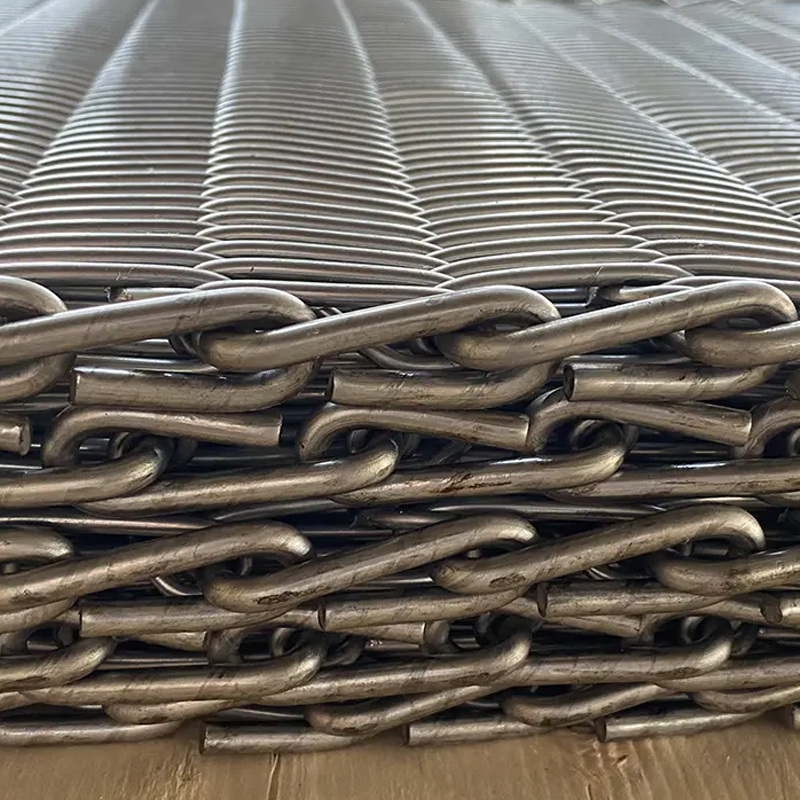
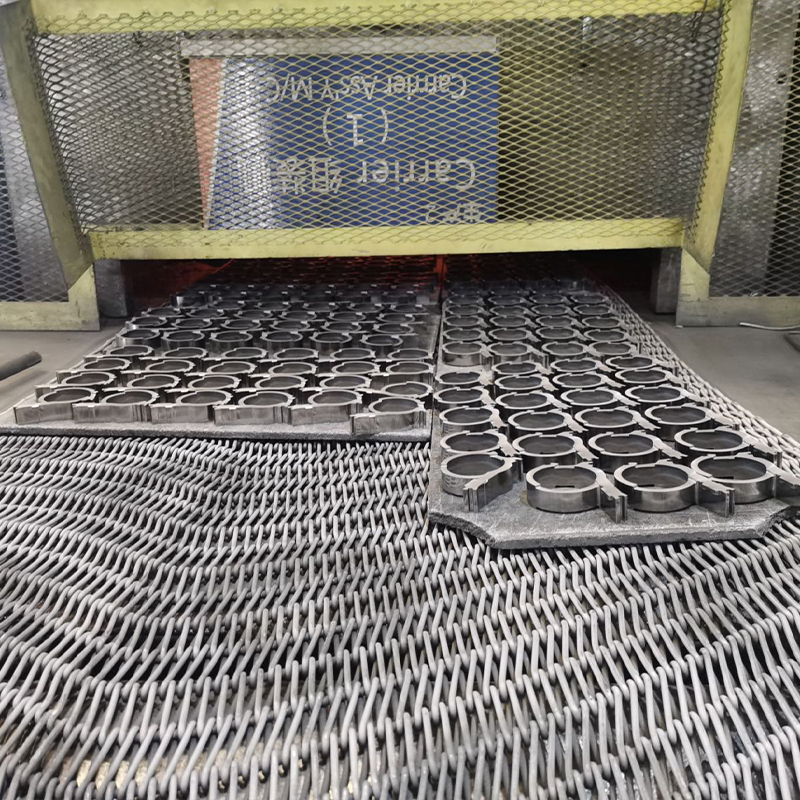
Before you order another sintering furnace mesh belt, understand one thing: the belt is not a passive conveyor. It is a process component that directly determines temperature uniformity, product consistency, and how much money you lose every time the furnace stops. Choosing a belt without matching it to your atmosphere, load, and thermal profile is a recipe for premature cracking and unplanned downtime. This guide walks through the real selection criteria, then shows how different sintering processes change the answer.
What a Sintering Furnace Mesh Belt Actually Does
A continuous mesh belt sintering furnace relies on the belt to carry compacts through several distinct zones: dewaxing, preheat, sintering, and cooling. In each zone the belt is exposed to a different temperature, atmosphere condition, and mechanical load. It must remain flat enough to keep parts stable, open enough to allow gas flow around the parts, and strong enough to resist the combined weight of the product and its own span.
Most engineers think of the belt only when it breaks. But the belt also affects heat transfer. A dense weave blocks the furnace atmosphere and slows heating; an overly open weave allows small parts to drop through or distort at high temperature. The belt’s thermal mass also matters — a heavy belt absorbs more energy, increasing your power bill and lengthening the time the furnace takes to recover after loading.
The practical conclusion is simple: the belt is a heat-treatment tool, not a consumable afterthought.
The Five Selection Criteria That Have the Biggest Impact
Specifying a sintering furnace mesh belt is more than matching width and length. Five variables dominate performance and service life. Get these right, and a belt can run for years. Get one of them wrong, and you will be replacing it within months.
Mesh Material: Match the Alloy to Your Temperature and Atmosphere
The alloy is the first decision because it sets the temperature ceiling and defines how the belt reacts to the furnace atmosphere. Standard austenitic stainless steels work for lower-temperature sintering and neutral atmospheres, but their creep strength drops quickly above 900 °C. For most powder metal sintering, where the belt sees 1050–1150 °C, you need a higher-alloy grade.
Common mesh belt alloys and their practical sintering service ranges
| Alloy |
Practical temperature range (°C) |
Typical atmosphere compatibility |
Relative cost |
| SS 304 / 304L |
Up to 750 |
Oxidizing, light protective atmospheres |
$ |
| SS 310S / 314 |
850–1000 |
Nitrogen, endothermic gas, some hydrogen |
$$ |
| Inconel 600 |
950–1100 |
Hydrogen, dissociated ammonia |
$$$ |
| Inconel 601 |
1050–1150 |
Hydrogen-rich, carburizing/decarburizing swings |
$$$$ |
Do not assume that a higher alloy is always better. In alloys with high nickel content, sulfur in the atmosphere can cause severe embrittlement. If your sintering atmosphere contains trace sulfur, a slightly lower alloy with better surface stability may outperform an expensive nickel superalloy. Talk to the belt manufacturer about your exact atmosphere composition before finalizing the material.
Weave Pattern: The Compromise Between Strength and Permeability
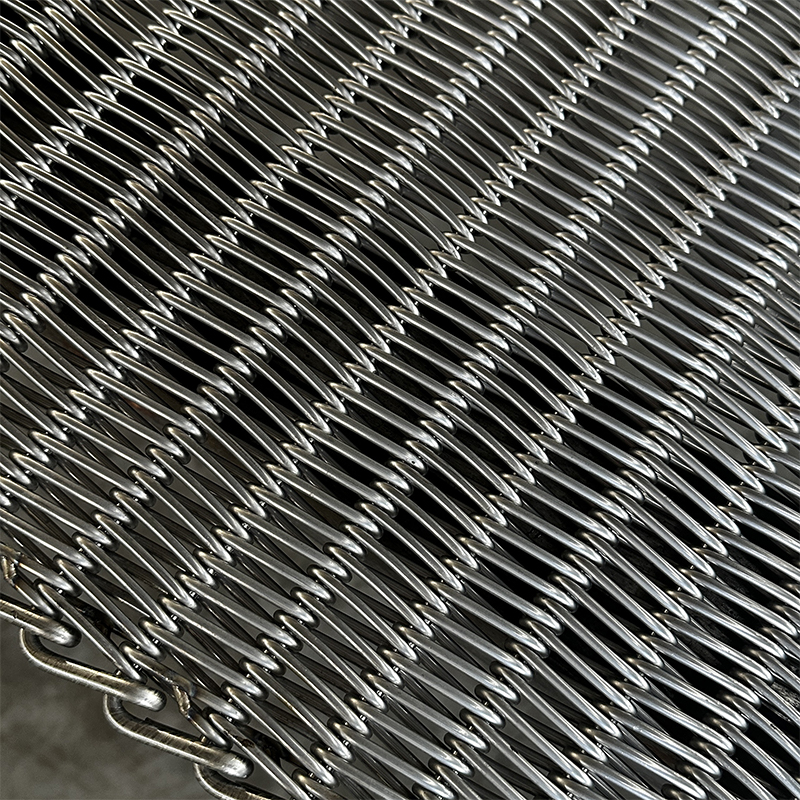
Weave determines both mechanical strength and how easily atmosphere gases reach the parts. A tight weave offers a smoother surface and better support for fine components, but it restricts convection and traps lubricant vapors during dewaxing. A more open weave allows faster outgassing and heating, but every opening increases the risk of small parts sinking into the mesh or leaving marks on the surface.
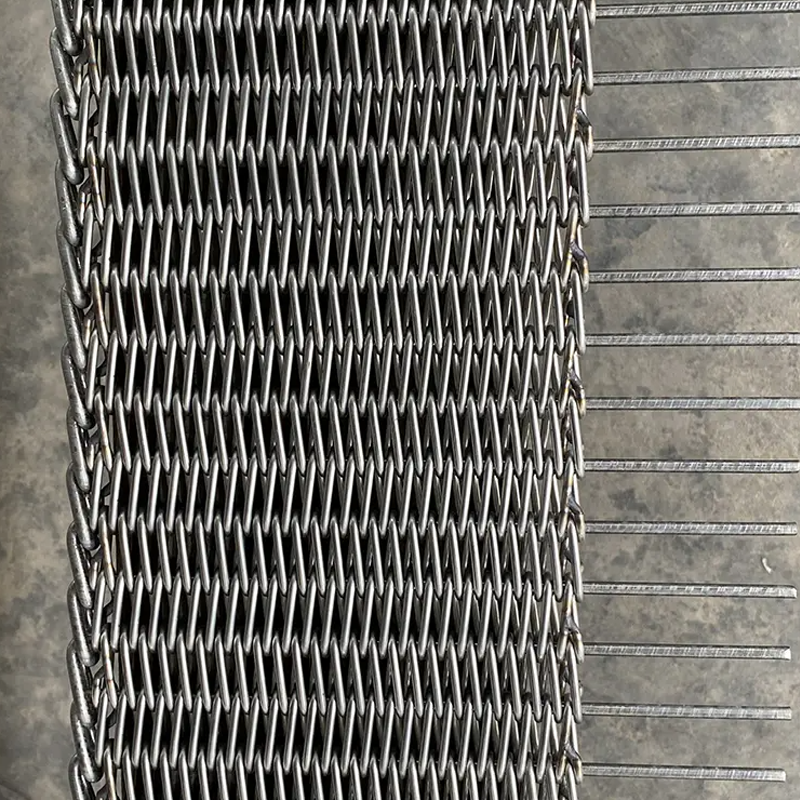
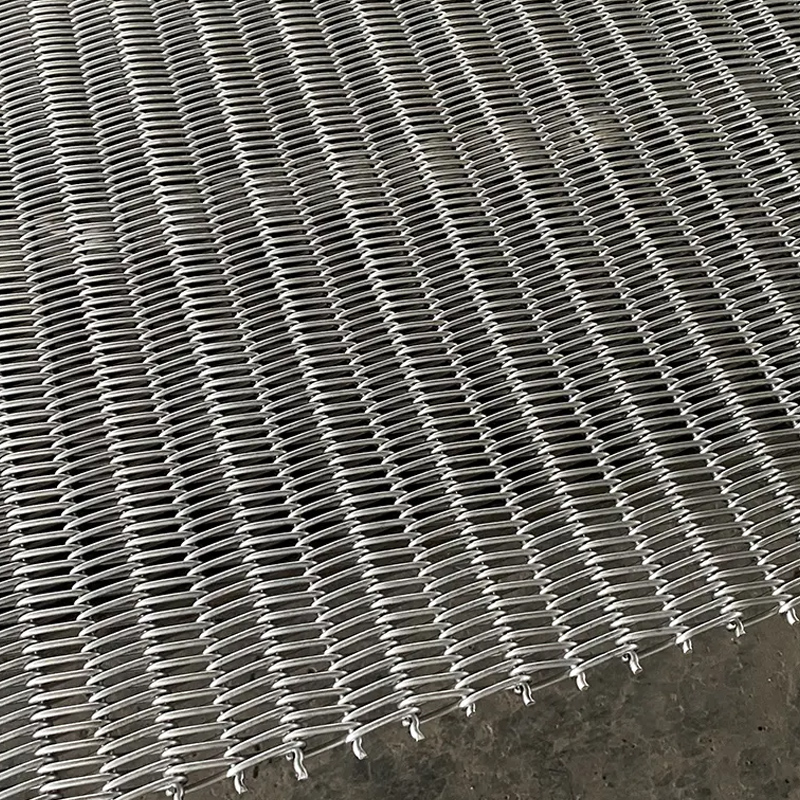
For sintering applications, the most common options are balanced weave, double-balanced weave, and chain-link or rod-reinforced constructions. Balanced weave is the general-purpose choice. Double-balanced weave adds a second strand in each direction, increasing stiffness and load capacity. Chain-link designs are built with pre-formed spiral wires and are often used for very wide furnaces or heavy loads; they tolerate thermal expansion better than a flat woven sheet.
Choose the weave based on the smallest part you handle. If the gap exceeds half the minimum part dimension, you will lose product. If you have even occasional flatness problems, avoid a weave that stretches under load and causes the surface to wave.
Edge Construction: The Weakest Link
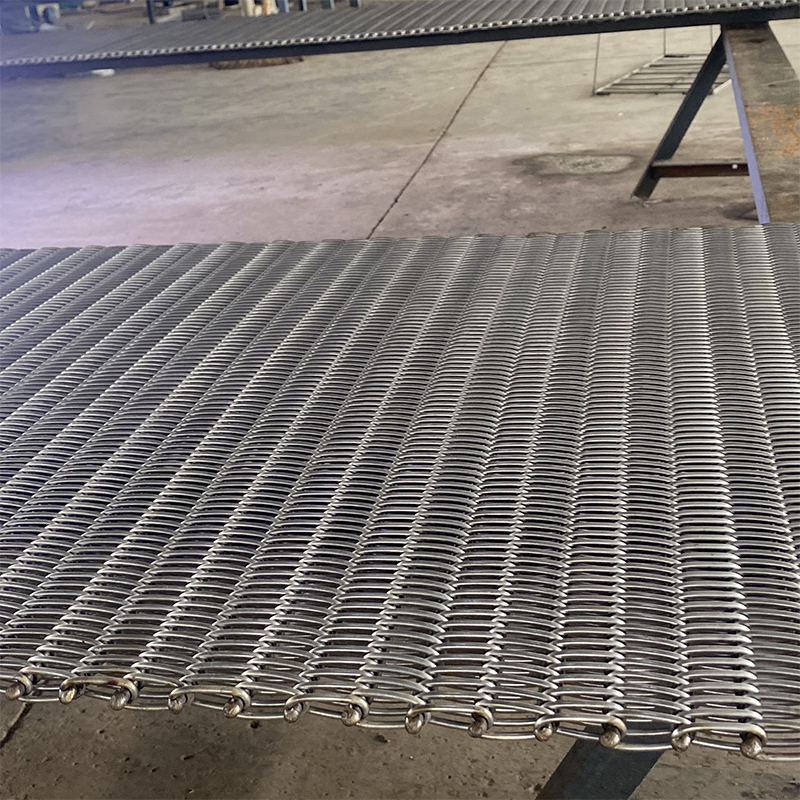
Most premature belt failures start at the edge. The edge is subjected to tension, rubbing against the furnace lining, and thermal fatigue. A poorly constructed edge may have exposed wire ends that catch on parts or create stress concentrations. Two common edge types dominate sintering belts: welded mesh edges and selvage or U-bound edges. Welded edges are made by fusing the ends of each cross wire together. They are smooth and resist unraveling, but the weld area can become brittle after repeated heating and cooling. Selvage edges turn the wire back into the weave, minimizing exposed ends; they handle thermal cycling better but may be less rigid. Ask specifically how the edge will behave under your furnace’s thermal gradient.
Dimensions and Tolerances: Fits the Furnace, Not Just the Roller Centers
Width is obvious, but belt pitch and mesh aperture are equally critical. Pitch controls the spacing between spirals or rows; aperture controls the open area. Both affect the belt’s ability to track straight. A belt that is only a few millimeters wider than the furnace track will rub and wear. A belt that is too narrow leaves gaps where parts can fall off.
Also check the thickness of the wire. Heavier wire increases load capacity and heat resistance but also increases thermal mass and cost. Lighter wire heats faster, costs less, and is easier to handle, but it deforms more under load. Your belt supplier should ask for part weight per linear meter, furnace speed, and the distance between support rollers — if they do not ask, consider that a red flag.
Belt Load and Surface Condition: Think About the Parts, Not Only the Belt
Every sintering line has a maximum load rating, but the rating is about more than weight. A dense load of heavy parts creates different stress than a sparse load of light parts. Edge tension changes with load distribution across the width. If parts are placed closer to one edge, the belt will try to track toward that side. A proper forecast of load distribution helps the manufacturer design the right edge construction and support system.
Surface finish matters in applications where parts come out ready for assembly. A belt with rough wire can leave abrasive marks on soft metals. For components that must meet strict surface requirements, a polished or specially rounded wire may be necessary, even though it costs more.
How Sintering Furnace Mesh Belts Differ by Process
There is no universal sintering belt. The differences in atmosphere, temperature, and component size across industry segments force different design choices. Here is how the belt changes with each application.
Powder Metallurgy Sintering
Powder metal parts are usually porous and contain pressed-in lubricants. The belt must allow fast dewaxing in the initial heating zone, which means a relatively open weave. It must also withstand the abrasive effect of metal powder falling off the parts during transfer. Iron-based and copper-based PM parts are the two most common categories. Iron-based parts are heavier and often sintered at 1100–1150 °C; they require a high-alloy belt with strong edge reinforcement. Copper-based parts are lighter and sinter at lower temperatures, so the belt material can be a less expensive stainless grade, but the weave still needs to be open enough to allow lubricant burn-off.
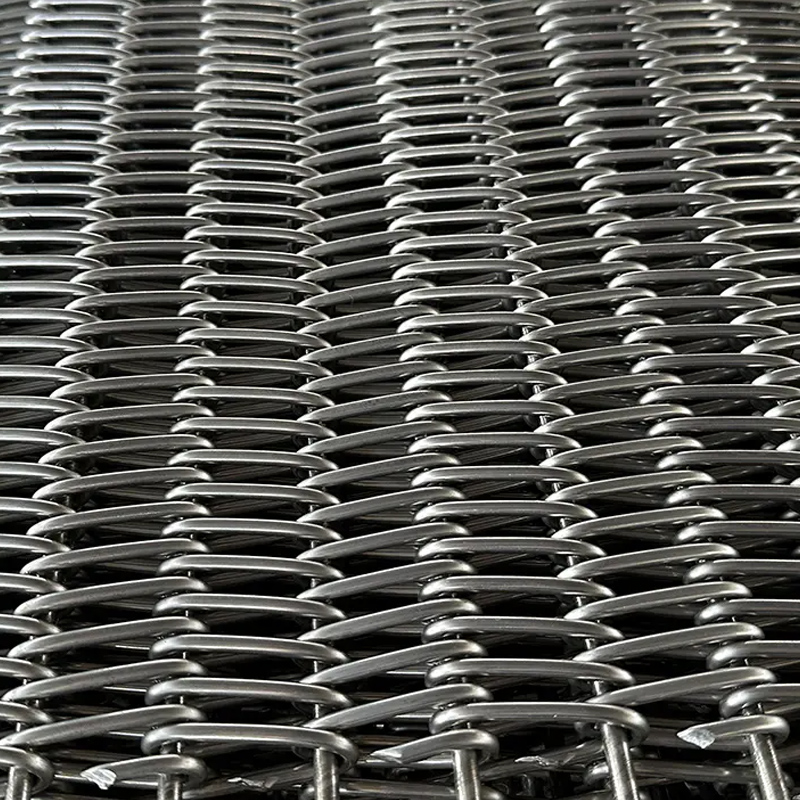 High-Alloy Mesh Belt for Iron-Based Powder Metal SinteringThis belt suits heavy iron-based PM parts sintered at 1100–1150 °C, offering strong edge reinforcement. Its open weave aids dewaxing, while a slightly coarser texture helps mitigate copper vapor deposition on the belt.View Product →
If your line runs copper-based PM parts, pay attention to the potential for copper vapor to deposit on the belt and change its emissivity. A slightly coarser weave reduces the surface area where deposition can build up.
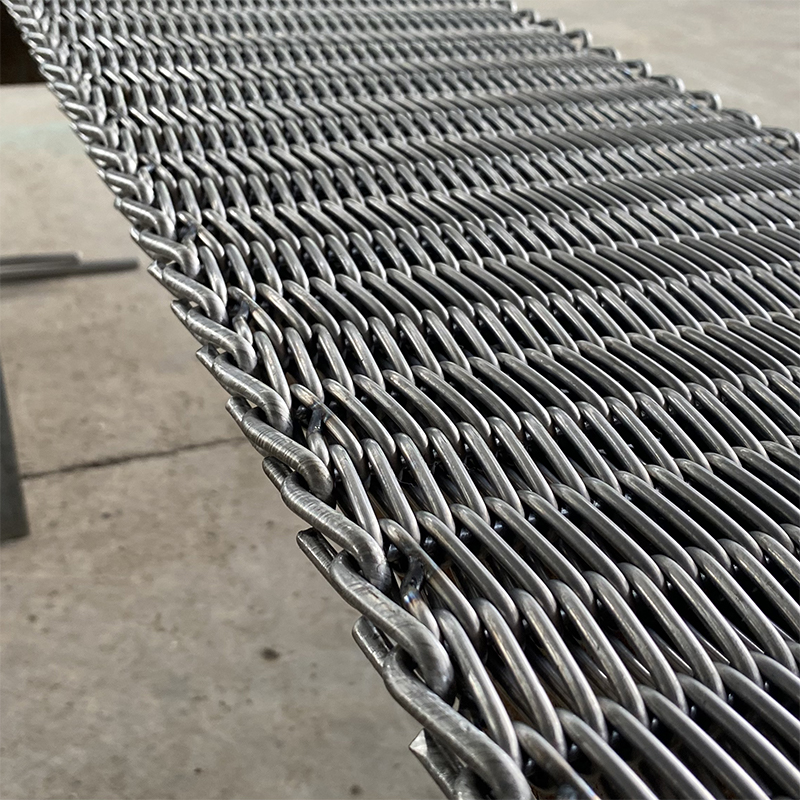 Stainless Steel Mesh Belt for Copper-Based Sintering FurnaceDesigned for lighter copper-based PM parts at lower temperatures, this belt uses a less expensive stainless grade. Its open weave supports lubricant burn-off, and a coarser option can reduce emissivity changes from copper vapor buildup.View Product →
Ceramic and Electronic Component Sintering
Ceramic and electronic parts are usually small, light, and sensitive to vibration and surface contamination. The belt must provide a flat, stable platform and high dimensional accuracy. Open areas are still needed for atmosphere flow, but the aperture must be small enough to keep tiny components from falling through. Here, a double-balanced weave with fine wire is common. Since these furnaces often use air or nitrogen at lower temperatures, material selection is less extreme than for powder metals.
Solar Photovoltaic Cell Sintering
PV cell sintering belts run at moderately high temperatures but face a different enemy: chemical attack from silicon, phosphorus, and other dopants. They also require a very smooth surface to avoid micro-cracks in thin wafers. A belt designed for PV sintering uses a tightly controlled mesh geometry and often a high-chrome, high-nickel alloy that resists corrosive fuming. The belt also must maintain its flatness through hundreds of thermal cycles. Standard industrial belts that work well in PM furnaces may fail quickly in PV lines due to corrosion fatigue.
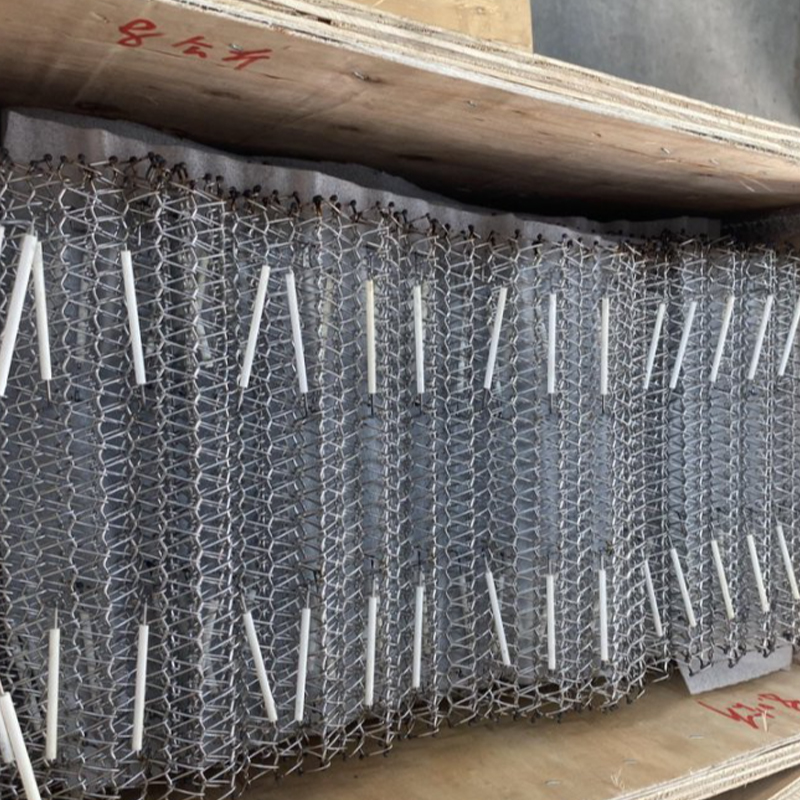 Corrosion-Resistant Mesh Belt for Photovoltaic Cell SinteringThis belt meets the demands of PV cell sintering, offering a smooth surface to avoid micro-cracks in thin wafers. Its high-chrome, high-nickel alloy resists chemical attack from silicon and phosphorus, maintaining flatness through thermal cycles.View Product →
Why Sintering Furnace Mesh Belts Fail Prematurely
When a belt fails in less than its expected life, the root cause is rarely a single dramatic moment. It is usually a combination of factors that could have been avoided at the specification stage.
- Thermal fatigue. Rapid heating and cooling cause differential expansion between outer and inner wires. Over time, cracks appear near the crimps, especially in belts with sharp internal radii.
- Edge wear. Continuous contact with the furnace lining or side plates wears down the edge. A belt with poorly welded edges can unwrap and catch on parts.
- Creep elongation. At high temperature, the belt slowly stretches. If the take-up mechanism cannot compensate, the belt loses tension, sags, and eventually hot-spots.
- Atmosphere attack. Hydrogen, carbon, sulphur or other reactive gases can cause embrittlement, carburization, or scaling. The result is a sudden loss of ductility.
- Tracking issues. Misalignment of rollers or uneven load distribution causes the belt to drift to one side, damaging the edge and the furnace structure.
Most of these failures can be predicted by looking at the belt after each maintenance shutdown. Early signs include surface discoloration, local flattening of the weave, elongated pitch, and small hairline cracks at the edge. If you see these, do not wait for a full break; schedule a replacement and review the specification with your supplier before ordering.
What to Tell Your Mesh Belt Supplier Before You Order
A reputable supplier can recommend a reliable belt, but they need more than “sintering furnace mesh belt” from you. Give them the following information:
- Furnace model, width between inner walls, and the center distance of the drive and idler rollers.
- Maximum operating temperature and the exact temperature profile across the length of the furnace.
- Atmosphere gas composition, including dew point, hydrogen percentage, and any trace impurities.
- Product dimensions, weight per piece, and loading density per meter of belt.
- Required belt speed and how often the speed changes during production.
- Scheduled maintenance window and expected belt life in hours or tons of product.
With those details, a technical manufacturer can calculate the correct wire diameter, weave type, edge style, and alloy grade. If you need deeper guidance, the powder metallurgy application notes on this site cover common process conditions. For a practical list of belt types and selection criteria, see this reference on sintering furnace mesh belt types and selection criteria.
Also ask about lead time and spare belts. Furnace downtime is expensive, and having a spare belt on hand can save you days of lost production. Some suppliers provide repair services for damaged edges or stretched sections — worth asking if your belt shows localized wear.
Do not treat the next sintering furnace mesh belt as a commodity purchase. The alloy, weave, edge, and dimensions all affect your throughput, energy use, and scrap rate. By defining your temperature, atmosphere, load, and part geometry before calling a supplier, you can avoid the most common causes of premature failure and get a belt that pays for itself many times over.



 English
 русский
 عربى
عربى