 English
 русский
 عربى
عربىElectronic component sintering furnace mesh belt
Electronic component sintering furnace mesh belts are specialized heat-resistant...
 +86 13852191798
Yangzhou Yafei Machinery Manufacturing Co., Ltd.

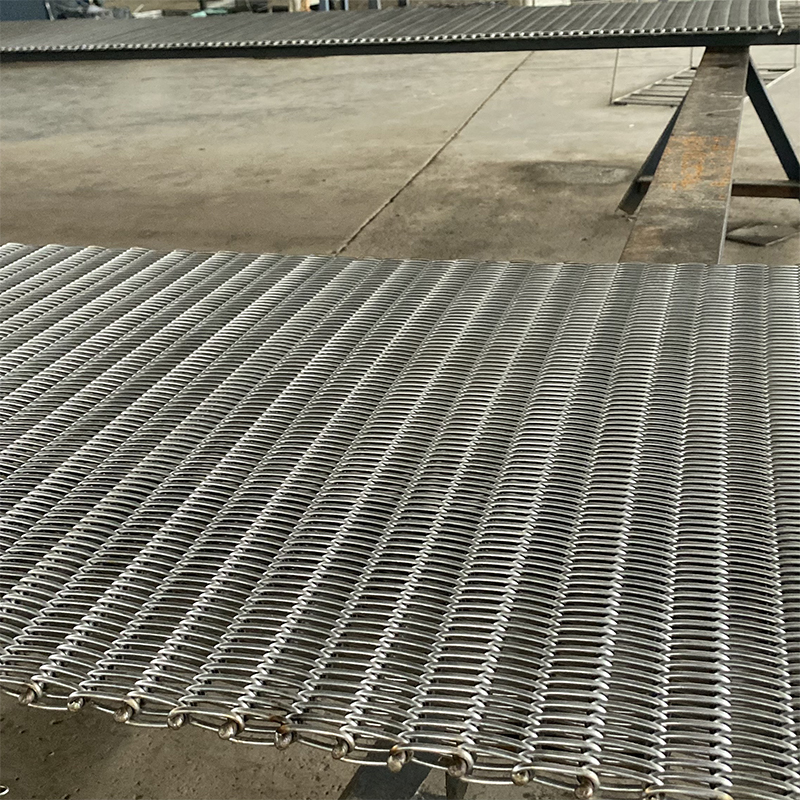
Electronic component sintering furnace mesh belts are specialized heat-resistant...
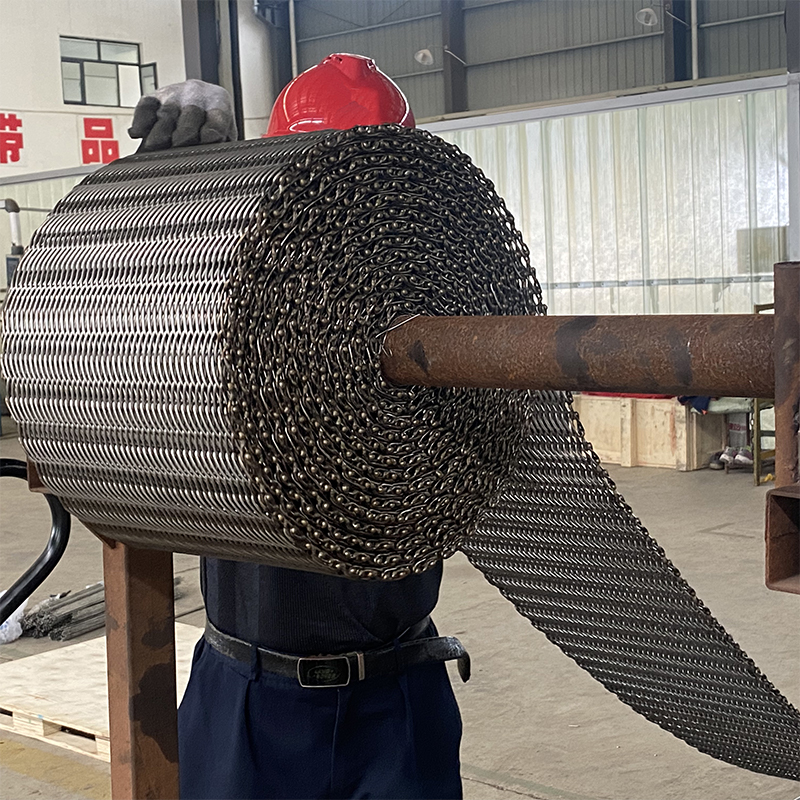
The sintering furnace mesh belt for circuit boards is a type of heat-resistant m...
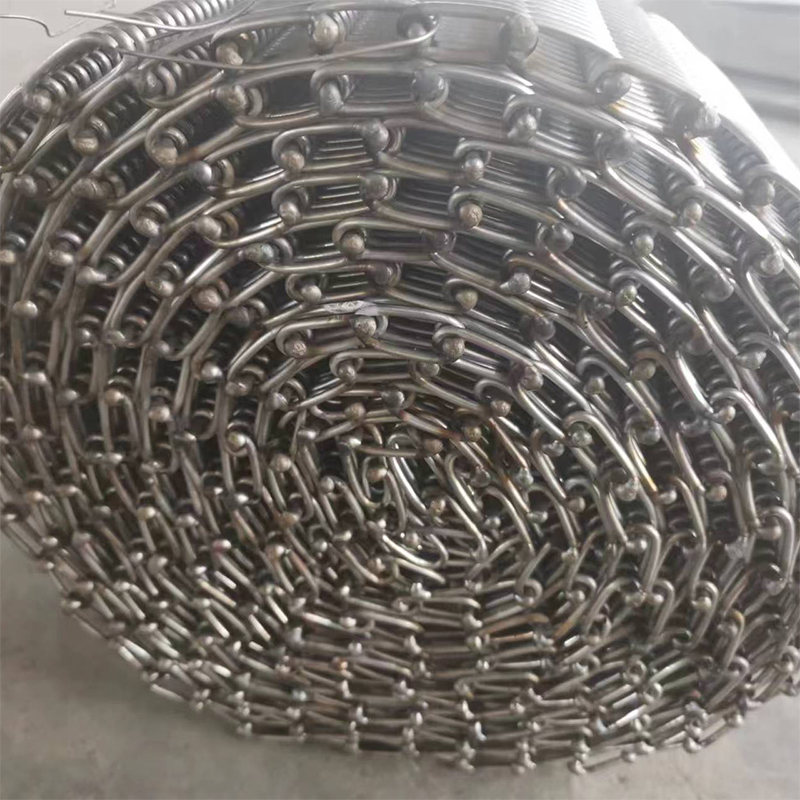
The sensor sintering furnace mesh belts is a type of heat-resistant, platform-sh...
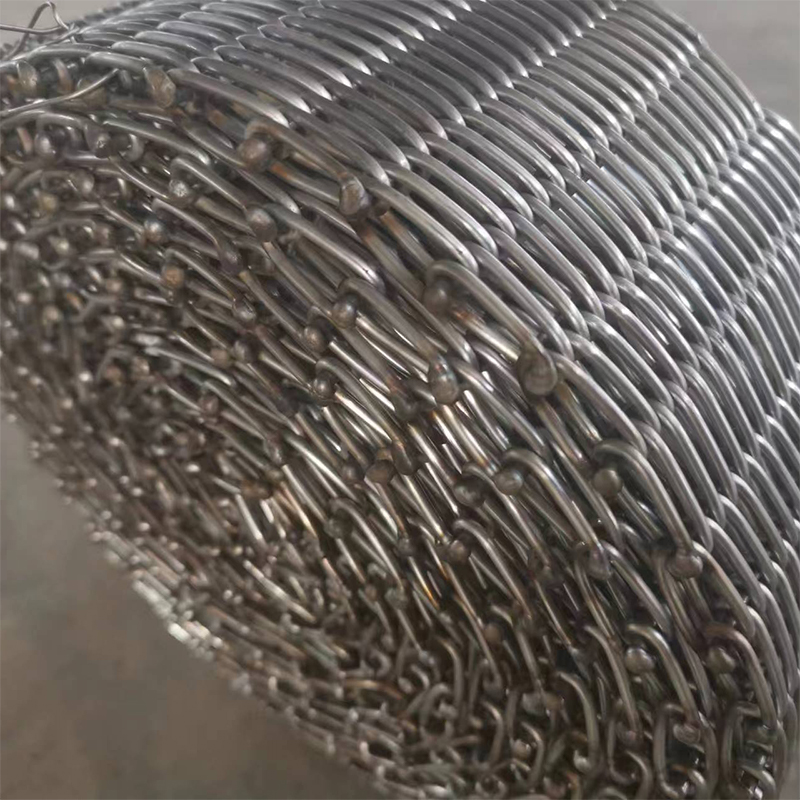
The PLCC controller sintering furnace mesh belt is primarily used for the contin...
The mesh belt used in electronic component sintering furnaces is a metal conveying structure specifically designed for high-temperature heat treatment and sintering processes in the electronics manufacturing industry. It primarily serves the mass production of circuit boards, PLCC controllers, medical sensors, and various other precision electronic components. Typically constructed from high-temperature alloy steel or nickel-chromium alloy, these mesh belts maintain excellent mechanical strength and structural stability in sustained high-temperature environments. Their flat surface and stable transmission make them suitable for continuous sintering furnace operation, ensuring smooth transport of electronic components between high-temperature, holding, and cooling zones, ensuring a uniform and controllable heat treatment process.
The mesh belts used in electronic component sintering furnaces are designed for thermal stability and balanced conveying. Their woven structure effectively distributes the load, preventing deformation caused by localized overheating or uneven loads. To meet the high consistency requirements of precision electronic components, the mesh belts are typically polished or treated with an anti-oxidation treatment to reduce particle adhesion and surface contamination during the sintering process, thereby ensuring the product's electrical performance and appearance quality.
As China Electronic Component Sintering Furnace Mesh Belt Manufacturers and Electronic Component Sintering Furnace Mesh Belt Suppliers,
Yangzhou Yafei Machinery Manufacturing Co., Ltd. is a private scientific and technological enterprise in Jiangsu Province, formerly known as Yangzhou Yafei Metal Mesh Belt Factory, located in Yiling Industrial Park in the east of Yangzhou, with R&D, production and processing, office buildings, etc. With independent research and development of scientific and technological projects and equipment processing and manufacturing capabilities.
At present, the company is mainly engaged in: stainless steel mesh belt, conveyor mesh belt, metal mesh belt, stainless steel conveyor belt and related technology research and development, application and promotion.
Metal mesh belts have been used in beer and beverage, food, wood industry, glass, chemical industry, pharmacy, cleaning and spraying, powder metallurgy, new energy, heat treatment, industrial kiln, general conveying machinery and other industries.
Conveying machinery includes: net belt conveyor, hoist, flat top chain conveyor belt, roller conveyor, chain plate conveyor, etc. Widely used in home appliance engineering, automobile engineering, dairy beverage industry, brewing and water treatment and other fields.
A conveyor mesh belt rarely announces its own failure. It distorts, cracks, or begins tracking to one side, and a continuous furnace or production line stops the moment it does. That makes belt selection more than a spare-part purchase; it is a decision about uptime, product quality, and operating cost. The right conv...
READ MOREWhen a hardening furnace mesh belt fails, it usually does it without warning. One shift it is carrying bearing races through the high-temperature zone; the next, a torn edge catches on the return track and the whole line stops. Most of these failures were decided months earlier, when the belt specification was written...
READ MOREA continuous brazing line stops because the mesh belt has drifted to one side, the edge wires are broken, and the stainless steel parts grouping together on the belt are no longer aligned. It is a familiar scenario for maintenance teams: the furnace itself is running correctly, but the belt has become the bottleneck. ...
READ MOREThe operational life and efficiency of an electronic component sintering furnace mesh belt are governed by complex thermodynamic and mechanical principles. Because these belts operate in environments that regularly exceed hundreds of degrees Celsius, the metallurgical selection is the primary factor in determining performance. Typically constructed from high-temperature alloy steel or premium nickel-chromium alloys, these belts are engineered to resist grain growth, oxidation, and mechanical creep. Under continuous load at elevated temperatures, standard metals experience progressive deformation, which leads to belt stretching, tracking errors, and eventual structural failure. In contrast, advanced alloy formulations maintain excellent mechanical strength and dimensional stability, ensuring that the conveyor belt retains its tension and flat profile over thousands of operational hours.
The geometric design of the woven wire mesh is another crucial engineering parameter. The weave pattern must be calculated to balance structural strength with thermal mass. A belt with too much thermal mass will absorb excessive heat energy, reducing the thermal efficiency of the furnace and increasing energy costs. On the other hand, a weave that is too light may lack the mechanical strength to carry heavy production loads or resist the localized tension spikes that occur during starting and stopping procedures. Woven structures, such as balanced weave or compound balanced weave patterns, are designed to distribute tension evenly across the entire width of the belt. This uniform distribution prevents the development of localized stress concentrations, which are the leading cause of premature belt tearing and tracking issues.
Surface quality is equally vital when conveying highly sensitive electronic parts. To meet the rigorous consistency requirements of precision electronics, the mesh belts are typically polished or treated with an anti-oxidation finish. This processing reduces the risk of particle adhesion and surface contamination during the sintering process. In the production of semiconductor packages and sensor elements, even microscopic metallic dust or oxide flakes can bridge electrical contacts, leading to short circuits and field failures. By implementing advanced polishing and chemical passivating treatments, an experienced Electronic Component Sintering Furnace Mesh Belt Manufacturer ensures that the conveying surface remains chemically inert and clean, preserving both the electrical properties and the aesthetic quality of the sintered components.
Selecting the correct alloy for an electronic component sintering furnace mesh belt requires a detailed understanding of the chemical interactions that occur within the furnace atmosphere. Sintering processes are often conducted in protective atmospheres, such as pure nitrogen, hydrogen, or dissociated ammonia, to prevent the oxidation of copper and silver contacts on the electronic assemblies. The alloy used in the mesh belt must be compatible with these atmospheres. For instance, high nickel-chromium alloys form a protective, tightly adherent oxide scale that resists further chemical attack in oxidizing environments, yet they must be carefully monitored in reducing atmospheres to prevent green rot, a form of localized intergranular oxidation.
The rate of thermal expansion must be balanced across the belt structure. When the belt transitions from the high-temperature zone to the cooling zone, different parts of the woven wire cool at different rates. If the alloy lacks sufficient thermal fatigue resistance, this rapid temperature differential can cause micro-cracking at the welded edges of the belt. Professional manufacturing facilities utilize state-of-the-art welding techniques, including plasma arc and laser welding, to finish the belt edges. This ensures that the weld joints possess the same thermal expansion characteristics and mechanical strength as the parent wire material, eliminating weak points that could fail under thermal shock.
The mechanical tension applied to the belt must also be continuously monitored and controlled. In heavy-duty industrial kilns, tensioning systems utilize counterweights or pneumatic cylinders to maintain a constant pulling force. The electronic component sintering furnace mesh belt must resist stretching under this constant tension. If the wire undergoes significant plastic deformation, the pitch of the weave will change, causing the belt to slip on the drive rollers or jump on the tracking sprockets. By using pre-stretched wires and performing thermal stress-relieving processes during the manufacturing phase, suppliers like Yangzhou Yafei Machinery Manufacturing Co., Ltd. ensure that the belts exhibit minimal structural stretch during their initial break-in period, simplifying maintenance and extending the overall service life of the conveyor system.
To assist engineering teams in choosing the optimal configuration for their specific sintering applications, the following table compares the primary structural designs of metal mesh belts utilized in high-temperature industrial environments.
|
Mesh Belt Structure Type |
Thermal Expansion Resistance |
Surface Flatness Level |
Tension Load Capacity |
Primary Industry Application |
|---|---|---|---|---|
|
Balanced Weave Pattern |
Moderate to High |
Standard Flat |
Moderate |
Food processing, glass annealing, and general conveying |
|
Compound Balanced Weave |
High |
Superior Flatness |
Very High |
Powder metallurgy, electronic sintering, and small parts transport |
|
Double Spiral Structure |
High |
Standard Flat |
High |
Heavy-duty heat treatment, industrial kilns, and chemical processing |
|
Chain Link Reinforced |
Low to Moderate |
Uneven |
High |
Heavy part transport, quenching tanks, and washing lines |
This structural comparison demonstrates why the compound balanced weave is often favored for electronic component sintering. Its dense, closely woven wire profile provides a virtually continuous, flat supporting surface that prevents small electronic chips or sensor housings from tipping or falling through the mesh, while maintaining the necessary permeability to allow uniform heat and gas flow around the parts.
Sourcing high-quality mechanical components for precision industries requires a manufacturing partner that possesses robust research and development capabilities, independent processing facilities, and a diverse product portfolio. In the competitive landscape of industrial conveying, Yangzhou Yafei Machinery Manufacturing Co., Ltd. has established a comprehensive production infrastructure that spans stainless steel mesh belts, conveyor mesh belts, metal mesh belts, and related technological applications. Operating as a scientific and technological enterprise, the company relies on advanced R&D projects to continuously refine the mechanical properties of its conveyor systems, ensuring they meet the changing needs of sectors such as new energy, powder metallurgy, glass manufacturing, and chemical processing.
A reliable supplier must offer solutions that extend beyond the mesh belt itself to encompass entire conveying systems. This holistic approach is essential because the performance of an electronic component sintering furnace mesh belt is closely linked to the design of the drive and support machinery. If the conveyor frame is misaligned, or if the drive rollers lack the proper friction coatings, even the most advanced alloy mesh belt will suffer from premature wear and tracking issues. By offering a complete line of conveying machinery, including net belt conveyors, hoists, flat top chain conveyor belts, roller conveyors, and chain plate conveyors, manufacturers can guarantee that the entire material handling system operates in perfect synchronization. This integrated design capability is a major advantage for global engineering teams who prefer to source complete, turn-key solutions from a single, highly accountable entity.
The design of a continuous sintering kiln involves a delicate balance between thermodynamics and mechanical handling. The mesh belt must travel through extremely distinct environments within a single conveyor loop. In the sintering of precision electronic parts, the conveyor first enters a burn-off zone where organic binders and solvents are evaporated from the green components. This zone, while lower in temperature, often contains corrosive volatile gases that can attack the conveyor belt if the metallurgy is not correctly selected. The belt then transitions into the main sintering zone, where temperatures peak, requiring maximum creep resistance and structural stability.
Following the sintering zone, the conveyor enters a controlled cooling section. Here, the mesh belt must assist in the rapid but uniform dissipation of heat from the electronic components to prevent thermal shock and cracking in ceramic bodies. The open area of the mesh belt is a critical design factor in this zone, as it allows cooling gases to circulate freely around the parts. Yangzhou Yafei Machinery Manufacturing Co., Ltd. utilizes advanced computer modeling to optimize the open-area ratio of its electronic component sintering furnace mesh belt designs, ensuring that the belt provides sufficient mechanical support while maximizing thermal transfer efficiency.
This multidisciplinary engineering approach is what distinguishes a specialized metal mesh belt producer from a general industrial distributor. By understanding the chemical, thermal, and mechanical variables of the entire sintering cycle, the engineering teams can customize the wire gauge, spiral pitch, and alloy selection to match the precise operating curve of the customer's furnace. This customization not only improves the yield of the sintering process but also minimizes unplanned downtime, which is exceptionally costly in high-volume electronics manufacturing.
In the global B2B procurement model, standard off-the-shelf conveyor belts rarely suffice for high-performance sintering applications. Sourcing managers require custom solutions that are tailored to the specific dimensions, load capacities, and thermal profiles of their existing furnace installations. A professional Electronic Component Sintering Furnace Mesh Belt Supplier must possess the engineering agility to support comprehensive OEM and ODM projects, providing detailed technical drawings, material certifications, and custom edge configurations.
This level of collaborative engineering is a core strength of Yangzhou Yafei Machinery Manufacturing Co., Ltd. By maintaining independent design and manufacturing facilities, the company can rapidly prototype and produce customized mesh belts that fit seamlessly into imported or domestically manufactured industrial kilns. Whether a client requires a specific reinforced edge to prevent wear against furnace side-walls, or a unique alloy composition to resist a highly corrosive protective atmosphere, the manufacturing team can deliver a tailored solution. This flexibility, backed by a strong commitment to quality and integrity, has made the company a trusted partner for global engineering firms and kiln manufacturers alike.
Beyond the initial sale, providing reliable technical support and maintenance guidance is essential for building long-term B2B relationships. An experienced manufacturer will provide comprehensive installation instructions, tracking calibration procedures, and tensioning recommendations to ensure that the mesh belt operates smoothly from the day it is commissioned. This post-purchase support reduces the learning curve for factory technicians and helps prevent the common installation errors that lead to premature belt wear, tracking drift, and catastrophic mechanical failures in high-temperature conveyor systems.
The following section addresses critical questions often raised by procurement directors, plant engineers, and global distributors when evaluating, sourcing, and maintaining high-performance conveyor mesh belts for electronic sintering applications.
The selection between nickel-chromium alloys and high-temperature alloy steels is primarily determined by the operating temperature, chemical atmosphere, and required service life of the conveyor system. Nickel-chromium alloys exhibit exceptional resistance to high-temperature oxidation and carburization, forming a stable, microscopic protective layer on the wire surface that prevents deeper chemical degradation. These alloys also maintain much higher tensile strength and creep resistance at temperatures exceeding eight hundred degrees Celsius, which prevents the belt from stretching or sagging under continuous load. In contrast, while high-temperature alloy steels are highly durable and cost-effective for moderate thermal applications, they are more susceptible to oxidation and structural deformation over long periods at extreme temperatures. For high-precision electronics manufacturing where mechanical stability and contamination prevention are paramount, nickel-chromium represents the standard for ensuring consistent alignment and long-term reliability.
Yangzhou Yafei Machinery Manufacturing Co., Ltd. maintains strict dimensional control through the use of automated wire flattening, crimping, and weaving machinery. Each spiral coil is formed to exact pitch and height tolerances before assembly. During the weaving process, automated tension sensors ensure that the cross rods and spiral wires are aligned precisely parallel and perpendicular, preventing any skewing that could cause tracking errors during furnace operation. Following assembly, the belts undergo a physical tensioning and pre-stretching process in the factory to settle the joints and eliminate initial mechanical elongation. This meticulous manufacturing protocol guarantees that the final electronic component sintering furnace mesh belt possesses a uniform pitch and a perfectly flat surface, which are essential for transporting microelectronics without vibration or tipping.
Precision electronic components, such as medical sensors and PLCC controllers, require incredibly clean thermal environments during their manufacturing processes. Standard metal conveyor belts can shed microscopic metal flakes or accumulate oxide dust when subjected to continuous heating and cooling. These loose particles can settle on the sensitive electrical contacts of the components, leading to localized contamination, poor solder wetting, or immediate short circuits that ruin the electrical performance of the device. By applying advanced surface polishing and specialized anti-oxidation treatments, the wire surface is made highly resistant to particle shedding and chemical reactions. This treatment ensures a clean, non-stick surface that minimizes contamination, preserves the electrical integrity of the components, and maintains the pristine appearance of the final product.
Preventing thermal deformation requires a combination of proper belt design and careful furnace management. Operators must monitor the temperature distribution across the width of the furnace to ensure there are no hot spots caused by misaligned burners or faulty heating elements. Localized overheating causes uneven thermal expansion, which creates internal stresses that distort the flat surface of the belt. Additionally, the conveyor system must maintain a reliable and balanced tension; excessive tension at high temperatures accelerates mechanical creep, while insufficient tension can cause the belt to sag or slip on the drive rollers. Sourcing a belt with a compound balanced weave structure is also highly effective, as this dense pattern naturally distributes thermal energy and mechanical loads more evenly across its woven surface, mitigating the risk of localized deformation.
Yes, as an experienced Electronic Component Sintering Furnace Mesh Belt Manufacturer, the company excels in providing customized solutions that meet the precise specifications of various imported and domestic furnace models. Sourcing teams can specify the exact width, overall length, wire gauge, and spiral pitch required for their installations. Furthermore, the edge finish of the belt can be customized to match the tracking and containment systems of the furnace. Options include standard welded edges, knuckled or looped edges for increased flexibility, and reinforced side-wall plates to prevent small components from sliding off the sides of the conveyor during transit. This comprehensive OEM support ensures that the replacement belt integrates perfectly with the existing mechanical systems without requiring costly structural modifications to the furnace.
Maximizing the operational lifespan of a high-temperature mesh belt requires regular inspection and proactive mechanical calibration. First, the belt tracking system must be checked daily to ensure the conveyor remains perfectly centered on the drive and tail rollers, preventing edge wear against the furnace frame. Second, tensioning systems must be adjusted to apply the minimum force necessary to drive the belt without slipping, as excessive tension accelerates thermal creep and stretching. Third, the conveyor should be kept free of debris and accumulated flux residues, which can react chemically with the metal alloy at high temperatures and cause localized corrosion. Finally, when starting or stopping the furnace, temperature changes should be implemented gradually to minimize thermal shock and fatigue in the metal wire structure, ensuring the belt maintains its mechanical strength and structural stability over many years of continuous service.
Get A Free Consultation Now
Get A Customized Solution
The company adheres to the concept of creating value for customers and prosperity for society, aiming to build a reliable mesh belt brand and establish the century-old Yafei brand.
CONTACT INFORMATION

Yiling Industrial Park, Jiangdu District, Yangzhou City, Jiangsu Province, China

+86 13852191798
PRODUCT CATEGORIES
QUICK LINKS
MOBILE
 Custom Electronic Component Sintering Furnace Mesh Belt Suppliers