 English
 русский
 عربى
عربىMesh belt of the annealing furnace for medical glass products
The mesh belt of the annealing furnace for medical glass products is made of imp...
 +86 13852191798
Yangzhou Yafei Machinery Manufacturing Co., Ltd.

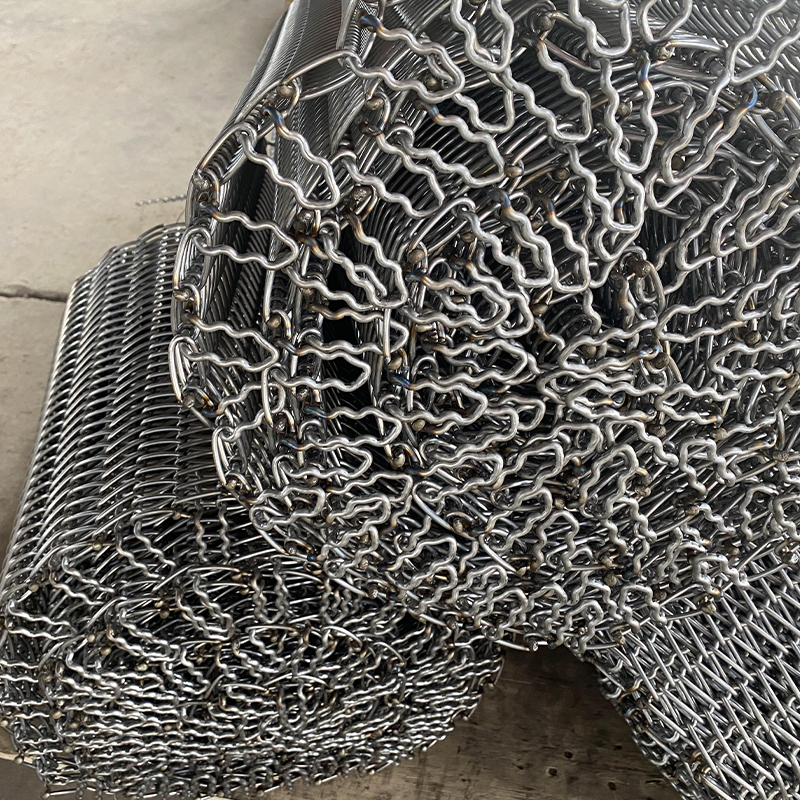
The mesh belt of the annealing furnace for medical glass products is made of imp...
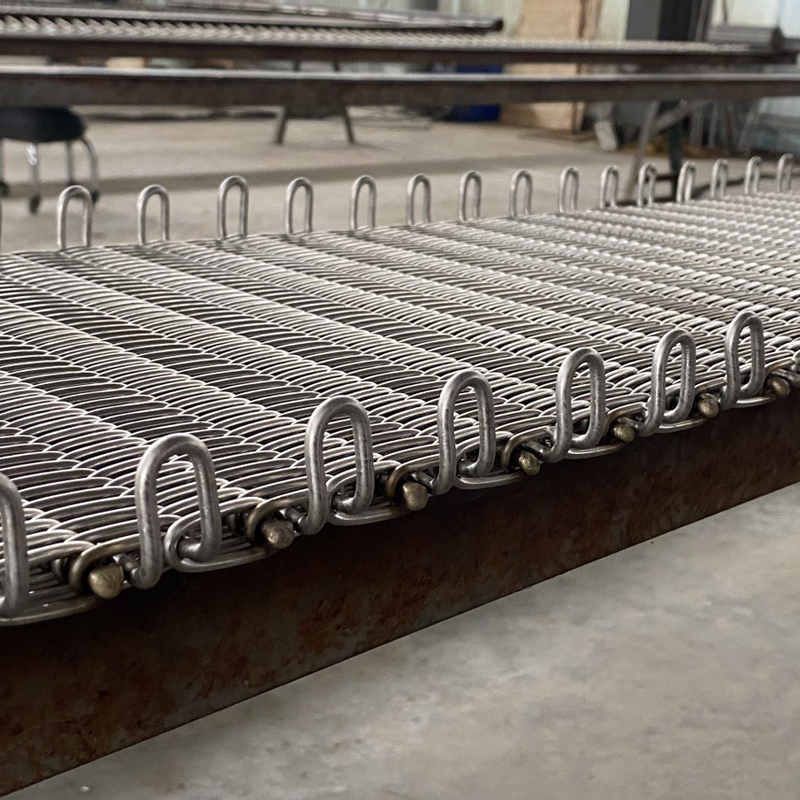
The glass bottle annealing furnace mesh belt employs a balanced weaving method, ...
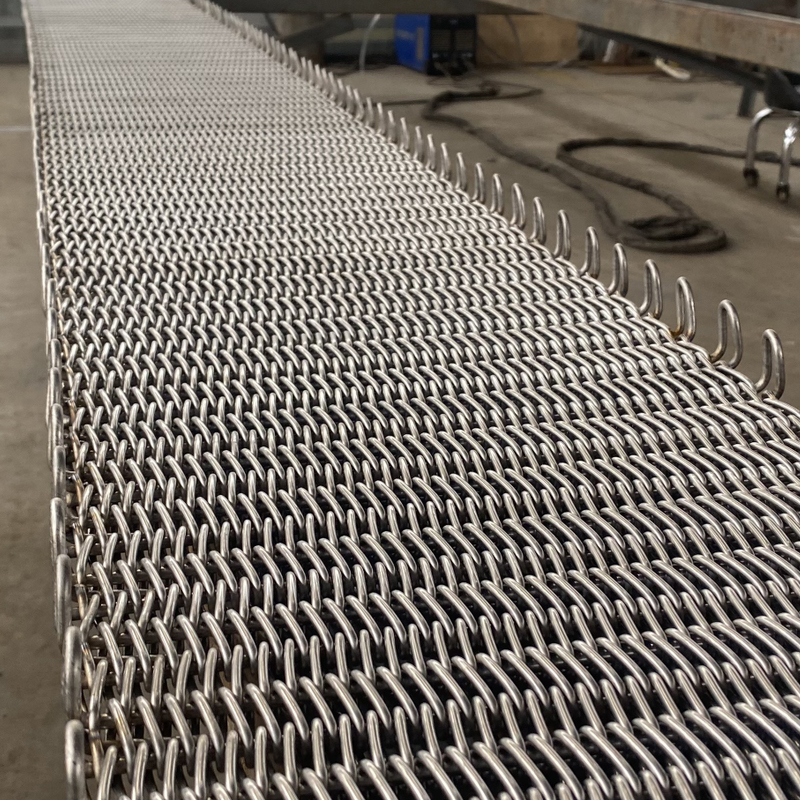
The metal product annealing furnace mesh belt employs a balanced weaving method....
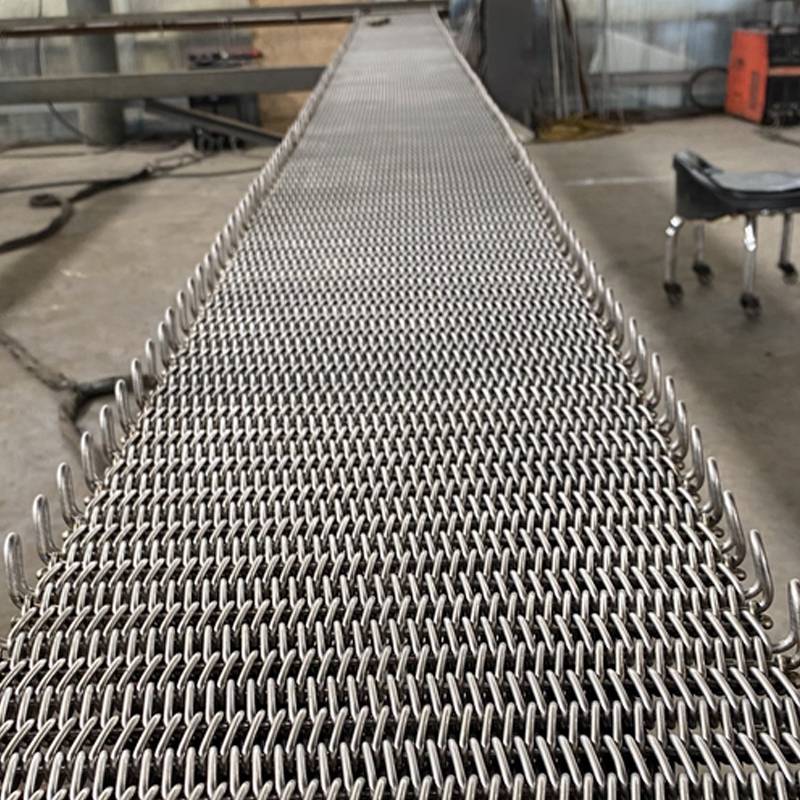
Maintaining uniform heating and a stable working environment is crucial during t...
Annealing furnace mesh belts are commonly used for annealing glass, metal, automotive parts, electronic components, and other products. They provide smooth conveying and enable continuous normalizing. Their structural design emphasizes stability and high-temperature resistance, enabling them to operate in high-temperature environments for extended periods without significant deformation or instability, ensuring uniform heating and thorough annealing of workpieces during transport. Because the annealing process requires precise control of the temperature profile and heating time, the smooth operation of the mesh belt directly impacts product performance and appearance. Therefore, annealing furnace mesh belts are crucial transmission and load-bearing components in the entire annealing line.
Annealing furnace mesh belts are typically made of heat-resistant stainless steel, nickel-chromium alloy, or other high-temperature alloys. These materials exhibit excellent oxidation resistance and creep resistance in long-term high-temperature environments, and can withstand operating temperatures of hundreds or even thousands of degrees Celsius. Their weave is typically balanced, composite, or chain-driven, depending on product weight and furnace type. The balanced structure can effectively prevent the mesh belt from deviation and ensure stable transmission direction; the composite structure is suitable for annealing operations of smaller parts or precision components; and the chain-driven design is used in continuous production lines with large load capacities to improve transmission strength and reliability.
As China Annealing Furnace Mesh Belt Manufacturers and Annealing Furnace Mesh Belt Suppliers,
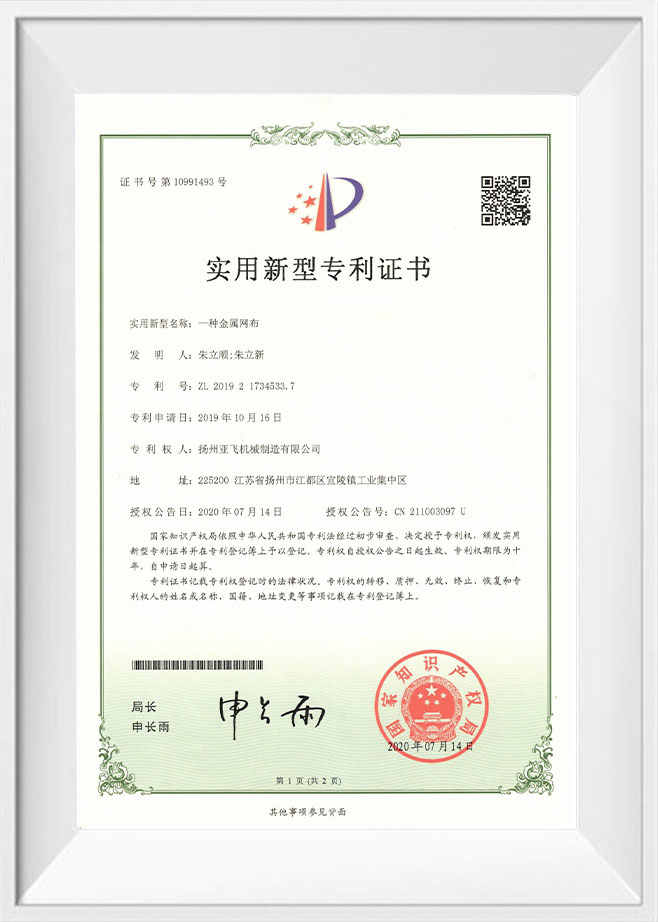
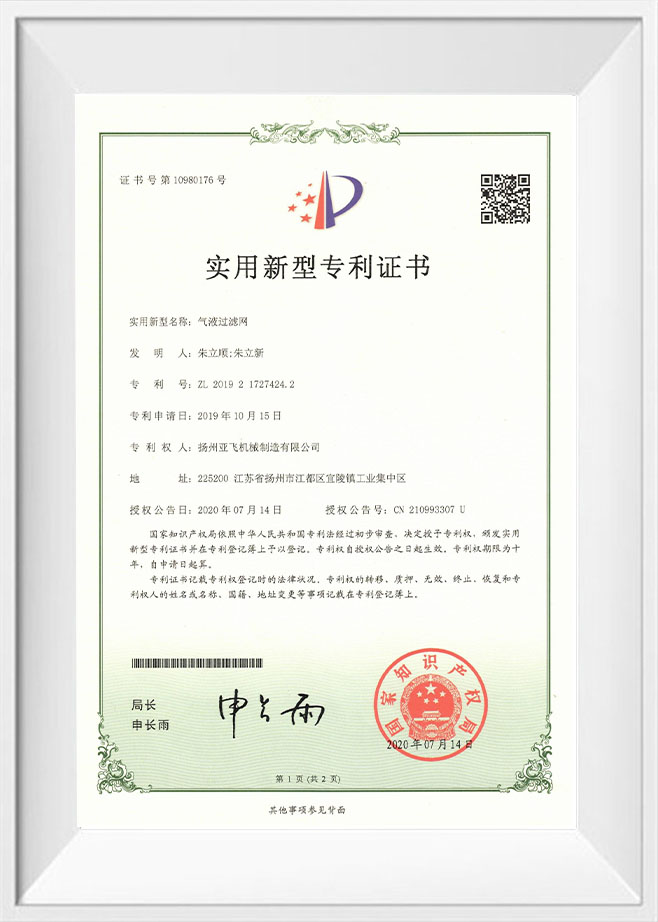
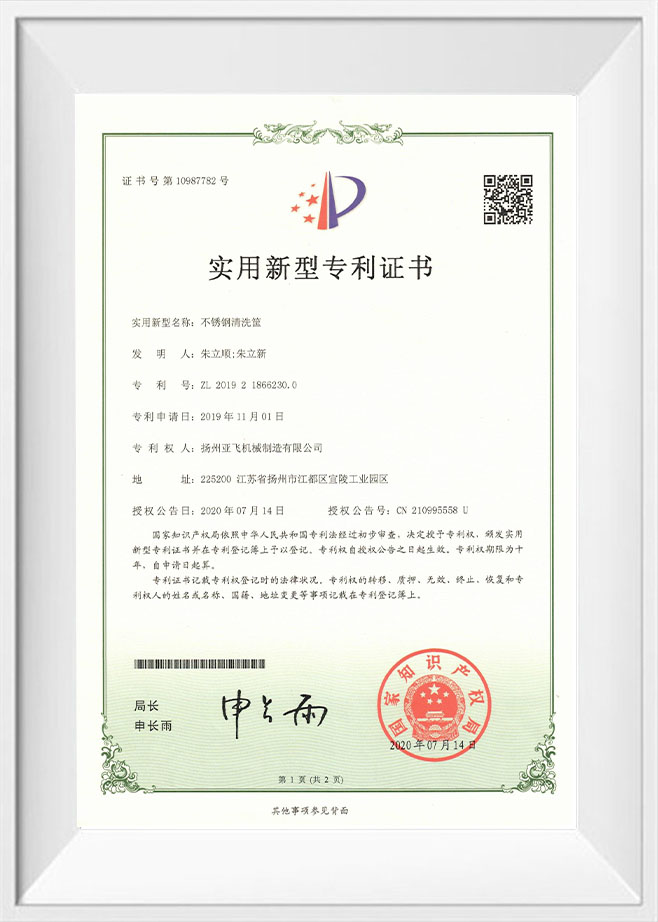
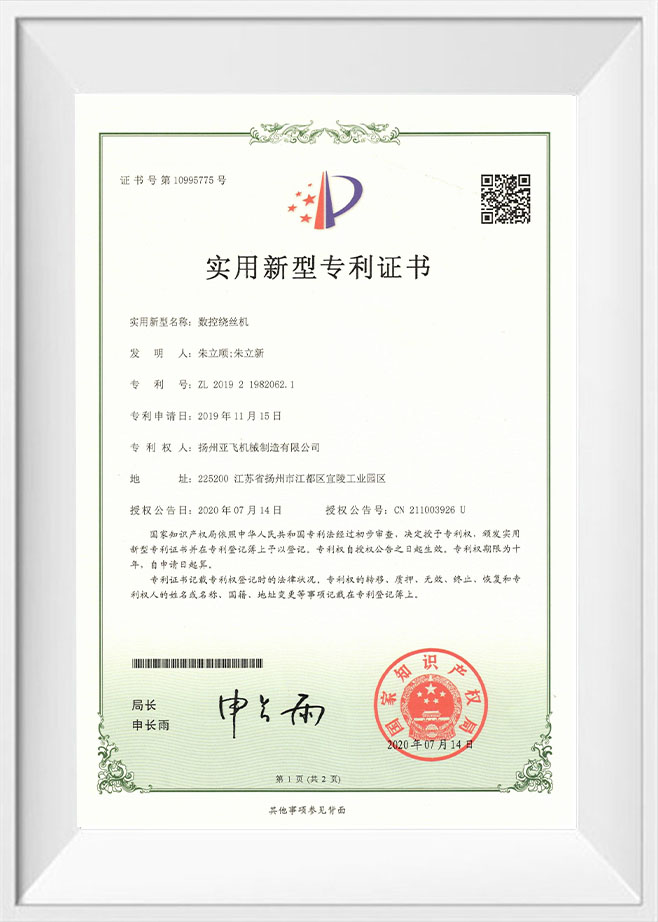
Yangzhou Yafei Machinery Manufacturing Co., Ltd. is a private scientific and technological enterprise in Jiangsu Province, formerly known as Yangzhou Yafei Metal Mesh Belt Factory, located in Yiling Industrial Park in the east of Yangzhou, with R&D, production and processing, office buildings, etc. With independent research and development of scientific and technological projects and equipment processing and manufacturing capabilities.
At present, the company is mainly engaged in: stainless steel mesh belt, conveyor mesh belt, metal mesh belt, stainless steel conveyor belt and related technology research and development, application and promotion.
Metal mesh belts have been used in beer and beverage, food, wood industry, glass, chemical industry, pharmacy, cleaning and spraying, powder metallurgy, new energy, heat treatment, industrial kiln, general conveying machinery and other industries.
Conveying machinery includes: net belt conveyor, hoist, flat top chain conveyor belt, roller conveyor, chain plate conveyor, etc. Widely used in home appliance engineering, automobile engineering, dairy beverage industry, brewing and water treatment and other fields.
A conveyor mesh belt rarely announces its own failure. It distorts, cracks, or begins tracking to one side, and a continuous furnace or production line stops the moment it does. That makes belt selection more than a spare-part purchase; it is a decision about uptime, product quality, and operating cost. The right conv...
READ MOREWhen a hardening furnace mesh belt fails, it usually does it without warning. One shift it is carrying bearing races through the high-temperature zone; the next, a torn edge catches on the return track and the whole line stops. Most of these failures were decided months earlier, when the belt specification was written...
READ MOREA continuous brazing line stops because the mesh belt has drifted to one side, the edge wires are broken, and the stainless steel parts grouping together on the belt are no longer aligned. It is a familiar scenario for maintenance teams: the furnace itself is running correctly, but the belt has become the bottleneck. ...
READ MOREThe Annealing Furnace Mesh Belt functions as a continuous mechanical and thermal transfer medium designed for industrial heat treatment production lines. It provides a stable conveying surface for workpieces moving through controlled furnace environments where temperature zones are arranged in sequential stages. The structural composition of the mesh belt allows continuous movement under high thermal load while maintaining dimensional consistency and controlled mechanical tension. In industrial furnace systems, the belt is not only a transport component but also part of the thermal regulation structure, influencing airflow distribution, heat absorption efficiency, and material positioning during processing.
In production environments developed by Yangzhou Yafei Machinery Manufacturing Co., Ltd., Annealing Furnace Mesh Belt systems are engineered using stainless steel materials with carefully selected wire diameters and weaving patterns. Our manufacturing processes focus on balancing mechanical load distribution with thermal expansion tolerance. The belt structure is designed to maintain consistent motion under long-duration operation in furnace chambers, where temperature variation across zones can affect both belt geometry and surface behavior.
The industrial architecture of an Annealing Furnace Mesh Belt system integrates multiple subsystems, including drive rollers, tension control units, furnace chamber supports, and cooling transition interfaces. Each subsystem interacts with the belt movement to ensure continuous production flow. The belt surface provides a semi-open structure, allowing heat circulation through convection and radiation while supporting materials evenly across the width. This structure reduces localized overheating and supports uniform exposure to thermal energy.
In the application systems of Yangzhou Yafei Machinery Manufacturing Co., Ltd., we design mesh belt configurations suitable for different furnace sizes and production capacities. The engineering approach considers load per square meter, belt speed synchronization, and furnace atmosphere composition. The resulting system supports stable conveying behavior in industrial sectors such as metallurgy, glass processing, chemical treatment, and continuous annealing lines. Our production experience also includes adapting belt structures to automated conveyor integration systems, ensuring compatibility with modern industrial layouts.
| Parameter Item | Specification Range | Material / Type | Technical Description |
|---|---|---|---|
| Wire Material | SUS304 / SUS310S / SUS316 | Heat-resistant stainless steel | Selected for high-temperature oxidation resistance and mechanical stability in continuous annealing environments |
| Mesh Structure Type | Balanced weave / Spiral weave / Reinforced rod type | Metal interlocked structure | Designed to optimize airflow penetration, load balance, and thermal uniformity |
| Wire Diameter | 0.8 mm – 5.0 mm | Customized stainless steel wire | Adjusted based on furnace load capacity and operating temperature requirements |
| Belt Thickness | 5 mm – 30 mm (structure dependent) | Multi-layer woven assembly | Provides structural strength while maintaining flexibility in furnace rollers |
| Edge Reinforcement | Single/double reinforced edge | High-strength steel edging | Prevents deformation, lateral shift, and edge fraying during long-term high-temperature operation |
The Annealing Furnace Mesh Belt operates within a continuous process system where synchronization between mechanical movement and thermal treatment stages defines production consistency. In a multi-zone furnace layout, the belt carries materials through preheating, heating, soaking, and cooling sections without interruption. Each zone operates under specific temperature and atmosphere conditions, requiring precise control of belt speed and tension stability to maintain uniform processing time.
Within systems designed by Yangzhou Yafei Machinery Manufacturing Co., Ltd., we develop conveyor mesh belts that maintain stable movement under varying thermal gradients. The belt must resist deformation caused by repeated exposure to temperature fluctuations while maintaining consistent tracking alignment along furnace rollers. Our engineering approach includes analyzing friction coefficients between belt and support rollers, ensuring smooth movement without slippage or irregular vibration.
Synchronization is achieved through coordinated control systems that link furnace temperature controllers with conveyor drive motors. When production requirements change, belt speed adjustments directly influence heat exposure duration. This relationship requires stable mechanical response from the mesh belt structure. The belt must respond predictably to acceleration and deceleration without introducing tension imbalance or structural distortion.
In industrial operations involving Yangzhou Yafei Machinery Manufacturing Co., Ltd., we incorporate reinforced edge designs and controlled mesh spacing to maintain directional stability. The belt surface is engineered to distribute load evenly across width, preventing localized stress concentration during long continuous runs. Furnace airflow interacts with the belt structure, influencing heat distribution patterns and ensuring that materials placed on the belt experience consistent thermal exposure.
Multi-zone furnace systems often require precise coordination between conveyor entry timing and exit unloading cycles. The Annealing Furnace Mesh Belt supports this requirement by maintaining predictable speed profiles and stable mechanical response under continuous load conditions. Our design methodology includes simulation of thermal expansion cycles and mechanical fatigue patterns to optimize long-term operational stability.
The Annealing Furnace Mesh Belt functions as an interface between furnace thermal energy and transported materials, enabling heat transfer through conduction, convection, and radiation. The open mesh structure allows furnace gases to circulate freely, improving heat penetration across material surfaces. This design reduces uneven thermal distribution and supports consistent processing outcomes across production batches.
In engineering systems developed by Yangzhou Yafei Machinery Manufacturing Co., Ltd., we optimize mesh geometry to regulate airflow velocity and direction inside furnace chambers. The spacing between wires determines the permeability of hot gases, which directly influences heating uniformity. We adjust mesh density based on furnace type, material weight, and required thermal processing parameters.
Conduction occurs at contact points where materials rest on the mesh belt surface. The belt material selection ensures stable thermal conductivity while maintaining resistance to oxidation. Convection is enhanced through continuous airflow through mesh openings, allowing heated gases to circulate around all surfaces of the workpiece. Radiation from furnace walls contributes additional energy transfer, particularly in high-temperature zones where infrared emission dominates heat transfer behavior.
The interaction between airflow and mesh structure also influences furnace efficiency. A well-designed Annealing Furnace Mesh Belt reduces stagnant air zones and promotes continuous gas movement. This improves thermal consistency across the furnace chamber. In production systems of Yangzhou Yafei Machinery Manufacturing Co., Ltd., we design belt patterns that balance airflow penetration with mechanical strength requirements.
Thermal expansion behavior of the belt is also considered in airflow design. As temperature increases, metal expansion affects mesh geometry, which may influence airflow resistance. Our engineering process includes calculating expansion coefficients and adjusting structural tolerances accordingly. This ensures that airflow distribution remains stable across different temperature conditions.
The Annealing Furnace Mesh Belt must maintain stable load distribution while transporting materials through high-temperature environments. Load behavior depends on material type, weight distribution, belt tension, and operational speed. Uneven load distribution may lead to deformation, vibration, or tracking deviation, which can affect furnace processing uniformity.
In manufacturing systems developed by Yangzhou Yafei Machinery Manufacturing Co., Ltd., we design mesh belts with reinforced structural frameworks that distribute mechanical stress evenly across the belt width. This includes optimizing wire interlocking patterns and selecting stainless steel grades suitable for prolonged thermal exposure.
Mechanical stability is influenced by the interaction between belt tension and roller alignment. Proper tension ensures that the belt remains flat during operation, preventing sagging or edge lifting. Our engineering approach includes dynamic tension modeling to account for thermal expansion effects during furnace operation cycles.
Load distribution also depends on material placement patterns. In continuous production lines, materials may be arranged in uniform spacing or batch groupings. The mesh belt must accommodate both configurations without compromising movement stability. In systems provided by Yangzhou Yafei Machinery Manufacturing Co., Ltd., we design belt surfaces that support flexible loading arrangements while maintaining structural integrity.
Vibration control is another aspect of mechanical stability. Continuous movement through rollers may introduce oscillations if belt tension or alignment deviates. We address this through structural reinforcement and precise manufacturing tolerances, ensuring that motion remains smooth across long production cycles.
Modern Annealing Furnace Mesh Belt systems operate within automated production environments where conveyor movement is coordinated with furnace temperature regulation, sensor feedback systems, and digital production management platforms. The belt serves as a mechanical foundation for automated thermal processing.
In systems developed by Yangzhou Yafei Machinery Manufacturing Co., Ltd., we design mesh belts compatible with PLC-controlled furnace systems. Conveyor speed is adjusted based on real-time temperature data, ensuring consistent thermal exposure across all processed materials. This integration reduces manual intervention and enhances production continuity.
Sensor systems placed along the furnace track monitor belt position, temperature distribution, and mechanical tension. Data collected from these sensors is used to adjust operational parameters dynamically. The mesh belt must respond consistently to these adjustments without introducing mechanical instability.
Automation also includes coordination with robotic loading and unloading systems. Materials are placed onto the belt with precise timing to match conveyor speed. The belt must maintain predictable motion characteristics to ensure alignment with automated handling equipment.
Our engineering work at Yangzhou Yafei Machinery Manufacturing Co., Ltd. focuses on ensuring compatibility between mesh belt systems and digital control architectures. We design conveyor systems that maintain stable mechanical behavior under automated feedback loops, supporting efficient integration into smart manufacturing environments.
Get A Free Consultation Now
Get A Customized Solution
The company adheres to the concept of creating value for customers and prosperity for society, aiming to build a reliable mesh belt brand and establish the century-old Yafei brand.
CONTACT INFORMATION

Yiling Industrial Park, Jiangdu District, Yangzhou City, Jiangsu Province, China

+86 13852191798
PRODUCT CATEGORIES
QUICK LINKS
MOBILE
 Custom Annealing Furnace Mesh Belt Manufacturers