 English
 русский
 عربى
عربىPV cell drying oven mesh belt
The PV cell drying oven mesh belt is a heat-resistant conveyor component specifi...
 +86 13852191798
Yangzhou Yafei Machinery Manufacturing Co., Ltd.

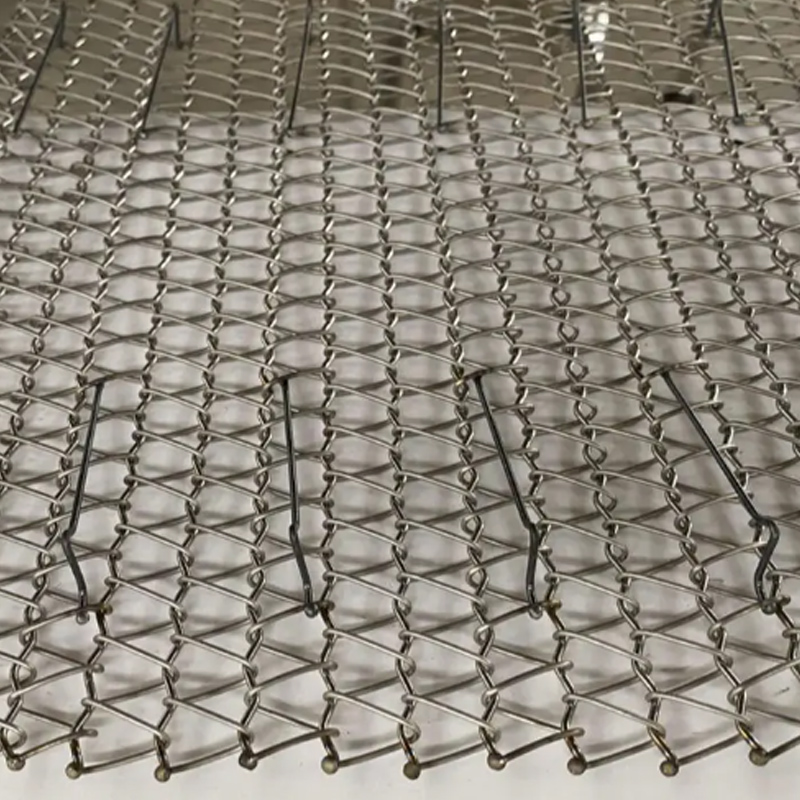
The PV cell drying oven mesh belt is a heat-resistant conveyor component specifi...
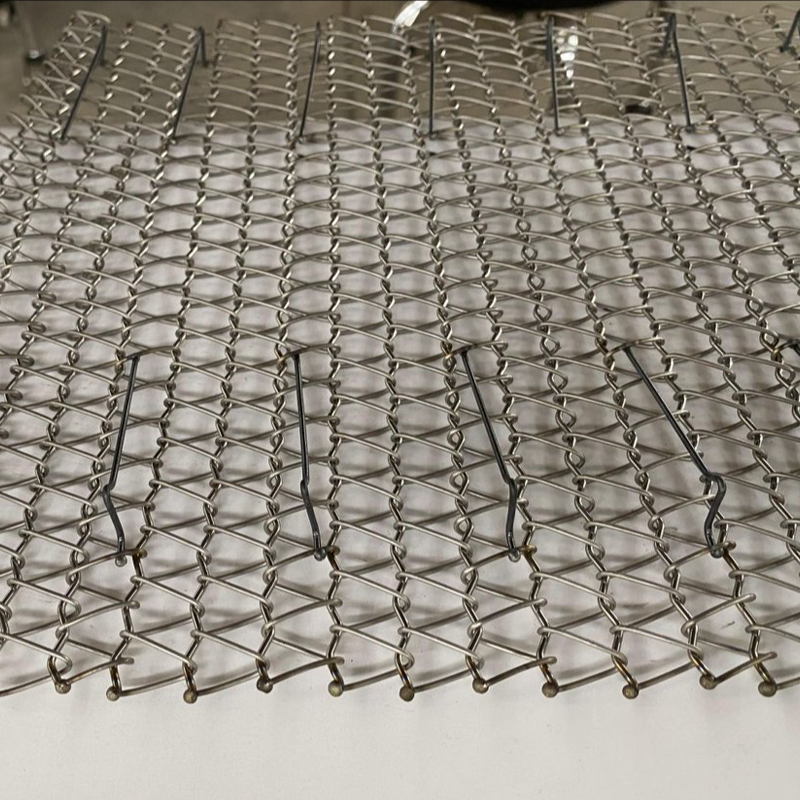
The photovoltaic cell sintering furnace mesh belt is a type of heat-resistant co...
Solar photovoltaic cell mesh belts are high-temperature conveyor belts designed for the photovoltaic industry, primarily used in the sintering, drying, and annealing stages of solar cell production. The primary function of this type of mesh belt is to stably convey unsintered cells within high-temperature furnaces, ensuring uniform heating and stable positioning of each cell during the heating process, thereby effectively preventing warping, deformation, or cracking. Due to the high temperature control and transmission precision requirements during the photovoltaic cell manufacturing process, solar photovoltaic cell mesh belts are designed and manufactured to high standards.
This type of mesh belt is typically made of stainless steel or high-temperature nickel-chromium alloy, offering excellent oxidation and corrosion resistance and maintaining structural stability in sustained high-temperature environments. The mesh belts often feature a balanced weave structure, with interlaced spiral and threaded wires, ensuring a smooth and evenly tensioned surface, ensuring smooth cell transport. This structure also reduces thermal stress caused by uneven temperature distribution within the furnace, improving the uniformity of sintering the photovoltaic cells and the adhesion of the conductive layer. Some production lines also perform precision polishing or anti-stick treatment on the mesh belt surface to prevent micro-sticking or scratching between the cells and the mesh belt.
As China Solar Photovoltaic Cell Mesh Belt Manufacturers and Photovoltaic Panel Pyrolysis Furnace Mesh Belt Suppliers,
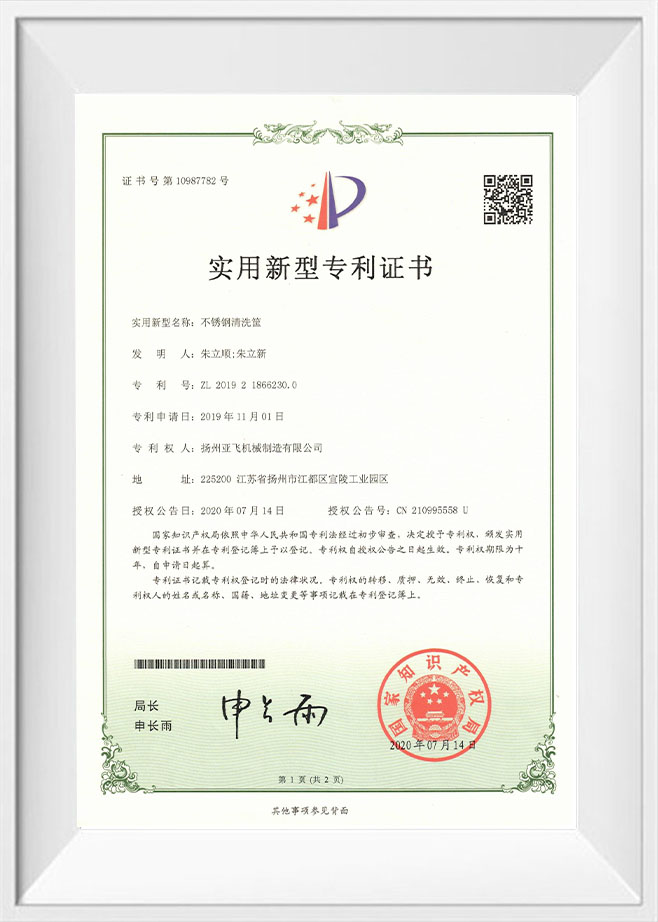
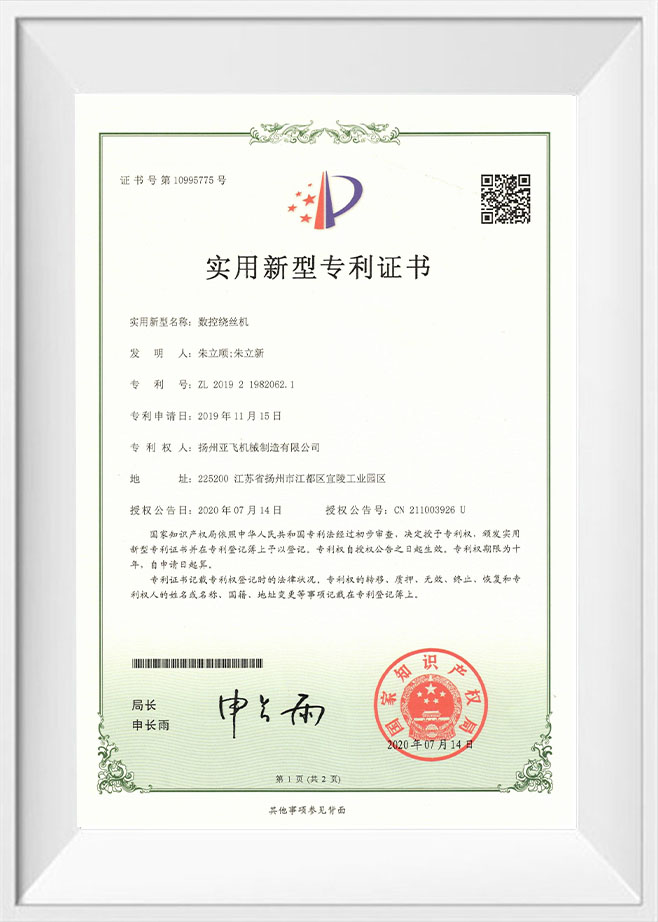
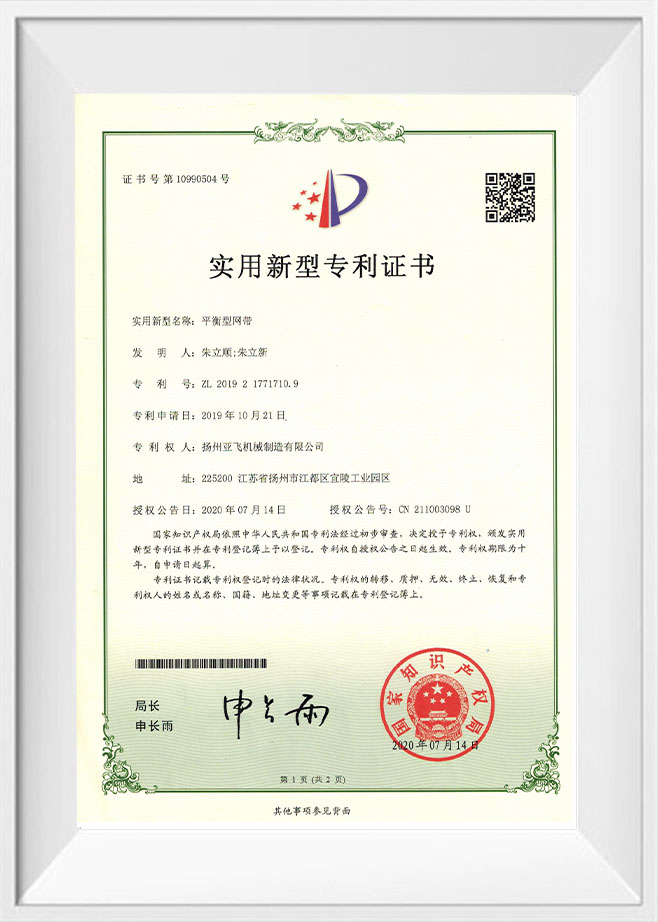
Yangzhou Yafei Machinery Manufacturing Co., Ltd. is a private scientific and technological enterprise in Jiangsu Province, formerly known as Yangzhou Yafei Metal Mesh Belt Factory, located in Yiling Industrial Park in the east of Yangzhou, with R&D, production and processing, office buildings, etc. With independent research and development of scientific and technological projects and equipment processing and manufacturing capabilities.
At present, the company is mainly engaged in: stainless steel mesh belt, conveyor mesh belt, metal mesh belt, stainless steel conveyor belt and related technology research and development, application and promotion.
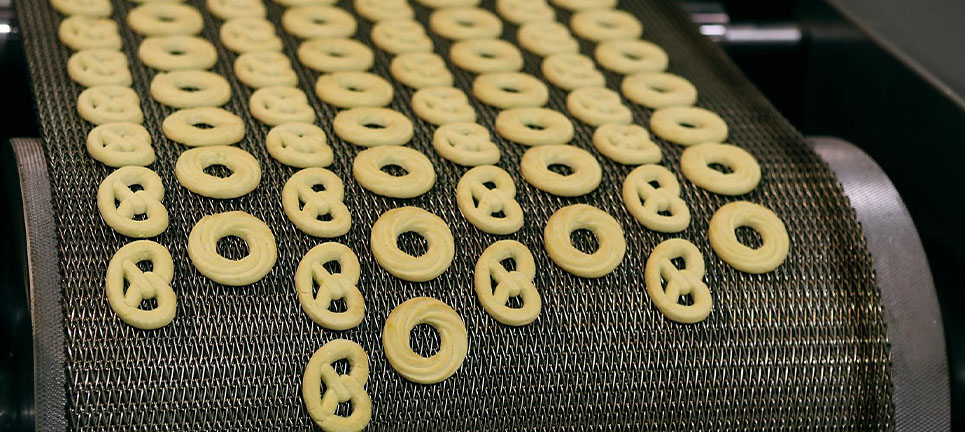
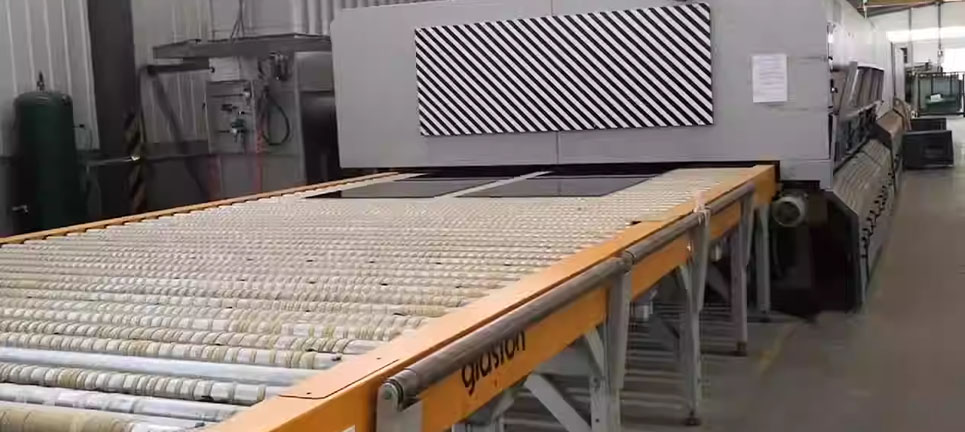
Metal mesh belts have been used in beer and beverage, food, wood industry, glass, chemical industry, pharmacy, cleaning and spraying, powder metallurgy, new energy, heat treatment, industrial kiln, general conveying machinery and other industries.
Conveying machinery includes: net belt conveyor, hoist, flat top chain conveyor belt, roller conveyor, chain plate conveyor, etc. Widely used in home appliance engineering, automobile engineering, dairy beverage industry, brewing and water treatment and other fields.
A conveyor mesh belt rarely announces its own failure. It distorts, cracks, or begins tracking to one side, and a continuous furnace or production line stops the moment it does. That makes belt selection more than a spare-part purchase; it is a decision about uptime, product quality, and operating cost. The right conv...
READ MOREWhen a hardening furnace mesh belt fails, it usually does it without warning. One shift it is carrying bearing races through the high-temperature zone; the next, a torn edge catches on the return track and the whole line stops. Most of these failures were decided months earlier, when the belt specification was written...
READ MOREA continuous brazing line stops because the mesh belt has drifted to one side, the edge wires are broken, and the stainless steel parts grouping together on the belt are no longer aligned. It is a familiar scenario for maintenance teams: the furnace itself is running correctly, but the belt has become the bottleneck. ...
READ MOREThe Solar Photovoltaic Cell Mesh Belt is a core conveying component in photovoltaic manufacturing systems, specifically designed for high temperature processes such as sintering, drying, and annealing of solar cells. In modern photovoltaic production lines, material stability and thermal uniformity are essential, and the Solar Photovoltaic Cell Mesh Belt provides a continuous and controlled transport foundation that allows cells to move smoothly through furnace systems without displacement or structural distortion.
During photovoltaic cell production, each cell must maintain precise alignment while passing through multiple thermal zones. The Solar Photovoltaic Cell Mesh Belt ensures that unsintered or semi processed cells remain evenly distributed, avoiding stacking pressure or surface contact instability. This reduces the risk of deformation, cracking, or uneven heating, which are common challenges in high temperature photovoltaic processing environments.
The structural design of the Solar Photovoltaic Cell Mesh Belt is based on a balanced weave configuration. Interlocked spiral wires and transverse connecting wires form a stable mesh surface that distributes mechanical tension evenly across the belt. This design improves conveying accuracy and reduces thermal stress accumulation caused by uneven furnace heating conditions.
Solar Photovoltaic Cell Mesh Belt Manufacturers emphasize precision engineering at every production stage to ensure that the belt maintains dimensional stability under continuous thermal exposure. This is especially important in photovoltaic cell manufacturing systems where even minor deviations can affect electrical performance and conversion efficiency.
In photovoltaic production systems, Solar Photovoltaic Cell Mesh Belt can be categorized based on operational function and furnace integration requirements. Each classification supports a different stage of photovoltaic manufacturing, ensuring optimized thermal processing and material stability across continuous production environments where precision and consistency are critical. The classification not only reflects functional differences but also represents how the Solar Photovoltaic Cell Mesh Belt adapts to varying thermal loads, mechanical stress levels, and process control requirements within photovoltaic cell fabrication lines.
These functional categories are widely applied in modern solar energy manufacturing systems where furnace stability, uniform heating distribution, and material protection are essential. By dividing the Solar Photovoltaic Cell Mesh Belt into specialized types, manufacturers and production engineers can better align conveyor performance with process stages, improving both operational efficiency and product quality consistency throughout the photovoltaic manufacturing cycle.
This type is designed specifically for continuous furnace sintering environments where photovoltaic cells undergo structural stabilization under high temperature conditions. During this stage, raw or semi processed photovoltaic materials are transformed into stable functional structures through controlled thermal exposure, making conveyor stability extremely important.
The High temperature sintering Solar Photovoltaic Cell Mesh Belt ensures stable positioning of photovoltaic cells throughout the entire furnace path, preventing displacement, overlap, or uneven spacing during high heat exposure. It also maintains controlled heat transfer consistency across the belt surface, allowing each cell to receive uniform thermal energy distribution.
In addition, this type of Solar Photovoltaic Cell Mesh Belt is engineered to withstand long duration thermal stress cycles, ensuring that repeated heating and cooling processes do not compromise structural integrity. This makes it particularly suitable for large scale photovoltaic production lines where continuous operation and consistent product output are required.
The Annealing process Solar Photovoltaic Cell Mesh Belt is used in thermal treatment stages where photovoltaic cells undergo crystal structure adjustment and internal stress release. This stage is critical for optimizing electrical performance and improving structural uniformity of photovoltaic materials.
During annealing, precise temperature control and stable conveying speed are essential. This type of Solar Photovoltaic Cell Mesh Belt supports smooth transition between heating and cooling zones, ensuring that photovoltaic cells maintain structural consistency while gradually adapting to temperature changes.
It also helps reduce internal stress accumulation caused by rapid temperature variation, which can otherwise lead to micro cracking or performance instability. The belt’s balanced mesh structure ensures that each photovoltaic cell remains evenly supported, maintaining uniform exposure throughout the annealing cycle.
The Drying line Solar Photovoltaic Cell Mesh Belt is applied in moisture removal systems where photovoltaic cells require controlled drying before or after thermal processing stages. This step is essential for ensuring surface cleanliness and preparing materials for subsequent high temperature treatments.
This type of Solar Photovoltaic Cell Mesh Belt is designed for stable conveying under low to medium temperature conditions, allowing photovoltaic cells to move smoothly through drying tunnels without vibration or surface disturbance. It ensures that moisture is evenly removed across all materials, preventing uneven drying effects that could impact later processing quality.
The mesh structure also supports efficient airflow penetration, which enhances drying efficiency and improves consistency across production batches. By maintaining stable surface contact conditions, this belt type helps preserve the integrity of photovoltaic cell coatings and functional layers.
Some photovoltaic production systems require advanced surface engineering treatments to improve material compatibility and reduce contact resistance. The Precision surface treated Solar Photovoltaic Cell Mesh Belt is developed to meet these requirements by reducing friction and minimizing direct mechanical interaction between the belt surface and photovoltaic cells.
This type of Solar Photovoltaic Cell Mesh Belt often undergoes surface polishing or anti adhesion treatment, which helps prevent micro scratches and reduces the risk of surface contamination during continuous operation. It is especially important in high precision photovoltaic manufacturing environments where surface defects can significantly affect electrical performance.
In addition, the treated surface improves release performance, allowing photovoltaic cells to detach smoothly during transfer processes. This enhances production stability and reduces maintenance frequency caused by material buildup or surface wear.
These classifications demonstrate how Solar Photovoltaic Cell Mesh Belt adapts to different photovoltaic manufacturing stages while maintaining stable conveying behavior and thermal resistance. Each type is engineered to match specific process conditions, ensuring that photovoltaic production systems achieve consistent performance, controlled thermal processing, and reliable material handling across all stages of industrial solar cell manufacturing.
The Solar Photovoltaic Cell Mesh Belt is engineered using high performance metallic materials such as stainless steel and nickel chromium alloy. These materials provide strong resistance to oxidation, thermal fatigue, and structural deformation under continuous high temperature exposure.
In photovoltaic furnace environments, temperature fluctuations occur across multiple zones. The Solar Photovoltaic Cell Mesh Belt maintains structural consistency even under repeated heating and cooling cycles. This ensures uninterrupted production flow and stable photovoltaic cell alignment throughout the thermal process.
The mesh structure allows heat to circulate evenly through the belt surface. This reduces localized thermal accumulation and ensures that photovoltaic cells receive uniform heat exposure. Uniform heating is essential for maintaining electrical performance consistency in solar cell production.
Another critical advantage is mechanical stability under load conditions. The Solar Photovoltaic Cell Mesh Belt distributes weight evenly, preventing stress concentration that could lead to deformation or misalignment. This makes it suitable for long duration industrial operation in photovoltaic manufacturing systems.
The performance of Solar Photovoltaic Cell Mesh Belt is closely linked to furnace efficiency and photovoltaic cell quality consistency in large scale manufacturing environments. Its balanced weave structure provides controlled tension distribution across the entire belt surface, which stabilizes the movement path of photovoltaic cells during continuous processing. This structural stability is especially important in long furnace systems where multiple thermal zones operate under different temperature conditions, requiring precise material guidance and consistent conveying behavior throughout the production cycle.
The Solar Photovoltaic Cell Mesh Belt helps reduce mechanical fluctuation caused by high temperature expansion and continuous operational stress. By maintaining uniform force distribution, it ensures that photovoltaic cells remain properly aligned even during long duration processing, which directly contributes to improved production reliability and reduced defect rates in solar cell manufacturing systems.
Key functional advantages include:
Uniform thermal exposure support
Solar Photovoltaic Cell Mesh Belt ensures each photovoltaic cell receives consistent heating conditions across furnace zones, reducing performance variation between batches. This uniformity is achieved through the belt’s open mesh structure, which allows heat to circulate evenly around each cell surface while maintaining stable conveying speed. As a result, thermal gradients are minimized, and photovoltaic cells experience controlled temperature exposure during sintering, annealing, and drying processes. This improves overall electrical consistency and structural uniformity in finished solar products.
Reduced material displacement risk
The stable mesh surface minimizes vibration impact, preventing photovoltaic cells from shifting during high temperature movement inside furnace systems. In continuous production environments, even minor movement deviations can lead to misalignment or overlapping, which may affect product quality. The Solar Photovoltaic Cell Mesh Belt addresses this issue by maintaining consistent mechanical tension and stable support conditions. This ensures that each photovoltaic cell remains securely positioned throughout the entire thermal processing cycle, even under long duration operational stress.
Improved surface protection
Precision surface treatment reduces direct friction contact, protecting delicate photovoltaic cell surfaces from micro damage during conveying operations. Many photovoltaic cells contain sensitive conductive layers and coated surfaces that require careful handling. The treated Solar Photovoltaic Cell Mesh Belt surface reduces abrasion and minimizes the risk of scratches or particle adhesion. This helps maintain surface integrity, improves yield consistency, and reduces rework rates in high precision photovoltaic manufacturing environments.
Continuous production compatibility
The belt is designed for long term operation in automated production systems, supporting uninterrupted photovoltaic manufacturing cycles with stable performance over extended periods. Its structural durability allows it to operate continuously under high temperature conditions without deformation or loss of alignment. This makes it suitable for large scale photovoltaic production lines where production continuity is essential for maintaining output efficiency and process stability. The Solar Photovoltaic Cell Mesh Belt ensures that material flow remains uninterrupted across all furnace stages.
These functions make Solar Photovoltaic Cell Mesh Belt a foundational component in photovoltaic thermal processing lines, especially in high precision energy conversion material production systems where stability, uniformity, and continuous operation directly influence final product performance and manufacturing efficiency.
Industrial integration model of Solar Photovoltaic Cell Mesh Belt in photovoltaic production ecosystems:
The Solar Photovoltaic Cell Mesh Belt does not operate as a standalone component. It is integrated into complete photovoltaic production ecosystems that combine furnace systems, automated conveying mechanisms, and thermal control units working in coordinated synchronization. This integrated structure ensures that photovoltaic manufacturing processes maintain continuous material flow, stable thermal conditions, and precise process timing across all production stages.Within modern photovoltaic manufacturing environments, the Solar Photovoltaic Cell Mesh Belt functions as a central conveying medium that connects multiple processing stages. Its role extends beyond simple transportation, acting as a stabilizing interface between thermal systems and material handling systems to ensure consistent production output quality.
Solar Photovoltaic Cell Mesh Belt is synchronized with tunnel furnace structures to maintain stable material flow through multiple thermal zones. This ensures that photovoltaic cells follow a controlled heating and cooling trajectory that matches the designed thermal profile of the production system. The belt movement speed is carefully coordinated with furnace temperature gradients to ensure uniform exposure time in each processing zone, reducing thermal imbalance and improving structural consistency of photovoltaic cells.
The belt maintains consistent spacing between photovoltaic cells, preventing overlapping or uneven distribution during continuous movement. This spacing control is essential for ensuring that each cell receives uniform heat exposure and avoids contact interference with adjacent cells.By stabilizing material positioning, the Solar Photovoltaic Cell Mesh Belt reduces the risk of mechanical collision and surface damage. It also improves airflow distribution within the furnace environment, allowing more efficient heat transfer and consistent processing conditions across all materials being conveyed.
The movement speed of Solar Photovoltaic Cell Mesh Belt is coordinated with heating intensity to ensure uniform exposure time for each photovoltaic cell. This synchronization between mechanical conveying and thermal energy input is critical in maintaining process stability across multiple furnace zones.Each thermal zone within a photovoltaic production system may operate at different temperature levels, and the belt ensures that photovoltaic cells transition smoothly between these zones without sudden thermal shock. This controlled movement supports stable material transformation and improves consistency in final photovoltaic cell performance.
It integrates with automated loading and unloading systems, supporting high efficiency photovoltaic production lines where continuous material flow and minimal manual intervention are required. The Solar Photovoltaic Cell Mesh Belt works seamlessly with robotic handling units, conveyor feeders, and synchronized control systems.This compatibility allows production lines to operate with higher stability and reduced interruption risk. It also enables precise coordination between upstream and downstream processes, ensuring that photovoltaic cells are consistently delivered to each processing stage at the correct timing and orientation.
In this integrated environment, Solar Photovoltaic Cell Mesh Belt acts as the structural backbone of continuous photovoltaic thermal processing, supporting stable material movement, synchronized furnace operation, and consistent product quality across the entire manufacturing system.
It is used to transport photovoltaic cells through high temperature processes such as sintering, drying, and annealing while maintaining stable positioning and thermal uniformity throughout the entire production cycle. In photovoltaic manufacturing systems, the Solar Photovoltaic Cell Mesh Belt acts as a continuous conveying medium that ensures each cell moves steadily through different furnace zones without displacement or surface damage. This stable transport function is essential for achieving consistent structural formation and uniform electrical performance in solar cell production. It also helps synchronize material flow with thermal processing speed, ensuring that photovoltaic cells receive accurate and controlled heat exposure at each stage of manufacturing.
It is made from stainless steel or nickel chromium alloy materials that provide strong resistance to heat, oxidation, and long term thermal deformation under continuous high temperature conditions. These materials allow the Solar Photovoltaic Cell Mesh Belt to maintain structural integrity even when exposed to extreme furnace environments over extended production cycles. In addition, its thermal stability ensures that expansion and contraction effects are minimized, which helps maintain consistent alignment and conveying accuracy. This makes it highly suitable for demanding furnace applications where reliability, durability, and temperature resistance are critical for uninterrupted industrial operation.
The balanced weave structure ensures even tension distribution, stable conveying paths, and reduced thermal stress during continuous furnace operation. This interwoven design allows the Solar Photovoltaic Cell Mesh Belt to support photovoltaic cells evenly across its surface, preventing localized stress concentration that could lead to deformation or misalignment. It also enhances airflow and heat circulation through the belt structure, improving thermal uniformity during processing. As a result, photovoltaic cells experience more consistent heating conditions, which contributes to improved product stability, reduced defect rates, and higher overall manufacturing efficiency.
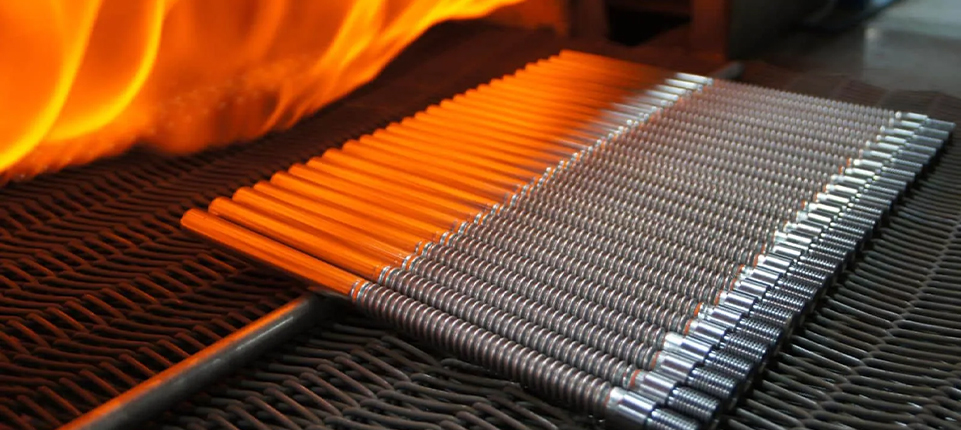
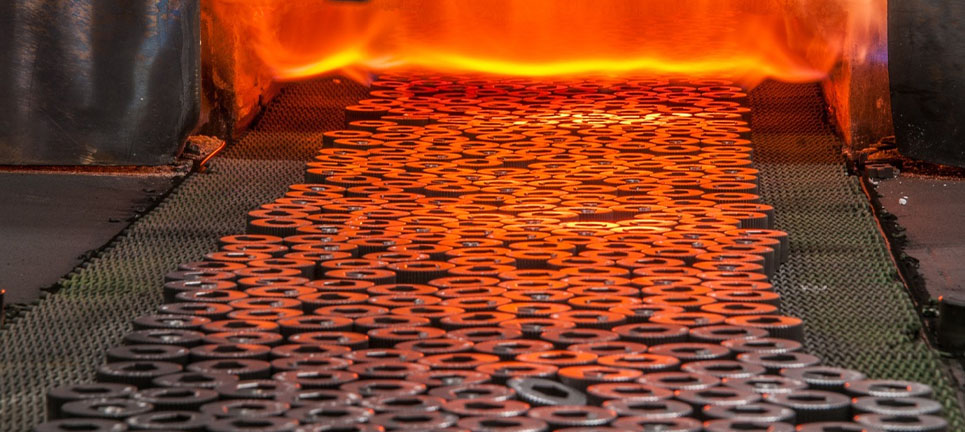
It is used in photovoltaic manufacturing, heat treatment furnaces, powder metallurgy, chemical processing, glass production, and industrial drying systems. In photovoltaic production, it supports sintering, drying, and annealing processes for solar cells. In heat treatment industries, it enables continuous thermal processing of metal and composite materials. Powder metallurgy systems rely on it for stable material sintering, while chemical processing lines use it for controlled conveying under thermal or reactive environments. It is also widely applied in glass and ceramic production as well as industrial drying systems where stable conveying and temperature resistance are required for consistent product quality.
The company designs and manufactures metal mesh belts and conveying systems, providing industrial solutions for thermal processing and automated conveying applications. As China Solar Photovoltaic Cell Mesh Belt Manufacturers and Photovoltaic Panel Pyrolysis Furnace Mesh Belt Suppliers, Yangzhou Yafei Machinery Manufacturing Co., Ltd. integrates research, engineering development, and production capabilities to support complex industrial requirements. The company focuses on delivering durable and precision engineered mesh belt systems that can operate reliably in high temperature furnace environments, helping industries maintain stable production flow and consistent process performance across large scale manufacturing operations.
Get A Free Consultation Now
Get A Customized Solution
The company adheres to the concept of creating value for customers and prosperity for society, aiming to build a reliable mesh belt brand and establish the century-old Yafei brand.
CONTACT INFORMATION

Yiling Industrial Park, Jiangdu District, Yangzhou City, Jiangsu Province, China

+86 13852191798
PRODUCT CATEGORIES
QUICK LINKS
MOBILE
 Custom Photovoltaic Panel Pyrolysis Furnace Mesh Belt Manufacturers