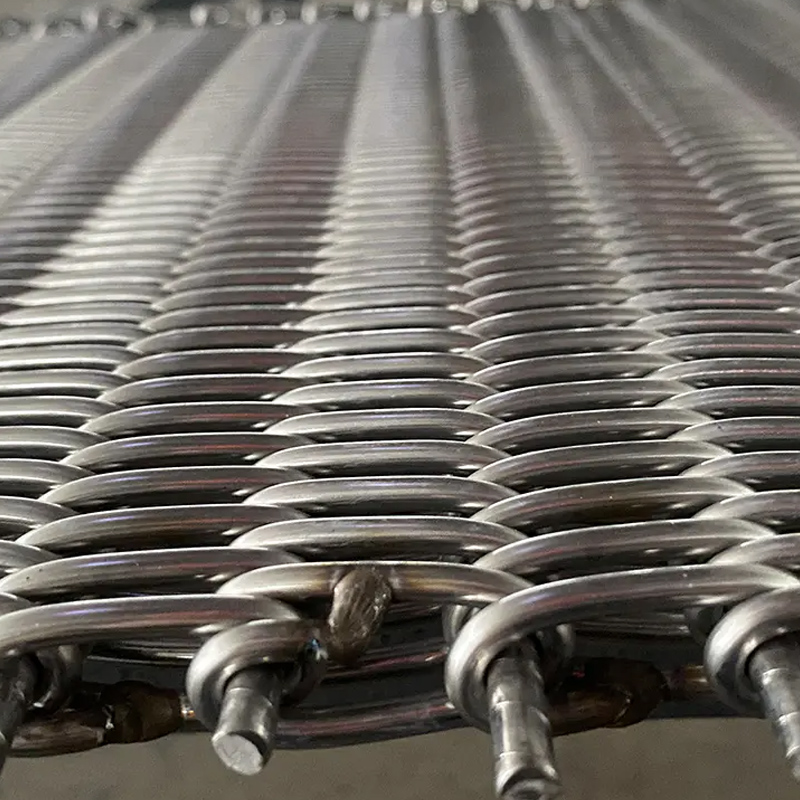
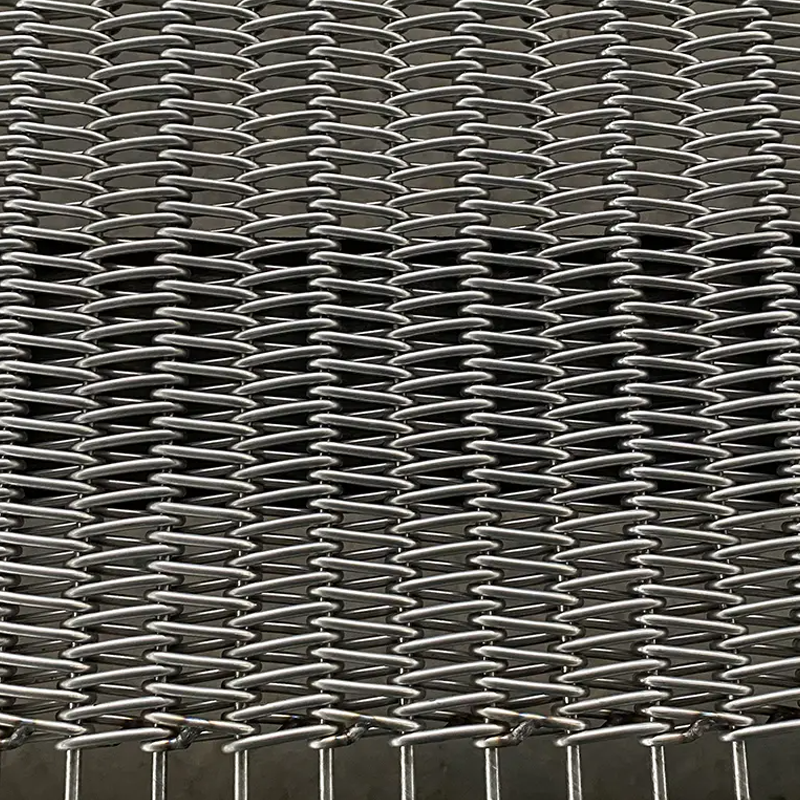
When a hardening furnace mesh belt fails, it usually does it without warning. One shift it is carrying bearing races through the high-temperature zone; the next, a torn edge catches on the return track and the whole line stops. Most of these failures were decided months earlier, when the belt specification was written. The alloy, the weave, the edge construction, and the wire diameter determine whether the belt lasts two years or two months. That is why the purchase decision belongs in the engineering office, not just the purchasing department.
What a Hardening Furnace Mesh Belt Has to Endure
A hardening furnace mesh belt is a moving fixture, not a simple conveyor. It works continuously at temperatures between 800 and 950 °C, carries parts through heating zones, and often runs through a quench section before returning through a cooling area. The belt must hold its geometry under several tons of load, resist oxidation and thermal fatigue, and survive occasional contact with quench oil, water, or salt.
The most severe stress comes from thermal cycling. Each time the belt enters the furnace, its temperature rises by several hundred degrees; each time it passes through the quench zone, it cools sharply. This cycle creates expansion and contraction that work on the wire intersections, where cracks eventually start. A belt that works well in an annealing furnace, where temperature changes are slower, may fail quickly in a hardening line because of this repeated shock.
Core Selection Criteria You Cannot Ignore
Three aspects dominate the decision: alloy grade, weave geometry, and edge construction. Each interacts with the furnace temperature, the part weight, and the tracking system.
Typical selection considerations for hardening furnace mesh belts
| Criterion |
What it controls |
Typical options |
Why it matters |
| Alloy grade |
Oxidation resistance, hot strength |
310S, 314, RA330, nickel-based alloys |
Determines the maximum usable temperature and creep resistance |
| Weave pattern |
Surface area, load support, airflow |
Balanced weave, double-balance, chain-link |
Affects part stability, heating uniformity, and mesh openness |
| Edge reinforcement |
Resistance to tracking damage |
Single loop, U-shaped selvage, welded edge |
Prevents early edge failure from misalignment |
| Wire diameter |
Load capacity, thermal mass |
2.0–5.0 mm typical |
Thicker wire carries more load but adds weight and heat retention |
Do not assume that the alloy with the highest temperature rating is the best choice. A 314 belt can run near 1100 °C, but its higher nickel content makes it expensive and heavier. If your hardening furnace stays between 850 and 900 °C, a 310S belt with the correct weave often gives the best balance of life and cost.
Reading the Data Sheet Like an Engineer
The supplier's data sheet should include more than the belt width and wire diameter. Four numbers tell you most of what you need: maximum continuous operating temperature, creep elongation at your running temperature, unit weight per square meter, and minimum radius of the sprocket or drum. If the manufacturer cannot provide creep data, treat that as a warning.
Creep elongation is especially important in hardening furnaces. When the belt spends months at high temperature, the alloy slowly stretches. Most hardening mesh belts are specified with a creep rate below 1% after 10,000 hours at 900 °C. Ask for that number in writing. A belt with a higher creep rate may need re-tensioning every few weeks, leading to downtime and uneven tracking.
Why Belts Break Early and How to Prevent It
When a hardening belt fails before its expected life, one of four causes is usually responsible:
- Thermal fatigue — repeated heating and quenching causes cracks at wire crossover points.
- Creep elongation — running too close to the alloy's temperature limit makes the belt stretch and become loose.
- Abrasive wear — scale and part edges grind against the mesh and reduce the wire cross-section.
- Tracking damage — a misaligned sprocket or carryover build-up crushes the belt edge or bends the spirals.
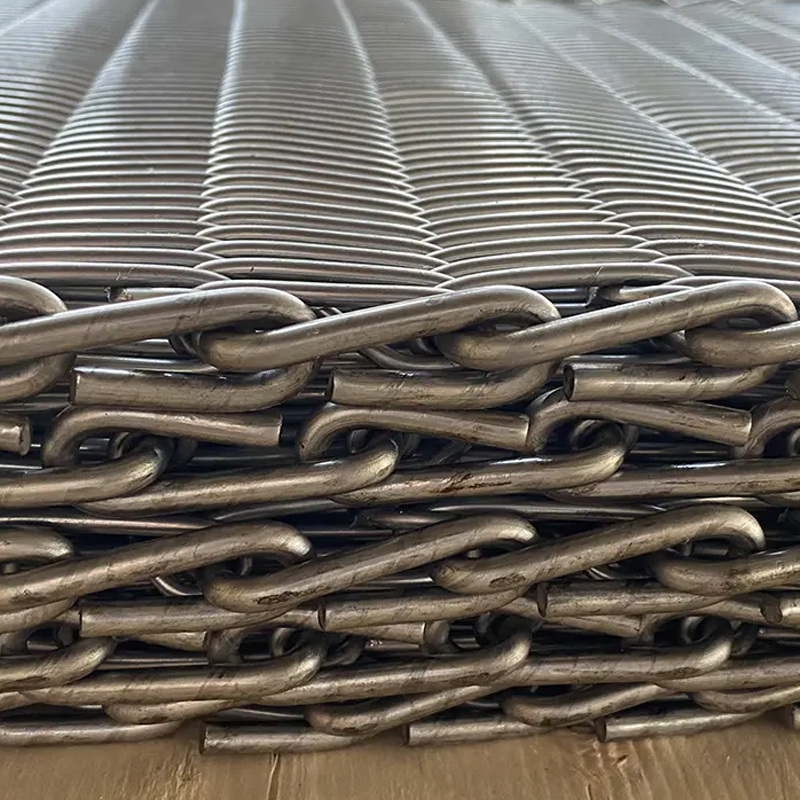
Prevention begins with correct tracking during installation. The furnace chain and sprockets should be aligned within 1 mm of the centerline across the width of the belt. Edge reinforcement is the second line of defense. A U-shaped selvage, for example, distributes the tracking force more evenly than a simple loop edge and is a common choice for hardening furnaces where slight misalignment cannot be eliminated completely.
Matching the Belt to Your Hardening Line
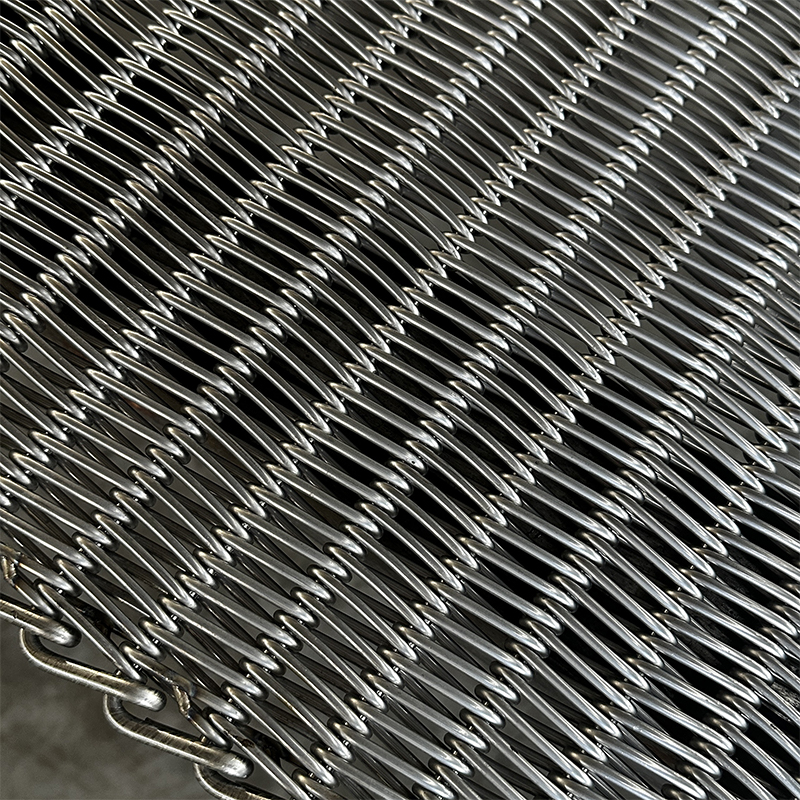
The same furnace can process very different workpieces, and the belt should be matched to what you actually run. For bearing races and rings, the belt carries dense, concentrated loads. A tight weave with a larger wire diameter keeps the carrying surface flat and prevents parts from sagging into the gaps between cross rods.
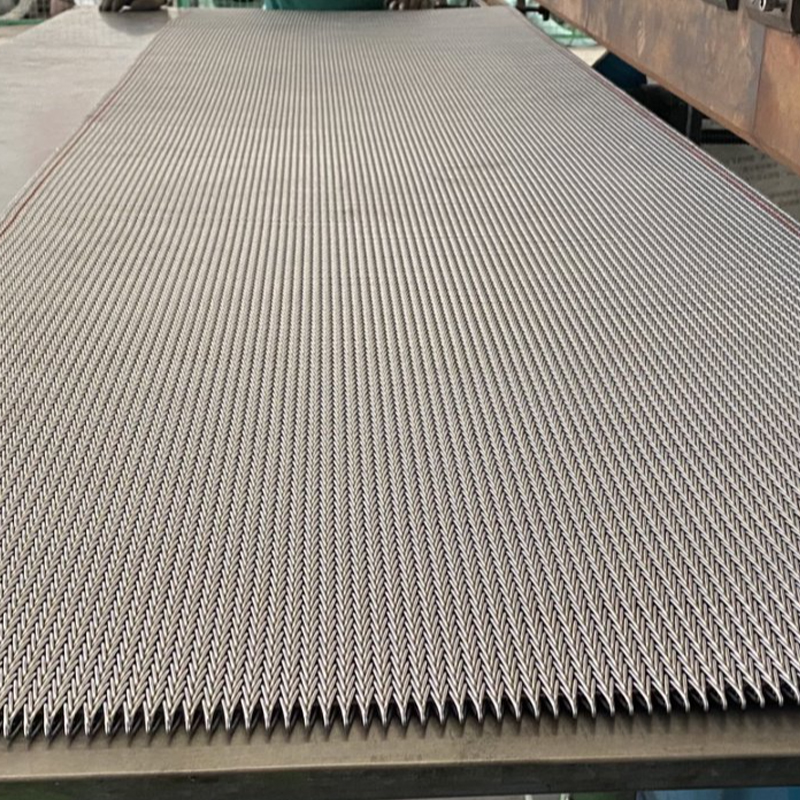 Bearing Quenching Furnace Mesh Belt with Tight WeaveThis belt is built to carry dense, concentrated loads from bearing races and rings. Its tight weave and larger wire diameter keep the surface flat, preventing parts from sagging into the gaps during quenching.View Product →
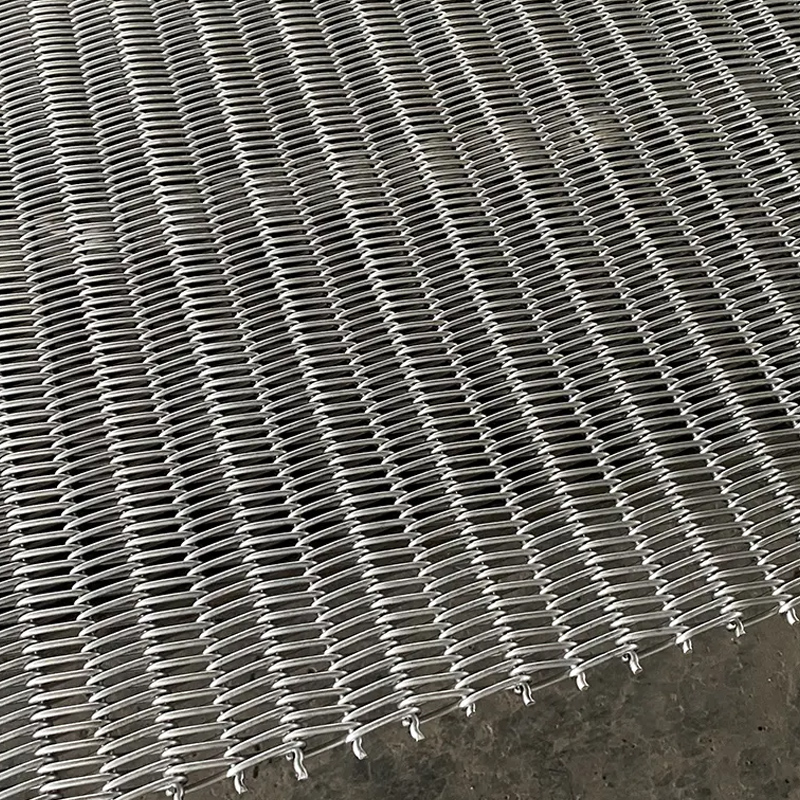
Fasteners are small and easily lost through open mesh. For nuts, bolts, and screws, a close-mesh construction is the practical answer; it keeps parts on the surface while still allowing heat and quench media to reach them.
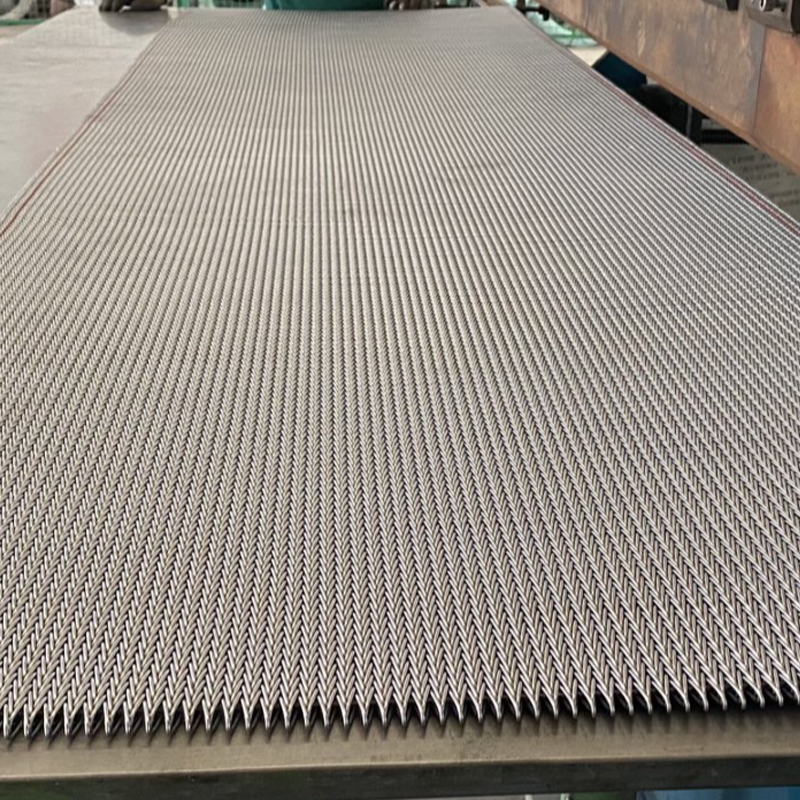 Close-Mesh Fastener Quenching Furnace Mesh BeltDesigned for nuts, bolts, and screws, this belt uses a close-mesh construction that keeps small fasteners on the surface while still allowing heat and quench media to reach them, reducing part loss.View Product →
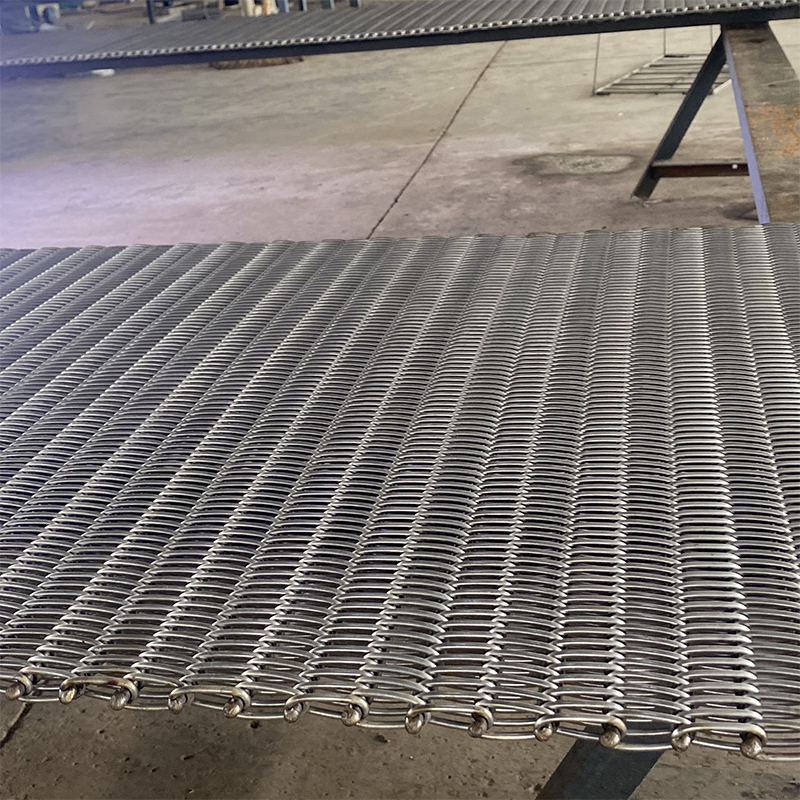
Springs and other flexible parts need uniform support along their entire length to avoid distortion during heating and quenching. A flat, stable carrying surface matters more than extreme heat resistance for this type of work, and the belt should have enough rigidity to keep the spring ends from dropping into the mesh.
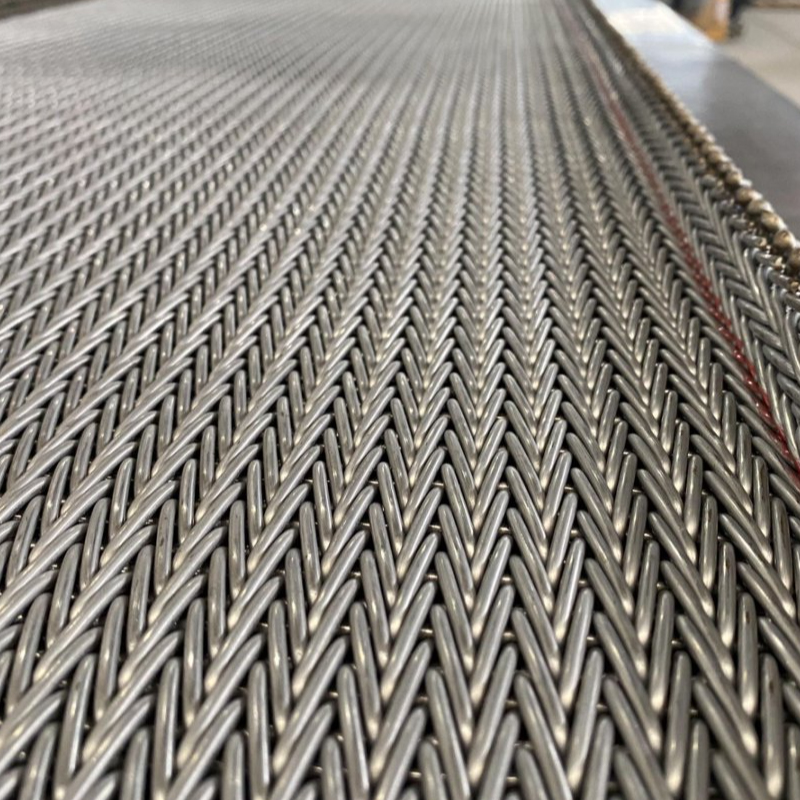 Rigid Spring Quenching Furnace Mesh Belt with Flat SurfaceThis belt provides uniform support along its full length, keeping flexible springs from distorting during heating and quenching. Its rigid, flat surface prevents spring ends from dropping into the mesh.View Product →
Practical Maintenance That Extends Belt Life
Even a well-specified belt will fail early if maintenance is neglected. Three habits make the biggest difference:
- Rotate the belt on a planned schedule to distribute wear across both edges.
- Clean carryover build-up from the mesh and sprockets regularly; hardened scale acts as an abrasive that grinds the wire.
- Adjust tension so the belt tracks smoothly through the furnace; excessive tension accelerates edge damage and creep.
Track belt elongation at each maintenance stop and write it down. A sudden jump in elongation is often the first sign of creep that will end as a crack. Catching it early lets you plan a replacement instead of reacting to an emergency breakdown.
Questions to Ask Before You Order
Before placing an order, ask the manufacturer for the exact alloy grade, the maximum recommended continuous operating temperature, and the expected creep rate at your running temperature. Ask how the edge is built and whether it can handle your furnace's tracking system. Ask for the unit weight — a belt that is much lighter than a comparable spec probably uses thinner wire or a cheaper alloy.
It also helps to describe your heat treatment application in detail — not just the furnace temperature, but the part geometry, load pattern, and quench method. And before finalizing the specification, review a guide to choosing the right heat treatment belt to see the questions other maintenance teams forget to ask.
The hardening furnace mesh belt is a consumable item, but it is not a commodity. When you treat it as an engineering specification — with real data on alloy, weave, edge, and creep — you extend belt life, improve part consistency, and keep the line moving. That is the difference between a belt that simply works and one that quietly costs you downtime every year.



 English
 русский
 عربى
عربى