A mesh belt that stretches permanently after six weeks of service. A belt that tracks sideways no matter how often you adjust the tensioners. A broken strand that scores the furnace chamber and forces an unscheduled shutdown. These failure modes are familiar to anyone running a continuous annealing furnace, and in most cases they trace back to one decision: the belt was specified by price rather than by operating conditions.
The annealing furnace mesh belt is the most maintenance-intensive component in a continuous annealing line, yet it is often the last item reviewed during a furnace project. The belt carries components through heating, soaking, and cooling zones, but it also absorbs the full thermal, mechanical, and atmospheric load of the process. Selecting the wrong belt does not simply add a replacement cost; it creates recurring downtime, scrapped parts, and a furnace that never reaches its rated output.
This article explains what determines belt performance in annealing service, how to compare construction options, and which maintenance practices extend belt life. The same considerations apply across other continuous heat treatment lines.
The Role of the Mesh Belt in a Continuous Annealing Furnace
A continuous annealing furnace works on a simple principle: parts move steadily through temperature zones while the furnace atmosphere protects their surfaces. The mesh belt is what makes that movement repeatable. If the belt speed varies, dwell time varies, and so does the metallurgical result. If the belt surface is not stable, parts can shift, overlap, or fall out of position, causing rejects and jams.
The belt must also survive the temperature gradient. In a typical annealing line, the belt enters through a heated zone and exits into a cooling section. In many designs the belt leaves the furnace and returns outside the chamber, so the same section is heated and cooled on every cycle. That repeated thermal cycling creates expansion and contraction stresses that act on the wire material, the weave structure, and the edge connections.
For this reason, the belt should be treated as a thermal component, not just a transport component. Its alloy must be selected for the maximum belt temperature rather than the average furnace temperature, and its weave must resist distortion when furnace atmosphere flows through the chamber. The practical consequence is that the belt specification belongs in the same discussion as the heating system and the atmosphere control, not after them.
How to Evaluate Annealing Furnace Mesh Belt Materials
The alloy is the first decision because it sets the temperature ceiling and the oxidation behavior. Heat-resistant stainless steels are the standard starting point. For annealing service at belt temperatures up to roughly 1050°C, chromium-nickel grades such as 310S offer a good balance of strength and oxidation resistance. Where the belt sees higher temperatures or harsher atmosphere conditions, nickel-based alloys extend the ceiling but increase cost.
The comparison is not only about maximum temperature. Creep strength matters just as much. A belt operating at 950°C under a heavy load will slowly elongate if the alloy lacks sufficient creep resistance. That elongation changes the pitch length, and at a certain point the belt no longer meshes correctly with the drive sprockets or runs straight on the return track.
Atmosphere compatibility is the second major factor. Annealing of stainless steel parts is often performed in a reducing atmosphere such as hydrogen or dissociated ammonia. These atmospheres prevent scale on the parts, but they also affect the belt alloy. Oxidizing conditions at high temperature cause scaling on the belt wire itself, which gradually reduces the cross-section and leads to breakage. The belt material must therefore be selected with the furnace atmosphere in mind, not just the temperature.
For most lines, the starting point is a heat-resistant grade selected for the maximum belt temperature with an allowance for hot spots, combined with a weave density matched to the part size and load. Buyers who want a structured approach can apply the same heat treatment mesh belt selection criteria used for other continuous furnace belts.
Belt Construction: Weave, Edge, and Pitch
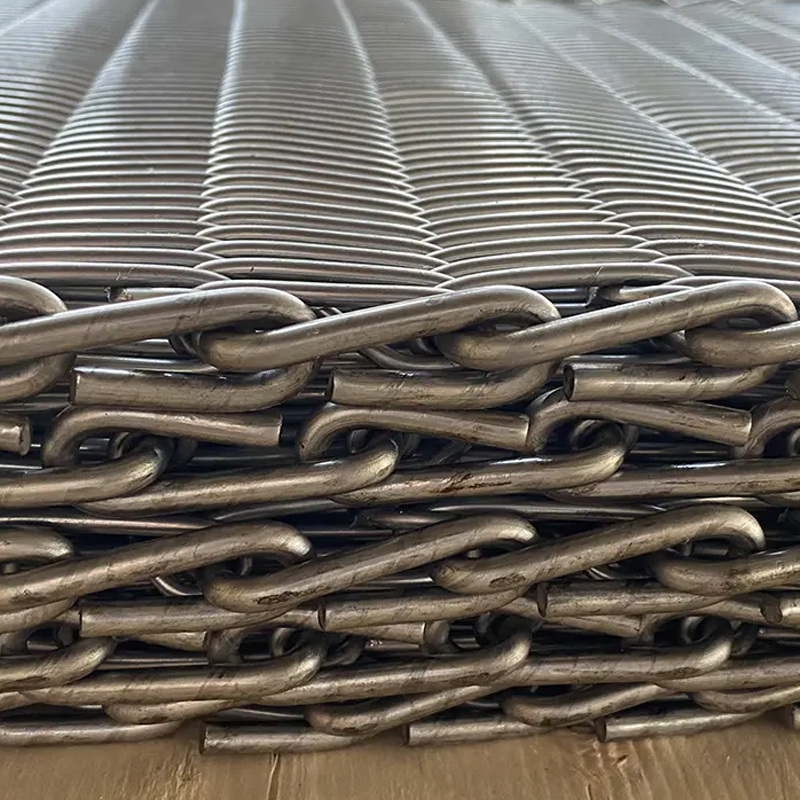
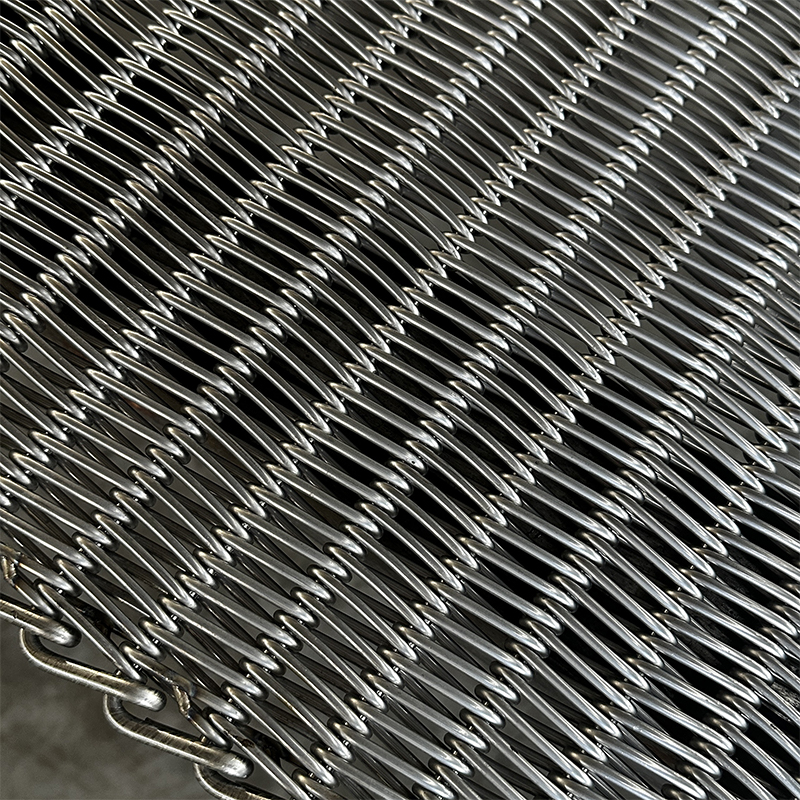
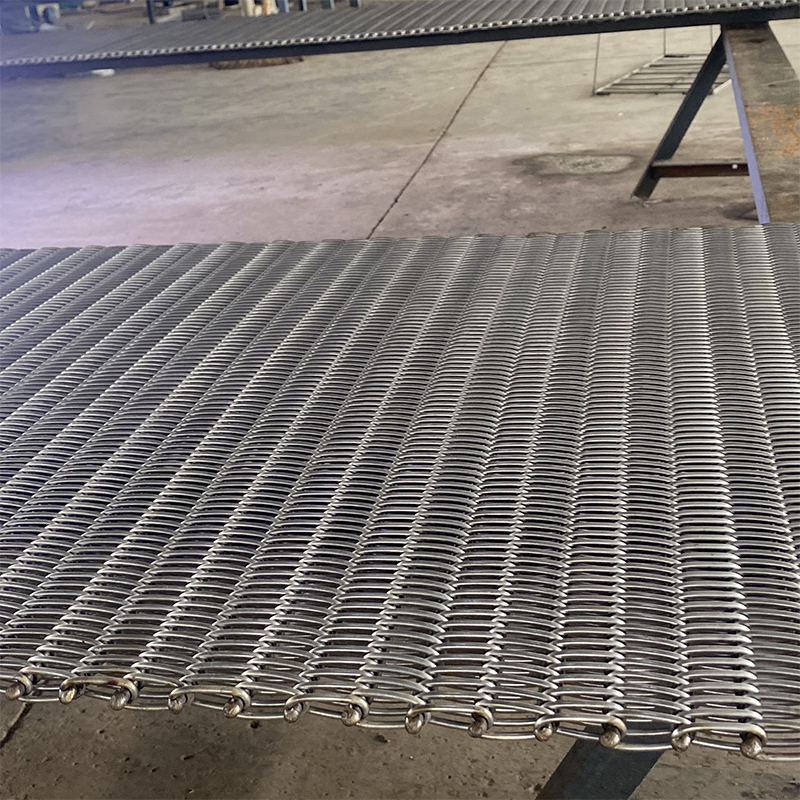
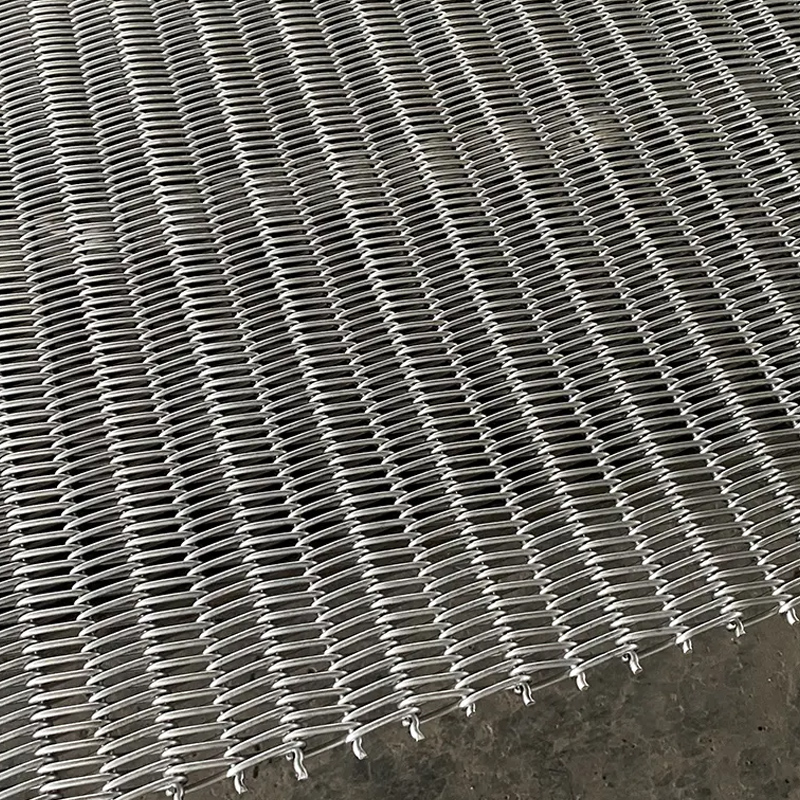
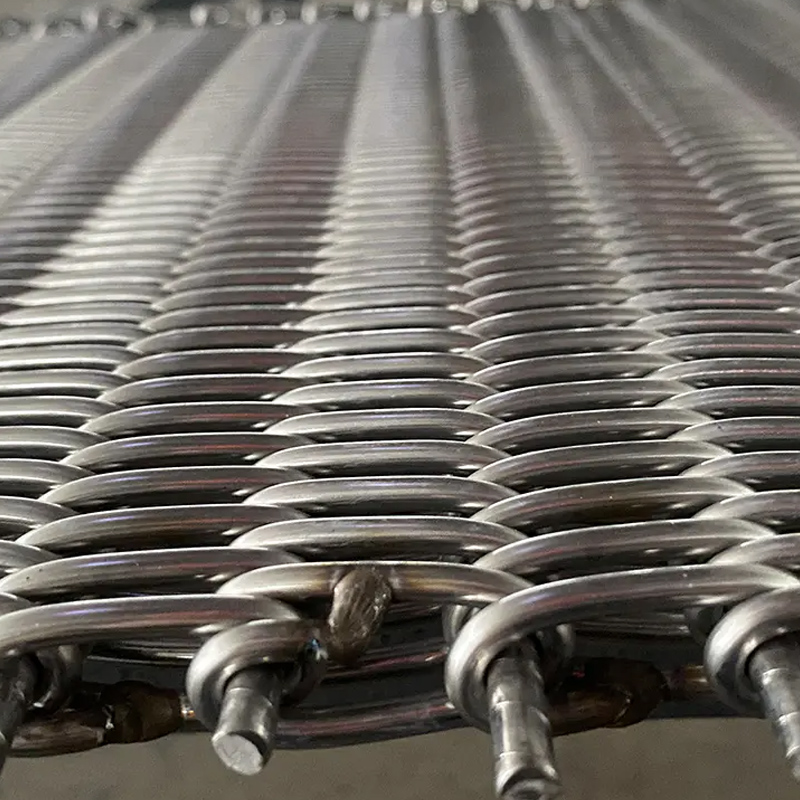
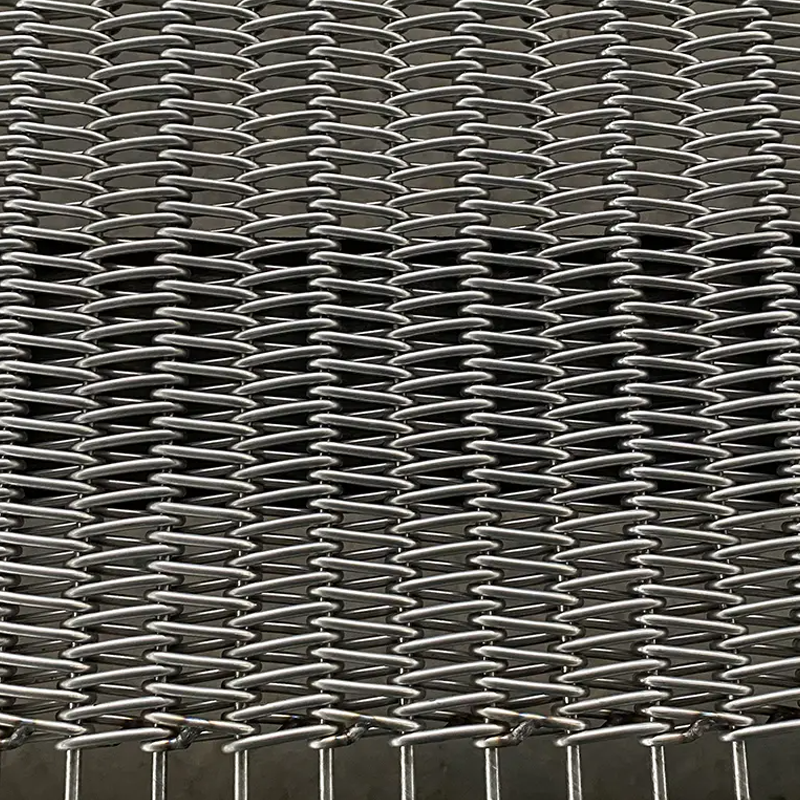
The weave determines how the belt handles load distribution, airflow, and tracking. For annealing furnaces, the most common constructions are balanced weave and compound weave, both of which provide good flatness and stability. The choice between them depends mainly on part weight and the required surface openness. Heavier parts require a denser or multi-layer construction to avoid sagging between the support rails.
The edge is the most vulnerable zone of the belt. Welded edges, where the cut ends of the wire are welded into a solid edge, provide good structural integrity for most annealing applications. Reverse knuckle edges are also used when belt flexibility matters. In either case, the edge is a wear area that benefits from reinforcement because it makes first contact with the furnace lining and the drive system.
Pitch, the distance between consecutive rows of spiral wire, affects both strength and airflow. A tighter pitch gives a denser surface and better support for small parts, but it reduces atmosphere circulation through the belt and increases thermal mass. For glass product annealing, a smooth dense surface matters; for metal parts where atmosphere circulation is required, a more open weave is often the better choice.
Tracking behavior is also influenced by these construction choices. A belt that does not track properly will rub against the furnace refractory wall and eventually jam. Straightness should be checked at installation and monitored during the first weeks of operation.
Key Selection Criteria at a Glance
The table below summarises the primary criteria for an annealing furnace mesh belt.
Typical selection criteria for annealing furnace mesh belts.
| Criterion |
What to Check |
Typical Annealing Furnace Values |
| Maximum belt temperature |
Highest temperature the belt sees, not simply the furnace set point |
900–1150°C depending on alloy |
| Alloy type |
Creep strength and oxidation behavior at operating temperature |
310S, 314, or nickel-based alloy |
| Atmosphere |
Reducing or oxidizing conditions in the furnace chamber |
Hydrogen, nitrogen, or air |
| Part load and size |
Belt strand load per square meter and point contact pressure |
Depends on component type |
| Weave density |
Surface openness for airflow and part support |
Balanced weave or compound weave |
| Edge type |
Edge reinforcement for tracking and wear resistance |
Welded or reverse knuckle edge |
| Belt width and pitch |
Match with furnace width and drive sprocket setup |
Customized per furnace line |
Common Failure Modes and Their Causes
Knowing why belts fail helps buyers avoid the most expensive mistakes. The most common failure modes are:
- Creep elongation at high temperature, which causes the belt to stretch beyond the take-up range and lose correct engagement with the drive.
- Thermal fatigue cracking at wire crossings or at the edges, caused by repeated heating and cooling cycles.
- Abrasive wear from contact with the support rails and from scale falling off the parts.
- Oxidation scaling, which reduces the wire diameter over time and creates stress concentration points.
- Tracking problems that lead to belt rubbing against the furnace lining.
A recurring pattern in annealing furnace operation is that the belt is not the sole cause of failure; the combination of temperature, load, atmosphere, and speed determines belt life. A belt that lasted three years in one line may fail in six months in another line that runs at a higher temperature or with a different load pattern. This is why it is not safe to reorder the same belt without reviewing the current operating conditions.
Maintenance Practices That Extend Belt Life
The largest practical influence on belt life, once the alloy and construction are selected, is how the furnace is operated and maintained. Four practices have the most impact.
First, initial tensioning should follow the manufacturer's recommendation. An over-tensioned belt increases friction on the drive and support tracks, while an under-tensioned belt causes slipping and poor tracking.
Second, the belt should receive a break-in period at moderate temperature and load. This allows the weave structure to settle and distributes the initial elongation more evenly.
Third, any change in product type, atmosphere, or temperature should be evaluated before it reaches the belt. A higher controller set point does not automatically mean the belt can handle the new condition.
Fourth, regular inspection of belt edges and wire crossings allows minor damage to be caught before it becomes a full-width break.
Spare parts planning also matters. A custom-width annealing furnace mesh belt is a made-to-order product rather than an off-the-shelf item, so a sudden failure can lead to weeks of furnace downtime while the replacement is manufactured.
Application Examples Across Industries
Annealing furnace mesh belts serve a wide range of continuous production lines. One of the most common applications is glass bottle annealing, where the belt must provide a stable flat surface for containers moving through the lehr and must resist both thermal stress and mechanical wear. A glass bottle annealing furnace mesh belt is designed to give a smooth carrying surface and predictable tracking at line speed.
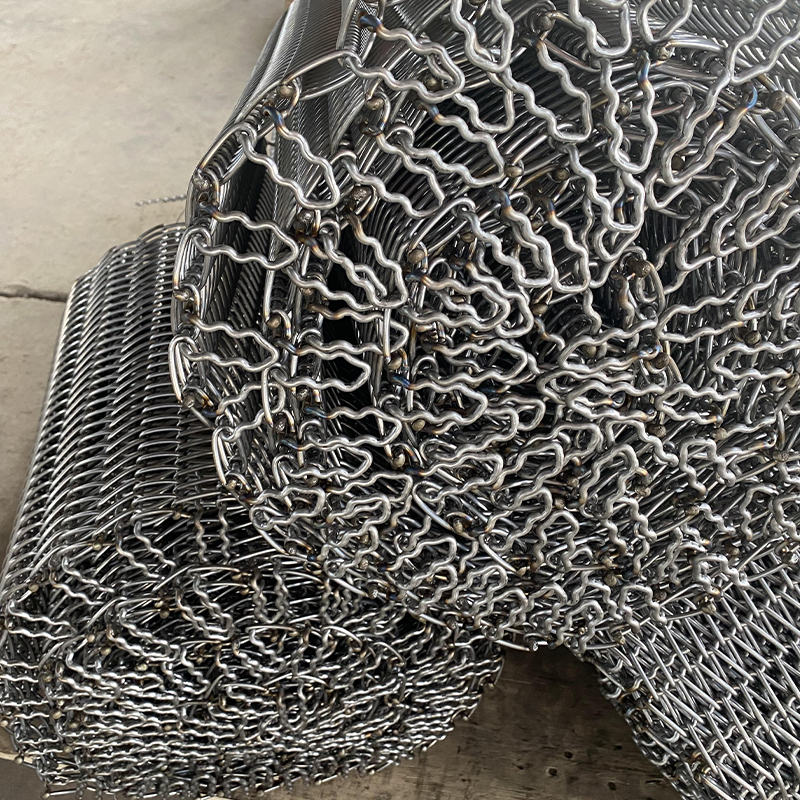 Wholesale Glass bottle annealing furnace mesh belt Suppliers, Factory - YangzhouYangzhou Yafei Machinery Manufacturing Co., Ltd is China wholesale Glass bottle annealing furnace mesh belt suppliers and factory, detail...View Product →
For metal products such as fasteners, springs, and precision components, the belt often operates at higher temperatures and with heavier point loads. A metal product annealing furnace mesh belt must hold its flatness under concentrated loads and tolerate the thermal cycling of a continuous line.
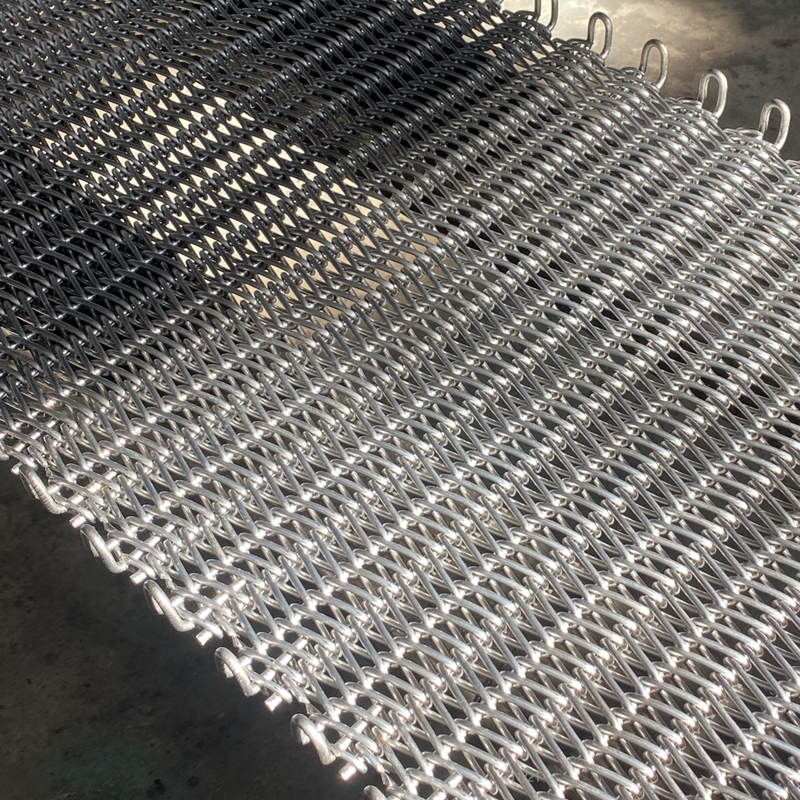 Wholesale Metal product annealing furnace mesh belt Suppliers, Factory - YangzhoYangzhou Yafei Machinery Manufacturing Co., Ltd is China wholesale Metal product annealing furnace mesh belt suppliers and factory, detai...View Product →
For stainless steel parts, annealing is frequently carried out in a protective atmosphere, and the belt sees both high temperature and the atmosphere environment. The stainless steel products annealing furnace mesh belt must keep its structural integrity in a reducing atmosphere and resist scaling for as long as possible. In all three cases, the common thread is that the belt is a process-critical component, and its life depends on how well it matches the operating envelope.
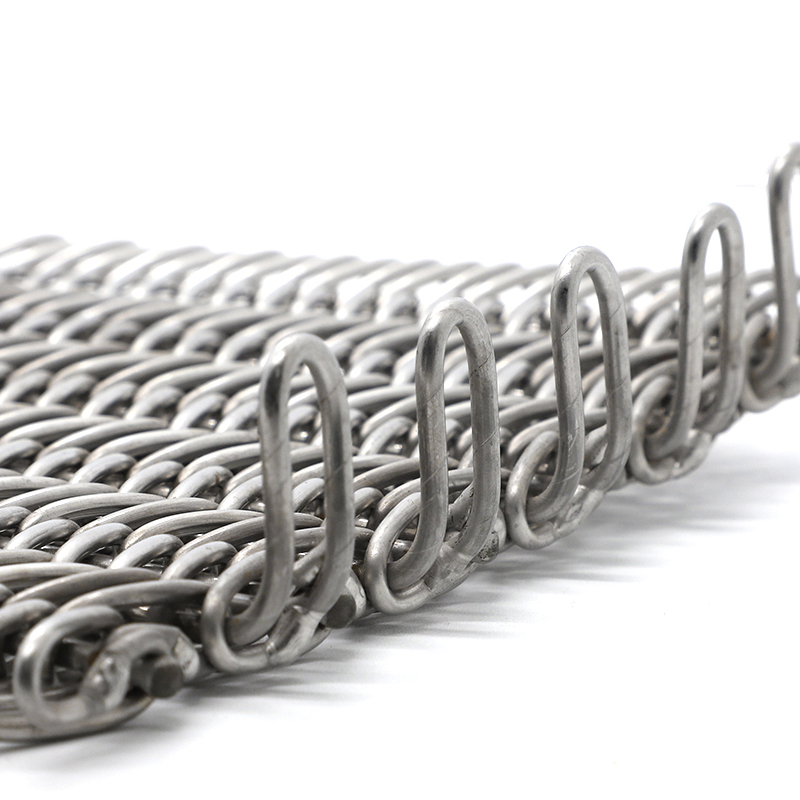 Wholesale Stainless steel products annealing furnace mesh belt Suppliers, FactorYangzhou Yafei Machinery Manufacturing Co., Ltd is China wholesale Stainless steel products annealing furnace mesh belt suppliers and fac...View Product →
Final Recommendations for Buyers
When sourcing an annealing furnace mesh belt, define the operating envelope first, then compare construction details, and then evaluate the manufacturer's experience. The critical numbers for the specification sheet are maximum belt temperature, atmosphere composition, part load, and belt width with pitch.
It is also worth asking the manufacturer to review the belt design rather than simply reordering the previous part number. A supplier that builds annealing furnace mesh belts on a regular basis can often recommend a small change in weave density or edge finish that improves life without increasing cost.
Annealing furnaces are long-cycle assets, and the belt is one of the few replaceable components that determines whether the furnace runs at the rated capacity. Giving the belt the same engineering attention as the heating system is the surest way to reduce downtime and keep annealing quality consistent.



 English
 русский
 عربى
عربى