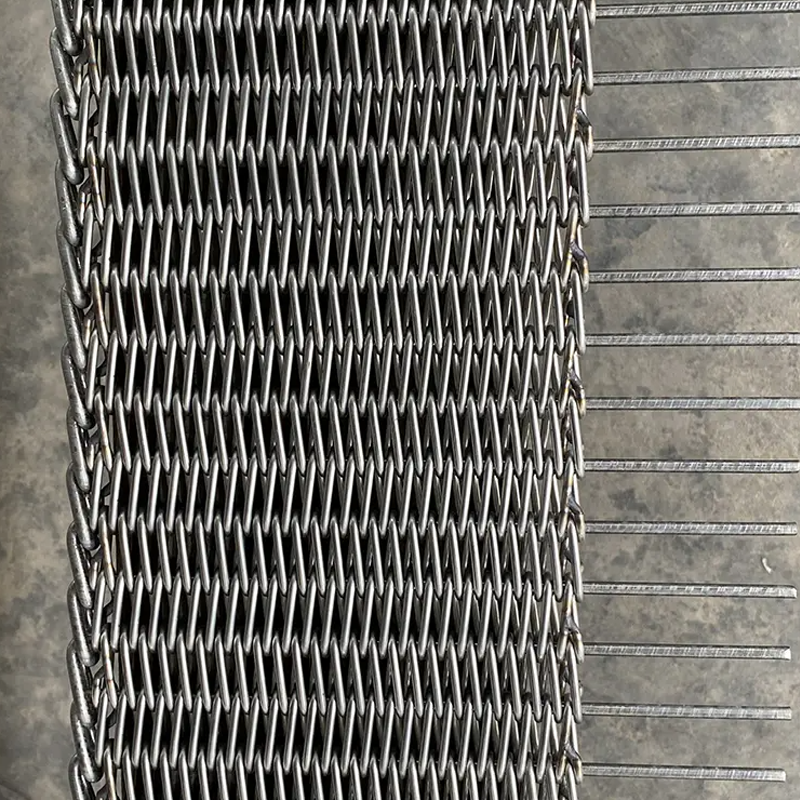
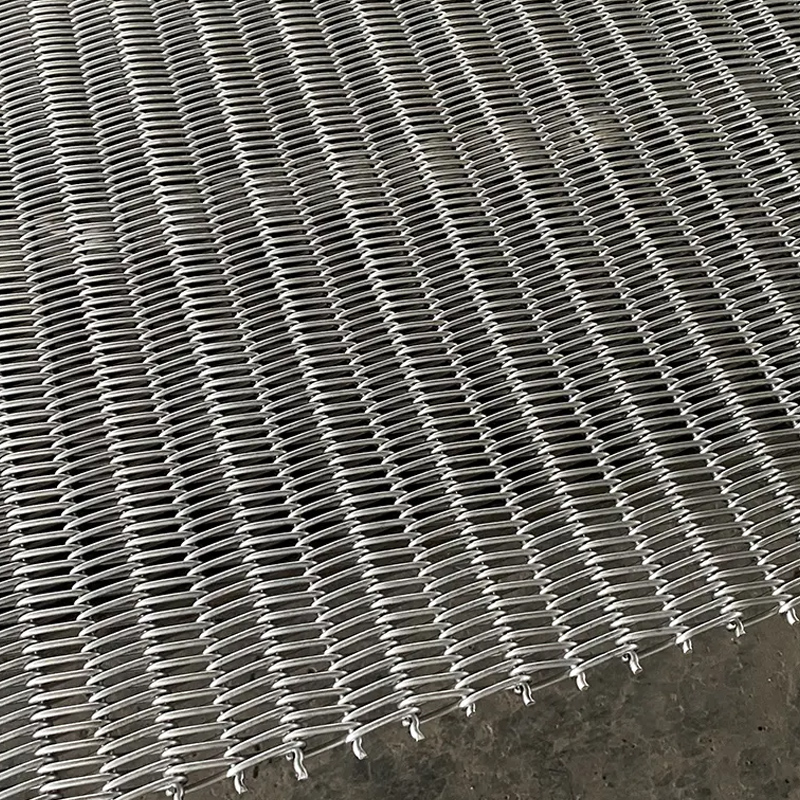
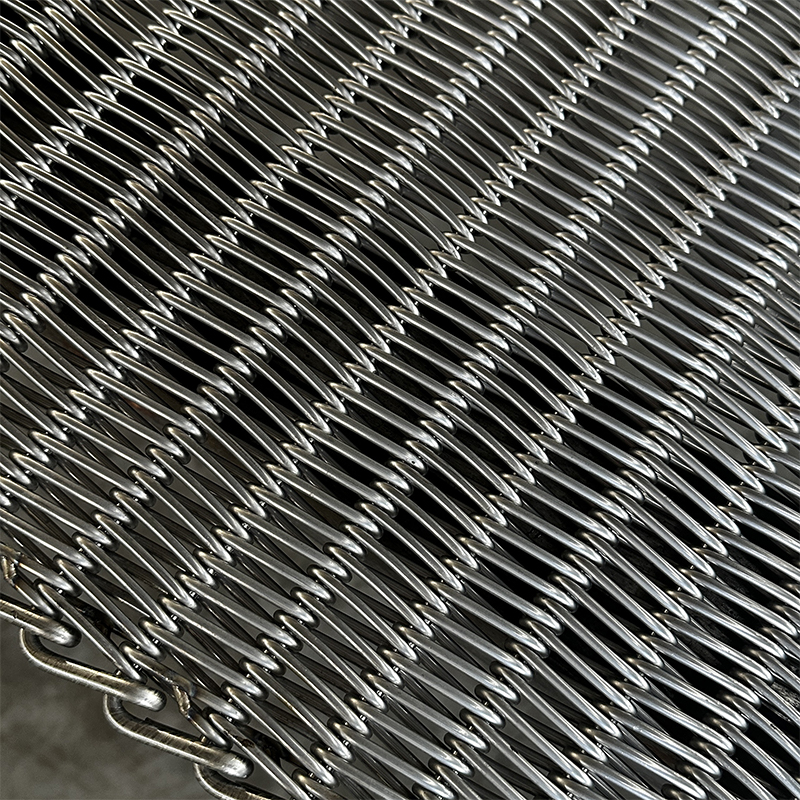
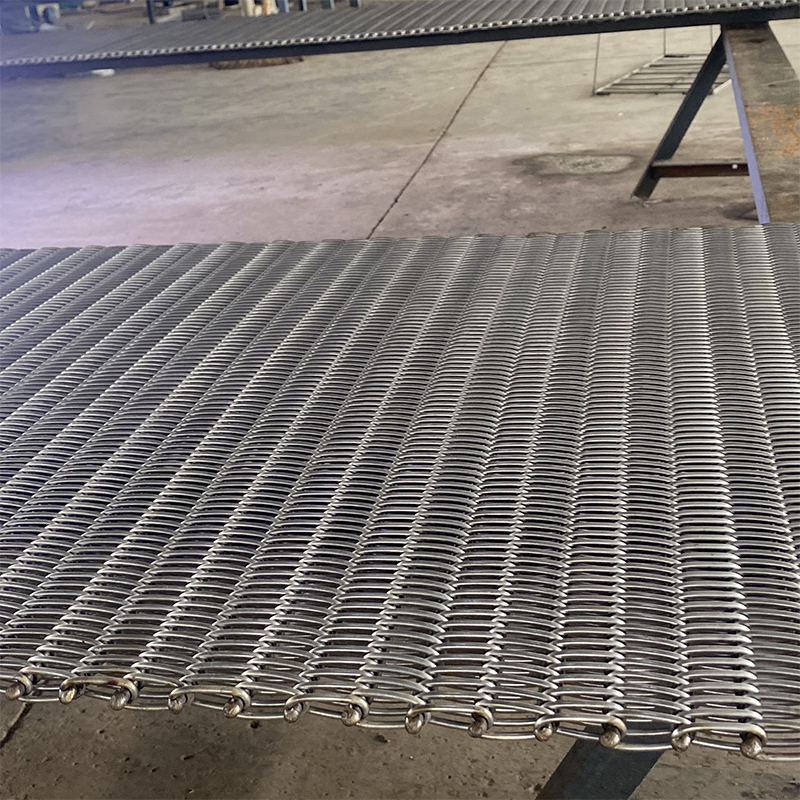
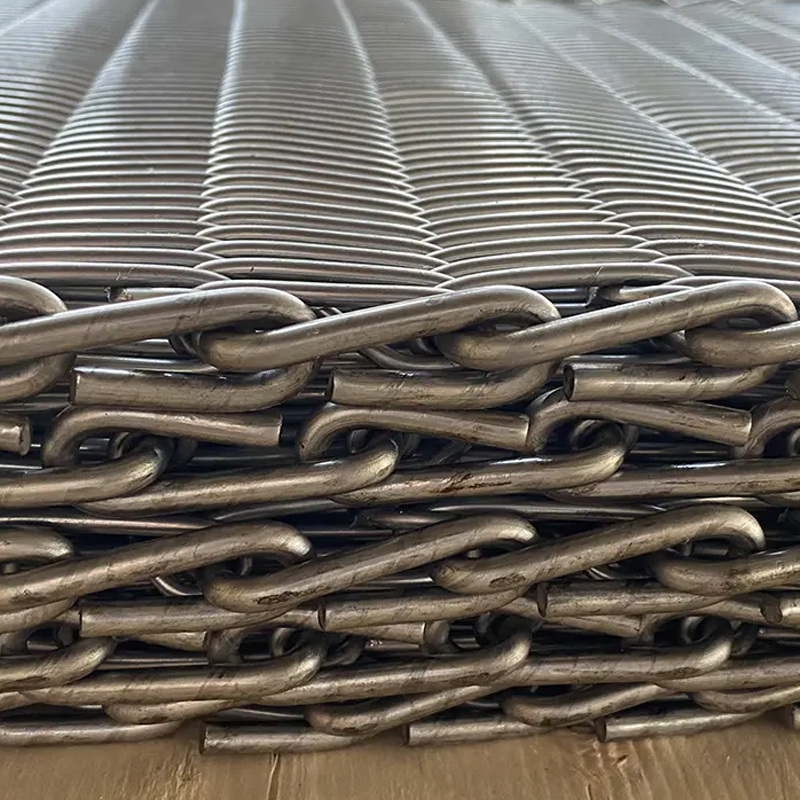
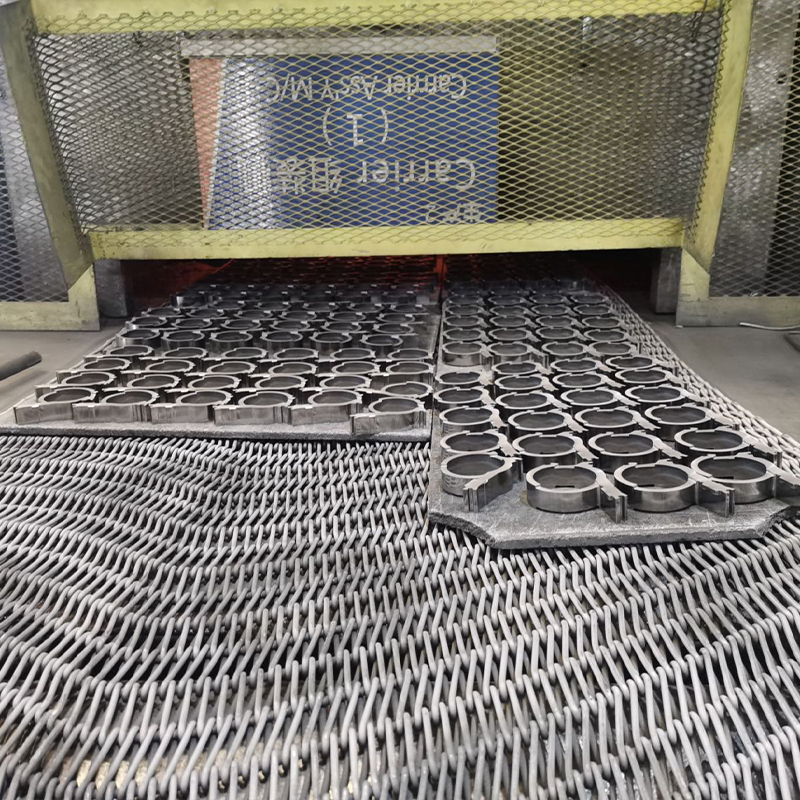
Two furnace technologies dominate industrial brazing: vacuum brazing and continuous-belt brazing. In a continuous-belt furnace, the mesh belt is far more than a transporter. It is the moving work surface that holds every assembly at brazing temperature for the required time, carries it through cooling, and then returns to pick up the next load. If the belt becomes unstable—through heat distortion, corrosion, or tracking issues—the whole line degrades even though the furnace controls remain within set points.
That is why the brazing furnace mesh belt should be selected with the same care as the furnace itself. A mesh belt that matches the process will produce consistent joints, predictable throughput, and lower maintenance cost. A belt selected only by width and alloy will usually reveal its weaknesses within months: small workpiece marks, edge fatigue, porosity in joints, or repeated emergency stops. The practical solution is to choose a belt based on process conditions, not on catalog convenience.
Why the Mesh Belt Carries More Risk Than It Appears
Vacuum brazing protects parts in a sealed chamber, typically with a stable fixture and no contact with combustion products. Continuous-belt brazing is different. The belt is exposed to open atmosphere or controlled gas flows, to thermal cycling from room temperature to brazing temperature and back, and to a continuous load of parts moving on and off the belt. It also rubs against support rails, passes over drums or sprockets, and collects flux residues that can become abrasive.
Each of these conditions attacks a different part of the belt. Heat weakens the wire and promotes oxidation. Load stretches the weave and can permanently change the pitch. Corrosion attacks the surface and reduces the cross-section of individual wires. Friction wears the links that carry the load. The result is that a brazing furnace mesh belt must fulfill several contradictory requirements at once: high hot strength, flexibility over pulleys, stable mesh geometry, and enough corrosion resistance for the specific flux and atmosphere.
What to Evaluate Before You Choose a Mesh Belt
The selection process should begin with the furnace and the brazing cycle, not with a belt specification sheet. Collect the operating parameters first, then translate them into belt design parameters.
Table 1. Key selection criteria for a brazing furnace mesh belt.
| Selection factor |
Why it matters |
Common failure if ignored |
| Peak brazing temperature |
Defines creep and oxidation resistance of the belt material. |
Early sagging, scaling, or rupture. |
| Atmosphere and flux |
Can corrode or embrittle stainless steel alloys. |
Rapid thickness loss and broken wires. |
| Workpiece load and support area |
Determines wire diameter, mesh opening, and support style. |
Local deformation and poor tracking. |
| Belt width and furnace geometry |
Affects thermal expansion and edge guidance. |
Edge jamming or off-center travel. |
These factors are connected. A wider belt handles more parts per hour but also experiences more thermal expansion and requires more careful edge support. A dense mesh supports small parts but can reduce atmosphere flow around the joint. The best design is a compromise developed for a specific brazing line.
Matching the Mesh Belt to the Brazing Process
Brazing is not one process. The filler metal, atmosphere, and temperature create different demands on the belt. Matching the belt type to the brazing family is therefore the core of a successful selection.
Aluminum brazing furnace mesh belts
Aluminum brazing of heat exchangers usually runs with a non-corrosive flux based on potassium fluoroaluminate. The process temperature is not extreme by heat-treatment standards, but the flux is chemically active. It attacks conventional stainless steel over time, especially at woven wire intersections where stress concentrates. A belt for aluminum brazing must resist corrosion and keep its surface clean so parts do not stick. Automotive water tanks, condensers, and evaporators are typical parts transported on these belts. For high-volume aluminum heat exchanger brazing, manufacturers often rely on dedicated automotive water tank aluminum brazing furnace mesh belts.
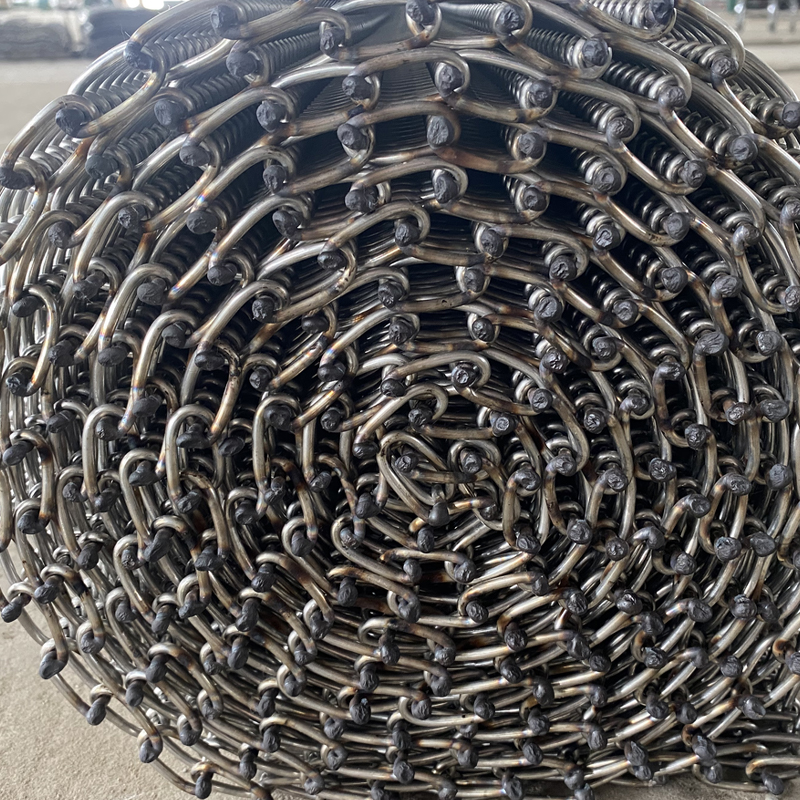 Wholesale Automotive water tank aluminum brazing furnace mesh belt Suppliers, FaYangzhou Yafei Machinery Manufacturing Co., Ltd is China wholesale Automotive water tank aluminum brazing furnace mesh belt suppliers and...View Product →
Copper brazing furnace mesh belts
Copper brazing is generally carried out at higher temperature, around 1100°C, often in a nitrogen/hydrogen atmosphere. The filler metal has low viscosity when molten and can flow along the wires. The belt must be stable enough to prevent vibration at the moment the filler melts, because any movement can shift the joint. Air conditioner liquid receivers, automotive pipes, copper valves, and electric heating elements are common products. A belt used in this environment needs high temperature creep resistance and a construction that minimizes distortion under heavy loads. A practical choice for this duty is a copper brazing furnace conveyor belt for air conditioner liquid receivers.
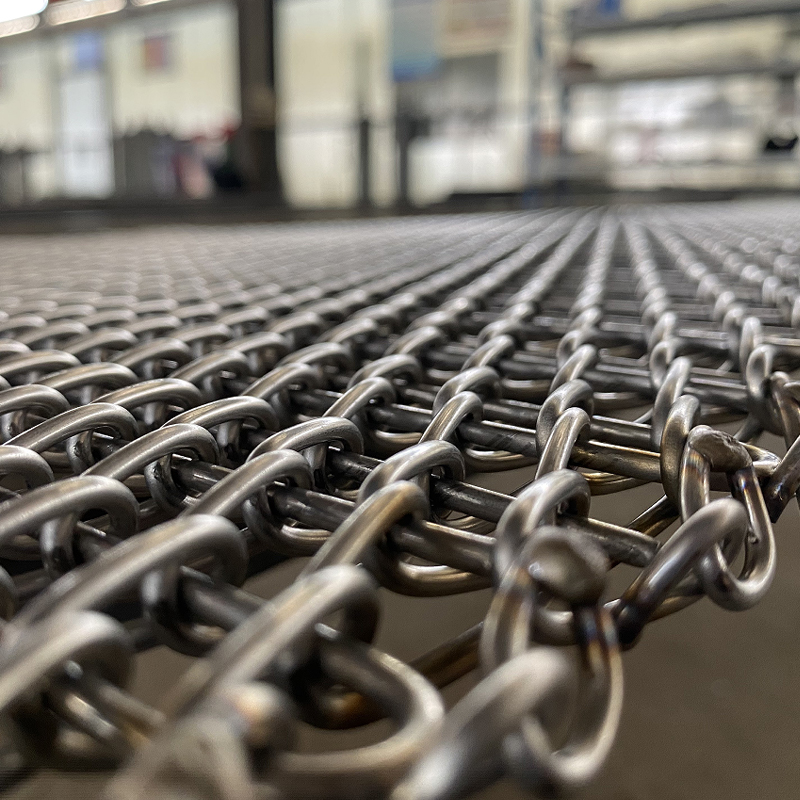 Wholesale Air conditioner liquid receiver brazing furnace mesh belt Suppliers, FYangzhou Yafei Machinery Manufacturing Co., Ltd is China wholesale Air conditioner liquid receiver brazing furnace mesh belt suppliers an...View Product →
Stainless steel brazing furnace mesh belts
Stainless steel brazing is common for heat exchanger cores, air conditioning piping, and medical devices. The process often calls for a clean surface and precise joint clearance. The belt can contaminate the work if it sheds scale, fibers, or residue. It also must remain dimensionally stable enough not to alter the position of parts during the braze cycle. Stainless steel brazing furnace mesh belts for heat exchanger cores are designed with these requirements in mind, using alloys and weave patterns that limit surface scaling and maintain a uniform support plane.
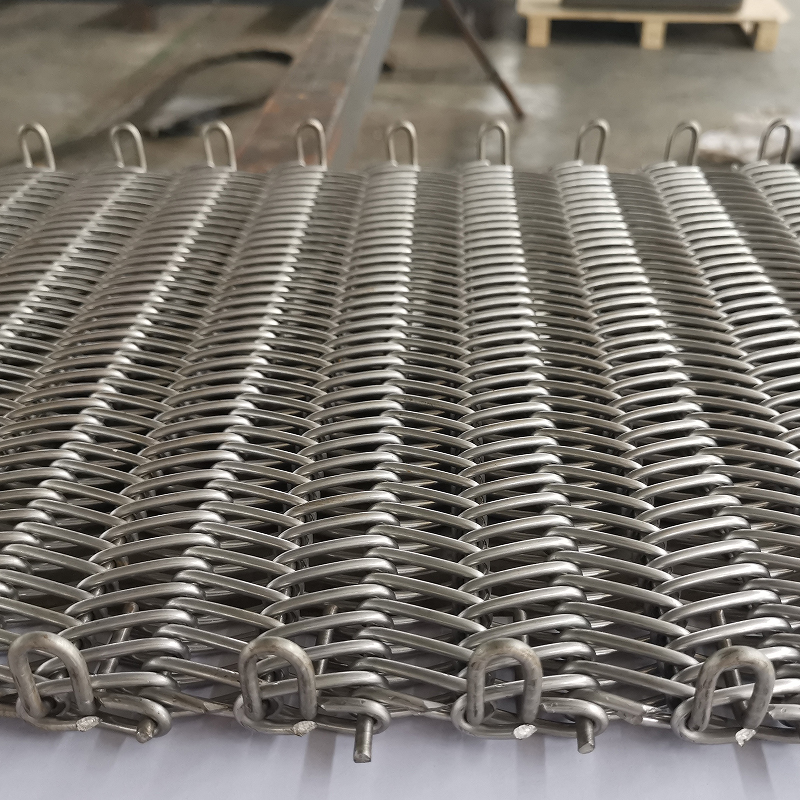 Wholesale Heat exchanger core brazing furnace mesh belt Suppliers, Factory - YanYangzhou Yafei Machinery Manufacturing Co., Ltd is China wholesale Heat exchanger core brazing furnace mesh belt suppliers and factory, d...View Product →
Practical Steps to Extend Mesh Belt Life
No belt lasts forever, but most premature failures come from installation or operating habits that can be controlled.
- Pre-stretch the belt before first production. Run it at a temperature close to the operating condition for a full cycle without parts, so initial elongation does not happen while the belt is loaded.
- Watch tracking early. A belt that drifts by a few millimeters per cycle should be corrected before it damages the edges or the furnace liner.
- Keep flux residue from building up. In aluminum brazing especially, residue becomes hard and abrasive when it cools, so schedule regular cleaning of the belt surface.
- Inspect edges, joints, and support rollers during planned maintenance. These areas show the first signs of fatigue.
- Keep records of installation date, elongation, and any tracking corrections. The data will help you predict when a belt should be replaced instead of waiting for a sudden failure.
Obvious warning signs include repeated off-center running, cracked edges, broken wires in the joint area, and a belt that no longer presents a flat surface to the parts. When these symptoms appear, a planned replacement is usually less expensive than an emergency stop.
Why a Mesh Belt Supplier Should Understand the Brazing Line
The best mesh belt specification in the world is worth little if the supplier cannot relate it to the actual furnace line. A supplier that manufactures belts can adjust weave style, wire diameter, edge reinforcement, and chain connection to match the furnace layout. This is especially true for brazing, where atmosphere, flux, and temperature interact with the belt material in ways that are not obvious from a standard product table.
Yangzhou Yafei Machinery Manufacturing Co., Ltd. started as a metal mesh belt factory and has since expanded into industrial furnace accompaniment products and equipment processing. Its product range spans brazing, sintering, heat treatment, and conveying applications. That history matters because it means the supplier has seen how different furnaces and workpieces stress the belt. For more on how these belts are used in real brazing lines, see the brazing industry applications overview. The company also publishes practical notes such as engineering the thermal edge in continuous brazing, which discusses throughput and belt lifespan in more detail.
Final Recommendations
Selecting a brazing furnace mesh belt is a process decision. Start with the brazing temperature, atmosphere, flux, and load conditions, then translate those into belt material, weave, and edge design. Match the belt type to the specific brazing family—aluminum, copper, or stainless steel—because the chemical and thermal demands are different. Finally, treat installation and maintenance as part of the belt specification. When the belt is understood as part of the process, the continuous brazing line runs more predictably, and the cost per good joint stays under control.



 English
 русский
 عربى
عربى