 English
 русский
 عربى
عربىAutomotive parts forging furnace mesh belt
The automotive parts forging furnace mesh belt is a specialized high-temperature...
 +86 13852191798
Yangzhou Yafei Machinery Manufacturing Co., Ltd.

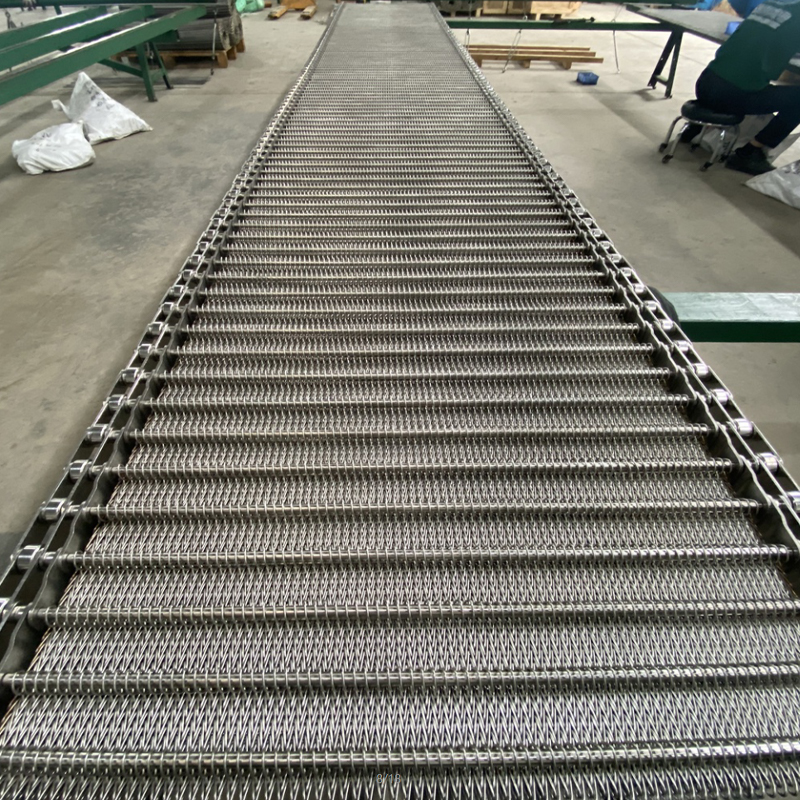
The automotive parts forging furnace mesh belt is a specialized high-temperature...
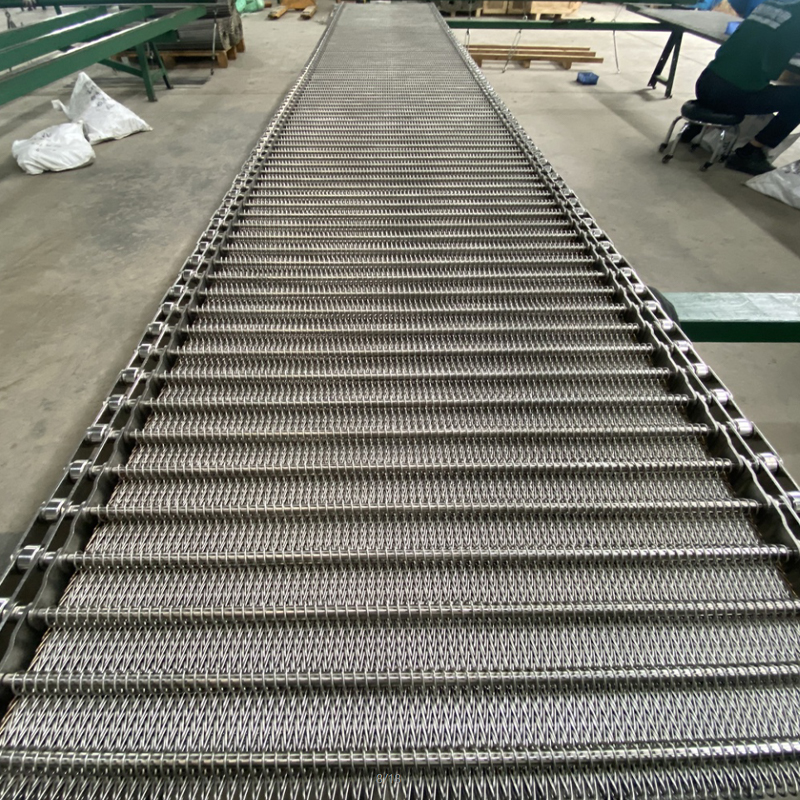
The construction machinery parts forging furnace mesh belt is designed with high...
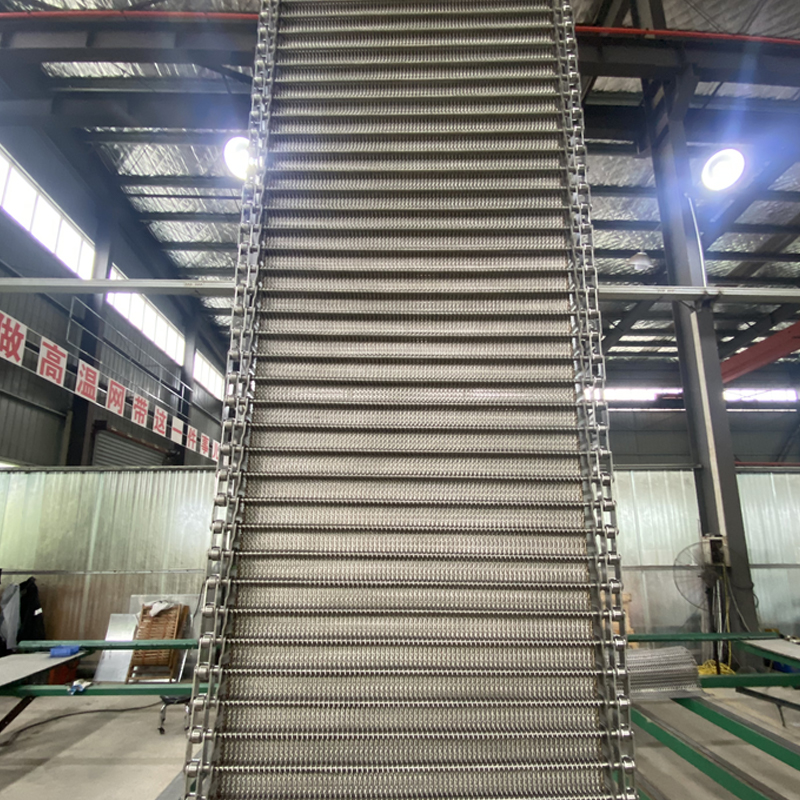
The rail transit components forging furnace mesh belt is manufactured using impo...
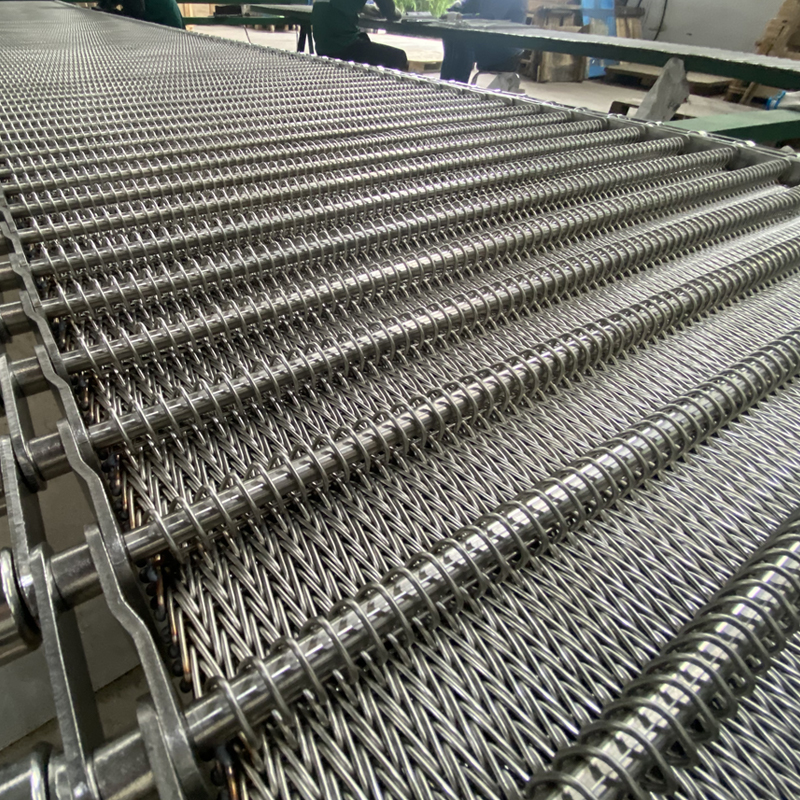
The weaving method and structure of the special forging furnace mesh belt can be...
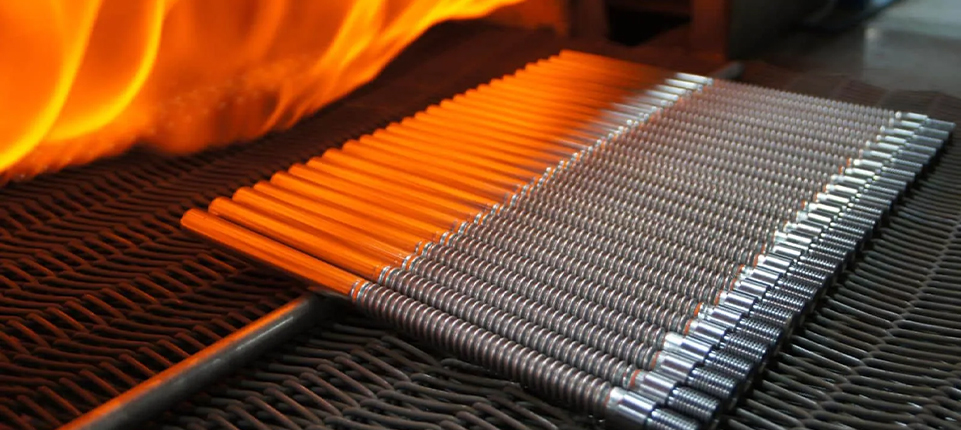
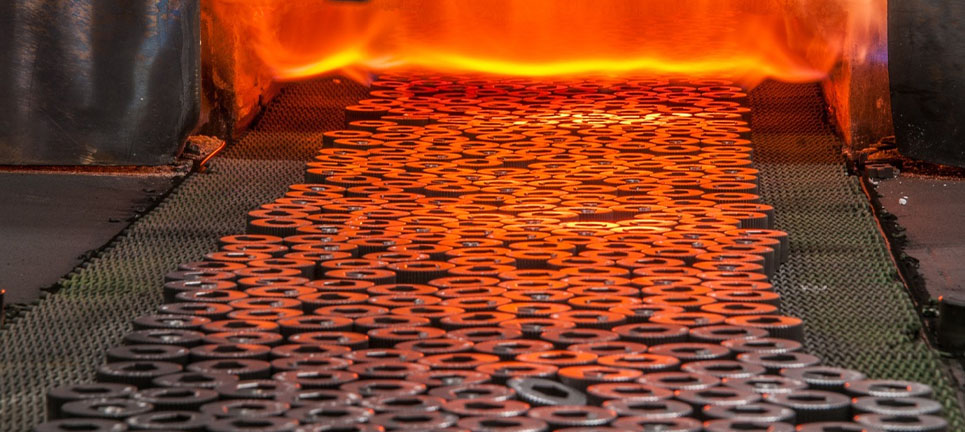
Heat-treated forged mesh belts are conveyor belts used in the heat treatment process of metal forgings. They are widely used in the production of components for automotive powertrains, transmission systems, chassis systems, as well as in construction machinery and rail transportation. The structural design and material selection of these belts fully consider stability and load requirements in high-temperature environments, enabling them to withstand the long-term operation of heavy workpieces in continuous heat treatment lines. Because forged parts are typically large and heavy, heat-treated forged mesh belts possess strong tensile and wear resistance, ensuring excellent balance and smooth operation even at high temperatures.
Heat-treated forged mesh belts are typically manufactured from high-temperature-resistant stainless steel or nickel-chromium alloys, which effectively resist oxidation, decarburization, and deformation during the heat treatment process. These belts are typically balanced or composite braided, with the spiral and threading wires precisely designed to ensure excellent load-bearing capacity and stability during transport.
As China Heat Treatment Forging Mesh Belt Manufacturers and Heat Treatment Forging Mesh Belt Suppliers,
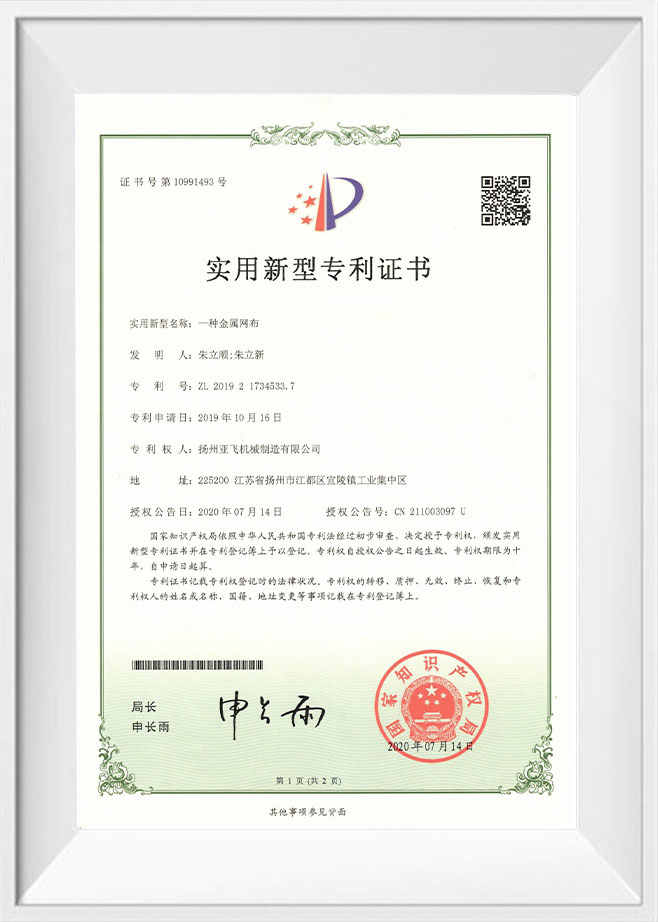
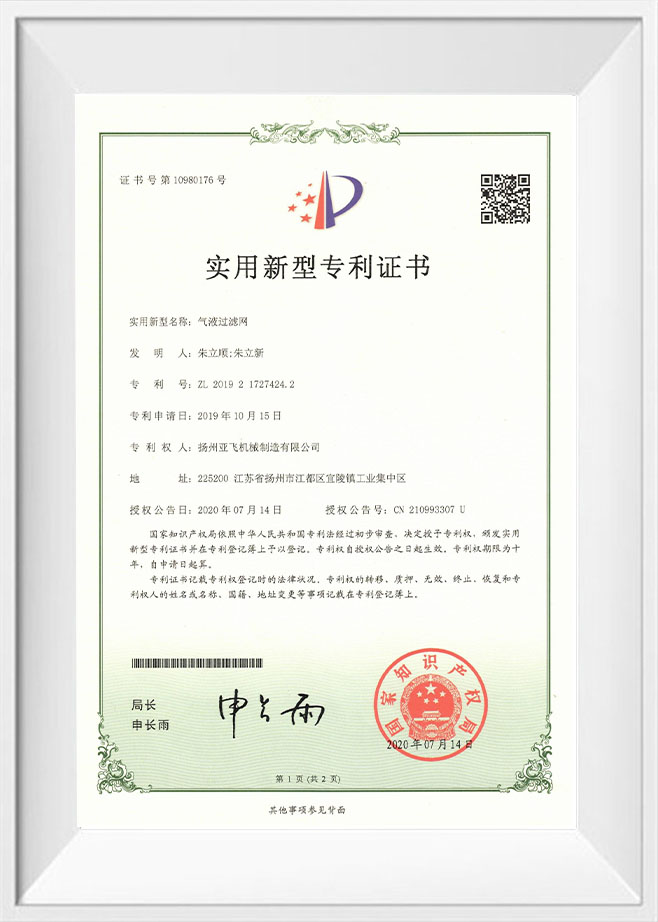
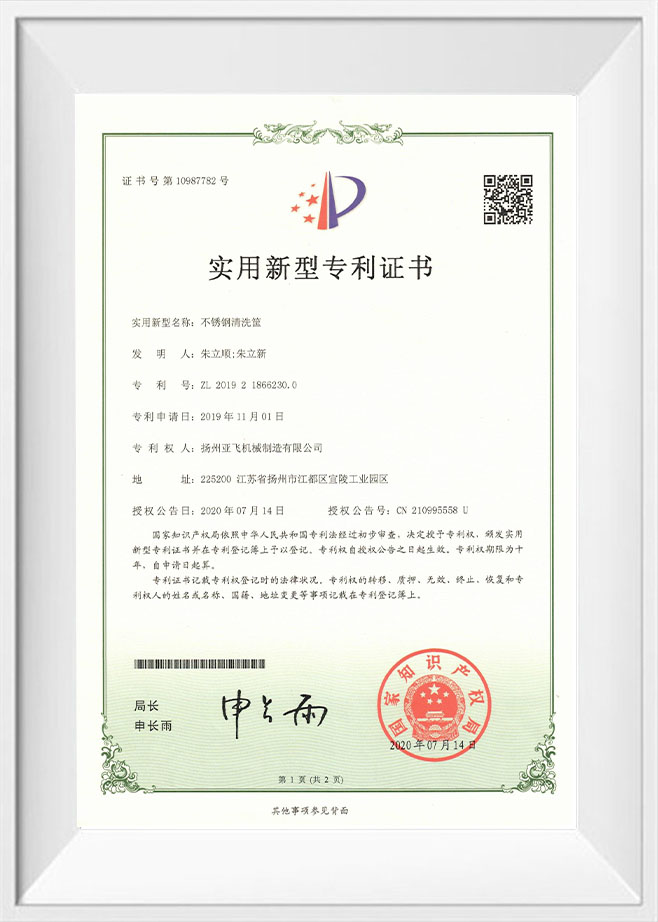
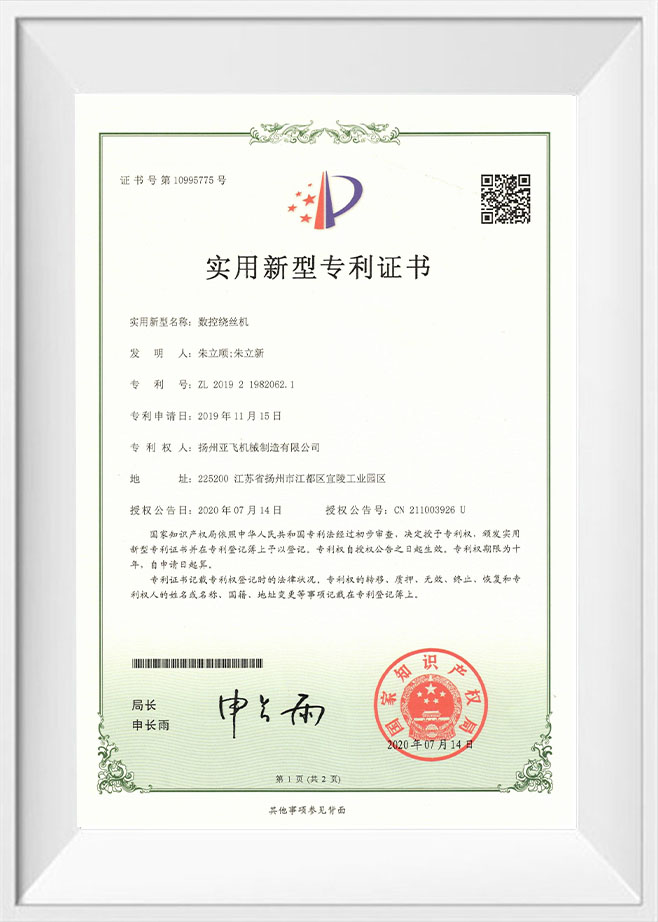
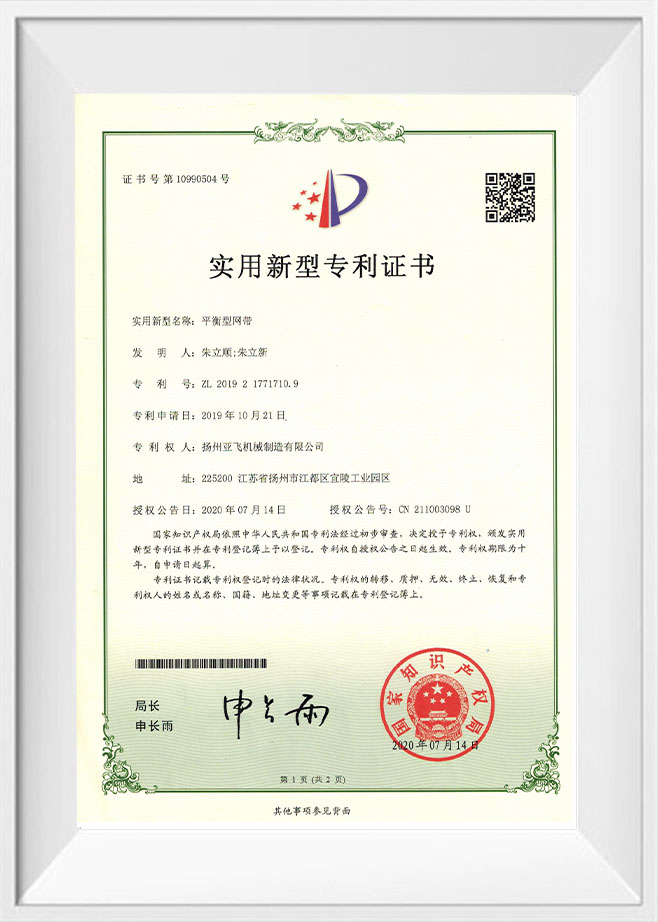
Yangzhou Yafei Machinery Manufacturing Co., Ltd. is a private scientific and technological enterprise in Jiangsu Province, formerly known as Yangzhou Yafei Metal Mesh Belt Factory, located in Yiling Industrial Park in the east of Yangzhou, with R&D, production and processing, office buildings, etc. With independent research and development of scientific and technological projects and equipment processing and manufacturing capabilities.
At present, the company is mainly engaged in: stainless steel mesh belt, conveyor mesh belt, metal mesh belt, stainless steel conveyor belt and related technology research and development, application and promotion.
Metal mesh belts have been used in beer and beverage, food, wood industry, glass, chemical industry, pharmacy, cleaning and spraying, powder metallurgy, new energy, heat treatment, industrial kiln, general conveying machinery and other industries.
Conveying machinery includes: net belt conveyor, hoist, flat top chain conveyor belt, roller conveyor, chain plate conveyor, etc. Widely used in home appliance engineering, automobile engineering, dairy beverage industry, brewing and water treatment and other fields.
A conveyor mesh belt rarely announces its own failure. It distorts, cracks, or begins tracking to one side, and a continuous furnace or production line stops the moment it does. That makes belt selection more than a spare-part purchase; it is a decision about uptime, product quality, and operating cost. The right conv...
READ MOREWhen a hardening furnace mesh belt fails, it usually does it without warning. One shift it is carrying bearing races through the high-temperature zone; the next, a torn edge catches on the return track and the whole line stops. Most of these failures were decided months earlier, when the belt specification was written...
READ MOREA continuous brazing line stops because the mesh belt has drifted to one side, the edge wires are broken, and the stainless steel parts grouping together on the belt are no longer aligned. It is a familiar scenario for maintenance teams: the furnace itself is running correctly, but the belt has become the bottleneck. ...
READ MOREIn modern industrial manufacturing, continuous heat treatment and high-temperature forging processes place demanding requirements on continuous conveying equipment. As a core load-bearing component in high-temperature furnaces, quenching tanks, and continuous annealing lines, the Heat Treatment Forging Mesh Belt precisely conveys materials under extreme physical environments, maintaining structural integrity under high temperatures, alternating thermal stress, and complex chemical atmospheres.
The Heat Treatment Forging Mesh Belt is a high-strength, corrosion-resistant metal conveyor belt designed for continuous high-temperature operations, differing fundamentally from light-duty belts in material science and structural mechanics:
Temperature Limits and Creep Resistance: Light-duty mesh belts operate at lower temperatures, while those used for heat treatment and forging typically work between 600°C and 1150°C. In this red-hot state, the belt must use special alloys with high nickel-chromium equivalents to provide creep rupture strength and prevent permanent plastic deformation.
Mechanical Strength and Tensile Performance: Forgings like automotive gears, fasteners, and bearings carry heavy unit loads. The mesh belt maintains high tensile strength when red-hot, preventing excessive stretching, narrowing, or fracturing under weight.
Thermal Shock Resistance: During process cycles, mesh belts experience extreme thermal shocks, such as instantly entering room-temperature quenching oil or water from a 900°C furnace. The materials and welding points must resist intergranular cracking under these sharp temperature drops.
In automated manufacturing lines, the operational efficiency of normalizing, quenching, and tempering furnaces determines output capacity. The open woven structure of the mesh belt ensures that hot air circulation and protective atmospheres penetrate completely, achieving uniform all-around heating and reducing organizational defects. Additionally, continuous transmission precisely controls material retention time inside the furnace, executing the heat treatment process curve accurately across industries like automotive engineering, industrial kilns, and powder metallurgy.
| Technical Indicator / Parameter Item | Traditional Light-Duty Conveyor Mesh Belt | Heat Treatment Forging Mesh Belt |
|---|---|---|
| Long-term Working Temperature Range | Room temperature to ≤ 120°C | 600°C to 1150°C |
| Core Material Selection | Carbon steel, low-grade stainless steel (SUS201, SUS304) | High-temperature alloys (SUS314, Cr20Ni80, Inconel 601, 310S) |
| Creep Resistance | Not required | Extremely high resistance above 900°C |
| Rated Tensile Strength (at High Temp) | Rapidly drops at high temperatures | Maintains allowed stress at 1000°C under heavy loads |
| Thermal Shock Resistance | Poor (prone to quenching deformation) | Excellent (withstands continuous rapid cooling/heating) |
| Drive and Structural Forms | Friction driven, thinner wire diameter | Balanced weave, chain driven; thick wires and cross rods |
Evaluating production line efficiency relies heavily on the geometric dimensions and material parameters of the mesh belt. Designs must undergo strict mechanics and thermodynamics calculations to handle specific loads, heating profiles, and corrosive atmospheres.
Wire diameter determines mechanical tensile strength and structural rigidity. Engineering choices balance tensile capacity against overall belt weight. Heavy forgings require large diameters (3.0 mm to 5.0 mm spiral wires and cross rods) to distribute high-temperature creep stress. However, excessively thick wires increase the dead-zone heat capacity, consuming unnecessary thermal energy to heat the belt itself and lowering furnace efficiency.
Mesh dimensions affect physical stability and the internal furnace environment. While smaller openings prevent precision small parts or stamping components from falling or jamming, overly dense mesh creates a shielding effect. This blocks hot air convection and protective atmosphere penetration, causing temperature variances or uneven surface decarburization. In quenching lines, proper mesh size allows rapid penetration of quenching media to obtain an ideal martensitic structure.
In environments from 800°C to 1150°C, conventional steel suffers rapid oxidation and softening. High-temperature alloys are critical to withstand diverse industrial requirements like glass annealing, powder metallurgy, and industrial kilns:
| Common Material Name | Main Chemical Composition Features | Limit Working Temperature | Core Performance Advantages and Typical Application Scenarios |
|---|---|---|---|
| SUS 304 / 316 | 18Cr-8Ni / 16Cr-10Ni-2Mo | ≤ 750°C | Good basic corrosion resistance; used for glass annealing and cleaning machinery. |
| SUS 310S | 25Cr-20Ni (High Cr, High Ni) | 950°C - 1050°C | Excellent oxidation resistance and high-temperature strength for medium-high temp furnaces. |
| SUS 314 | 25Cr-20Ni-2Si (Silicon added) | 1050°C - 1150°C | Forms a dense silicon dioxide film to provide high anti-oxidation and anti-carburization abilities. |
| Inconel 601 | Ni-Cr-Fe-Al Nickel-based alloy | ≤ 1200°C | High mechanical strength under alternating thermal stresses and aggressive corrosive gas environments. |
Mechanical structures must disperse high-temperature internal stresses to delay fatigue cracking:
Balanced Weave: Alternating left-hand and right-hand mesh strips counteract operational torque, providing straight-line travel and tracking stability.
Compound Balanced: Dense mesh with a flat carrying surface, ideal for precision small parts or powder metallurgy workpieces.
Chain Driven: Precision side chains driven by sprockets completely eliminate belt slippage under heavy loads or when climbing inclines out of quenching fluid tanks.
Continuous production requires rigid process execution, where transmission components face combined chemical, mechanical, and thermal challenges.
Heavy bearings and automotive gears contain severe residual stress after forging. Workpieces are often dropped onto the belt by robotic arms or vibrating feeders, meaning the structure must withstand local physical impacts without indentation. Because normalizing furnaces operate at 850°C to 950°C for long periods, the alloy must exhibit excellent red-hardness to resist stretching under high-temperature tensile load.
Quenching cycles are highly destructive. Workpieces and the belt travel through a 900°C furnace and are then rapidly dropped into a quenching medium, dropping hundreds of degrees within seconds. This violent alternating thermal stress causes microcracks at the edges and cross rod welds if grain boundaries are too coarse. In tempering sections, the belt must resist corrosion from residual quenching fluids between 400°C and 650°C.
In carbon-rich and nitrogen-rich atmospheres (carburizing or carbonitriding), active carbon atoms penetrate the stainless steel matrix, forming hard, brittle carbides (like Cr23C6) along the grain boundaries. This "carburization embrittlement" causes the belt to lose plasticity, leading to sudden, glass-like brittle fractures when passing over transmission rollers. Upgrading to alloys with specific silicon or aluminium traces promotes the growth of a self-healing surface barrier layer (SiO2 or Al2O3) that blocks active carbon atom penetration, extending operational lifespans in powder metallurgy and high-temperature kilns.
More than 70% of early mesh belt failures stem from improper mechanical setup or tensioning rather than natural material wear.
Tension adjustment must be split into two engineering stages due to thermal expansion:
Cold Installation Tension: Apply the minimum baseline tension required to ensure smooth travel. Over-tightening at room temperature leaves no room for expansion during heating, causing massive internal thermal stresses and surface distortion.
Hot Running Tension: Once the furnace stabilizes at working temperature (e.g., 900°C), the metal expands and slacks naturally. Secondary fine-tuning must be done via the tail take-up device to eliminate slippage or piling without over-stressing the high-temperature creep boundaries.
Continuous off-center tracking forces the belt edges to rub against furnace linings, destroying edge weld points and tearing the mesh. Tracking corrections follow the rule of adjusting the driven shaft and tightening rather than loosening. If the belt shifts left, tighten the left-side tension screw to guide it back to the centerline. Parallelism and alignment errors of drive rollers and sprockets must be maintained within tight mechanical tolerances.
| Commissioning Inspection Item | Standard Control Range / Industrial Requirement | Impact and Harm of Abnormal Status |
|---|---|---|
| Parallelism of Drive/Driven Shaft | ≤ 0.5 mm/m | Uneven force across the belt width, causing severe tracking deviation and edge wear. |
| Mesh Belt Sag at Working Temp | 1% - 2% of support idler spacing | Too tight accelerates high-temperature creep; too loose leads to surface piling and jamming. |
| Stepwise Heating Rate | ≤ 80°C/h under 400°C; ≤ 120°C/h above 400°C | Rapid heating prevents smooth release of residual stresses, triggering mesh distortion. |
| Mesh Tensile Permanent Deformation | Longitudinal extension rate ≤ 3% per cycle | Exceeding this indicates the material has entered non-linear creep, risking imminent breakage. |
Technical Explanation: This is a classic case of high-temperature grain boundary carburization embrittlement or intergranular oxidation rather than simple mechanical overloading. In carbon-rich environments, free carbon atoms diffuse along the grain boundaries of the stainless steel, forming brittle chromium carbides. This destroys matrix ductility and drops red-hardness sharply. When passing rollers or encountering slight resistance, it snaps cleanly like glass. Upgrading to SUS314 or Inconel 601 provides the silicon or nickel levels required to form a dense oxide layer that blocks carbon diffusion.
Selection Comparison: The choice depends on workpiece weight, operating media, and conveying layout rather than initial cost:
| Drive Form Comparison | Friction Driven Mesh Belt | Chain Driven Mesh Belt |
|---|---|---|
| Transmission Mechanism | Relies on friction between drive roller and mesh back | Relies on rigid engagement of side chains with sprockets |
| Rated Load Capacity | Light/medium workpieces (≤ 40 kg/m²) | Heavy forgings, high-density conveying (≥ 150 kg/m²) |
| Slippage Risk | Prone to tracking deviation and tension slippage | Forced synchronous travel; mechanically eliminates slippage |
| Media Adaptability | Poor; lubricants, oils, or water cause severe slip | Excellent; unaffected by quenching fluids or oil pollution |
Technical Clarification: No, blindly increasing wire thickness can shorten lifespan. Thicker wires increase the internal temperature gradient during heating and rapid quenching. This high core-to-surface variance generates massive alternating thermal stresses, causing grain boundaries to crack prematurely from thermal fatigue. Additionally, heavier belts exponentially increase dead-zone heat capacity, wasting significant furnace energy heating the conveyor rather than the workpieces.
Operational Specification: New belts must undergo stepwise preheating and passivation. Metal wires retain substantial internal mechanical stresses from drawing, weaving, and welding. Direct exposure to 950°C triggers a violent release of these stresses, distorting the surface mesh. Heating in steps (holding at 300°C and 600°C) allows safe stress relief while enabling alloy elements to react with trace oxygen, forming a uniform, protective green/grey passivation film (Cr2O3 or SiO2) that shields against industrial atmospheric erosion.
Get A Free Consultation Now
Get A Customized Solution
The company adheres to the concept of creating value for customers and prosperity for society, aiming to build a reliable mesh belt brand and establish the century-old Yafei brand.
CONTACT INFORMATION

Yiling Industrial Park, Jiangdu District, Yangzhou City, Jiangsu Province, China

+86 13852191798
PRODUCT CATEGORIES
QUICK LINKS
MOBILE
 Custom Heat Treatment Forging Mesh Belt Suppliers