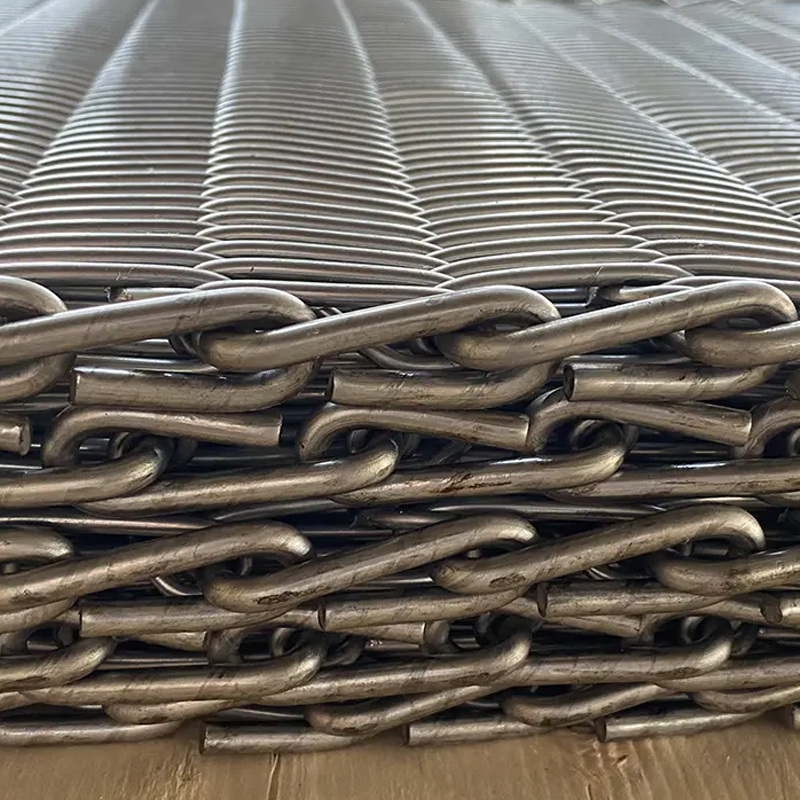
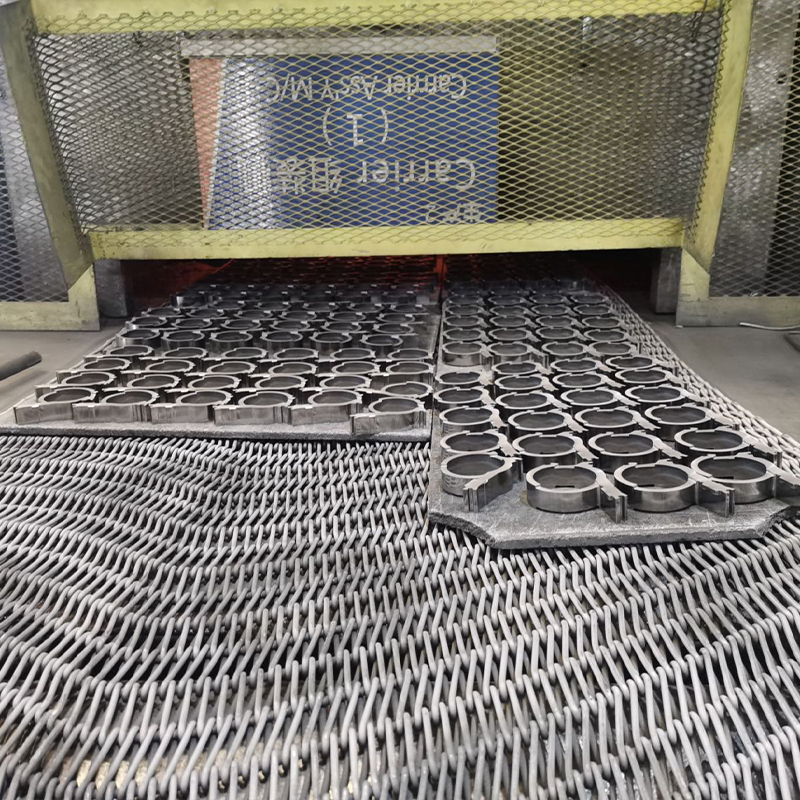
A continuous brazing line stops because the mesh belt has drifted to one side, the edge wires are broken, and the stainless steel parts grouping together on the belt are no longer aligned. It is a familiar scenario for maintenance teams: the furnace itself is running correctly, but the belt has become the bottleneck.
Selecting a brazing furnace mesh belt is not just about finding something that fits the furnace opening. The belt must handle the brazing temperature, survive the furnace atmosphere, carry the parts without distortion, and keep tracking straight across weeks of continuous operation. In short, start with the alloy, then the weave construction, and finally the physical measurements.
What a Brazing Furnace Mesh Belt Does
In a continuous brazing furnace, the mesh belt is the transport system that moves parts through the preheat zone, the high-temperature brazing zone, and the cooling zone. It also acts as a thermal mass and a support surface. If the belt deflects, parts can shift and braze together; if the belt vibrates, small components can fall through the mesh openings.
The duty varies with the process:
- Aluminum brazing typically runs at 590-620°C in a nitrogen atmosphere with a non-corrosive flux. The belt must resist flux residue and stay flexible enough to track around small pulleys.
- Copper brazing runs at 1090-1150°C in a reducing atmosphere. The belt must keep its strength near the liquidus temperature of copper and survive repeated thermal cycling.
- Nickel brazing of stainless steel runs at 1000-1120°C, often in hydrogen or vacuum. The belt must be dimensionally stable at high temperature and avoid contaminating the parts.
Alloy Selection: Temperature and Atmosphere Come First
The wrong alloy is the most common reason for premature belt failure. If the belt creeps, cracks, or oxidizes at operating temperature, no weave design can save it. Use the highest continuous-duty temperature of the furnace as your starting point, not the nominal set point, because zone overshoot and part loading can push the belt temperature higher.
Common mesh belt alloy groups for brazing furnace service.
| Alloy group |
Typical temperature limit |
Best suited for |
Main limitation |
| 304 stainless steel |
~650°C |
Light aluminum brazing |
Poor oxidation resistance above 700°C |
| 310S stainless steel |
~1050°C |
Copper brazing in reducing gas |
Limited creep strength at peak load |
| 314 stainless steel |
~1100°C |
Copper brazing and light stainless parts |
High silicon content can affect weld repair |
| 330 stainless steel |
~1150°C |
Long, heavy copper or nickel brazing runs |
Higher cost and harder to form |
| Nickel-chromium-iron alloy |
~1200°C |
High-temperature nickel brazing, corrosive fluxes |
Most expensive option |
For copper brazing in a mesh belt furnace, many shops choose a 310S or 314 grade because it offers a good balance between oxidation resistance and cost. For aluminum brazing, the fluoride flux can corrode chromium-rich alloys, so a belt with higher nickel content or a surface treatment is often a safer investment. If your parts are stainless steel heat exchangers or medical components, a high-temperature nickel alloy provides the stability needed for repeatable joint quality.
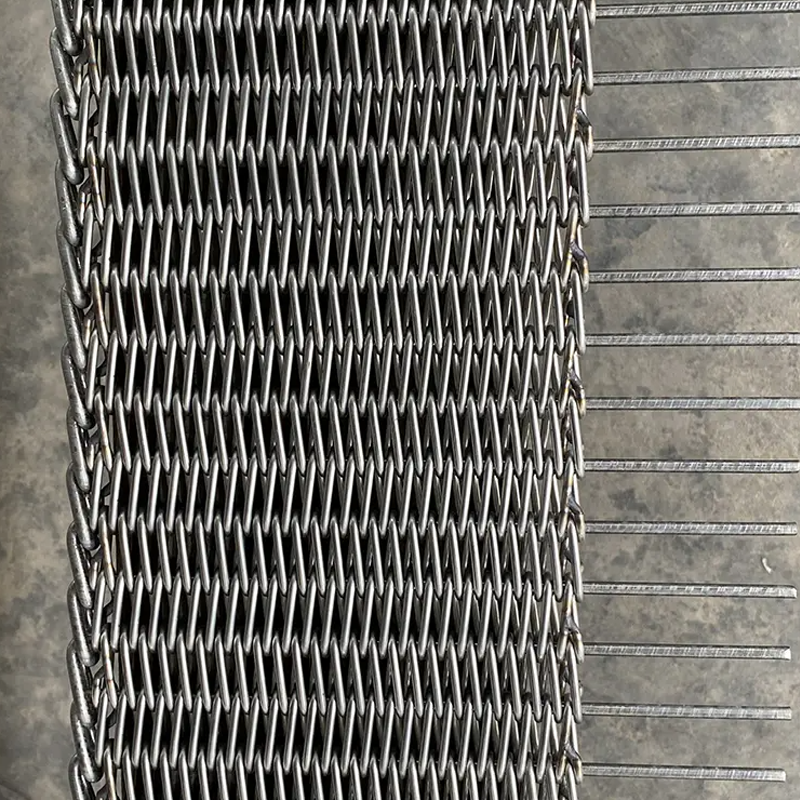
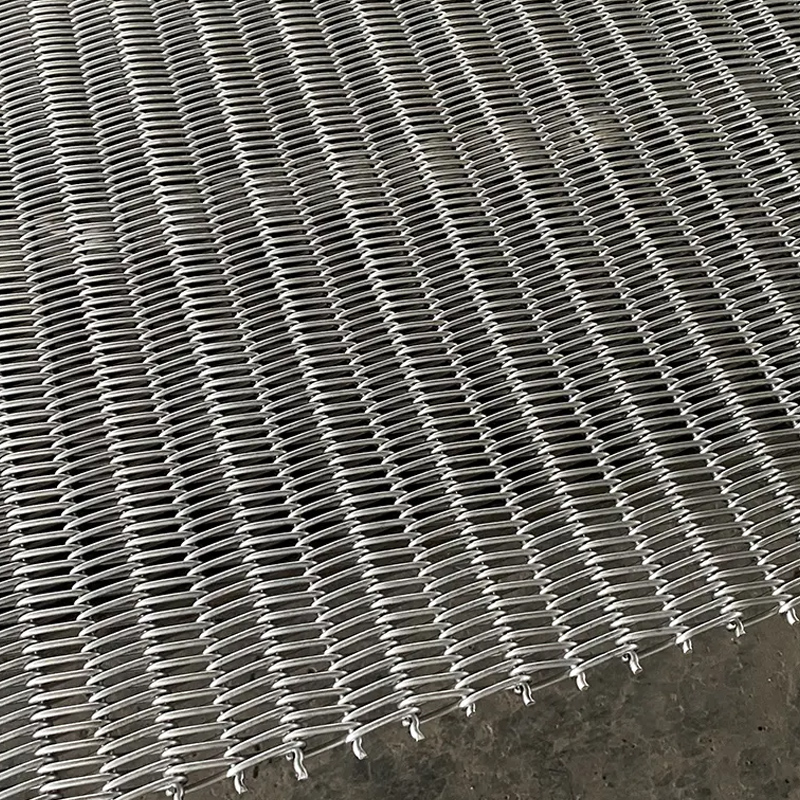
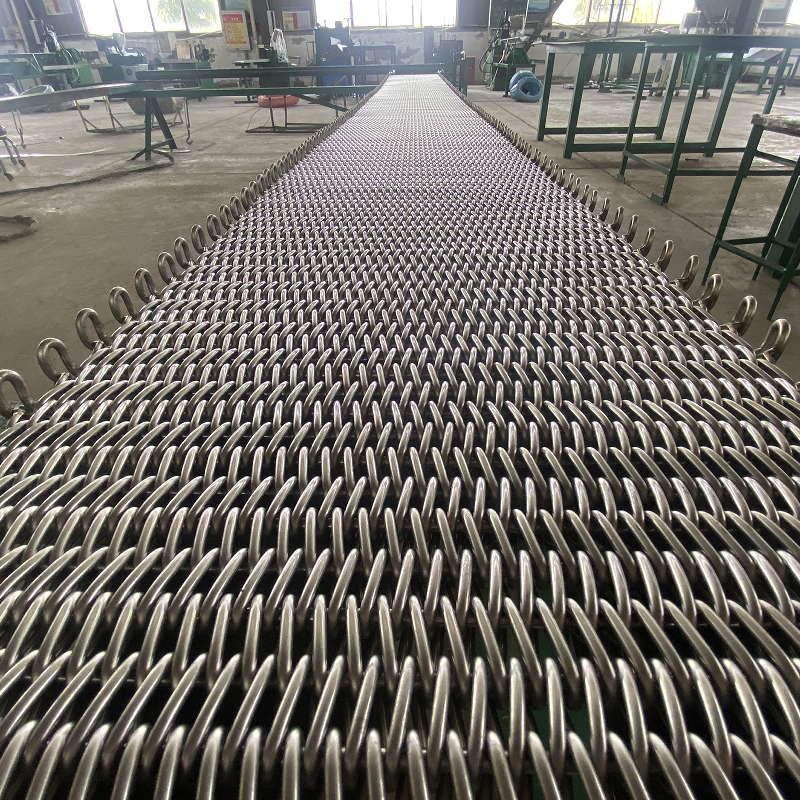 Copper Brazing Furnace Conveyor Belt with Alloy OptionsThis belt is selected for copper brazing in mesh belt furnaces, balancing oxidation resistance and cost. The weave choice affects service life, making it relevant for aluminum or stainless applications.View Product →
Weave and Edge Construction: What Keeps the Belt Flat
Once the alloy family is decided, the weave determines how the belt behaves under load. For brazing furnaces, the common options are not so different in appearance, but they give very different service lives.
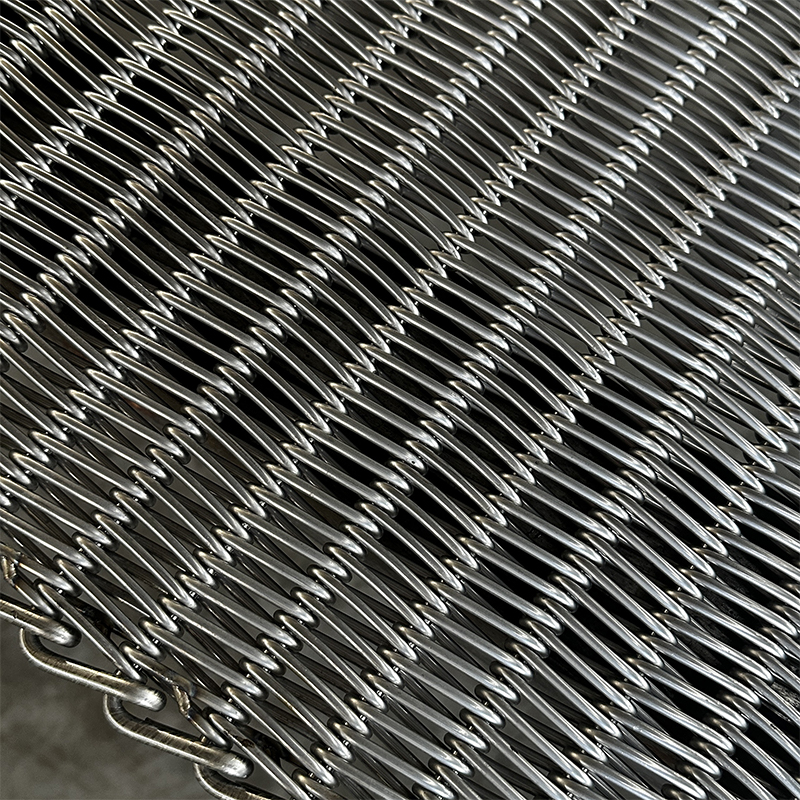
- Balanced weave uses one left-hand and one right-hand spiral per pitch. It is flat, reasonably stable, and good for small parts with moderate loads.
- Double balanced weave uses two left and two right spirals per pitch. It is stronger, less prone to distortion, and often specified when parts are heavy or the furnace is wide.
- Chain-link weave is more flexible and tracks more easily around small diameter drums, but it tends to stretch more and is not ideal for long, hot furnace zones.
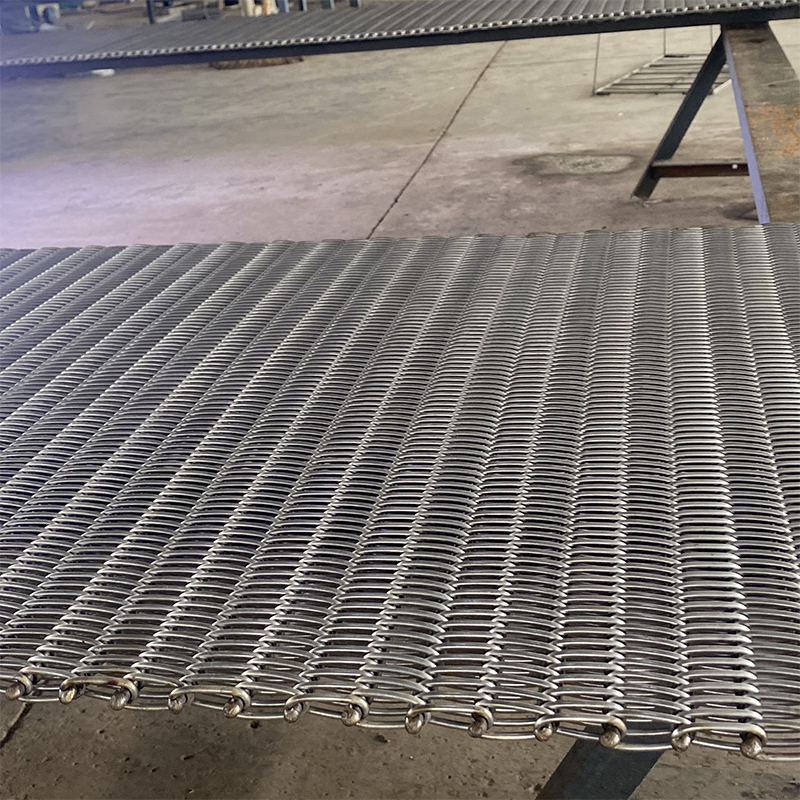
The edge is just as important. Many premature failures start at the edge because the outer spiral wires have no support. Reinforced edges, such as an A-shaped edge with chain plates or a U-shaped wire reinforcement, keep the belt straight and reduce edge cracking. If you see the belt tenting in the middle or curling at the side, the edge design is the first thing to check.
Aluminum brazing belts especially need a stable edge because the parts are often thin aluminum fins that catch on any protruding wire. A reinforced edge also helps the belt run wider without excessive sag.
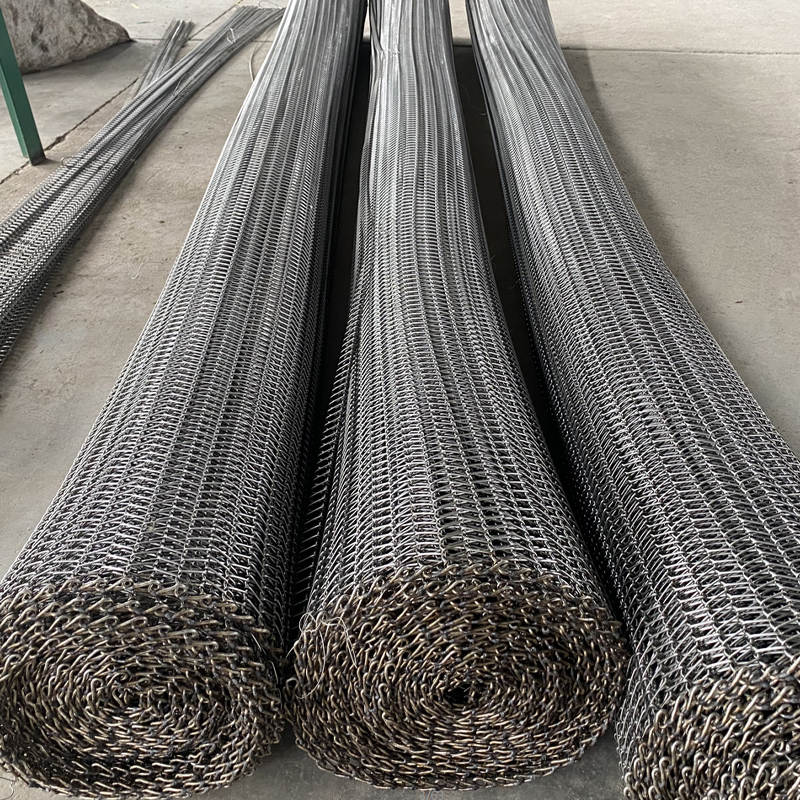 Brazing Furnace Mesh Belt with Reinforced EdgeThis belt addresses early failure from thermal, chemical, and mechanical stress. A stable edge is vital for thin aluminum fins and wide operation, reducing sag and extending durability.View Product →
Why Brazing Belts Fail Early
Most brazing furnace mesh belts do not wear out suddenly; they fail after a combination of thermal, chemical, and mechanical stress. Recognizing the signs early can save weeks of downtime.
- Thermal fatigue: Repeated heating and cooling creates internal stress. Cracks usually appear near the edge or at the points where spiral wires cross.
- Creep elongation: At high temperature, metal slowly stretches under load. If the belt becomes longer than the furnace take-up can adjust, it will sag and track poorly.
- Flux corrosion: Aluminum brazing flux leaves a residue that attacks stainless steel. If the belt is not cleaned or high-temperature materials are not used, pitting starts at wire intersections.
- Mechanical damage: A jammed part, a dropped pallet, or rough loading can bend wires and create a weak point that propagates through the belt.
- Misalignment: Worn sprockets, uneven drum surfaces, or inconsistent tension force the belt against the furnace side rails and destroy the edge.
It is worth reviewing a detailed guide on how the belt interacts with furnace temperature and atmosphere; the failure mechanisms are often visible in the worn belt before they stop production.
Buying Checklist: What to Measure Before You Order
When a replacement belt is needed, the supplier will ask for more than the furnace make and model. Furnaces get modified, pulleys get resized, and side rails are welded in different positions. Provide these measurements to avoid getting a belt that is close but not correct.
Key measurements and specifications for a replacement brazing furnace mesh belt.
| Parameter |
What to check |
Typical units |
| Belt width |
Outside edge to outside edge, minus clearance for side plates |
mm |
| Mesh pitch |
Distance between spiral centers along the belt length |
mm |
| Wire diameter |
Wire gauge used in the spirals |
mm |
| Belt length |
Measured around the furnace path with take-up at mid-position |
m |
| Edge finish |
Plain, welded, A-shaped reinforcement, U-shaped reinforcement |
Type |
| Joint type |
Crimped, welded, or spiral connector |
Type |
| Operating temperature |
Highest recorded zone temperature, not the set point |
°C |
| Atmosphere |
Air, nitrogen, hydrogen, or vacuum with flux residue |
Description |
Once the data is complete, a manufacturer can confirm the correct material and weave. Explain what parts are being brazed; a belt that works for aluminum radiators may not be the same as a belt for stainless steel heat exchanger cores. The part shape and loading pattern change the required wire diameter and pitch. For complex loads, a stainless steel brazing belt with a dense mesh and reinforced edge is usually the safer recommendation.
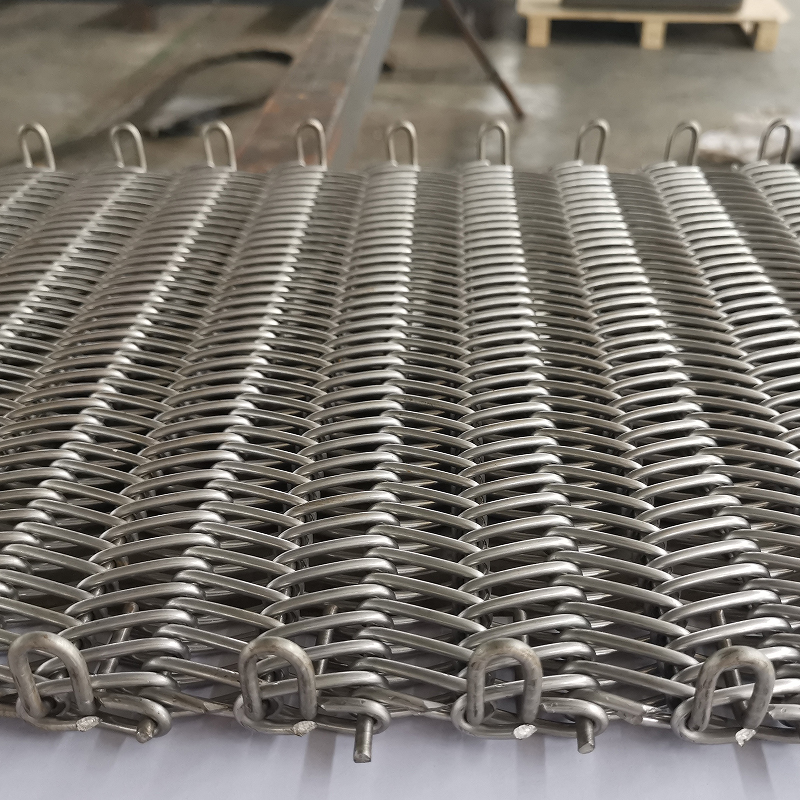 Heat Exchanger Core Brazing Furnace Mesh BeltDesigned for complex loads like aluminum radiators or stainless steel cores, this belt requires dense mesh and reinforced edges. Matching alloy and weave to operating conditions ensures longer life.View Product →
Final Thought
A brazing furnace mesh belt is a long-term investment. If the alloy is matched to the furnace temperature and atmosphere, the weave is matched to the parts, and the measurements are taken from the actual furnace envelope, the belt will last longer than a generic replacement. Take the time to document the operating conditions and choose a belt designed for that specific service.
Need help with your brazing line? Start with a clear view of your process conditions, then compare the candidate belts against the same checklist used by industrial brazing applications.



 English
 русский
 عربى
عربى