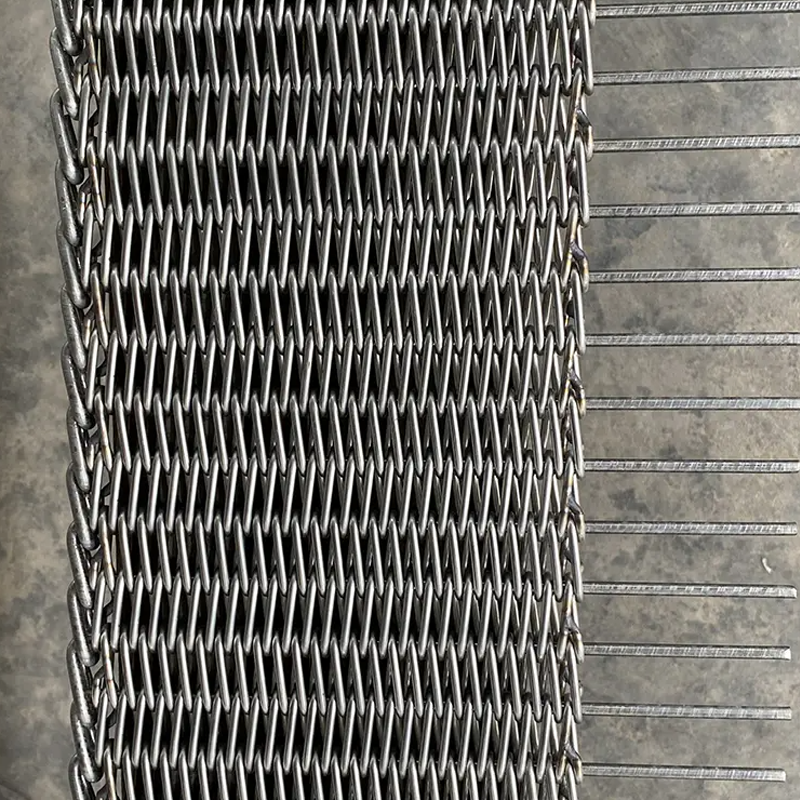
What Is a Sintering Furnace Mesh Belt and How Does It Work?
A copper-based powder metallurgy line can look perfectly stable for months. Then one morning the operator notices the belt drooping between drives, parts creeping off center, and fine dark specks appearing on sintered surfaces. The root cause is almost always the same: the sintering furnace mesh belt has reached the end of its useful life, or it was never the right belt for the job in the first place.
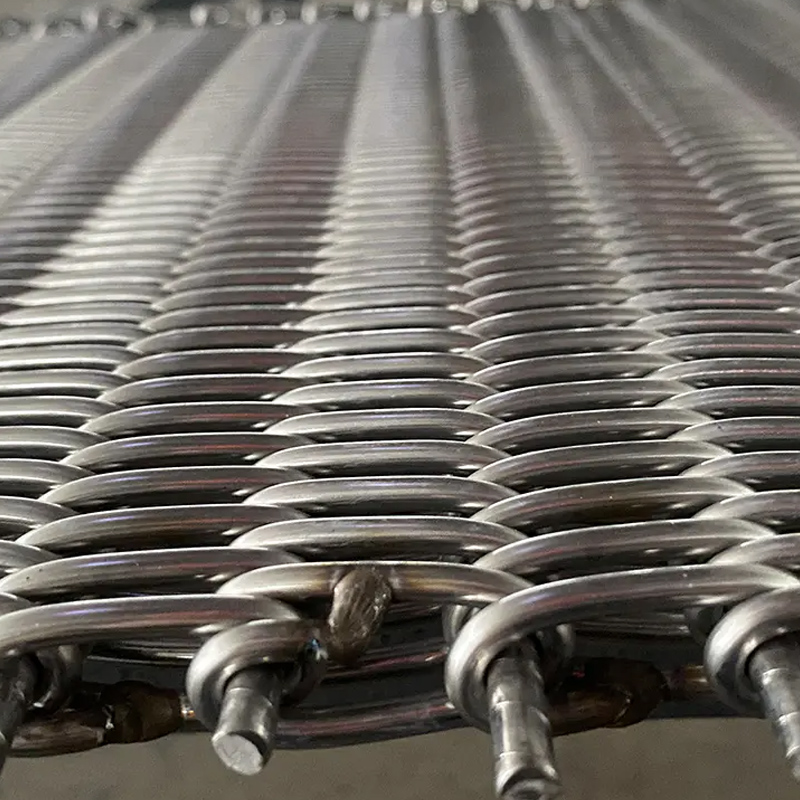
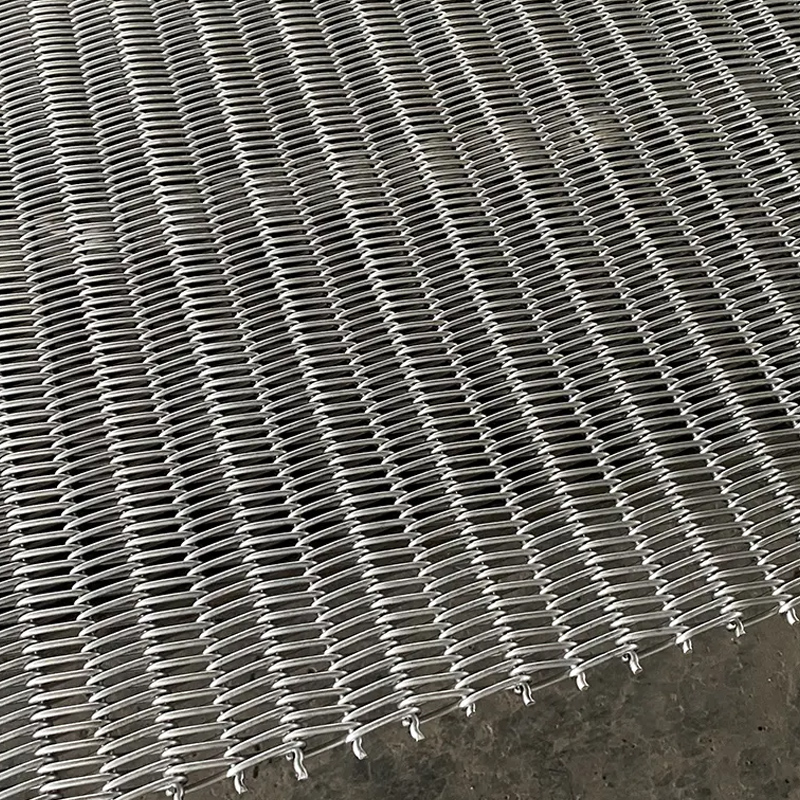
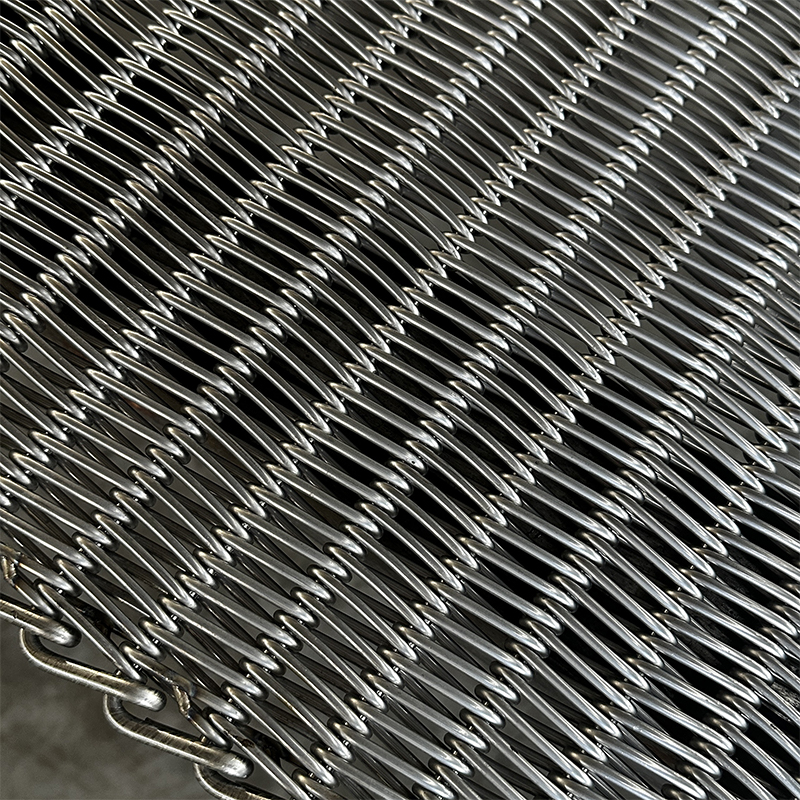
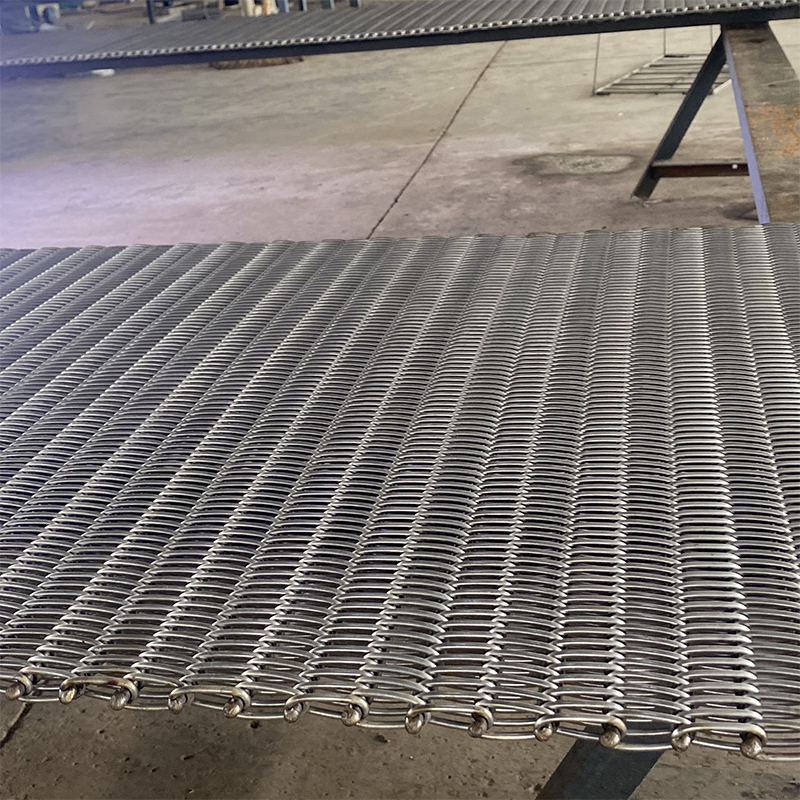
In a continuous mesh belt sintering furnace, the belt is the only component that experiences the entire thermal journey. The furnace is typically arranged in functional zones: a drive unit, a burn-off zone, the high-temperature sintering zone, and a water-jacketed cooling zone. Parts are loaded directly onto the belt, without boats or trays, and the belt carries them through each zone at a speed that operators can adjust, typically between 1.4 and 14 m/h depending on the process.
This direct-load design is the reason mesh belt furnaces heat more uniformly and produce less part distortion than walking beam or pusher furnaces. It also means the belt carries the full responsibility for part stability from room temperature to the sintering plateau and back. Material, weave, edge treatment, and tension management all feed directly into product yield and line uptime.
That is why we treat the belt as a process component rather than a consumable. To see the product options available, you can start with our sintering furnace mesh belt range and then narrow down by your specific process.
Main Types of Sintering Furnace Mesh Belts
Not all sintering belts are identical, and the reason is straightforward: not all sintering processes are identical. Workpiece weight, sintering temperature, furnace atmosphere, and surface finish requirements each change the belt specification. The following process families cover the majority of applications we see in production plants.
Powder metallurgy sintering belts
Iron-based, copper-based, and stainless steel-based PM parts impose different demands on the belt. Copper-based parts sinter at lower temperatures but can be dense and heavy; iron-based and stainless steel-based parts need higher temperatures and push the belt closer to its creep limit. A good practice is to match weave density to the smallest part dimension that must be supported, and to match the alloy grade to the maximum sintering temperature. For the dedicated product line in this category, see our powder metallurgy sintering furnace mesh belts.
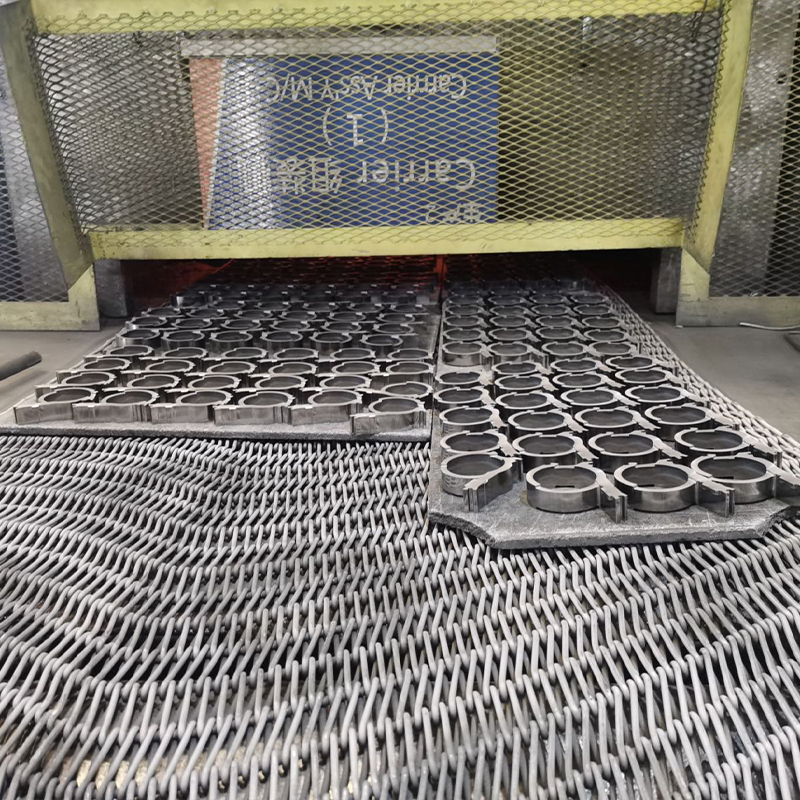 Custom Powder Metallurgy Sintering Furnace Mesh Belt Manufacturers, SuppliersAs Powder Metallurgy Sintering Furnace Mesh Belt suppliers and Powder Metallurgy Sintering Furnace Mesh Belt manufacturers in China, Yang...View Product →
Ceramic sintering belts
Electronic ceramics, including filters, resonators, sensors, and special ceramic components, typically sinter above 1100°C. The belt must support small, brittle parts without vibration while allowing hot gas to flow evenly around each part. Mechanical load is rarely the limiting factor here; thermal stability and surface cleanliness are.
Electronic component sintering belts
Circuit boards, PLCC controllers, and sensor packages move through furnaces with tight temperature tolerances. Dimensional stability of the belt becomes critical because any change in belt geometry shifts part positioning from zone to zone and changes the thermal profile each part experiences. The product range for this application is available under electronic component sintering furnace mesh belts.
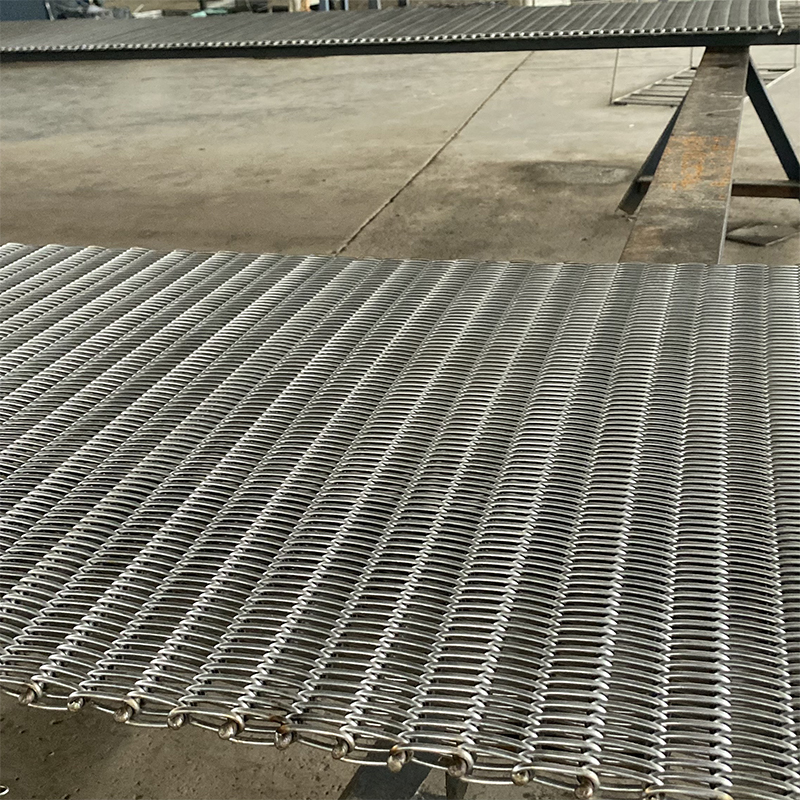 Custom Electronic Component Sintering Furnace Mesh Belt Manufacturers, SuppliersAs Electronic Component Sintering Furnace Mesh Belt suppliers and Electronic Component Sintering Furnace Mesh Belt manufacturers in China...View Product →
Foamed nickel and photovoltaic sintering belts
Foamed nickel for battery electrodes needs an open mesh that supports a delicate sponge-like structure without marking it. Solar photovoltaic cell sintering adds a strict flatness requirement and a very low contamination limit. In both cases, the belt is selected more for its surface behavior than for its load capacity.
Sintering Furnace Mesh Belt Materials: How to Choose by Temperature and Atmosphere
Material selection is a temperature and atmosphere question first, and a cost question second. Choosing a grade that barely survives your maximum temperature is not a cost saving; it is the beginning of a failure investigation. The table below summarizes commonly used alloy families in industrial sintering furnaces, with typical temperature ranges based on industry practice.
Typical alloy families used in sintering furnace mesh belts, with temperature and atmosphere guidance based on general industry practice.
| Alloy class |
Typical temperature range |
Atmosphere compatibility |
Typical use cases |
| SUS310S (25Cr-20Ni) |
900-1100°C |
Oxidizing, nitrogen-based |
General sintering, ceramic components |
| AISI314 (25Cr-20Ni, silicon-modified) |
900-1100°C |
Oxidizing |
Ceramic and electronic parts where scale adherence matters |
| Nickel-based alloys |
1100-1250°C and above |
Hydrogen, reducing, mixed |
Powder metallurgy, high-temperature ceramics |
The reason the grade matters so much is creep. Above roughly 900°C, grain boundaries in austenitic stainless steel begin to slide under sustained load, and the belt slowly elongates. A lower grade may survive the nominal temperature for a few weeks, but its creep rate is far higher, so the initial purchase saving disappears in downtime, replacement cost, and rejected parts. In practice, the lowest priced belt is almost never the lowest cost belt.
Atmosphere changes the selection logic just as much as temperature. In hydrogen sintering, the reducing atmosphere strips protective oxide layers differently than air does, so alloy stability in that specific environment is essential. In oxidizing conditions, chromium content drives scale resistance, while silicon content improves scale adherence. A competent supplier should always ask for your atmosphere composition before recommending a belt, and so should you before accepting one.
Common Sintering Furnace Mesh Belt Failure Modes and Prevention
Three failure modes account for most premature mesh belt replacements. Understanding them helps you diagnose a problem while it is still a signal, before it becomes a shutdown.
High-temperature creep elongation
At temperatures above 900°C, grain boundary sliding causes the belt to elongate permanently over time, typically 3-8% depending on load and temperature. Visible symptoms are slackness, jumping over sprocket teeth, and running off center. Prevention starts with a material grade that has adequate creep strength, continues with correct initial tension, and ends with regular elongation measurement so you can schedule replacement before an unplanned stop.
Oxide scale spallation
Stainless steel belts form a chromium oxide layer that protects the base material. Under thermal cycling, this layer becomes brittle and flakes off. The flakes fall onto workpieces and become embedded, causing surface rejects, a critical concern in ceramic and electronic component sintering. A belt with a more adherent oxide scale, such as a silicon-modified grade or a nickel-based alloy, reduces this risk. For ceramic sintering, where contamination is the dominant problem, our ceramic sintering furnace mesh belts are designed with exactly this failure mode in mind.
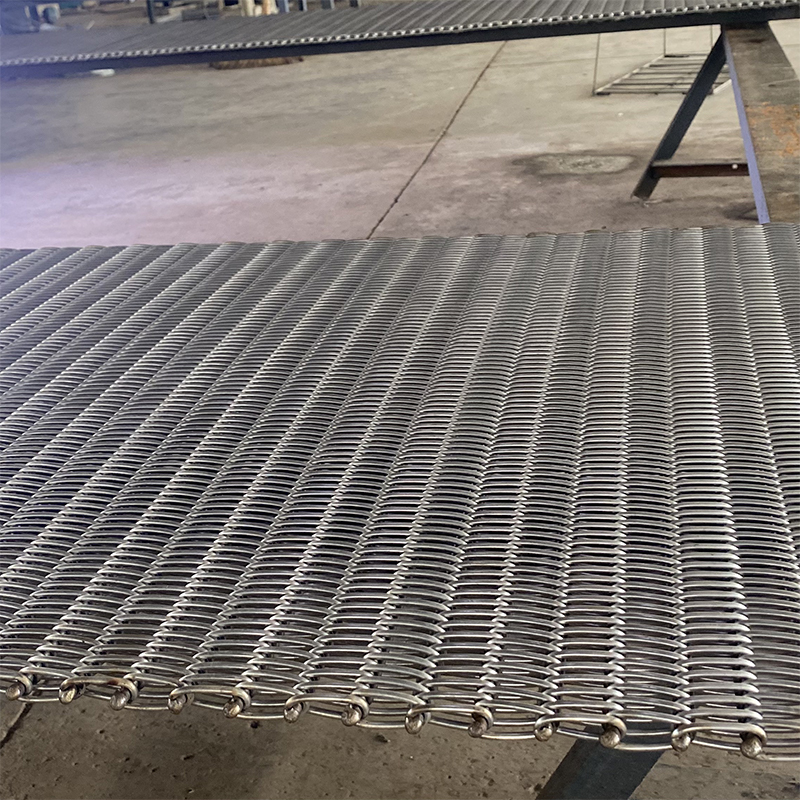 Custom Ceramic Sintering Furnace Mesh Belt Manufacturers, SuppliersAs Ceramic Sintering Furnace Mesh Belt suppliers and Ceramic Sintering Furnace Mesh Belt manufacturers in China, Yangzhou Yafei Machinery...View Product →
Premature fracture
When a belt breaks well before its expected life, the usual causes are material mis-selection or local overloading. If parts stack on one side of the belt, the strands on that side carry more than their design load and fatigue quickly. Uniform loading is not a nice-to-have detail; it is a life-extension requirement that is entirely within the operator's control.
How to Extend the Service Life of Your Sintering Furnace Mesh Belt
Extending belt life does not require exotic equipment or costly retrofits. It requires disciplined routine. The following practices are what we recommend to every plant that asks us why their belt fails early.
- Set initial tension with a proper tensioning device. Guessing leads either to slack belts or over-tensioned belts, and both shorten life.
- Measure and record belt elongation at every maintenance stop. A rising trend is the earliest warning you will get.
- Distribute parts uniformly across the belt width. Local concentration of load is the fastest route to premature fracture.
- Adjust belt speed to match the process. Unnecessary thermal cycling from running the belt faster than needed accelerates oxide scale spallation.
- Inspect edge wear and drive sprocket engagement monthly. Edge damage spreads quickly and forces a full belt change.
- Keep a maintenance log for each belt. Plants that track belt history consistently forecast replacement better and avoid unplanned stops.
These are habits, not capital investments. In our experience, plants that treat the belt as a process component rather than an unavoidable expense get the longest service life from every belt.
How to Select a Sintering Furnace Mesh Belt Supplier
The real question when selecting a supplier is not whether a vendor can weave a metal belt. Many can. The question is whether the vendor understands your sintering process well enough to recommend the right belt for it, and whether they have the engineering capability to back that recommendation.
Use this checklist when evaluating a supplier:
- Do they segment their product line by process, or do they sell the same belt for every furnace?
- Can they explain why a heavy iron-based PM part needs a different weave and alloy than a fragile ceramic filter?
- Do they have equipment processing and manufacturing capability, or are they only a trading house?
- Do they ask about your furnace atmosphere, operating temperature, and part weight before quoting?
- Do they support their work with application-specific engineering documentation?
These questions separate commodity belt sellers from process-oriented partners. A supplier that answers them well will also help you avoid the failure modes described earlier. As one example of how we think about this at Yafei, we encourage you to review our powder metallurgy applications page, which demonstrates our focus on the downstream process rather than only the belt.
Yafei Machinery Manufacturing is located in Yiling Industrial Park, Yangzhou. We began as a metal mesh belt factory and have grown into a private technology enterprise with equipment processing and manufacturing capabilities. Our product lines are segmented by downstream process, and we provide technical documentation in English, Russian, and Arabic for international customers.
Conclusion: Match the Belt to Your Process, Not the Other Way Around
If there is one takeaway from this guide, it is that the belt should be selected based on your sintering temperature, atmosphere, workpiece characteristics, and downtime budget, not the other way around. Material grade, weave construction, edge treatment, and tension management all contribute to the total cost of ownership over the life of the belt.
A supplier that asks about your parts before providing a quote is a supplier worth talking to. Send us your process parameters, including part material, sintering temperature, atmosphere, belt width, and current belt life, and we will provide a specific recommendation rather than a generic catalog answer. For more depth on the criteria covered here, you can also read our detailed sintering furnace mesh belt selection criteria.



 English
 русский
 عربى
عربى