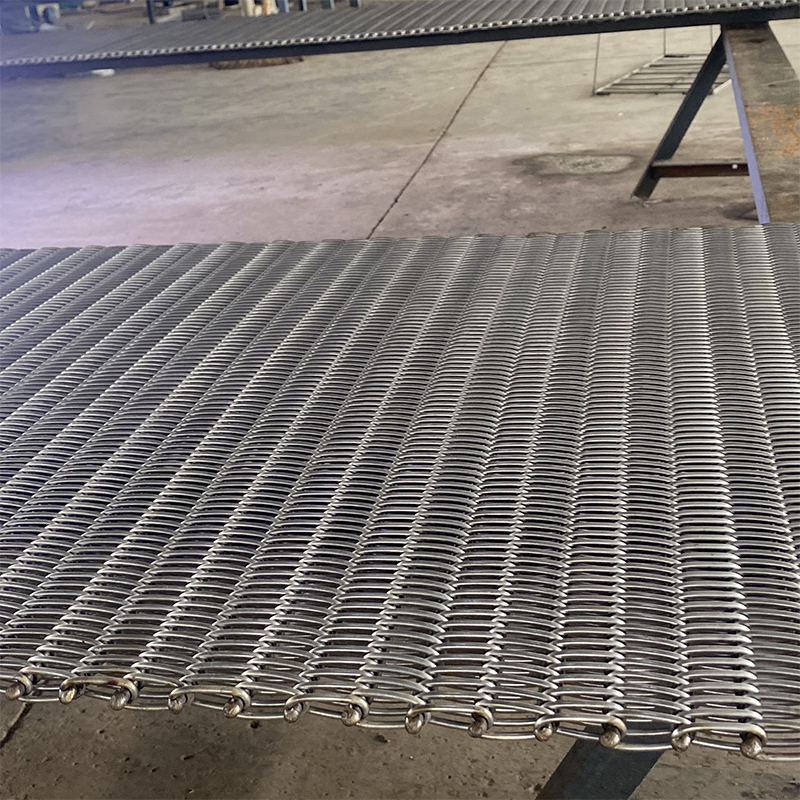
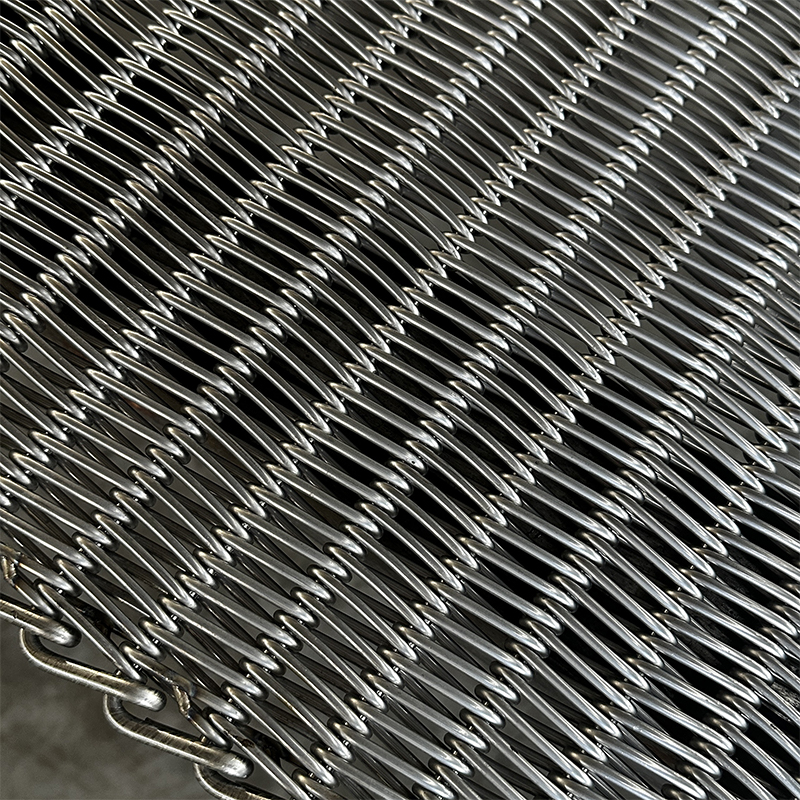
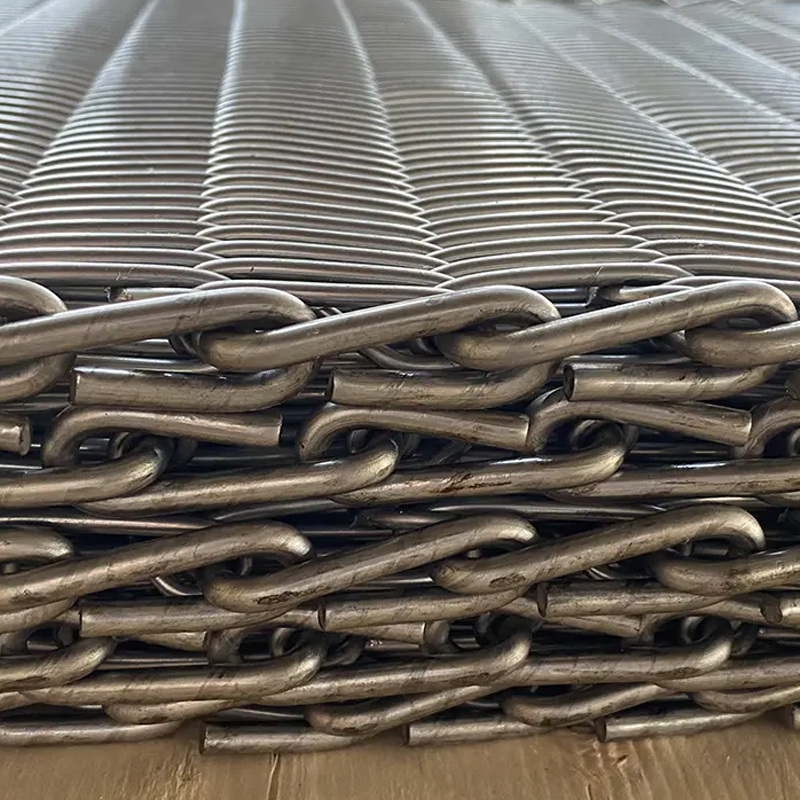
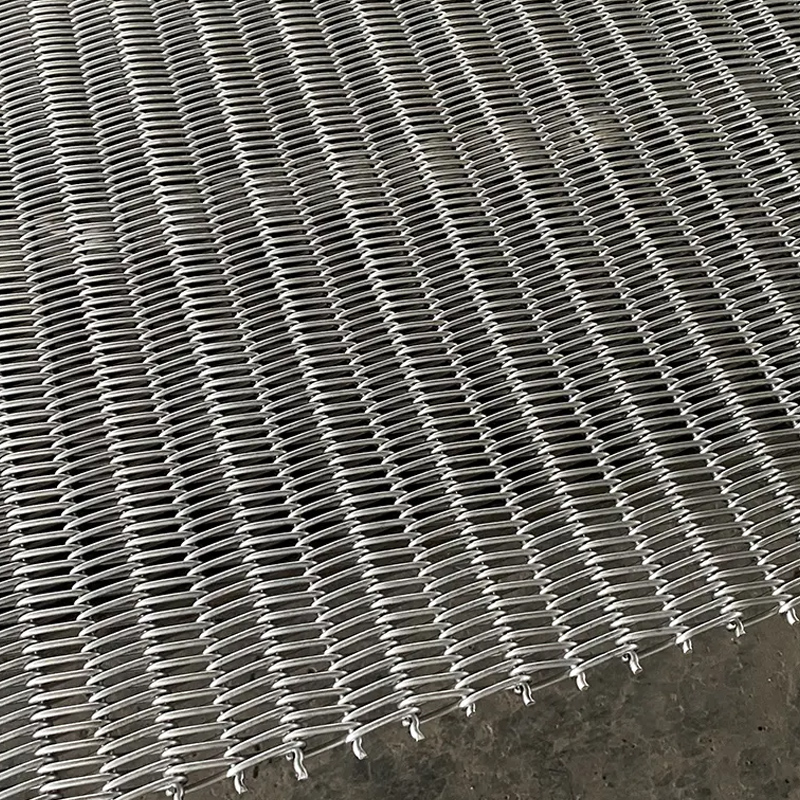
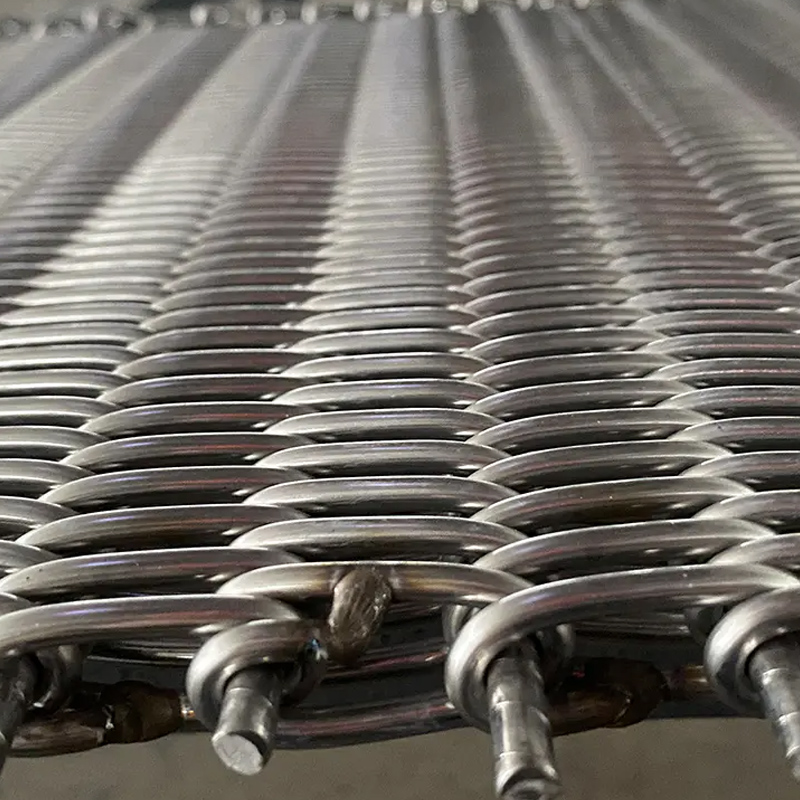
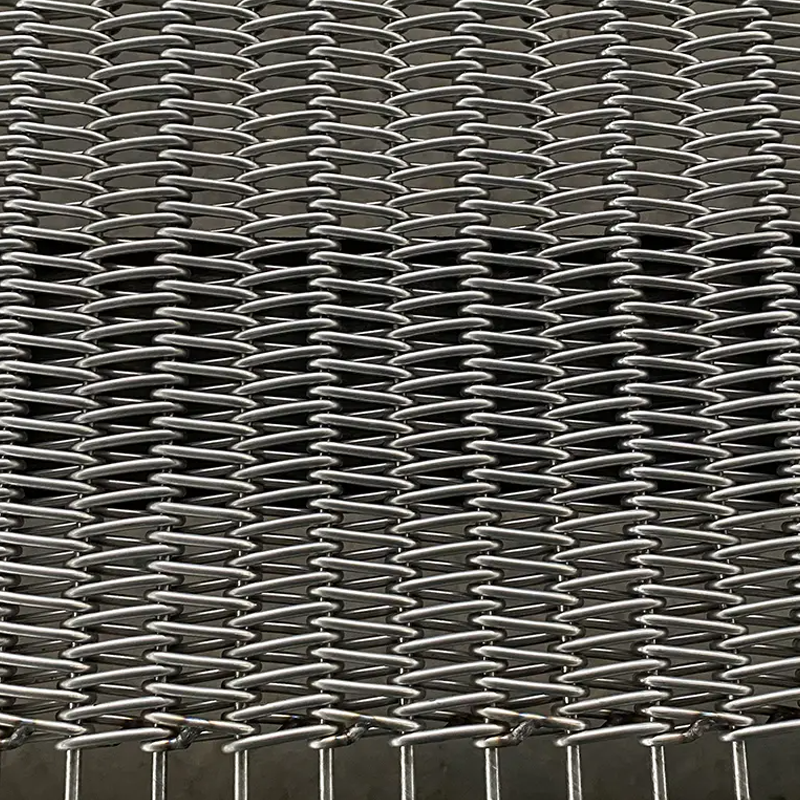
A sintering furnace mesh belt is a continuous conveyor belt made from heat-resistant metal alloys or ceramic-coated wire, designed to transport parts and materials through high-temperature sintering zones — typically ranging from 800°C to 1350°C (1472°F to 2462°F). Choosing the right mesh belt directly determines product quality, process efficiency, and equipment lifespan. The most critical selection factors are operating temperature, atmosphere compatibility, belt pitch/weave type, and alloy composition. This guide breaks down all major belt types, real-world applications, and a structured framework for making the right choice.
What Is a Sintering Furnace Mesh Belt?
Sintering is a thermal process that bonds powdered materials — metals, ceramics, or composites — into solid structures without reaching the melting point. The mesh belt serves as the moving floor of a continuous sintering furnace, carrying green (unsintered) compacts through preheat, sintering, and cooling zones in a precisely controlled atmosphere.
Unlike batch furnaces where parts sit stationary on trays, continuous mesh belt furnaces achieve higher throughput and tighter process consistency. The belt must maintain its structural integrity and dimensional stability across thousands of thermal cycles, often under protective atmospheres such as hydrogen (H₂), endothermic gas, nitrogen (N₂), or dissociated ammonia.
Key functional requirements for any sintering mesh belt include:
- Resistance to oxidation and creep at peak operating temperatures
- Adequate open area (typically 30–55%) for atmosphere penetration and heat transfer
- Sufficient tensile strength to carry load without elongation over time
- Smooth, non-reactive surface that does not contaminate the sintered product
- Resistance to carburization or nitriding in reactive atmospheres
Types of Sintering Furnace Mesh Belts
Mesh belts are not one-size-fits-all. There are four primary weave/construction types, each with distinct structural characteristics, open area ratios, and suitability for specific temperature ranges and load profiles.
Balanced Weave (Plain Weave) Belt
The balanced weave is the most widely used mesh belt construction for sintering furnaces. It features alternating left-hand and right-hand spirals interconnected by straight cross rods. This symmetric design distributes stress evenly and prevents lateral drift during operation.
- Typical open area: 35–45%
- Operating temperature range: Up to 1100°C (2012°F) depending on alloy
- Best for: Powder metallurgy (PM) parts, electronic components, ceramic substrates
- Wire diameter range: 0.8 mm to 3.0 mm
Balanced weave belts are available in fine (small mesh opening, high wire density) and coarse configurations. Fine-mesh variants are preferred when small or lightweight parts are being transported to prevent them from falling through or tipping.
Compound Balanced Weave Belt
A compound balanced weave uses two or more spirals between each pair of cross rods, increasing wire density and load-bearing capacity without sacrificing flexibility. This design provides a flatter, more uniform surface than the standard balanced weave.
- Typical open area: 25–38%
- Load capacity: Up to 2× that of equivalent-gauge balanced weave
- Best for: Heavier sintered parts, automotive components, dense ceramic tiles
Flat Wire (Flat Flex) Belt
Flat wire belts are constructed from flat, ribbon-like wires woven together with cross rods. The flat profile provides a nearly continuous, smooth surface with minimal gaps — critical for very small or fragile parts that cannot rest on rounded wire surfaces.
- Surface flatness: Equivalent to approximately 80–90% solid coverage
- Typical wire dimensions: 0.5 mm × 2.0 mm (thickness × width)
- Best for: Electronic components (chip resistors, capacitors), dental ceramics, thin ceramic wafers
- Limitation: Lower open area reduces atmosphere penetration from below
Rod Belt (Ladder Belt)
Rod belts consist of straight transverse rods linked by side chains or edge cables. They offer the highest open area of any belt type, making them ideal when maximum atmosphere access and gas flow from below are required.
- Open area: 50–65%
- Pitch options: 12 mm to 75 mm rod spacing
- Best for: Large structural PM parts, heavy ceramic tiles, hard metal (carbide) sintering
- Limitation: Parts must be large enough to span between rods without tipping or catching
| Belt Type |
Open Area |
Max Temp (°C) |
Typical Load (kg/m²) |
Primary Application |
| Balanced Weave |
35–45% |
Up to 1100 |
20–80 |
PM parts, electronics |
| Compound Balanced |
25–38% |
Up to 1150 |
80–200 |
Automotive, heavy PM |
| Flat Wire |
10–20% |
Up to 1050 |
10–40 |
Electronic components, ceramics |
| Rod Belt |
50–65% |
Up to 1350 |
100–400 |
Hard metals, large ceramics |
Comparison of sintering furnace mesh belt types by key technical parameters
Alloy Composition and Temperature Capability
The alloy used to manufacture a mesh belt is the single most important determinant of its temperature ceiling and service life. Selecting an under-spec alloy for the intended temperature results in rapid oxidation, creep deformation, and premature failure — often within weeks rather than the expected service life of 6 to 24 months.
Stainless Steel Grades (Up to ~900°C)
AISI 304 (18% Cr, 8% Ni) and AISI 316 (with 2% Mo) are entry-level mesh belt materials suitable for low-temperature sintering and debinding operations up to approximately 900°C. They are cost-effective and widely available but suffer rapid grain growth and oxidation scaling above this threshold. These grades are commonly used in belt furnaces for brazing, annealing, and drying, rather than high-temperature sintering.
AISI 310S (25% Cr, 20% Ni) extends the operating range to approximately 1050°C and is a popular upgrade for moderate-temperature sintering of stainless steel PM parts. Its higher chromium content forms a more stable oxide scale, significantly slowing further oxidation.
Nickel-Based Superalloys (Up to ~1200°C)
Alloy 330 (35% Ni, 19% Cr, 1.2% Si) and Inconel 601 (60% Ni, 23% Cr, 1.4% Al) offer substantially improved creep resistance and oxidation resistance for processes running between 1050°C and 1200°C. Alloy 330's higher nickel content inhibits carburization, making it particularly well-suited for sintering in endothermic or carburizing atmospheres.
Inconel 601's aluminum addition creates an alumina (Al₂O₃) scale at the surface that is chemically inert to most industrial atmospheres, providing superior protection compared to pure chromia-forming alloys. This makes it the preferred choice for continuous bright annealing and high-temperature sintering of stainless steel components.
Iron-Chromium-Aluminum (FeCrAl) Alloys (Up to ~1350°C)
For sintering temperatures above 1200°C — typical for hard metals (WC-Co), advanced technical ceramics, and high-alloy PM steels — FeCrAl alloys such as Kanthal A-1 (22% Cr, 5.8% Al) are the industry standard. Their maximum continuous operating temperature reaches 1350–1400°C, enabled by an exceptionally stable and adherent alumina scale.
FeCrAl belts are more brittle than nickel-based alternatives at room temperature, requiring careful handling during installation. However, in-service ductility at operating temperature is adequate for conveyor applications, and their ability to withstand extreme temperatures more than compensates for this limitation in high-temperature sintering environments.
| Alloy |
Composition (key elements) |
Max Continuous Temp |
Oxidation Scale |
Typical Service Life |
| AISI 304/316 |
18Cr-8Ni / 16Cr-12Ni-2Mo |
~900°C |
Chromia (Cr₂O₃) |
6–12 months |
| AISI 310S |
25Cr-20Ni |
~1050°C |
Chromia (Cr₂O₃) |
8–18 months |
| Alloy 330 |
35Ni-19Cr-1.2Si |
~1150°C |
Chromia (Cr₂O₃) |
12–24 months |
| Inconel 601 |
60Ni-23Cr-1.4Al |
~1200°C |
Alumina (Al₂O₃) |
12–24 months |
| Kanthal A-1 (FeCrAl) |
22Cr-5.8Al-Fe |
~1350°C |
Alumina (Al₂O₃) |
18–36 months |
Alloy grades commonly used in sintering furnace mesh belts: temperature limits and expected service life
Major Industry Applications
Sintering furnace mesh belts serve a broad range of industries, each with specific demands on belt design, alloy selection, and process atmosphere compatibility. The following represents the most significant application segments.
Powder Metallurgy (PM) Components
Powder metallurgy is the largest single market for sintering furnace mesh belts. Automotive PM components — including gears, connecting rods, bearings, and structural brackets — are sintered in continuous mesh belt furnaces at temperatures between 1120°C and 1200°C in a mixed N₂/H₂ atmosphere (typically 90% N₂ / 10% H₂ or 75% N₂ / 25% H₂).
A typical automotive PM sintering line processes 500–2000 kg of parts per hour, requiring a belt width of 450–900 mm and a belt speed of 50–200 mm/min depending on part geometry and section thickness. At this scale, belt lifetime and reliability directly translate to production cost per kilogram.
Electronic and Electrical Components
Thick-film paste sintering, MLCC (multilayer ceramic capacitor) sintering, resistor firing, and ferrite core sintering are all performed in continuous mesh belt furnaces. These applications run at lower temperatures — typically 600°C to 1000°C — but require exceptionally fine mesh and precise atmosphere control (air, nitrogen, or forming gas) to achieve target electrical properties.
Flat wire belts are dominant here, as the small and delicate parts (chip components can be as small as 0201 size, measuring just 0.6 mm × 0.3 mm) cannot be supported by conventional spiral mesh without risk of falling through or tipping during transport.
Structural and Technical Ceramics
Alumina (Al₂O₃), zirconia (ZrO₂), silicon nitride (Si₃N₄), and other advanced ceramics require sintering at temperatures of 1200°C to 1650°C. While the highest temperatures typically demand pusher furnaces or tunnel kilns with ceramic setters, many alumina and zirconia components are sintered in continuous mesh belt furnaces at the lower end of this range — particularly thin substrates and small-format parts.
For ceramic applications, the belt must not react with or contaminate the ceramic body. Alumina-forming alloys (Inconel 601, FeCrAl) are strongly preferred, as the passive alumina scale is chemically inert to most ceramic materials.
Hard Metals and Cemented Carbides
Tungsten carbide-cobalt (WC-Co) and other hard metal cutting inserts and wear parts are sintered at temperatures typically between 1300°C and 1450°C in hydrogen or vacuum. Continuous mesh belt furnaces are used for pre-sintering (dewaxing) at 450–600°C and for full sintering at the higher end of this range in high-temperature-capable equipment.
Rod belts made from FeCrAl alloys or molybdenum rods are the preferred configuration, providing both the high open area needed for hydrogen atmosphere access and the temperature capability required for full densification.
Magnetic Materials and Soft Ferrites
Sintered ferrite cores, MnZn and NiZn ferrites, and bonded magnets are sintered in continuous belt furnaces under carefully controlled oxygen partial pressure. Temperature ranges typically fall between 900°C and 1350°C depending on ferrite chemistry. The mesh belt must be neutral — neither a source nor a sink of oxygen — to avoid disturbing the sensitive oxygen balance that determines final magnetic permeability and loss characteristics.
Key Selection Criteria: A Practical Framework
Selecting the right sintering furnace mesh belt requires evaluating six core parameters. A mismatch in any one of these can lead to premature belt failure, product contamination, or suboptimal process performance.
1. Peak Operating Temperature and Thermal Cycle Profile
This is the primary driver of alloy selection. Always select an alloy rated at least 50–100°C above the intended peak operating temperature to account for local hot spots and furnace temperature variations across the belt width. Furnaces with high uniformity specifications (±5°C across the belt) reduce this safety margin requirement, but it is rarely advisable to eliminate it entirely.
Also consider the frequency of thermal cycling. Belts in furnaces that are frequently shut down and restarted experience significantly higher thermal fatigue than those running 24/7. Alumina-forming alloys are generally more susceptible to scale spallation during repeated thermal cycling than chromia-forming grades, which should be factored into alloy selection for intermittently operated furnaces.
2. Furnace Atmosphere Compatibility
Different protective atmospheres interact differently with belt alloys. The following summarizes the key compatibility considerations:
- Hydrogen (H₂): Generally benign for all standard alloys; actually reduces the surface oxide scale, which can be beneficial. High-purity H₂ (dew point below −40°C) does not attack any standard sintering belt alloy.
- Nitrogen (N₂): Safe for most alloys. High-purity N₂ may cause nitriding of iron-base alloys at temperatures above 1050°C; nickel-base alloys are more resistant.
- Endothermic gas (N₂/CO/H₂): Carbon-containing; risk of carburization. Alloy 330 (high Ni) or Inconel alloys preferred.
- Dissociated ammonia (75% H₂ / 25% N₂): Standard for many PM processes; compatible with most alloys. The hydrogen component helps keep the surface reduced.
- Air or low-oxygen atmosphere: Standard austenitic stainless (304, 310S) performs well. Rapid oxidation limits temperatures.
3. Load Profile: Weight, Distribution, and Part Geometry
The load on the belt — both total weight and how it is distributed — determines the required wire diameter and weave type. As a practical guideline:
- Light loads (<30 kg/m²): balanced weave in lighter gauge wire (1.0–1.6 mm)
- Medium loads (30–100 kg/m²): balanced weave in heavier gauge (2.0–3.0 mm) or compound balanced weave
- Heavy loads (>100 kg/m²): compound balanced weave or rod belt; consider using ceramic fiber or graphite trays to distribute point loads
Part geometry also matters: sharp-edged or pointed parts can act as stress concentrators on the belt wire, accelerating fatigue failure at contact points. In such cases, placing parts on thin alumina setter plates is recommended rather than resting them directly on the belt.
4. Belt Width and Furnace Dimensions
Mesh belt furnaces are built in standard belt widths, most commonly 150 mm, 300 mm, 450 mm, 600 mm, 750 mm, and 900 mm. The belt must be specified to match the furnace's drive and support roll dimensions precisely — even a 5 mm width discrepancy can lead to edge wear and lateral tracking problems.
Belt length is determined by the furnace hot zone length plus the return path. For a standard 1200 mm hot zone furnace with a 600 mm belt width, the total belt length is typically 3.5–5.0 meters, accounting for the return path. Longer furnaces with multiple temperature zones may use belts up to 10–12 meters in total length.
5. Mesh Opening Size and Open Area Percentage
The mesh opening must be smaller than the smallest dimension of the parts being processed — including any protrusions or fins. As a practical rule, the mesh opening should be no more than 60–70% of the smallest part feature to prevent parts from falling through, becoming wedged, or tipping.
Simultaneously, open area should be maximized to ensure uniform atmosphere penetration from below, which is critical for consistent densification and decarburization across the full part cross-section. This creates a design tension that must be resolved based on the specific part geometry. For parts smaller than ~5 mm in any dimension, flat wire belts or the use of setter trays is generally more practical than specifying an extremely fine spiral mesh.
6. Belt Speed and Throughput Requirements
Belt speed, combined with furnace hot zone length, determines part residence time at peak temperature — a critical process parameter. For example, a furnace with a 1200 mm sintering zone running at 100 mm/min provides a 12-minute soak at peak temperature. Increasing belt speed to 150 mm/min reduces this to 8 minutes, which may be insufficient for full densification of heavier cross-sections.
Higher belt speeds also increase the tensile load on the belt, particularly during acceleration from cold starts. When upgrading a furnace to higher throughput, it is important to verify that the existing belt specification can handle the increased drive tension — particularly at elevated temperatures where creep resistance is reduced.
Belt Maintenance and Failure Modes
Even correctly specified belts require proactive maintenance to achieve expected service life. Understanding the most common failure modes enables early intervention and minimizes unplanned downtime.
Creep and Elongation
At high temperatures, metals deform slowly under sustained stress — a phenomenon called creep. In mesh belts, creep manifests as progressive elongation of the belt (stretch) and sagging between support rolls. A belt that has elongated by more than 1–2% of its original length should be shortened or replaced, as excessive sag can cause parts to slide or contact furnace walls and muffle tubes.
Creep rate increases dramatically with temperature. A belt running 50°C above its design point may creep at 5–10× the rate of one operating within specification. This underscores the importance of the 50–100°C safety margin in alloy selection.
Oxidation Scaling and Wire Thinning
Progressive surface oxidation consumes wire cross-section over time, reducing the effective wire diameter and therefore the belt's load-bearing capacity. A wire that started at 2.0 mm diameter may be reduced to 1.5 mm after extended high-temperature service, representing a 44% reduction in cross-sectional area. Regular visual inspection and periodic wire diameter measurement at the highest-temperature zone section can provide early warning before catastrophic failure.
Fatigue Cracking at Weld Points
Mesh belts are formed by weaving wire spirals and connecting them with cross rods. The cross rods are typically crimped or welded into the spirals. These connection points are stress concentration sites and are susceptible to fatigue cracking under cyclic loading (each revolution of the belt constitutes a load cycle). Fatigue failures typically initiate at the rod-to-spiral interface and progress across the rod diameter. Inspection should focus on these connection zones, particularly after any belt tracking incident or overload event.
Carburization Embrittlement
In carbon-bearing atmospheres (endothermic gas, dissociated methane), carbon can diffuse into the belt alloy at elevated temperatures, forming carbide precipitates in the wire microstructure. Over time, this embrittles the wire, causing it to fracture easily when subjected to bending stress during belt flexing around drive rolls. Carburized wire breaks cleanly with a brittle fracture surface rather than the ductile deformation seen in normal wear. Switching to a higher-nickel alloy (Alloy 330 or Inconel 600 series) is the most effective remedy, as nickel strongly inhibits carbon uptake.
Recommended Inspection Schedule
- Weekly: Visual check for broken wires, loose cross rods, or abnormal tracking deviation
- Monthly: Measure belt length against baseline to quantify elongation; check belt tension setting
- Quarterly: Inspect wire diameter at the hot zone section using calipers; document and trend over time
- Annually: Full belt removal and inspection; assess cross rod condition; consider partial replacement of heavily worn sections
Optimizing Belt Performance Through Process Design
Beyond selecting the correct belt specification, process and furnace design decisions significantly influence how long a belt lasts and how consistently it performs. The following practices represent established industry best practice.
Load Distribution and Part Placement
Concentrated loads — such as stacking heavy trays along the belt centerline — create uneven stress distribution across the belt width and accelerate centerline creep relative to the edges, eventually causing the belt to buckle or track laterally. Distribute loads as uniformly as possible across the full belt width, leaving a minimum 25–30 mm clearance from each belt edge to prevent parts from contacting the furnace muffle sidewalls.
Belt Tracking and Alignment
A misaligned belt that rubs against the furnace wall will fail within days rather than months. Proper tracking requires that the drive roll, idler rolls, and all intermediate support rolls are aligned to within ±0.5 mm of parallelism over the full furnace length. Most continuous belt furnaces include adjustable idler rolls at the furnace inlet and outlet for tracking correction. Check tracking weekly and re-adjust as needed; do not allow persistent lateral drift to continue uncorrected.
Controlled Startup and Cooldown Procedures
Thermal shock from rapid temperature changes accelerates oxide scale spallation and increases thermal fatigue. When bringing a furnace up from cold, use a controlled heat-up rate of no more than 100–200°C per hour through the 400–700°C range where phase transformations in the oxide scale can occur. Similarly, avoid pulling the belt into ambient air while it is still above 300°C, as rapid oxidation at intermediate temperatures (the "green rot" phenomenon in nickel alloys) can cause localized accelerated attack.
Atmosphere Purity Management
Moisture and oxygen contamination in the furnace atmosphere dramatically accelerate belt oxidation. For hydrogen-based atmospheres, maintain a dew point of −30°C or lower at the furnace inlet. Use a continuously reading dew point analyzer rather than relying solely on gas supply certificates, as moisture can enter through leaks in the gas train, furnace seals, or wet parts being loaded. A single wet batch entering a hydrogen furnace can create a steam spike that causes significant immediate oxidation of the belt surface.
Cost-Benefit Analysis: Upgrading Belt Alloy Grade
A common cost-optimization question is whether to use a lower-cost belt alloy (e.g., 310S instead of Alloy 330) to reduce upfront material cost. The answer depends on total cost of ownership — not purchase price alone.
Consider a 600 mm wide × 4 m long belt running at 1100°C in a nitrogen-hydrogen atmosphere:
- 310S belt cost: ~€1,200–1,800; expected life at 1100°C: 6–10 months
- Alloy 330 belt cost: ~€2,200–3,000; expected life at 1100°C: 14–20 months
- Belt replacement labor and downtime: €800–1,500 per replacement (including unplanned downtime cost)
Over a 24-month period, the 310S option may require 3–4 replacements (total cost €6,000–12,000), while Alloy 330 requires 1–2 replacements (total cost €3,000–6,000). The higher-alloy belt delivers 40–60% lower total cost over 24 months in this scenario, despite the higher unit price. This calculation becomes even more favorable when the production output lost during unplanned belt replacements is factored in.
The cost calculus shifts only when operating temperatures are consistently at or below 950°C, where 310S can achieve service lives comparable to Alloy 330 under moderate load conditions.
Emerging Trends and Advanced Belt Technologies
The sintering furnace mesh belt market continues to evolve in response to demands for higher temperatures, more aggressive atmospheres, and longer maintenance intervals.
Ceramic-Coated Mesh Belts
Ceramic coating — typically alumina or mullite applied by thermal spray — has been developed to extend the high-temperature capability of standard alloy belts and to prevent metallic contamination of sensitive ceramic or electronic parts. Coated belts offer a non-reactive sintering surface up to approximately 1200°C and are particularly valued in the medical ceramics and dental zirconia sintering markets, where even trace metallic contamination is unacceptable.
Molybdenum and Refractory Metal Belts
For sintering temperatures above 1400°C — required for certain technical ceramics, heavy tungsten alloys, and semiconductor substrates — molybdenum wire mesh belts are used in vacuum or pure hydrogen furnaces. Molybdenum maintains useful mechanical properties up to approximately 1600–1700°C but oxidizes catastrophically in air above 500°C, restricting its use to vacuum or pure hydrogen environments. The cost premium is significant (3–10× the cost of nickel-based belts), and these belts are considered specialist components for ultra-high-temperature processes.
Digitally Monitored Belt Systems
Several furnace manufacturers and belt suppliers now offer integrated condition monitoring systems that use strain gauges, vision systems, and tension sensors to track belt health in real time. These systems can detect anomalous tension spikes (indicating a caught part or tracking excursion), lateral drift, and elongation trends — enabling predictive maintenance scheduling rather than reactive replacement. In high-volume automotive PM production, the return on investment for such systems is typically achieved within 6–12 months through reduced unplanned downtime alone.
Summary: How to Select the Right Sintering Furnace Mesh Belt
Selecting the optimal sintering furnace mesh belt requires a systematic evaluation of process requirements against belt capabilities. The following decision framework summarizes the key steps:
- Define the peak sintering temperature and add a 50–100°C safety margin to determine the minimum alloy temperature rating required.
- Identify the furnace atmosphere and check for carburization, nitriding, or oxidation risks — select an alloy with demonstrated compatibility.
- Determine the load profile — weight per unit area, part size, and whether setter trays are used — to select the appropriate weave type and wire gauge.
- Define mesh opening requirements based on the smallest part feature dimension, ensuring the opening is no more than 60–70% of the smallest feature to prevent part loss or instability.
- Confirm furnace dimensions — belt width, drive roll diameter, and total belt circuit length — to ensure the belt specification matches the physical hardware.
- Evaluate total cost of ownership over a 24-month horizon, not just purchase price, to justify alloy upgrades where appropriate.
- Implement a preventive maintenance schedule to maximize service life and avoid unplanned production stoppages.
By applying these criteria systematically, sintering operations can achieve belt service lives of 12–24 months or more, minimize contamination risks, and sustain high production throughput with predictable maintenance costs. The investment in a correctly specified mesh belt — even at a higher upfront cost — consistently delivers superior total value compared to selecting on purchase price alone.



 English
 русский
 عربى
عربى