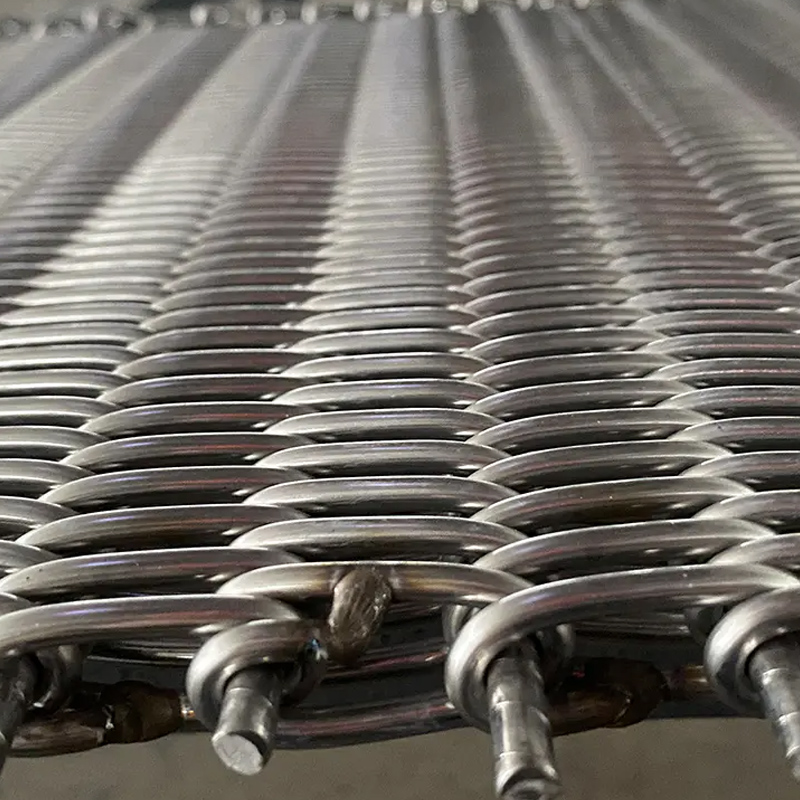
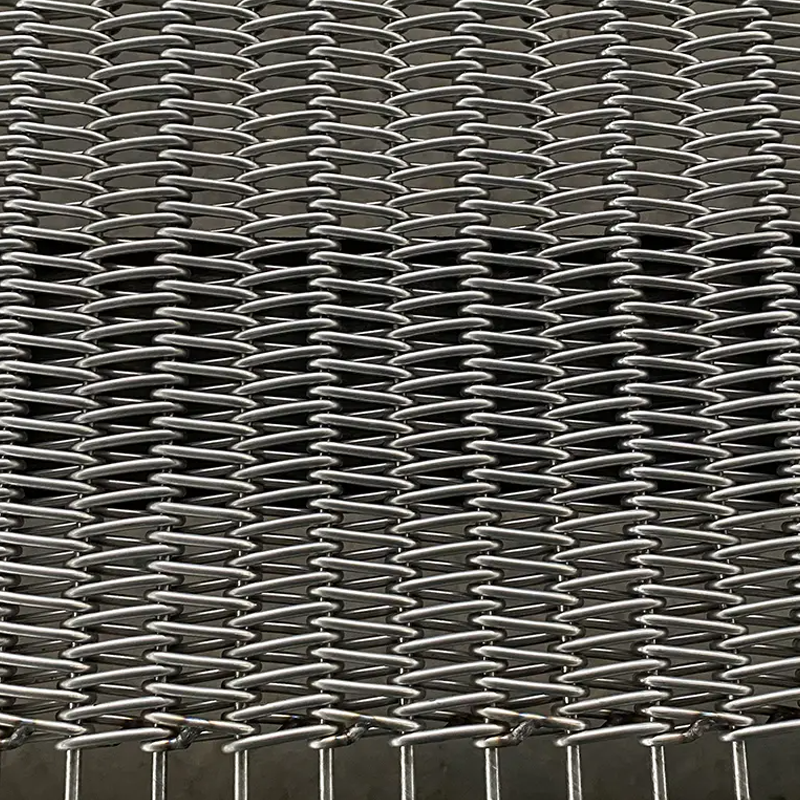
A metal mesh belt fails more often from a mismatch with the process than from normal wear. In a continuous furnace, the belt must survive the temperature curve, carry the parts, and keep its geometry over hundreds of operating hours. If the belt is too weak, too heavy, or too open for the load, you get stretching, tracking problems, and unplanned downtime. If it is matched to the process, it runs quietly for a long time.
The problem is that most buyers focus on the price per square meter instead of the interaction between belt construction and the furnace cycle. That interaction determines whether you replace the belt every few months or every few years. Choosing a metal mesh belt correctly starts with the furnace and the parts, not with the catalog price.
This guide compares the main belt constructions, explains how they are used across sintering, brazing, heat treatment, drying, and quick freezing, and walks through the practical selection factors that matter before you place an order.
Metal Mesh Belt Construction Types and When to Use Them
Metal mesh belts are not a single product. The construction determines how the belt flexes around end rollers, how much open area it provides, and how much load it can carry without distortion. Most industrial metal mesh belts fall into one of three structure families.
Balanced weave metal mesh belts
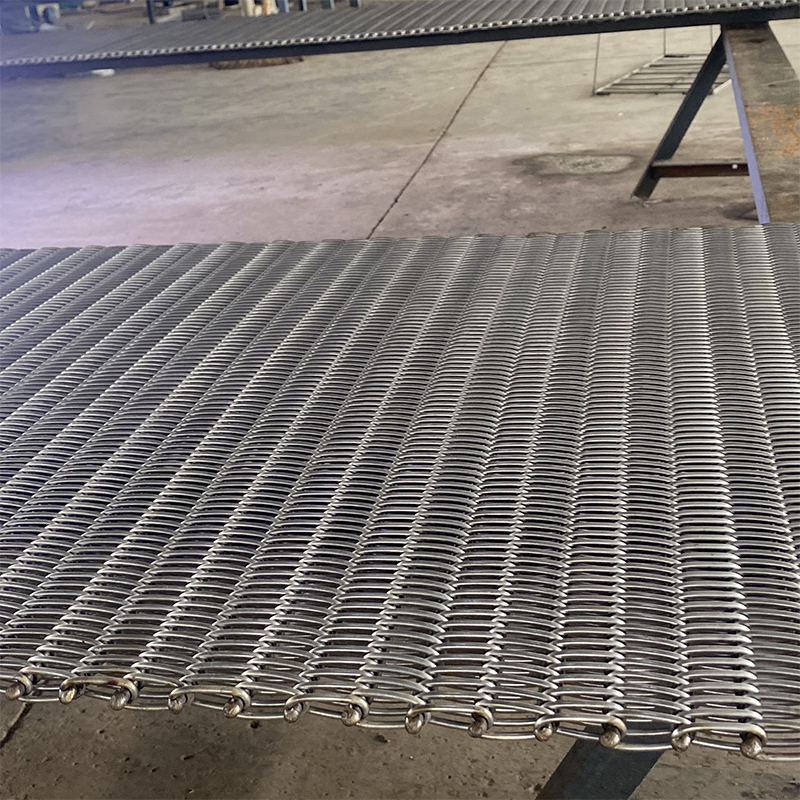
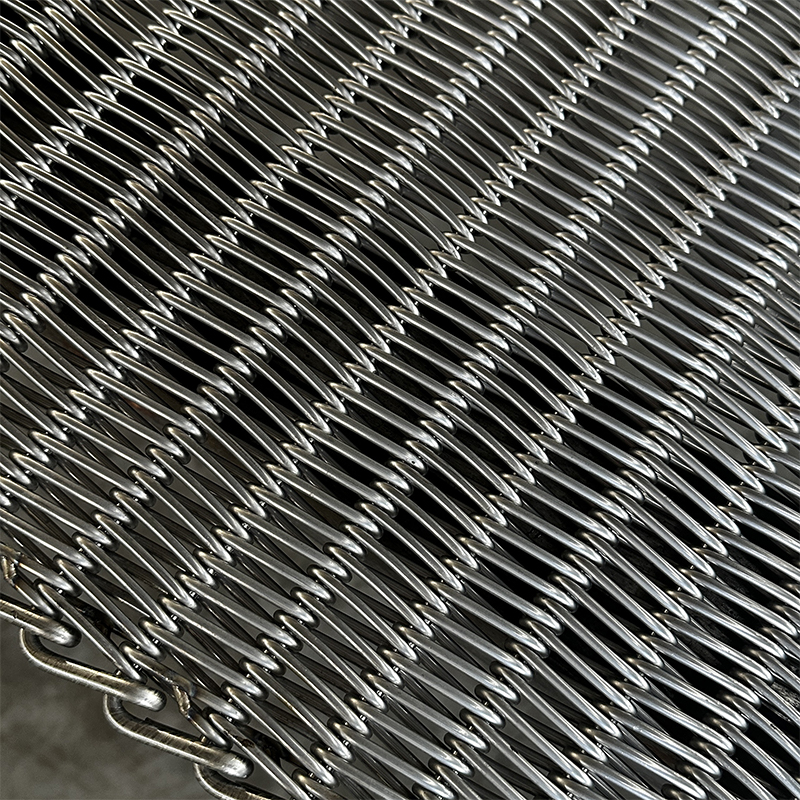
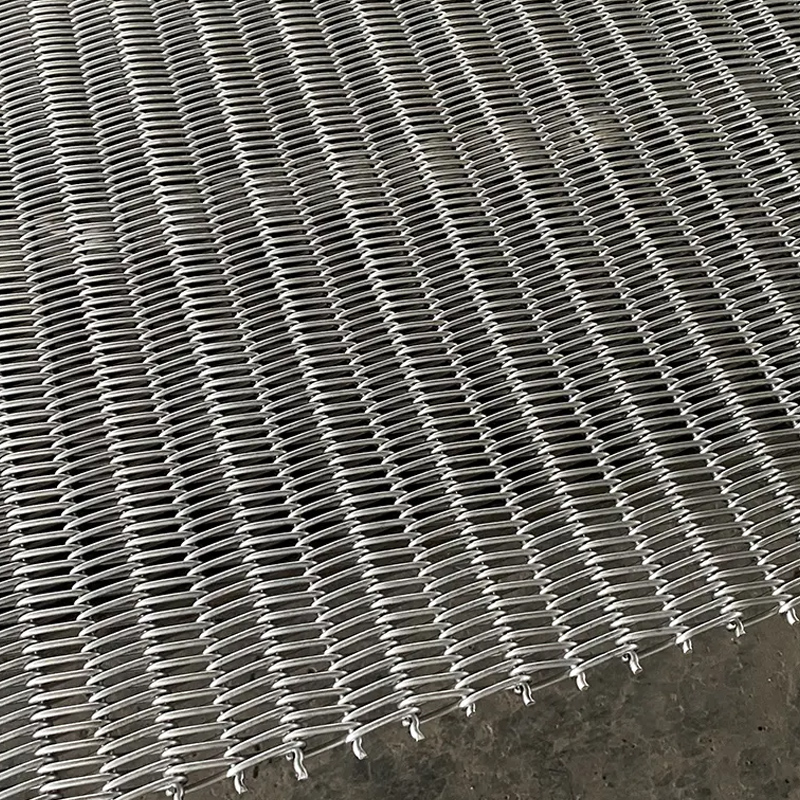
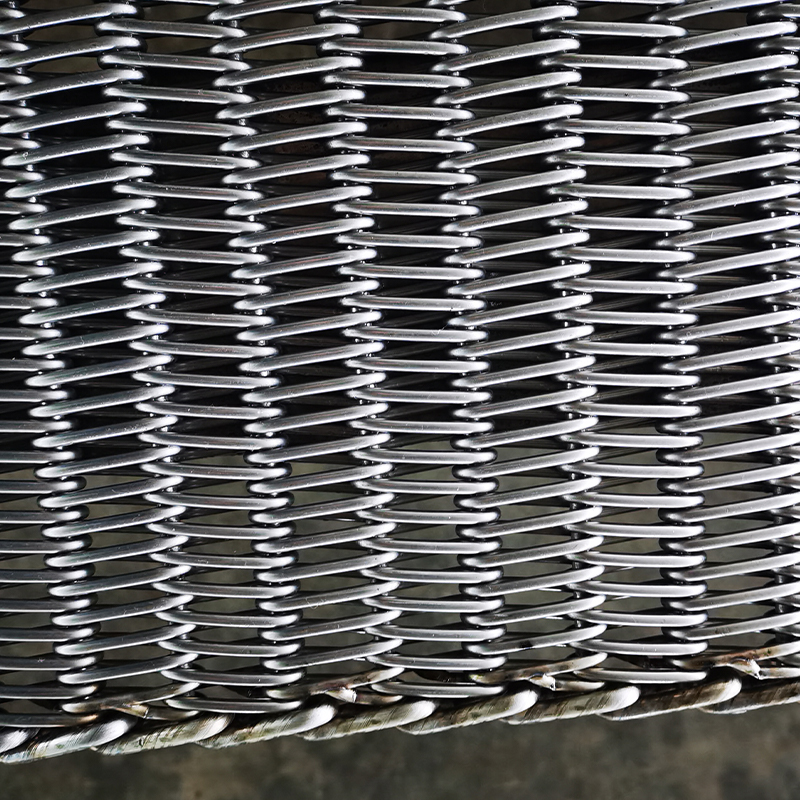
Balanced weaves use left-hand and right-hand spiral wires connected by crimped cross rods. This gives a flat, stable surface with good air permeability. Balanced weave belts are the standard choice for sintering furnaces, brazing furnaces, annealing lines, and drying conveyors where parts need uniform heat exposure and where the load is relatively light and evenly distributed.
Chain-driven metal mesh belts
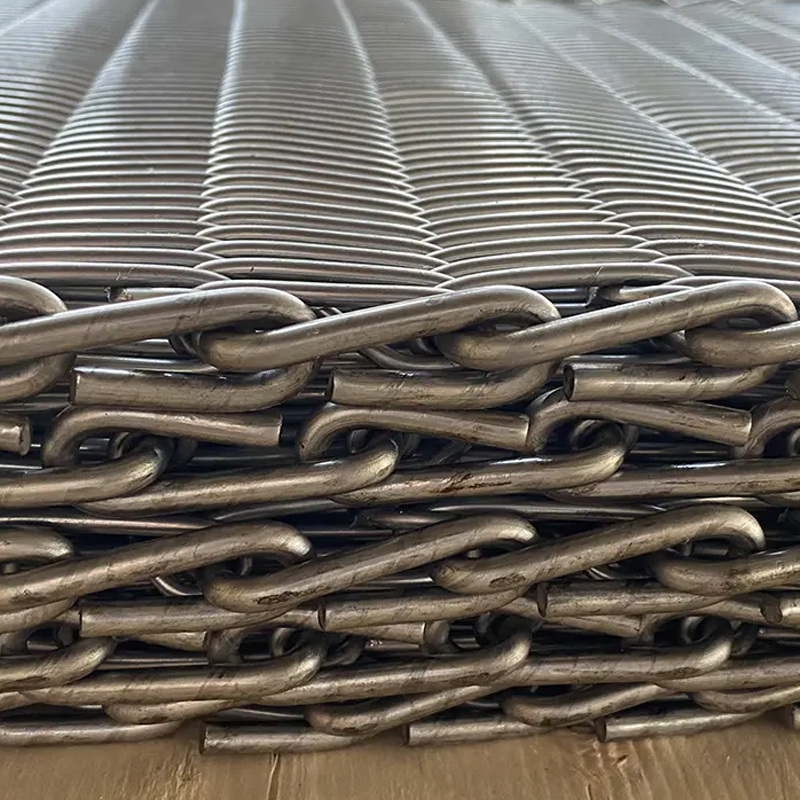
Chain mesh belts add side chains or integrated chain edges to the woven surface. The chain provides positive engagement with sprockets, which prevents slippage and improves tracking on longer conveyor paths. If the line carries heavy components, such as automotive forgings or dense powder metallurgy parts, a chain-driven construction is usually the safer option.
Elevator and lifting mesh belts
Elevator belts are designed for inclined conveyors and lifting sections. They often incorporate flights, side guards, or special surface features that prevent parts from sliding backward. In heat treatment shops, elevator mesh belts are commonly used to move fasteners, bearings, and small machined parts between process stages.
Metal mesh belt construction types and typical applications
| Construction |
Key characteristic |
Typical applications |
| Balanced weave |
Flat surface, good air flow, flexible |
Sintering, brazing, annealing, drying, quick freezing |
| Chain mesh belt |
Positive drive, high load capacity, stable tracking |
Forging, quenching, heavy part conveying, continuous heating equipment |
| Elevator mesh belt |
Inclined conveying, anti-slip surface or flights |
Fastener lifting, heat treatment transfer between levels |
Metal Mesh Belt Applications Across Furnace Processes
Different furnace processes create different demands on the belt. The same metal mesh belt that works in a light drying oven may fail quickly in a brazing furnace with heavy copper assemblies and aggressive flux residues. Matching the belt to the process is the core of the selection task.
Sintering furnace mesh belts
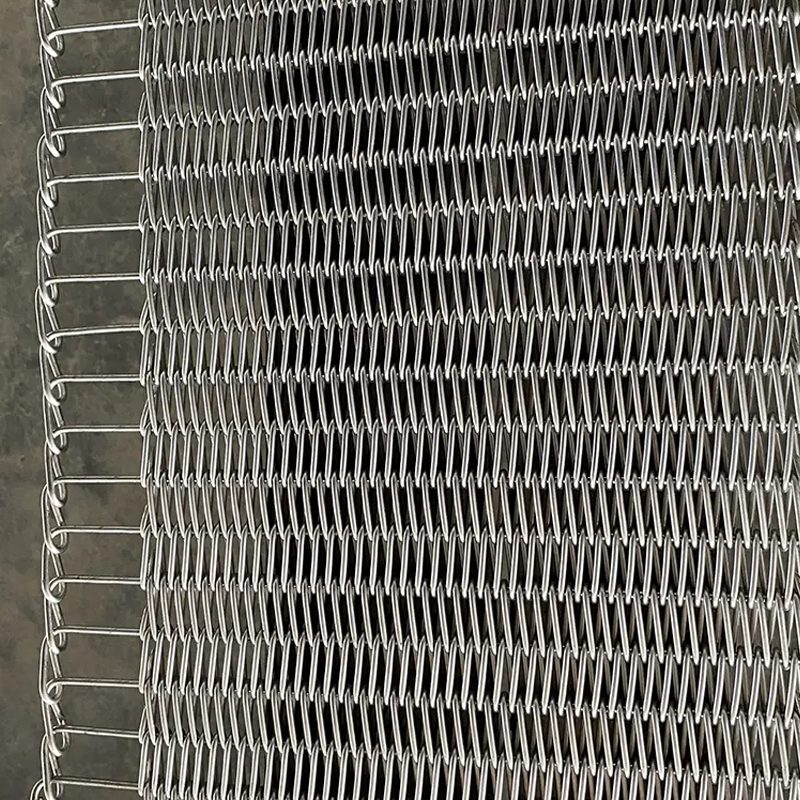
Sintering produces a continuous stream of parts that move slowly through a long, heated zone. The metal mesh belt supporting them must handle the weight of the parts as well as thermal expansion during heating and cooling. Powder metallurgy lines, ceramic sintering lines, and electronic component sintering lines all rely on belts that maintain a stable surface so parts do not shift or fall through the mesh openings. For automotive powder metallurgy parts, the belt must also tolerate high density loads and repeated heating cycles. Manufacturers such as Yangzhou Yafei offer dedicated automotive parts sintering furnace mesh belts designed around the dimensional stability of dense metal parts.
 Wholesale Automotive Parts Sintering Furnace Mesh Belt Suppliers, Factory - YangYangzhou Yafei Machinery Manufacturing Co., Ltd is China wholesale Automotive Parts Sintering Furnace Mesh Belt suppliers and factory, de...View Product →
Brazing furnace mesh belts
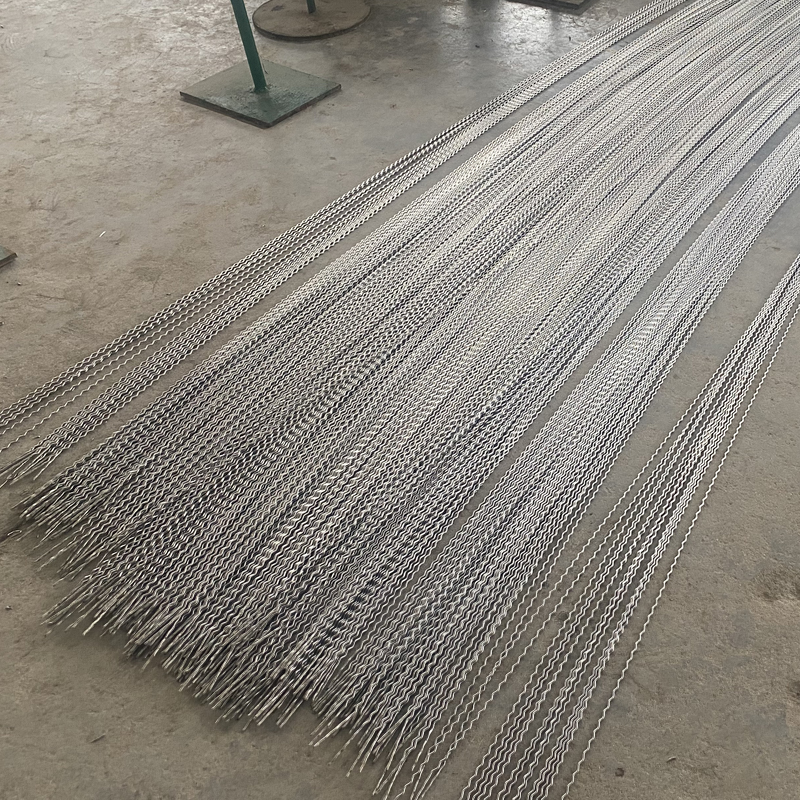
Brazing furnaces expose the conveyor belt to high temperatures, brazing alloy residues, and in the case of aluminum brazing, a controlled atmosphere that must penetrate evenly around each joint. The belt must stay flat because even a slight surface variation can change how the flux wets the joint. Aluminum brazing lines for automotive radiators, condensers, and evaporators are a typical case where the belt is selected to match the exact fixture arrangement. Yafei's aluminum brazing furnace mesh belts cover several heat exchanger components, making them a useful reference point for buyers in the automotive thermal management sector.
 Wholesale Aluminum brazing furnace mesh belt Suppliers, Factory - Yangzhou YafeiYangzhou Yafei Machinery Manufacturing Co., Ltd is China wholesale Aluminum brazing furnace mesh belt suppliers and factory, details:The ...View Product →
Heat treatment furnace mesh belts
Quenching, tempering, normalizing, annealing, and bright processing involve heating, rapid cooling, or controlled atmosphere conditions. In quenching furnaces, the belt may carry bearings and fasteners through the heating chamber and then release them into the quench medium. In bright annealing, the atmosphere protects the surface finish of stainless steel parts, so the belt must not introduce contamination or leave marks on the product. Heat treatment belts therefore tend to be heavier, more heat-resistant constructions with consistent surface quality.
Food processing mesh belts
Drying and quick freezing are not high-temperature heat treatment processes, but they create different risks: moisture, cleaning chemicals, and temperature swings. A food drying belt must allow air circulation while keeping small products stable on the surface. Quick freezing belts operate at low temperatures, which makes flexibility and resistance to brittleness important. For processors handling snack foods, herbs, seafood, meat, fruit, and vegetables, the belt surface needs to be easy to clean and dimensionally stable. Yafei's food drying conveyor belts are part of a broader food industry mesh belt line that also includes quick-freezing belts and assembly line conveyor belts.
 Wholesale Food drying conveyor belt Suppliers, Factory - Yangzhou Yafei MachinerYangzhou Yafei Machinery Manufacturing Co., Ltd is China wholesale Food drying conveyor belt suppliers and factory, details:The food dryi...View Product →
How to Choose a Metal Mesh Belt: Key Buying Factors
There is no single formula that fits every metal mesh belt order, but there is a clear order of decisions. First define the furnace environment, then the mechanical load, then the geometry of the belt, and finally the belt edge and material.
Working temperature and atmosphere
The belt alloy must withstand the maximum furnace temperature, not just the set point, but also the radiant heat peaks that occur when the furnace cycles. In continuous furnaces, the belt may spend long periods inside the heated zone and then exit through a cooling section. The atmosphere matters just as much as the temperature. Oxidizing, reducing, or flux-bearing atmospheres can attack the belt surface and shorten its life if the alloy is not selected for that specific exposure. Stainless steel mesh belts are common, but the exact grade should be confirmed against the actual furnace environment.
Load weight and load distribution
Every component on the belt adds weight, and that weight is not always evenly distributed. Dense parts, such as sintered automotive components or steel fasteners, create localized stress points on the mesh. For heavy or concentrated loads, a chain-driven construction or a tighter weave with a heavier wire diameter is easier to justify. The classic mistake is selecting a belt based on total load per square meter while ignoring how the parts are actually placed. Uneven loading causes the belt to track to one side, crease, or stretch asymmetrically.
Mesh opening and part support
The mesh opening must be small enough to prevent small parts from falling through, but large enough to allow heat or cold air to reach the parts. Powder metallurgy compacts and electronic ceramics may require very small openings. Larger parts with long furnace cycles can use more open constructions, which reduce the thermal mass of the belt itself. If you are processing small fasteners or pellets, a double-layer construction or an additional fine mesh overlay may be necessary.
Belt width, length, and sprocket compatibility
The belt width should match the furnace chamber or the product flow across the conveyor. Wider belts require better tracking control and more precise drive systems. For chain mesh belts, the chain pitch must align with the drive sprockets in the furnace. Buying a belt based only on width and wire diameter without confirming the drive arrangement is a common reason for installation failure.
Edge treatment
Belt edges affect how the belt runs through the furnace. Woven edges are standard, but welded edges are preferred when the belt is likely to fray or when the furnace has tight clearance. For heavy-duty conveying, a reinforced edge can prevent edge curling and extend operating life. Ask the manufacturer about edge options before finalizing the specification.
Installation and Maintenance Practices That Extend Belt Life
A metal mesh belt that is installed correctly and maintained regularly will outlast one that is ignored. Most belt problems are not caused by the belt material itself, but by how the belt is tensioned, aligned, and cleaned.
Tension and tracking
Excessive tension is the most common cause of premature belt failure. Metal mesh belts stretch slightly during the first few operating cycles. The tension should be set so the belt stays in positive contact with the drive drum or sprockets, but not so tight that the spirals lock up and prevent natural flexing. Weekly checks of the belt tracking along the furnace length will catch misalignment before it eats into the belt edges.
Cleaning schedules
Brazing flux, oil residues, and food product buildup can harden on the belt surface and affect its movement. The recommended cleaning method depends on the contaminant. Food processing belts need regular washing with mild detergents and thorough rinsing. Heat treatment belts may require occasional burn-off cycles to remove carbon deposits. The goal is the same: keep the mesh joints free-moving.
Planned replacement
No metal mesh belt lasts forever. Tracking records of belt thickness, elongation, and visual condition help you plan replacements during scheduled maintenance windows rather than after an emergency breakdown. For continuous furnaces that run 24 hours a day, keeping a spare belt on site is often the cheapest form of insurance.
Sourcing Metal Mesh Belts: Why the Supplier Matters
Selecting the right belt construction is only half the equation. The other half is whether the supplier can translate your furnace conditions into a belt that is actually built for the application. A generalist belt supplier can sell you standard sizes, but a manufacturer with a structured product line is easier to evaluate. Yafei, a Chinese manufacturer based in Yangzhou, organizes its metal mesh belt range by furnace type, process, and workpiece. That structure is useful because it forces the buyer to think about the belt in the same terms as the furnace supplier: which furnace, which process, which part.
The product categories on the Yafei website cover sintering furnace belts, heat treatment furnace belts, brazing furnace belts, chain mesh belts, and food industry belts. The application pages for brazing, food processing, heat treatment, and powder metallurgy reflect a clear understanding of process conditions. This kind of organization reduces the risk of ordering a generic belt that does not quite fit the equipment.
Final Recommendation for Your Metal Mesh Belt Decision
Start with the process, not the price. Document the furnace temperature, the atmosphere, the part weight, the part dimensions, and the required conveyor speed. Then compare those conditions with the belt construction options. For brazing and sintering lines, use a belt with proven process experience in those applications. For heavy loads and long conveyors, consider chain-driven structures. For food processing, prioritize cleanability and stable low-temperature operation.
Work with a supplier that asks questions about your furnace and parts before quoting a belt. If a supplier talks only about wire diameter and price without discussing temperature, atmosphere, and load, the belt may still run, but it will not run as long as it should. A metal mesh belt is a durable component when it is selected against the real operating conditions. The time spent on specification is paid back dozens of times in fewer replacements and fewer unplanned furnace stops.



 English
 русский
 عربى
عربى