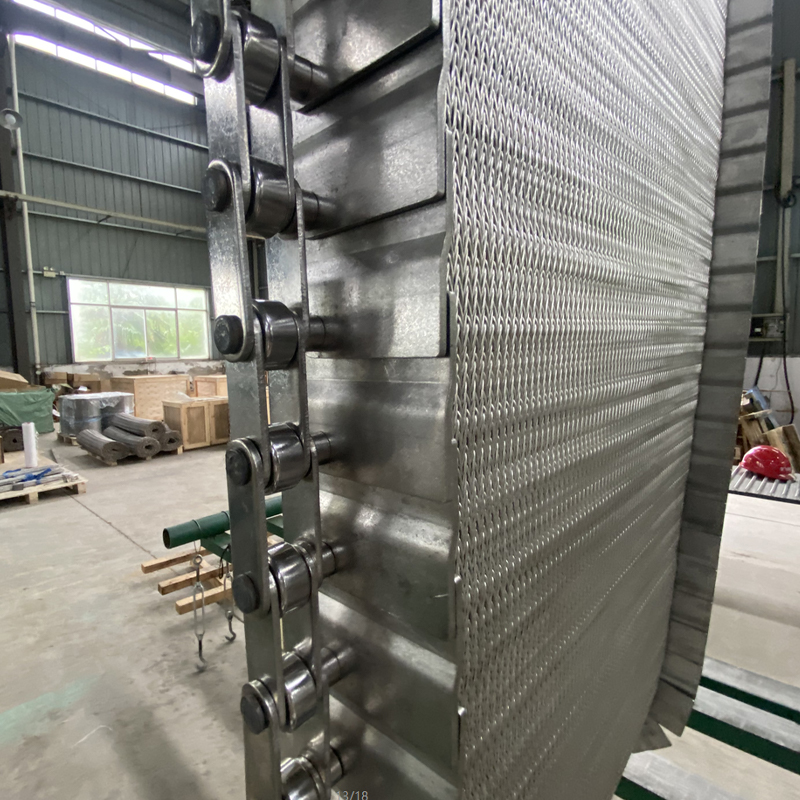
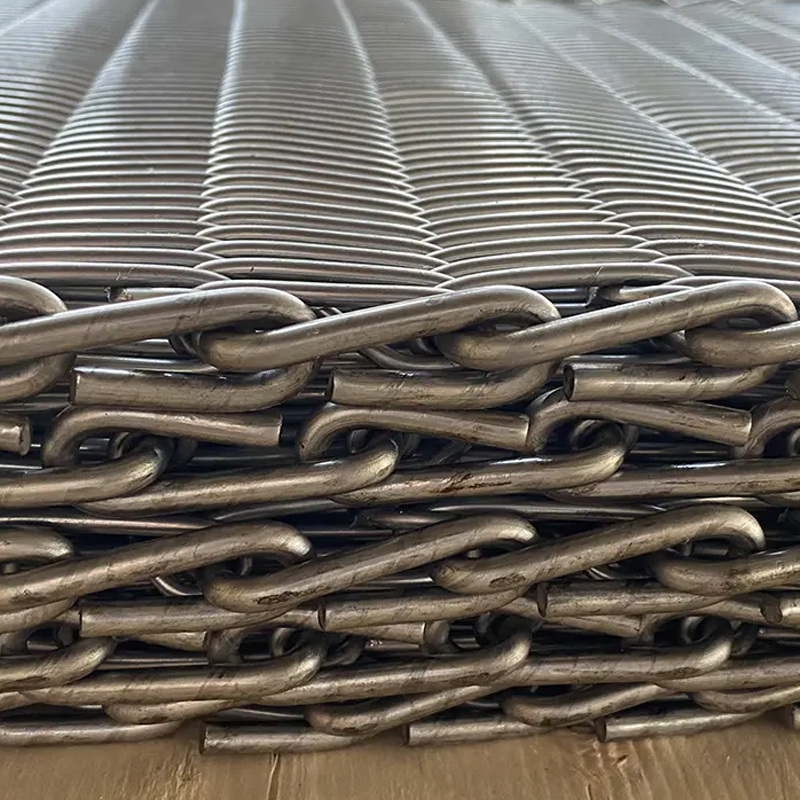
A conveyor mesh belt rarely announces its own failure. It distorts, cracks, or begins tracking to one side, and a continuous furnace or production line stops the moment it does. That makes belt selection more than a spare-part purchase; it is a decision about uptime, product quality, and operating cost. The right conveyor mesh belt keeps parts flat through hot zones, delivers the promised service life, and suits the mechanical drive that runs it.
The practical sequence is to define the process first and the belt second. Furnace temperature, product weight and dimensions, atmosphere, and cleaning method determine weave pattern, alloy grade, and edge treatment. This article arranges those variables in the order they affect purchasing decisions.
Conveyor Mesh Belt Construction and Weave Patterns
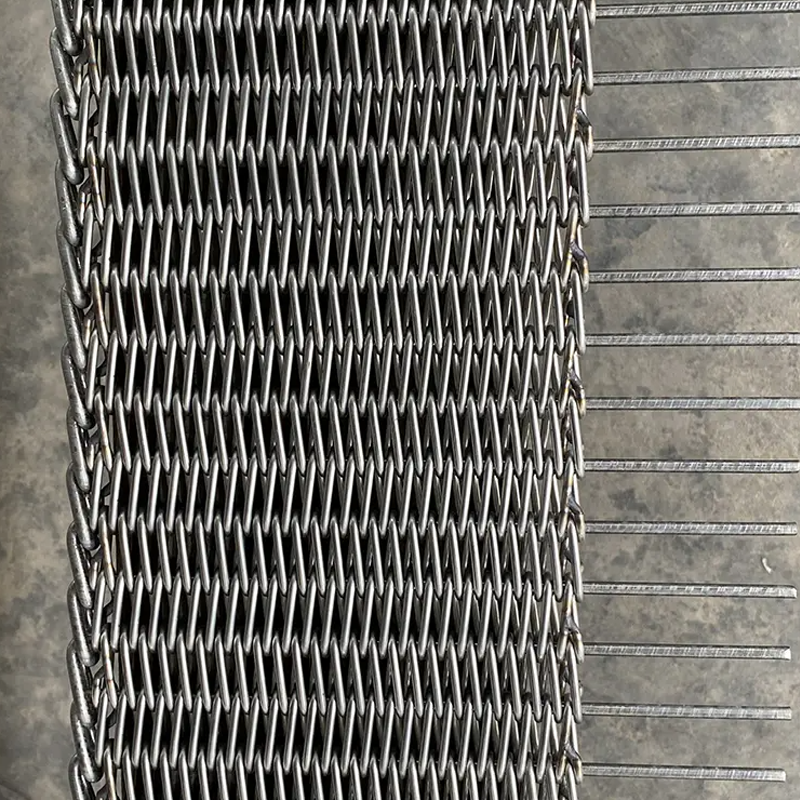
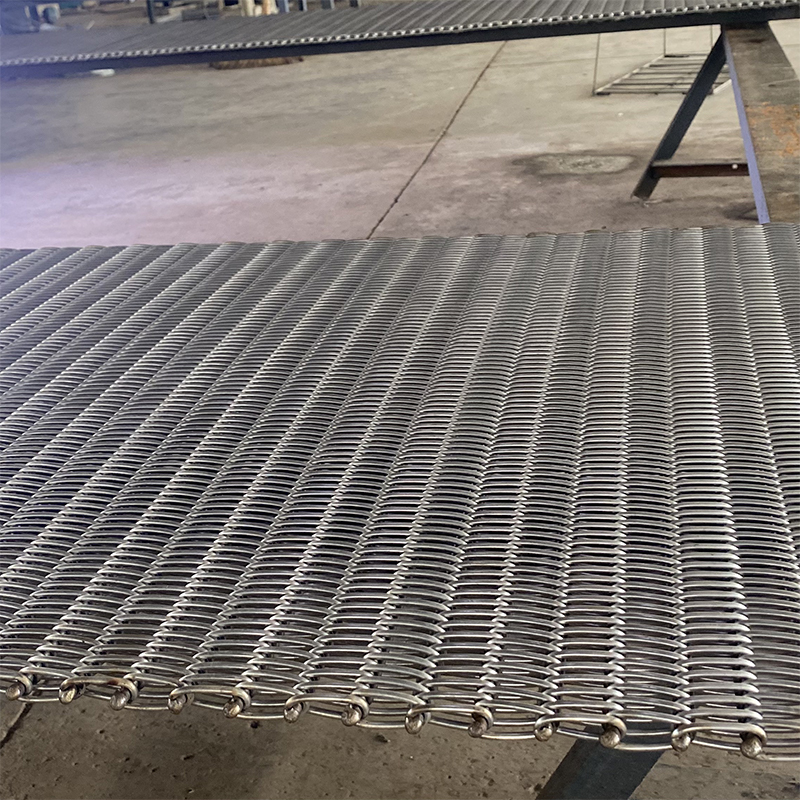
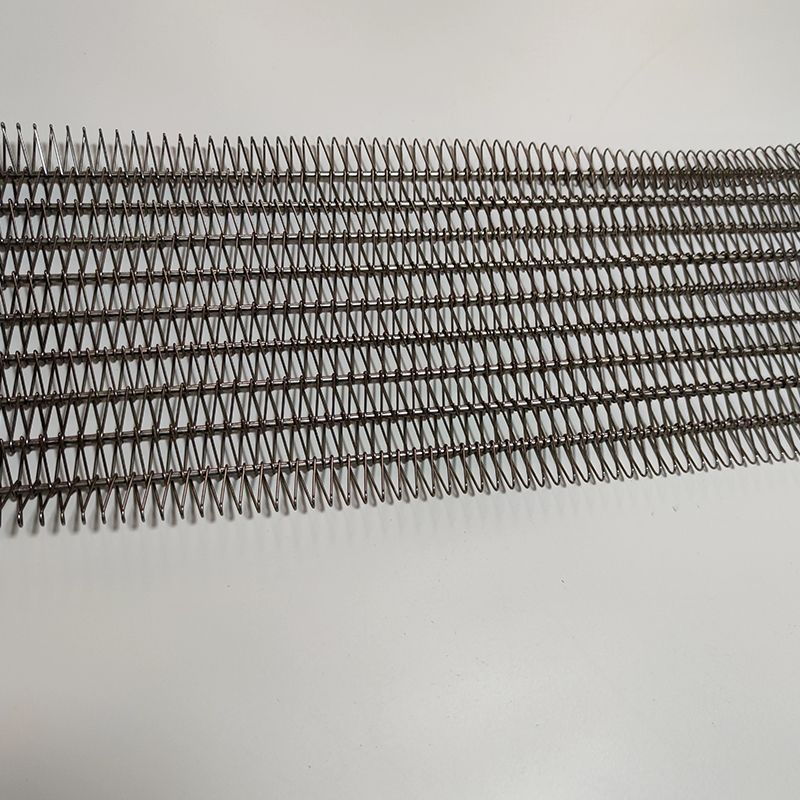
A conveyor mesh belt is fabricated from metal wire formed into continuous spirals. The spirals interlock, and cross rods or connecting wires tie them into a single flat, porous structure. Because the mesh remains open, hot air, cold air, and process liquids pass through it freely, which makes the same construction family suitable for sintering, quenching, drying, and freezing.
Wire diameter and weave pattern set the mechanical personality of the belt. Thicker wire increases strength and cost but creates a rougher carrying surface. Fine mesh supports small parts but is more vulnerable to point loading. The main patterns are:
- Plain weave: spirals pass over and under one another; dense and stable, used for small components.
- Balanced weave: alternating spiral directions give a smoother surface and straight tracking; a common default for light- and medium-duty lines.
- Double balanced weave: paired spirals raise strength and stability for medium and heavy loads.
- Chain-link and rod-reinforced construction: an open, very strong structure for heavy parts and aggressive thermal cycles.
Common conveyor mesh belt weave patterns and their typical duties.
| Weave pattern |
Typical duty |
Relative strength |
| Plain weave |
Small, light components |
Low |
| Balanced weave |
Light and medium general conveying |
Medium |
| Double balanced weave |
Medium to heavy loads |
High |
| Chain-link / rod-reinforced |
Heavy parts and high thermal cycling |
Highest |
Matching the Alloy to the Process
Alloy grade is the largest single factor in belt life. The belt must resist oxidation at operating temperature, retain useful strength while hot, and tolerate heating and cooling cycles. Selecting a grade below the requirement is the most frequent cause of premature failure.
Four stainless steel grades cover the majority of industrial lines:
Stainless steel grades commonly used in conveyor mesh belts.
| Grade |
Max continuous service temperature |
Typical applications |
| 304 |
650–700 °C |
Food conveying, drying, light heat exposure |
| 316 |
Around 700 °C |
Washdown environments, food acids, chemicals |
| 321 |
Around 850 °C |
Thermal cycling in intermediate heat treatment |
| 310S |
Around 1050 °C |
Sintering, brazing, high-temperature furnaces |
The furnace atmosphere matters as much as the thermometer. Carburizing, reducing, and flux-laden atmospheres change oxidation behavior and may require a higher alloy than a clean-air process. State both temperature and atmosphere when requesting a quote.
Price follows the alloy curve, not the belt size. Two belts of identical dimensions can differ significantly in cost when one is 310S and the other is 304. If a quotation looks unusually low for a high-temperature furnace, verify the material grade before signing.
Application-Specific Conveyor Mesh Belt Selection
Each continuous process loads the belt differently. Construction choices that work in a quench furnace will be overbuilt, or underbuilt, for a fruit freezer. The following application notes cover the four most common purchasing paths.
Heat Treatment and Forging Lines
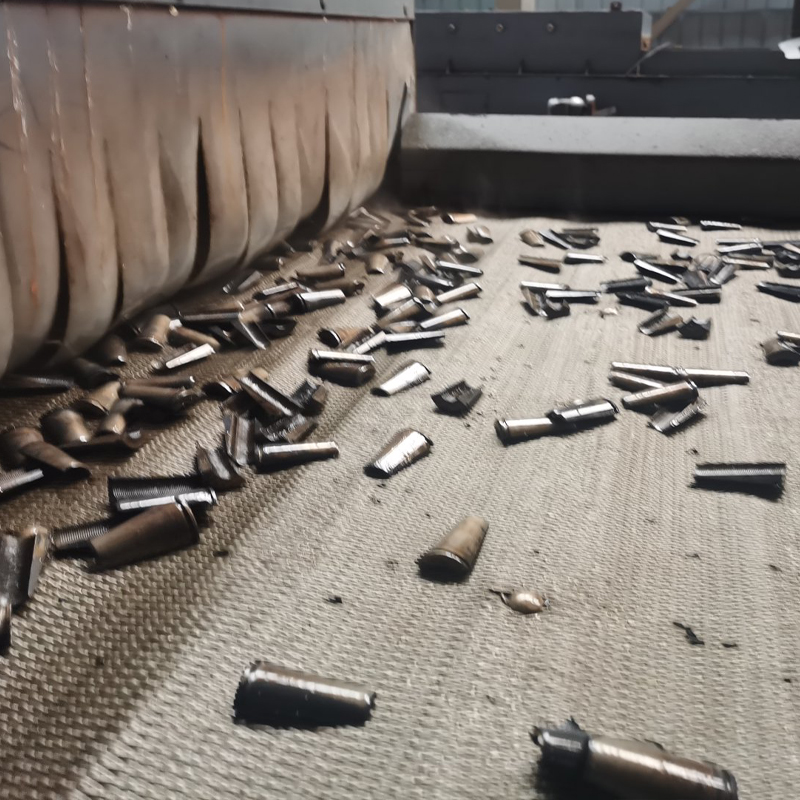
Bearings, fasteners, springs, and forged components are heavy and abrasive at high temperature. A double balanced or chain-link weave is typical, and reinforced edges prevent the distortion caused by repeated heating cycles. Tracking becomes critical on wide belts, so drum crowning and tension must match the belt's lateral stiffness. See our heat treatment mesh belt applications for further guidance on quenching, tempering, and normalizing.
Brazing Furnaces
Aluminum, copper, and stainless steel brazing all produce flux residues that attack the wire, and all run close to the practical temperature limit of the belt. A tight weave keeps small parts from dropping between spirals, while reinforced edges absorb the dimensional change as the belt heats and expands. On brazing lines, a belt designed for the specific furnace and joint geometry is the difference between regular replacement and predictable multi-year service.
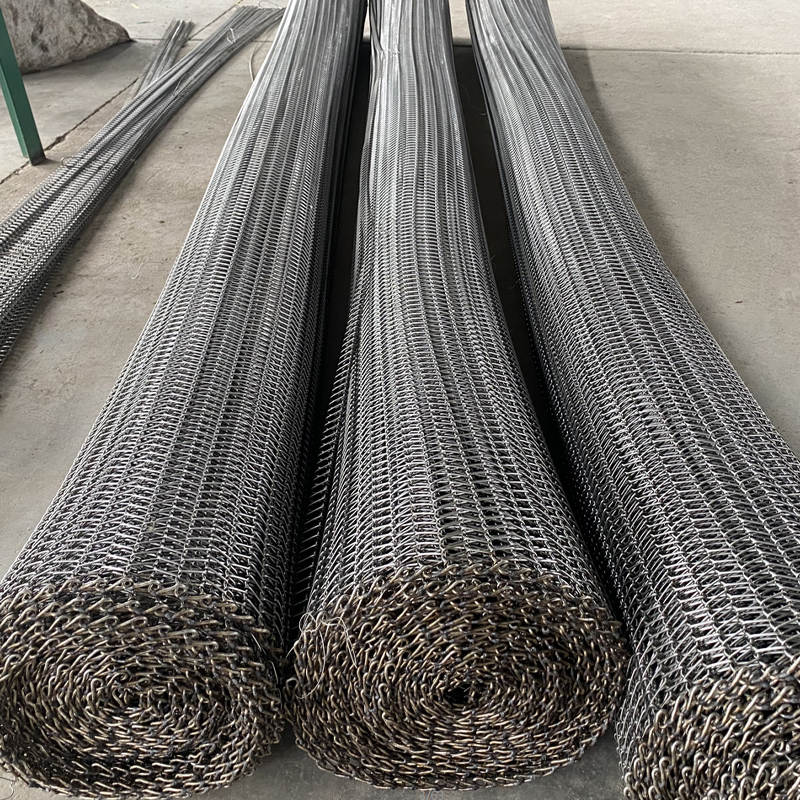 Brazing furnace mesh beltsStainless Steel-Based Sintering Furnace Mesh BeltView Product →
Powder Metallurgy and Ceramic Sintering
Sintering belts carry heavy powder-metal preforms at slow speeds and must stay dimensionally stable over long furnace zones. If the belt stretches unevenly, parts shift between temperature zones and scrap rates climb. Iron-based and copper-based powder metal lines benefit from a weave with generous wire cross-section, controlled pitch, and edge treatment that resists elongation.
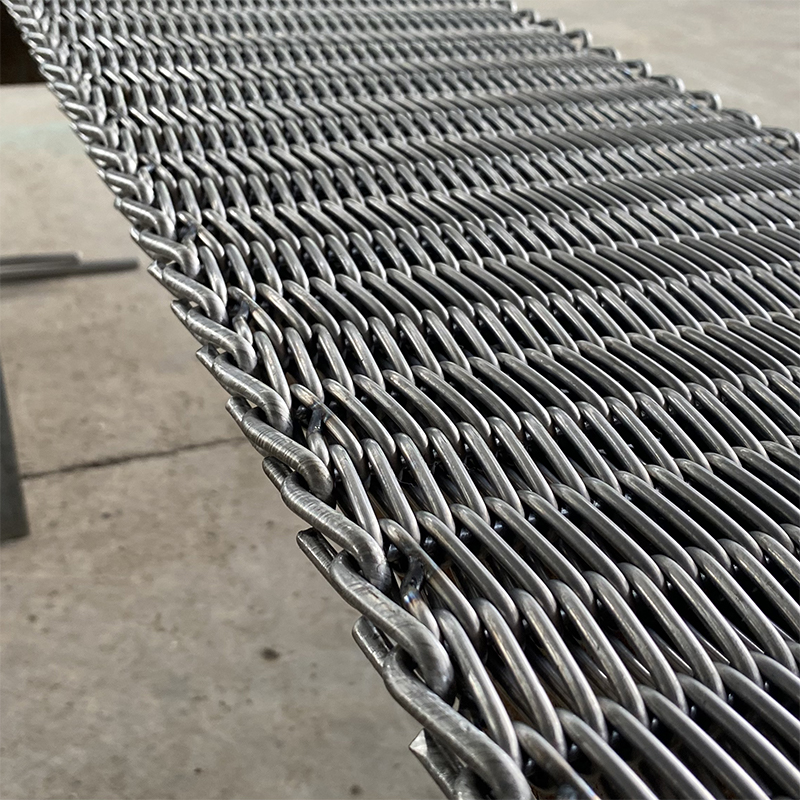 Copper-Based Sintering Furnace Mesh BeltGarden Tool Structural Components Sintering Furnace Mesh BeltView Product →
Food Drying and Quick Freezing
Hygiene and cleanability take priority in food processing. Stainless steel 304 or 316 resists food acids and frequent washdowns, and an open weave shortens drying and freezing times by maximizing air flow. Quick-freezing lines in particular require smooth tracking and clean product release; our food processing mesh belt solutions cover drying, freezing, and assembly-line conveying applications.
 Quick-freezing mesh conveyor beltSintering furnace mesh belts for special ceramic componentView Product →
Dimensional Specifications: Width, Pitch, and Edge Reinforcement
Measured belt width, mesh pitch, longitudinal pitch, and wire diameter define the fit of a conveyor mesh belt. Width should include margin on both sides of the load, because every belt shifts laterally by a few millimetres in service. A belt that runs metal-to-metal against the furnace wall will wear its edges quickly.
Edge construction is the most undervalued specification on a purchase order:
- Woven selvedge: a lightweight, low-cost edge for gentle conveying.
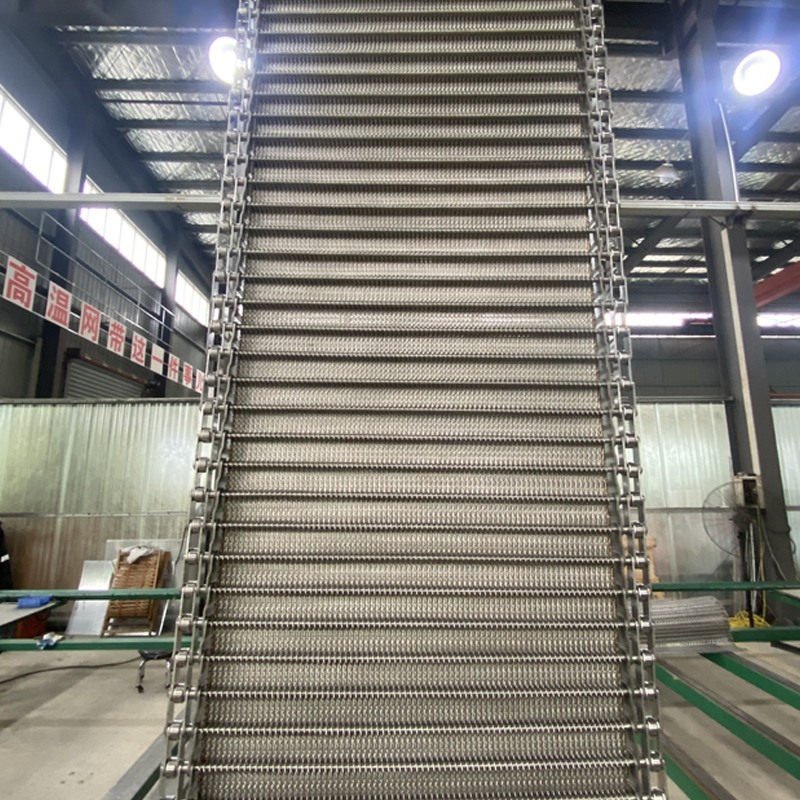
- A-shaped edge with chain plates: adds lateral rigidity and load transfer; common on hoist and elevating belts.
- U-shaped reinforcement: protects the edge from impact and wear on the return strand.
- Welded or crimped edge: stops spiral loss on wide, heavy belts.
Check the sprocket or drum diameter when setting pitch. A pitch that does not match the drive causes climbing, slipping, and fatigue at every mesh engagement. Manufacturers normally hold width within a few millimetres; confirm the tolerance in writing before production starts.
Procurement risk usually appears in two places: lead time and tolerance. A custom-width belt may take weeks to manufacture, and a belt that arrives narrower than the drawing will track poorly. Ask for the width tolerance, pitch tolerance, and estimated delivery time in the quotation. Documenting these details prevents the most common sourcing problems.
Maintenance That Extends Belt Life
A conveyor mesh belt has a finite but predictable life. The maintenance routine decides whether replacement happens on a planned schedule or in the middle of a shift.
- Keep tension only as high as needed to prevent slip; over-tension accelerates fatigue faster than any other factor.
- Check tracking after startup and after any furnace or structural modification.
- Clean flux, carbon, and food residue on a fixed schedule. Brazing flux is particularly aggressive to 304 and 316 at operating temperature.
- Inspect the belt at the drum returns for cracked spirals, elongated pitch, and thinning wire.
Edge cracks and open spirals are the belt telling you it is finished. Replacing the belt during a planned outage costs far less than an emergency shutdown. Keeping a spare belt in stock for critical furnaces shortens even the planned stop.
What a Belt Manufacturer Needs From You
A conveyor mesh belt specification is only useful when the manufacturer understands the full duty. Provide these details at the quotation stage:
- Furnace temperature and atmosphere
- Product material, weight, and loading pattern
- Belt speed and furnace length
- Drive drum or sprocket diameter and centre distance
- Cleaning procedure, including chemicals and frequency
No two continuous furnaces behave identically. A belt that performs in one plant can fail in another because load distribution or atmosphere differs. Yangzhou Yafei Machinery Manufacturing Co., Ltd. produces conveyor mesh belts for heat treatment, brazing, sintering, and food-processing equipment, and begins every quotation from the application data above. Wire diameter, weave balance, and edge reinforcement are therefore decided by the process, not by a catalogue.



 English
 русский
 عربى
عربى