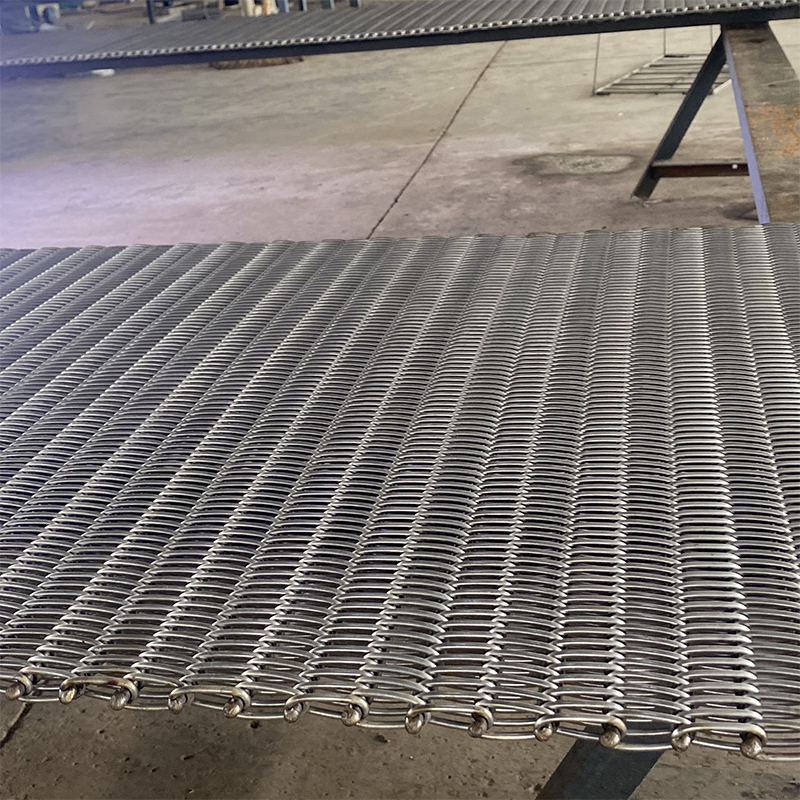
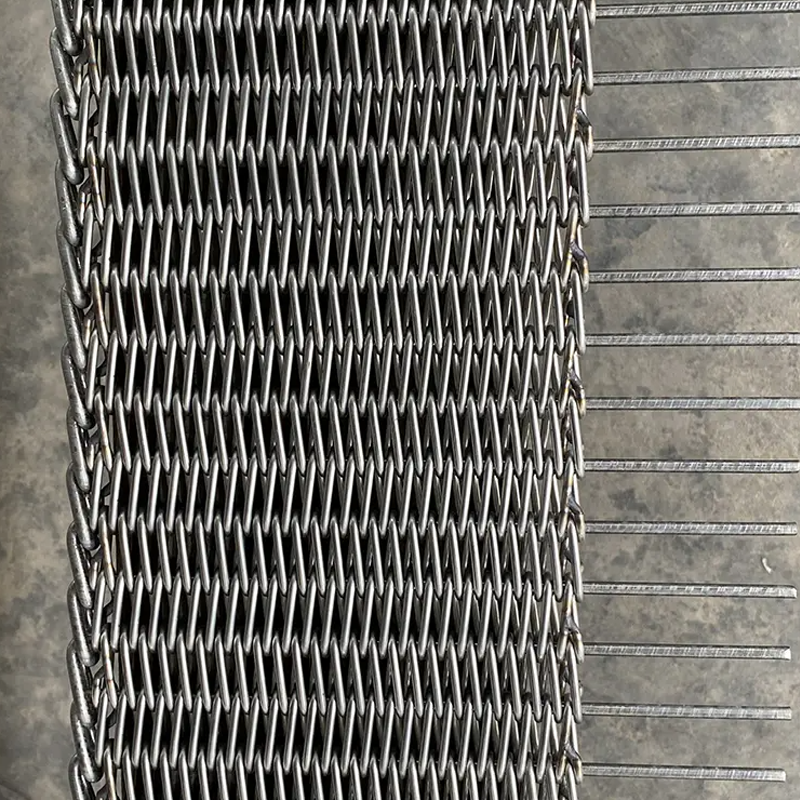
A glass container plant we know ran its annealing lehr around the clock and replaced the furnace mesh belt every eight months. The belt did not wear out from carrying bottles; the wire gradually stretched until the belt drifted to one side and its edges rubbed the lehr frame. That pattern is common, and it is rarely the belt's "fault." Most premature failures trace back to a mismatch made at the specification stage: a wire grade chosen against the wrong peak temperature, a weave that cannot flex around the drums actually fitted, or an edge structure that cannot carry the real load.
The conclusion up front: get three things right and the belt runs for years. Match the material to the hottest zone temperature, match the weave and pitch to your drum diameters and load per square meter, and match the edge to how the belt is driven. Everything else, including price, is secondary. This guide explains what an annealing furnace mesh belt actually endures, how weave and material choices play out in practice, and where specialized belts for glass, metal, and stainless-steel annealing fit.
What an Annealing Furnace Mesh Belt Has to Survive
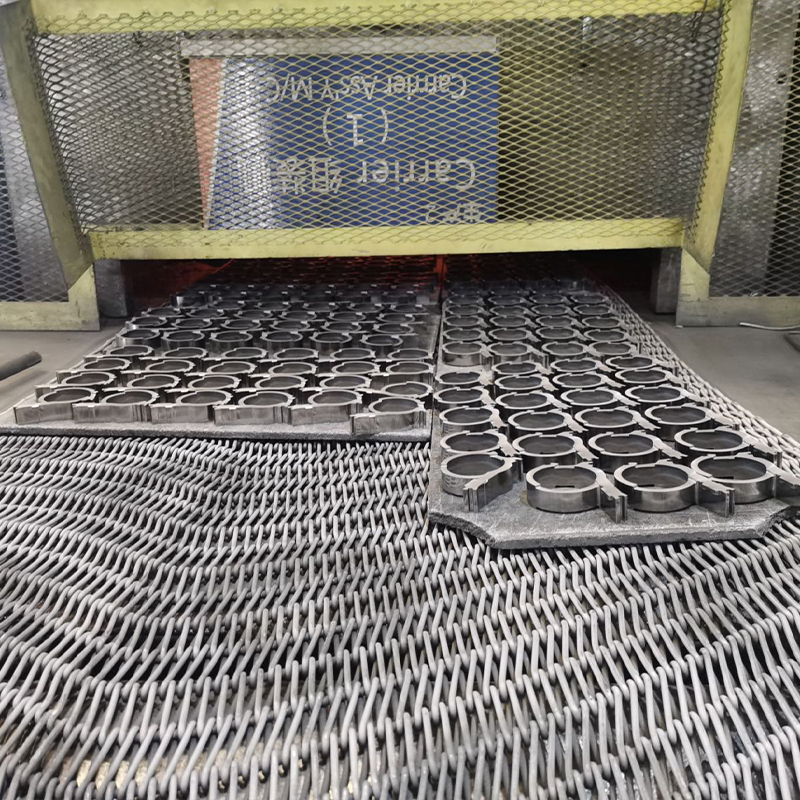
Annealing heats a workpiece to a defined temperature, holds it there, then cools it at a controlled rate to relieve internal stress or soften the material. On a continuous line, the mesh belt is both the conveyor and a piece of furnace furniture. It soaks in the hot zone, cools at the discharge, and re-enters the hot zone, repeating that cycle every few minutes, day and night.
Three consequences follow. First, the belt never runs at one temperature; it cycles, and thermal cycling is what fatigues wire. Second, the belt carries load at temperature, where stainless steel holds only a fraction of its room-temperature strength, so a belt sized for cold load will sag hot. Third, the atmosphere matters: air, hydrogen, or nitrogen-hydrogen mixtures each demand different surface behavior from the belt.
Approximate belt-level temperature windows for common annealing work; size the belt for the hottest zone, not the line average.
| Workpiece / process |
Typical belt-level temperature |
Key demand on the belt |
| Glass bottles and jars |
500-620°C |
Flatness under cycling; stable bottle travel |
| Medical and laboratory glass |
500-630°C |
Clean surface; no marking of soft glass |
| Metal product stress relief |
350-650°C |
Moderate load; reliable tracking |
| Copper and brass parts |
450-700°C |
Consistent speed; oxidation control |
| Stainless-steel solution annealing |
900-1100°C |
Creep and oxidation resistance at peak |
Weave Structure: Where Most Selection Mistakes Start
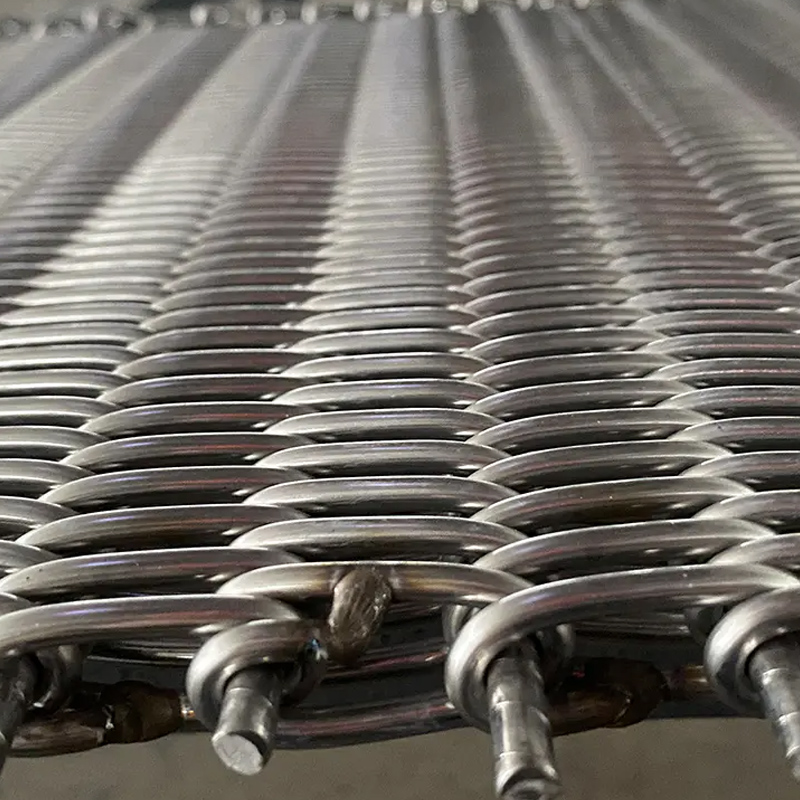
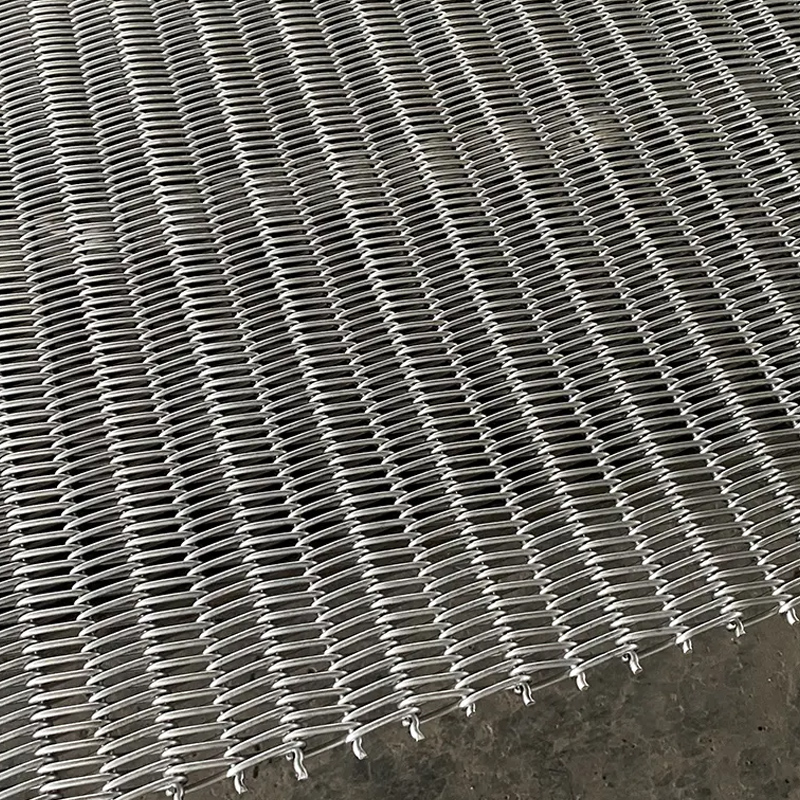
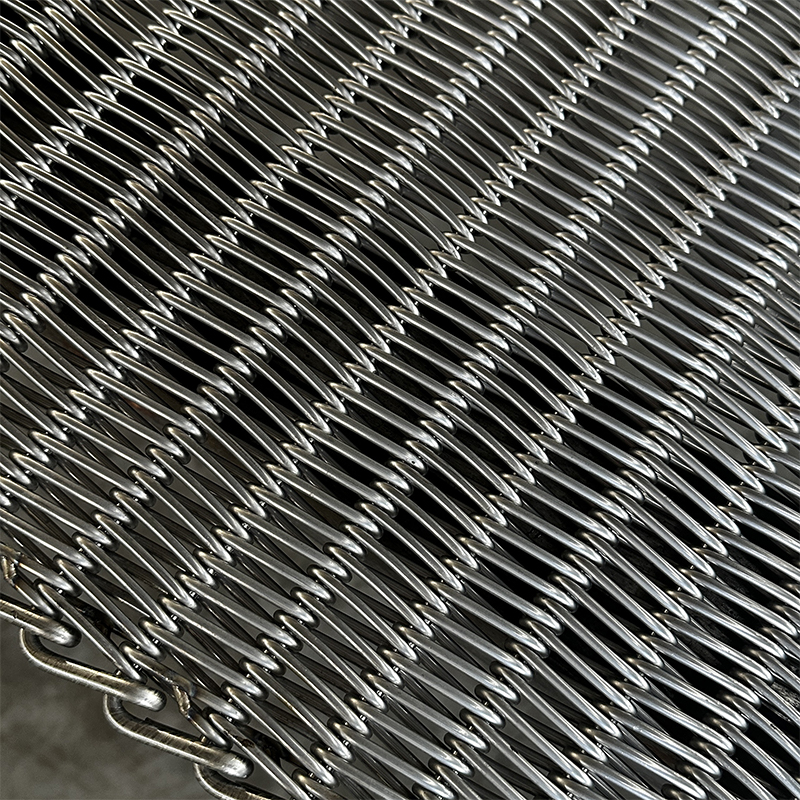
Material grade gets the attention, but weave structure usually decides how long a belt lasts. A balanced weave, the double-spiral pattern used on most annealing lines, flexes easily and suits smaller drums and lighter loads. A rod-reinforced weave adds cross rods threaded through the spirals, which resists elongation under heavier loads and higher temperatures, at some cost in flexibility.
Two structural details deserve specific attention during procurement. The first is drum diameter: as a rule of thumb, the smallest drum should be about 12 to 20 times the spiral wire diameter for a balanced-weave belt. Force the belt around a smaller radius and the wire work-hardens at the bend, then cracks in the first hot zone. The second is the edge. Welded or knuckled edges suit most glass lehrs; chain edges give positive drive for heavier metal loads and longer belts, where friction alone would let the belt slip or wander.
Open area also matters more than buyers expect. A denser weave changes how heat and protective gas reach the product surface. If your process relies on convection or atmosphere flow, treat open area as a specification, not a detail.
A practical selection path looks like this:
- Peak zone up to about 700°C, light load: balanced weave in standard 304-grade wire.
- Typical lines: glass lehrs, stress-relief furnaces.
- 700 to 1000°C, or heavier load: rod-reinforced weave in a higher chromium-nickel grade.
- Typical lines: copper and brass annealing, metal-product annealing.
- Above 1000°C, or protective atmosphere: dense high-temperature weave matched carefully to drum diameter.
- Typical lines: stainless-steel solution annealing, bright annealing.
Material Grades and Their Practical Limits
Most annealing belts run on austenitic stainless wire, and the dividing lines are temperature-based. Standard 304-grade wire handles roughly 750°C continuously in air, which covers the majority of glass and metal-product annealing. Between about 450°C and 850°C, 304 sensitizes, meaning chromium carbides precipitate at grain boundaries; this rarely matters inside a clean furnace but becomes relevant if the belt later sees corrosive wash-down or condensation.
Above roughly 800°C, oxidation becomes the life-limiting factor, and higher chromium-nickel grades such as 310S or 314 hold a protective oxide scale up to roughly 1050-1150°C depending on grade. For continuous operation beyond that range, high-nickel alloys are the usual answer, and the belt price steps up accordingly. For bright annealing under hydrogen or nitrogen-hydrogen atmospheres, specify a clean, scale-free belt surface, because any scale shed inside the furnace lands on your product.
Matching the Belt to the Workpiece
Yangzhou Yafei organizes its annealing belt range by workpiece rather than by a generic weave chart, and that is the right way to specify: the same furnace temperature creates very different demands depending on what rides the belt. The full range, covering glass bottles, medical glass, metal products, and stainless-steel goods, is collected on the 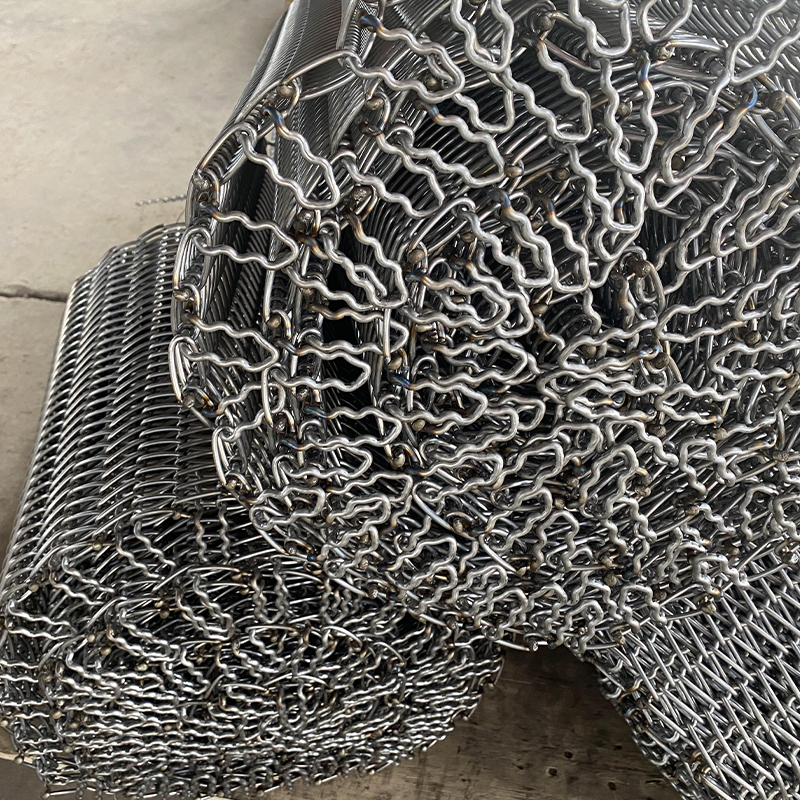 Annealing Furnace Mesh Belt ManufacturersMesh belt of the annealing furnace for medical glass products The mesh belt of the annealing furnace for medical glass products is made of imp...View Product → category page.
Glass bottle and container annealing
Lehr belts for bottles and jars prioritize flatness and stable travel over extreme temperature. Bottles enter the lehr soft, and a belt that bumps at a seam or slopes at the side will tip light containers. Consistent spiral pitch and a well-supported edge matter as much as the wire grade here, because the failure you are preventing is a production stoppage, not a broken wire.
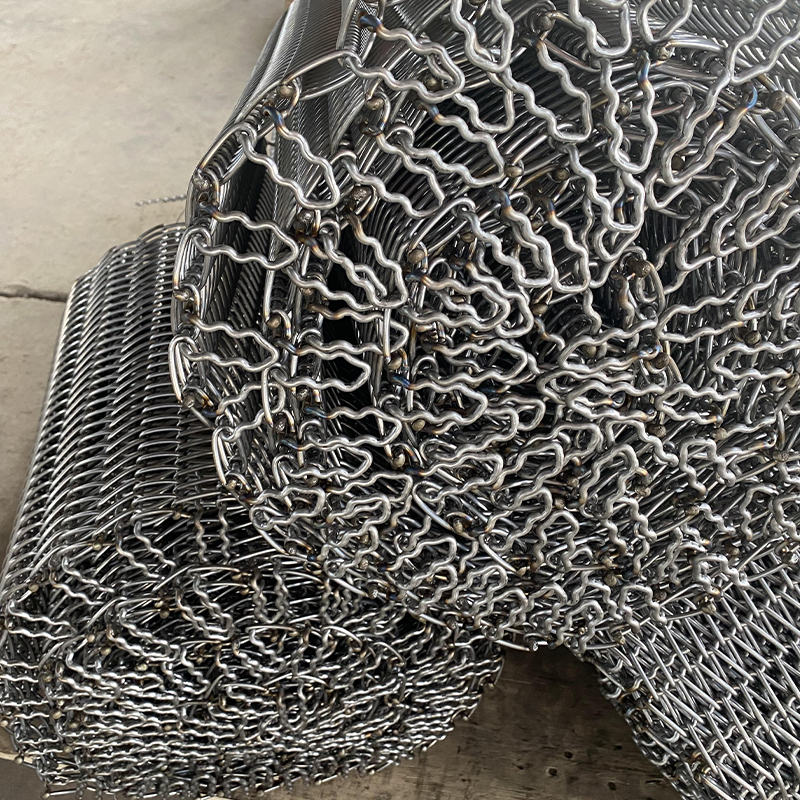 Glass bottle annealing furnace mesh beltCopper-Based Sintering Furnace Mesh BeltView Product →
Stainless-steel product annealing
Solution-annealing stainless goods such as cups, kitchenware, and pipe fittings pushes belt temperature toward 1000°C and beyond. At that level, creep and oxidation govern belt life, so the weave needs reinforcement and the wire needs a grade whose oxide scale stays intact cycle after cycle. Belts for this service should always be quoted against the peak zone temperature, never the setpoint average.
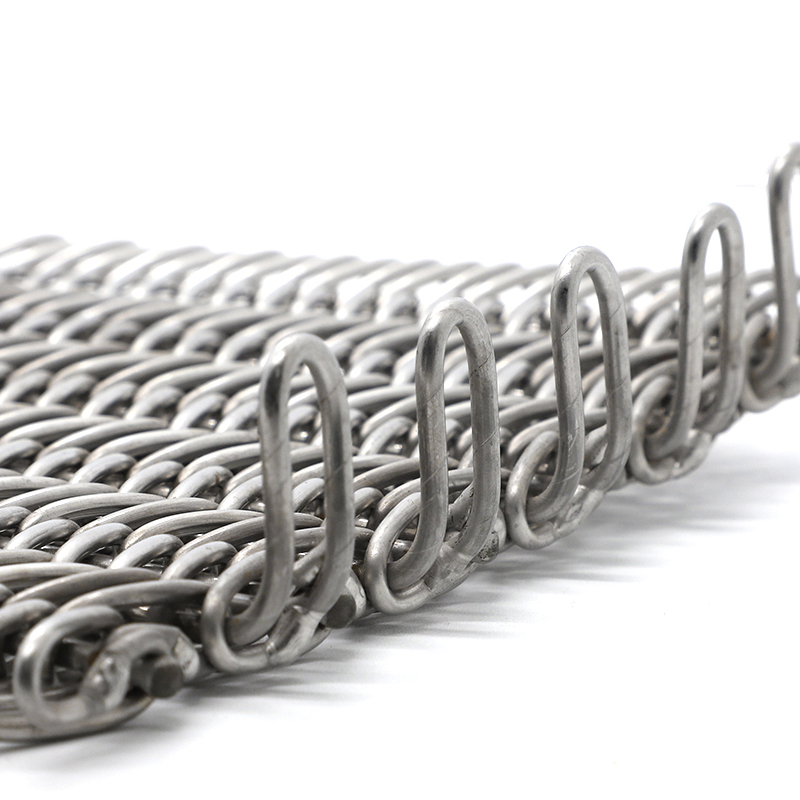 Stainless steel products annealing furnace mesh beltFastener quenching furnace mesh beltView Product →
Medical glass and clean processes
Medical and laboratory glass adds a surface requirement: the belt must not mark soft glass, and it must not shed particles onto clean products. Finer weaves with smooth wire surfaces are the norm, and cleaning instructions for the belt should be agreed before delivery, since a contaminated belt will contaminate an entire charge.
Failure Modes and a Procurement Checklist
Belt failures in annealing service cluster into four patterns. Creep and elongation show up as gradual tracking drift and take-up running out of travel; belts do elongate somewhat, so confirm your take-up has spare range and order the belt at the correct initial length. Thermal fatigue breaks wire at the drum bend, which almost always means the drum is too small for the pitch. Oxidation appears as scale flakes on product, which is critical in bright annealing. Edge curl warps the belt sides after repeated overheating, typically when furnace side zones run hotter than the center. None of these are exotic, and all of them are predictable at specification time.
Before you place an order, work through this checklist:
- State the peak zone temperature and the cycle profile, not just the word "annealing."
- Give the load per square meter, including the belt's own weight at temperature.
- Provide drum diameters at both ends and the take-up range.
- Declare the atmosphere: air, hydrogen, or a nitrogen-hydrogen mix.
- Fix width, pitch, edge type, and spare length in writing.
- Ask for the wire mill certificate and the weave specification sheet.
- Request reference life data from a comparable line where it exists.
An annealing furnace mesh belt is a consumable component, but the difference between an eight-month belt and a three-year belt is almost always decided at specification: hottest-zone temperature, weave and pitch versus drum diameter, load, and atmosphere. Specify those four, buy against certificates rather than catalog adjectives, and the belt becomes one of the predictable items on your maintenance schedule.
For context on where annealing sits alongside quenching, tempering, and normalizing lines, see our heat treatment mesh belt applications overview. And if you are drawing up a specification across furnace types, the industry guide on how to choose the right heat treatment mesh belt covers the selection criteria in more depth.



 English
 русский
 عربى
عربى