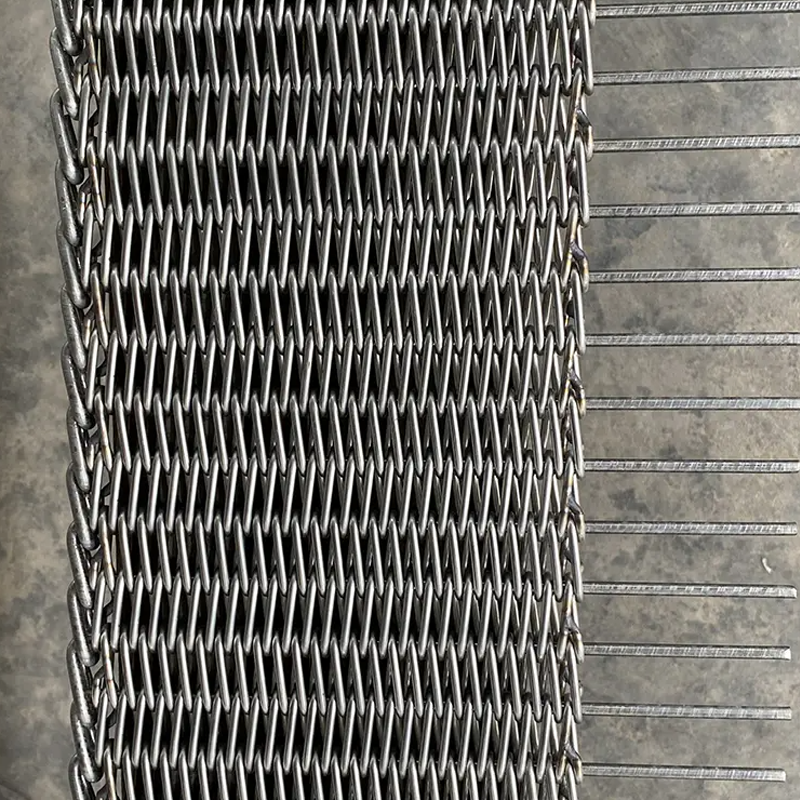
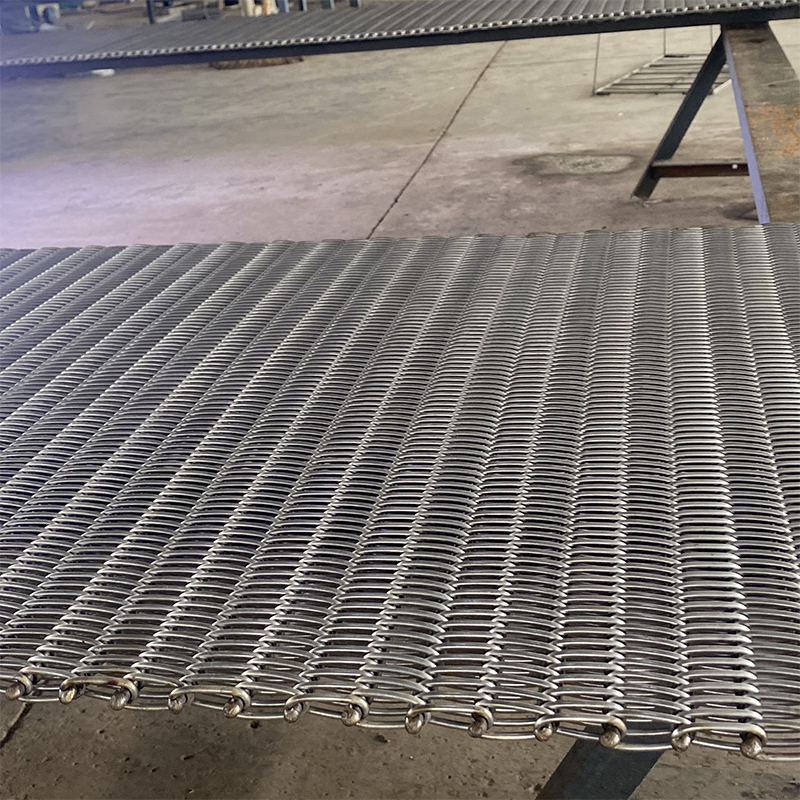
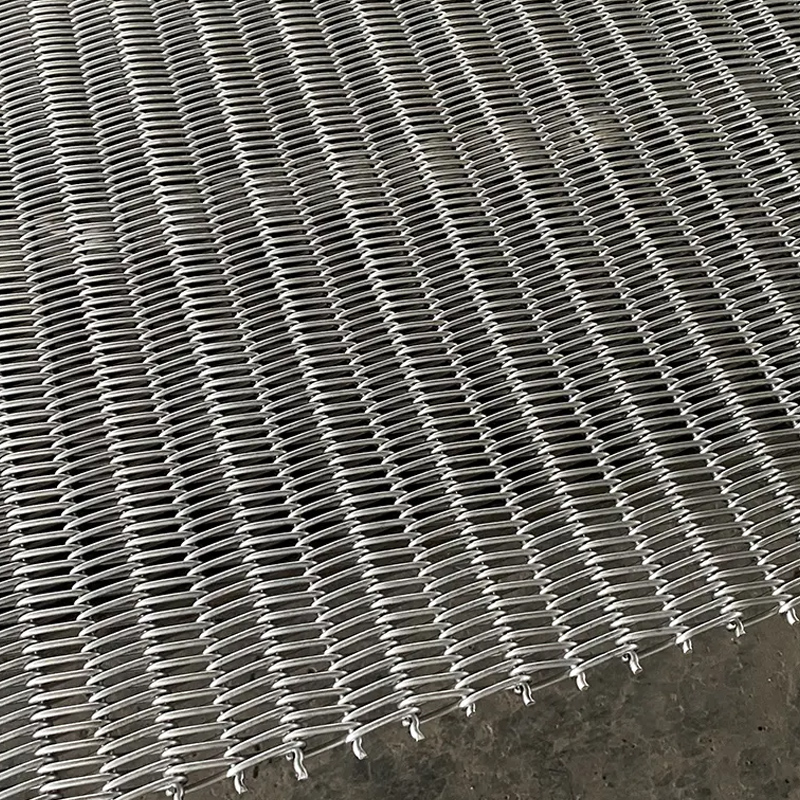
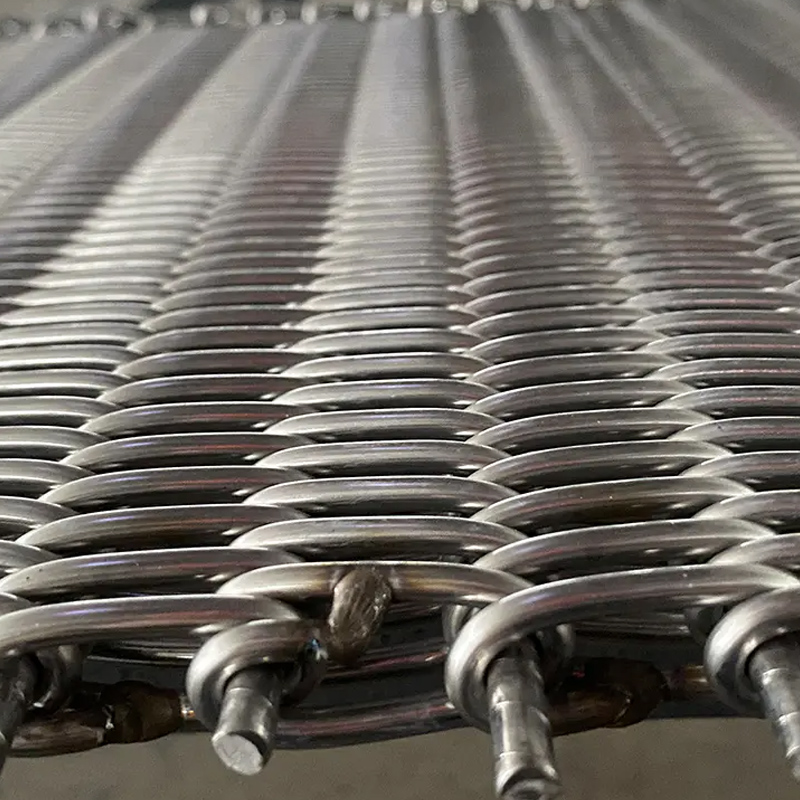
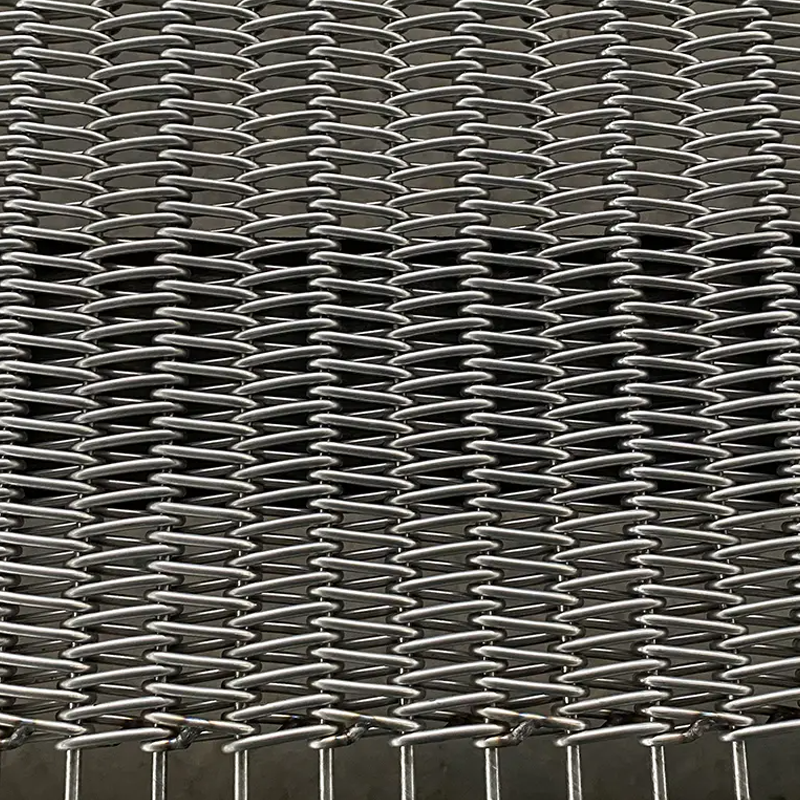
A hardening furnace mesh belt that fails after six months instead of the expected two years is rarely a random event. Line stops, hot parts piled into transfer bins, and rework pulled from the quench tank all point to the same root cause: the belt was chosen for the furnace envelope rather than for the parts, loads, and thermal cycle it has to carry. Get that match right at the start, and the belt can run for years with predictable maintenance. Get it wrong, and no amount of careful operation will save it.
What a hardening furnace mesh belt must survive every shift
A continuous hardening furnace moves parts through a fixed sequence: load zone, austenitizing heat zone, quench, wash, and temper. Bearing races, fasteners, springs, and standard parts typically see heat-zone temperatures between 800 and 950 degrees Celsius, depending on steel grade and section thickness. The belt is the only component that travels the whole cycle. It is heated, plunged into oil, water, or polymer quench, cooled rapidly, then heated again.
That repeated thermal shock is what separates hardening belts from belts used in annealing or drying. Rapid cooling contracts the wire surface faster than the core, building cyclic stress that gradually work-hardens the material. At the same time, the belt carries a dense load of small parts that must stay stable through the quench zone while the quenchant drains freely through the mesh. Belt speed also matters, because it controls soak time in the heat zone and immersion time in the quench. A belt designed for a light annealing line will rarely survive this combination of temperature swing, mechanical load, and quench exposure.
Wire material, weave, and edge construction set the performance ceiling
Three structural decisions determine how long a hardening belt lasts: the alloy, the weave pattern, and the edge design. Heat-resistant stainless steels with higher chromium and nickel content resist oxidation at heat-zone temperatures and recover better after rapid cooling. Wire diameter controls both strength and thermal mass. Thicker wire carries heavier loads and resists distortion, but it also absorbs more heat and can interfere with heating and quenching of the parts directly above it. The right wire size balances belt strength against process efficiency.
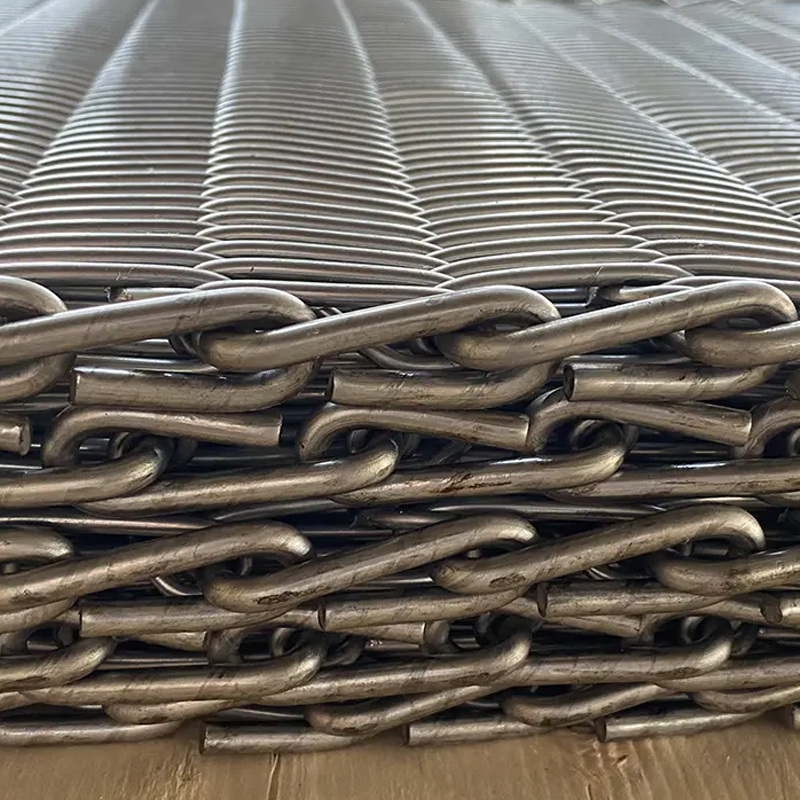
The weave pattern affects load support and quenchant flow. A dense, smooth surface keeps small parts from falling through or wedging between openings, while a more open structure lets oil and water escape quickly. Compound weaves and reinforced spiral constructions add stability for wide belts carrying uneven loads. Edge construction deserves special attention because edges are where fatigue cracks first appear. A reinforced or welded edge resists tension and tracking forces that gradually tear a simple selvedge edge apart.
Suppliers list these options differently, so the practical question is not which belt has the thickest wire, but which combination of alloy, weave, and edge matches the operating conditions of a specific hardening line.
Match the belt design to the workload before comparing prices
Belt prices are easy to compare; operating costs are not. The cheapest belt for a given furnace width can be the most expensive when it means replacing the belt twice as often or losing parts into the quench tank. Work through the process parameters first, then match the belt construction to them.
- Confirm the maximum part weight and the load density in kilograms per square meter.
- Identify the heat-zone temperature, the soak time, and the quench medium, including whether the furnace atmosphere is protective or oxidizing.
- Check the mesh opening against the smallest part so parts can neither fall through nor wedge in the openings.
- Verify the drive and take-up arrangement, because edge stress changes with drum diameter and tracking alignment.
- Ask the belt manufacturer what service life they expect under those exact conditions.
Different workpiece families lead to very different belt designs, and this is where a supplier with process experience earns its value. Fastener lines, for example, usually need a dense and stable carrying surface for mixed loads of bolts, nuts, and washers, which is why many shops run a purpose-built fastener quenching furnace mesh belt. Bearing manufacturers deal with heavy, closely packed loads and severe thermal cycling, so a bearing quenching furnace mesh belt with stronger wire and reinforced edges is usually the safer starting point. Spring makers handle small, easily tangled parts that demand tight openings and a smooth surface, making a spring quenching furnace mesh belt the natural first choice.
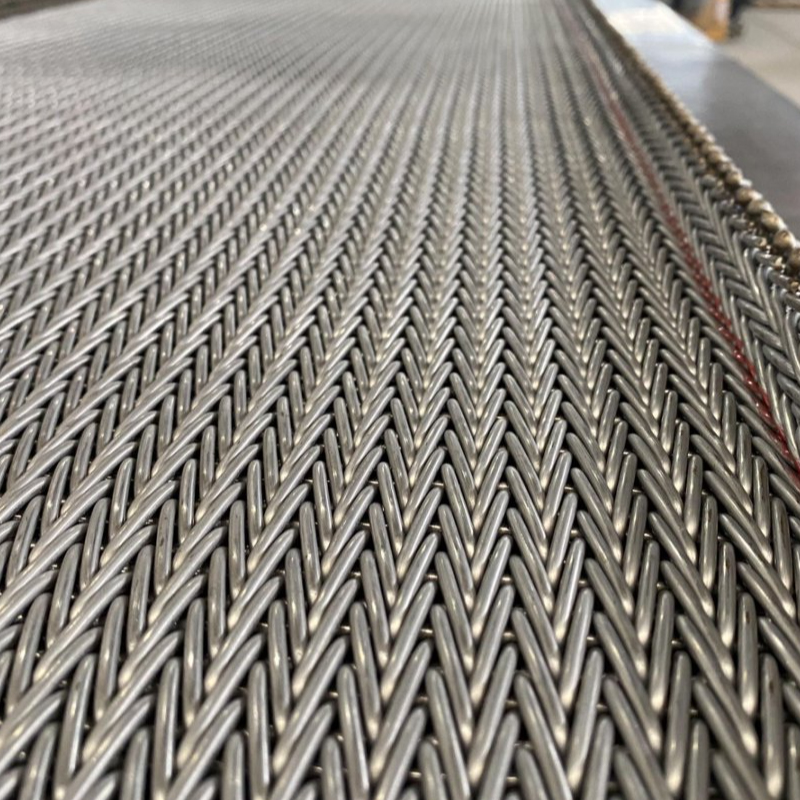 Wholesale Spring quenching furnace mesh belt Suppliers, Factory - Yangzhou YafeiYangzhou Yafei Machinery Manufacturing Co., Ltd is China wholesale Spring quenching furnace mesh belt suppliers and factory, details:The ...View Product →
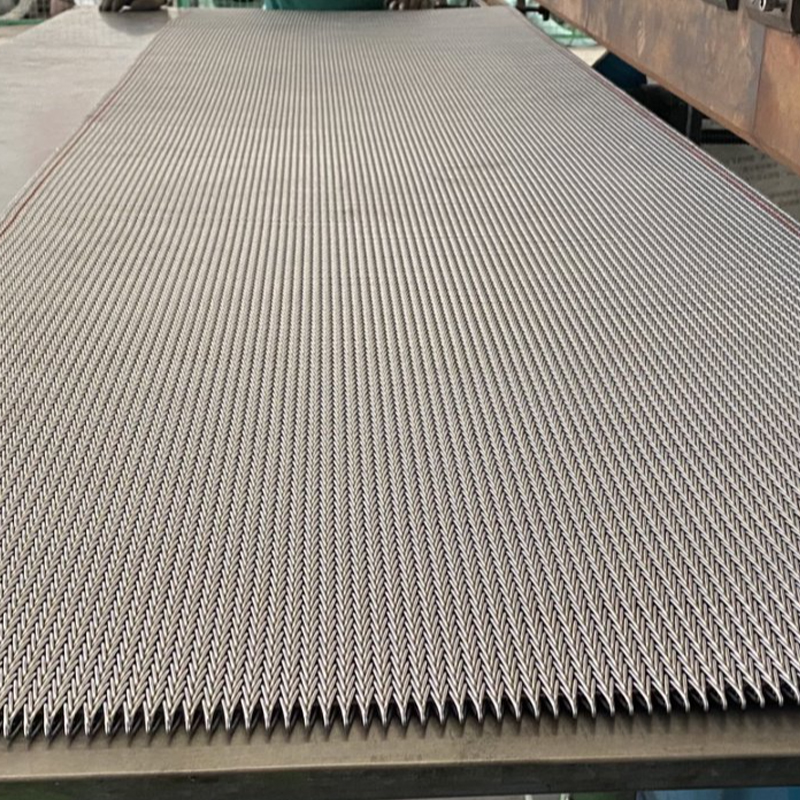 Wholesale Bearing quenching furnace mesh belt Suppliers, Factory - Yangzhou YafeYangzhou Yafei Machinery Manufacturing Co., Ltd is China wholesale Bearing quenching furnace mesh belt suppliers and factory, details:The...View Product →
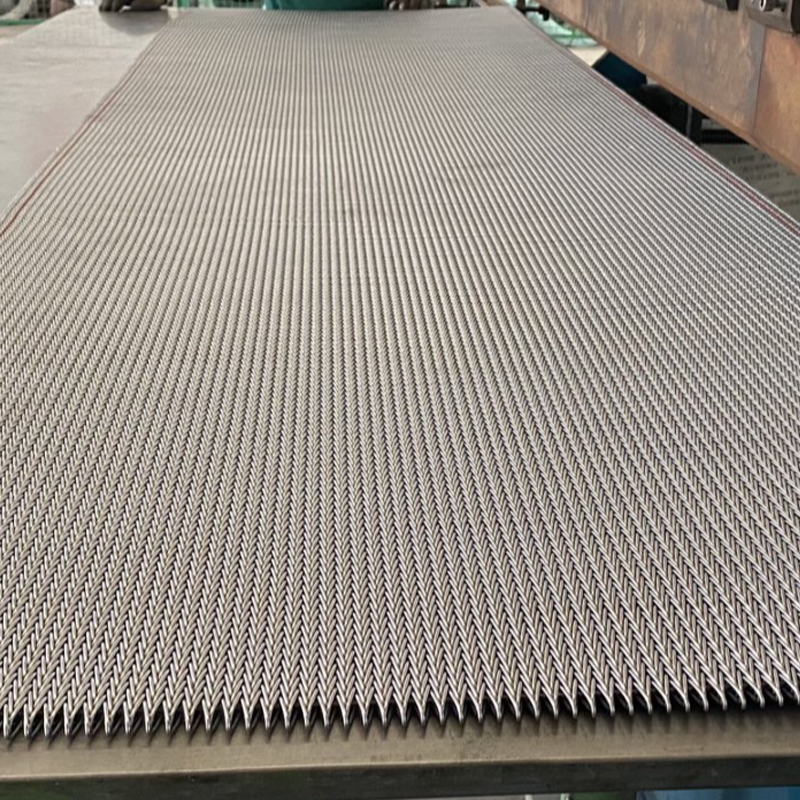 Wholesale Fastener quenching furnace mesh belt Suppliers, Factory - Yangzhou YafYangzhou Yafei Machinery Manufacturing Co., Ltd is China wholesale Fastener quenching furnace mesh belt suppliers and factory, details:Th...View Product →
For a broader view of how belt construction maps to different thermal processes, see our heat treatment applications overview, which compares the main furnace types and their belt requirements.
Common failure modes and how to prevent them
Most mesh belt failures follow a few recognizable patterns. Identifying the pattern early separates a belt defect from an operating problem and prevents the same failure from repeating on the replacement belt.
Common hardening furnace mesh belt failure modes and the operating factors that drive them.
| Failure mode |
Typical cause |
Practical prevention |
| Edge cracking or broken spirals |
Thermal fatigue combined with tracking misalignment |
Check tracking weekly; use a reinforced edge design |
| Belt elongation and stretching |
Overload or creep at sustained high temperature |
Reduce load density; select a higher-alloy wire |
| Blocked mesh from debris or scale |
Parts debris and oxide scale collecting during the cycle |
Schedule regular cleaning; adjust mesh opening if parts wedge |
| Tracking problems and edge wear |
Drive drum misalignment or uneven tension |
Inspect drums, crowned rollers, and take-up tension monthly |
When a belt shows advancing edge cracks, replacing it before a full break is usually cheaper than repairing furnace internals or fishing parts out of the quench. Also record the failure pattern. A belt that fails in the same location twice is telling you something about the furnace alignment or the loading pattern, not just about the belt.
Maintenance routines that add years to a hardening belt
Routine inspection pays for itself quickly. A weekly visual check of the belt surface catches broken wires and deformed spirals while they are still local problems. A monthly check of drum alignment, take-up tension, and belt tracking catches the mechanical issues that turn into edge fatigue. After quench processes that leave heavy oil residue or carbon deposits, a regular burn-off or cleaning cycle keeps the mesh open and maintains consistent quenchant flow.
Keep a simple record of tension adjustments, tracking corrections, and any unusual noise from the furnace drive. These observations show developing problems before they stop the line. After installation or any major repair, run the belt under load for a full shift before resuming normal output, because most premature failures happen during the first hours of operation when tension and tracking are still settling. For a step-by-step checklist that ranks the decision factors in order of importance, see our guide on how to choose the right heat treatment mesh belt.
In practice, the belt that runs for years without trouble is the one matched to the real process: actual part weights, actual temperatures, actual quench behavior. Define the cycle, measure the loads, and give the mesh belt supplier those numbers. The short time spent confirming those details costs far less than an emergency replacement in the middle of a production week.



 English
 русский
 عربى
عربى