 English
 русский
 عربى
عربىAutomotive and motorcycle parts blackening furnace mesh belt
The automotive and motorcycle parts blackening furnace mesh belt is designed for...
 +86 13852191798
Yangzhou Yafei Machinery Manufacturing Co., Ltd.

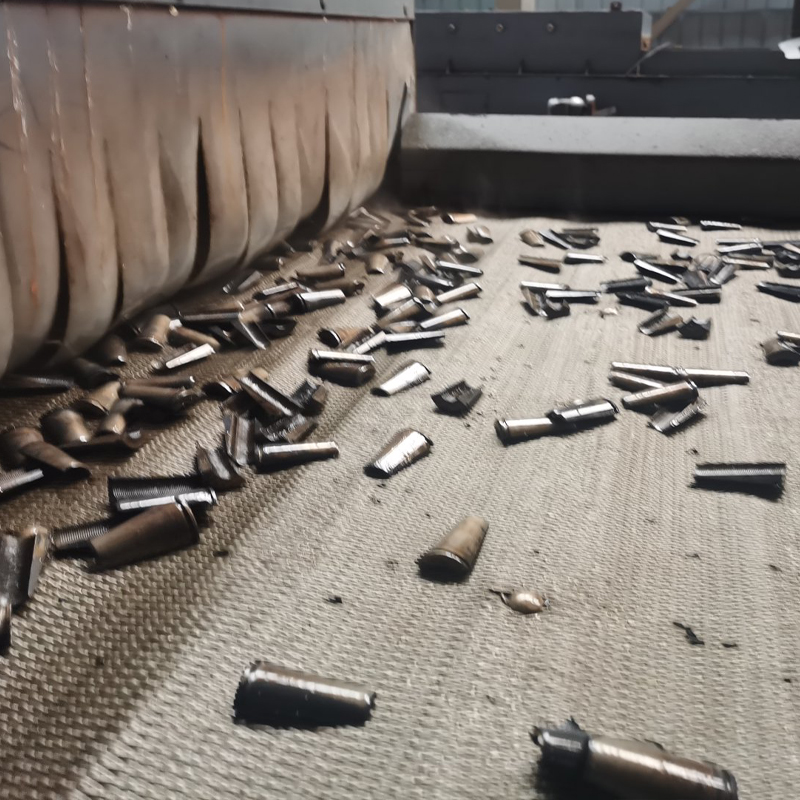
The automotive and motorcycle parts blackening furnace mesh belt is designed for...
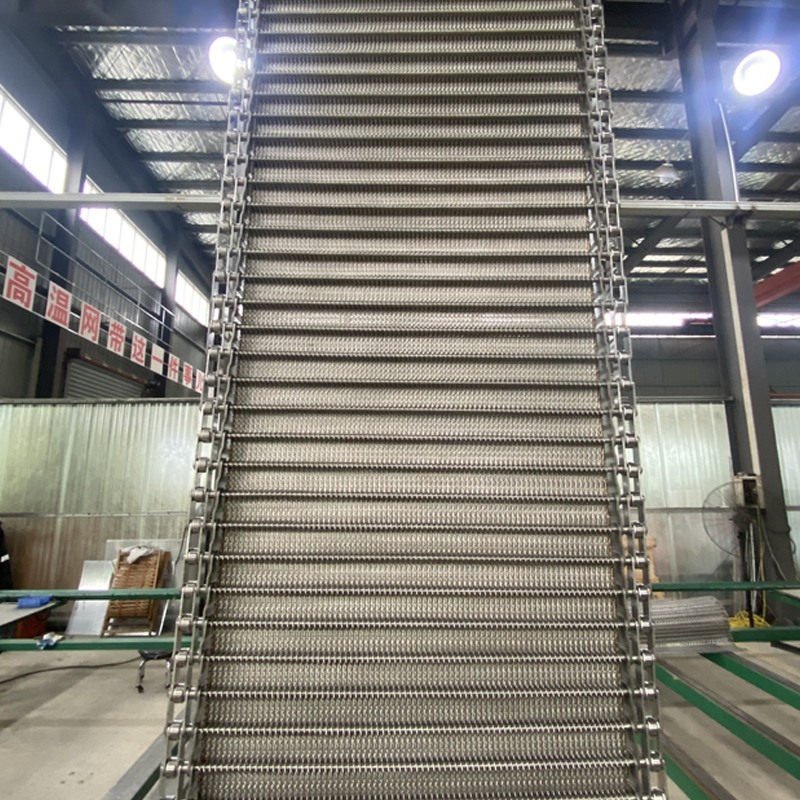
The hardware and power tool blackening furnace mesh belt is designed for high-fr...
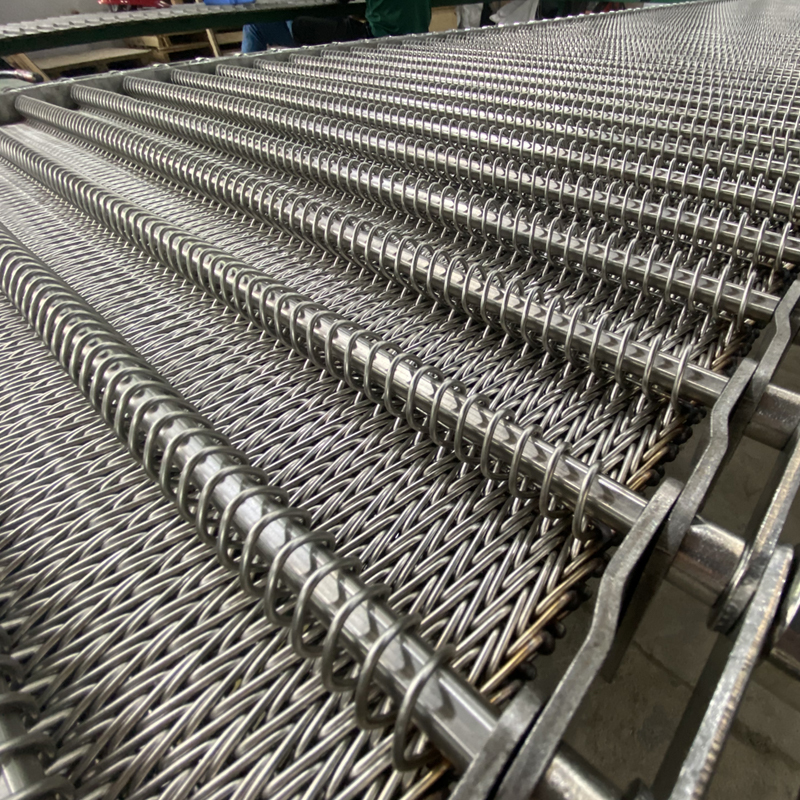
The fastener blackening furnace mesh belt uses imported AISI 314 or 310S high-ni...
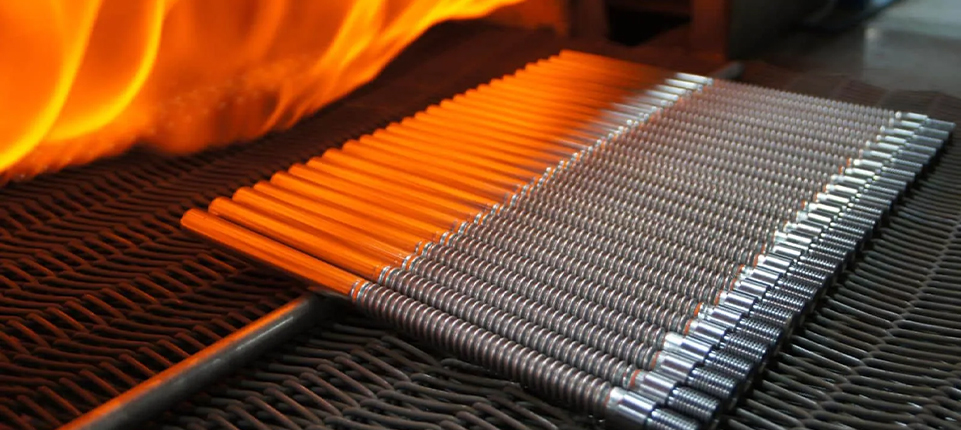
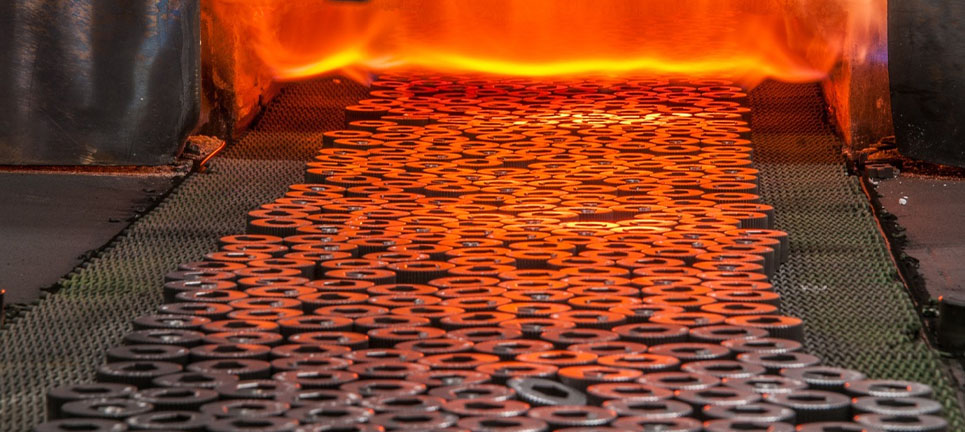
Blackening furnace mesh belts are primarily used for continuous batch blackening operations on fasteners (bolts/screws, nuts/washers, rivets/pins), automotive and motorcycle parts, hardware tools, power tools, and other products. They ensure stable and continuous product conveyance in high-temperature environments. Blackening is a common metal treatment for rust prevention and aesthetics, requiring oxidation of the workpiece at high temperatures. Therefore, the mesh belt must possess excellent heat resistance, corrosion resistance, and operational stability. The precisely designed transmission structure and balanced weaving process ensure stable movement and uniform heating of the workpiece within the high-temperature furnace, thereby ensuring a consistent, secure blackening layer.
Blackening furnace mesh belts often utilize a balanced weave, with spiral wires and threaded rods interwoven in a regular pattern. This ensures smooth operation and prevents deviation. To withstand long-term operation in high-temperature and corrosive environments, mesh belts are often made of heat-resistant stainless steel (such as SUS304 and SUS310S) or nickel-chromium alloys. These materials maintain their strength and resist oxidation and deformation even at temperatures exceeding hundreds of degrees Celsius.
As China Blackening Furnace Mesh Belt Manufacturers and Blackening Furnace Mesh Belt Suppliers,
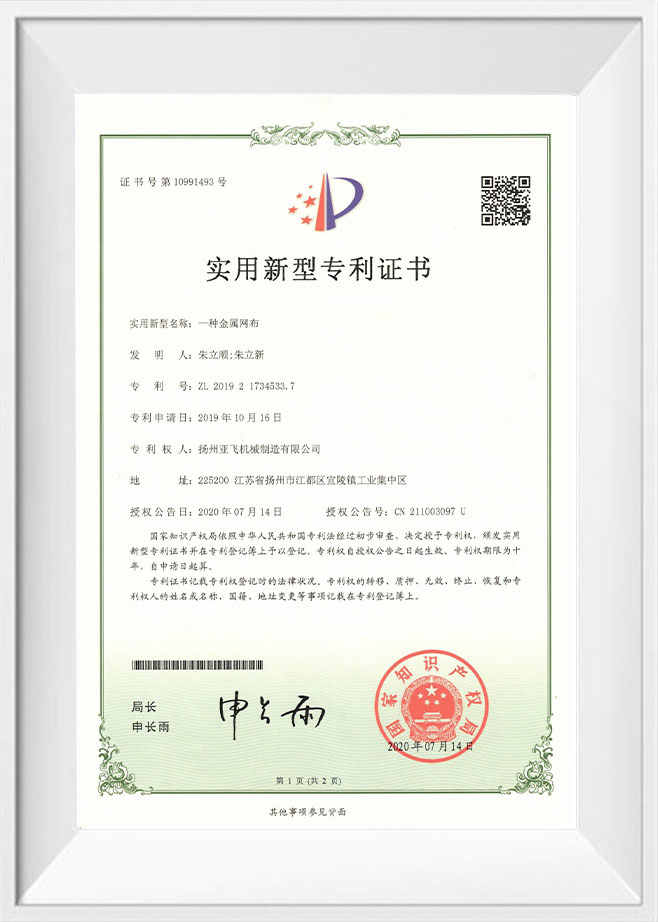
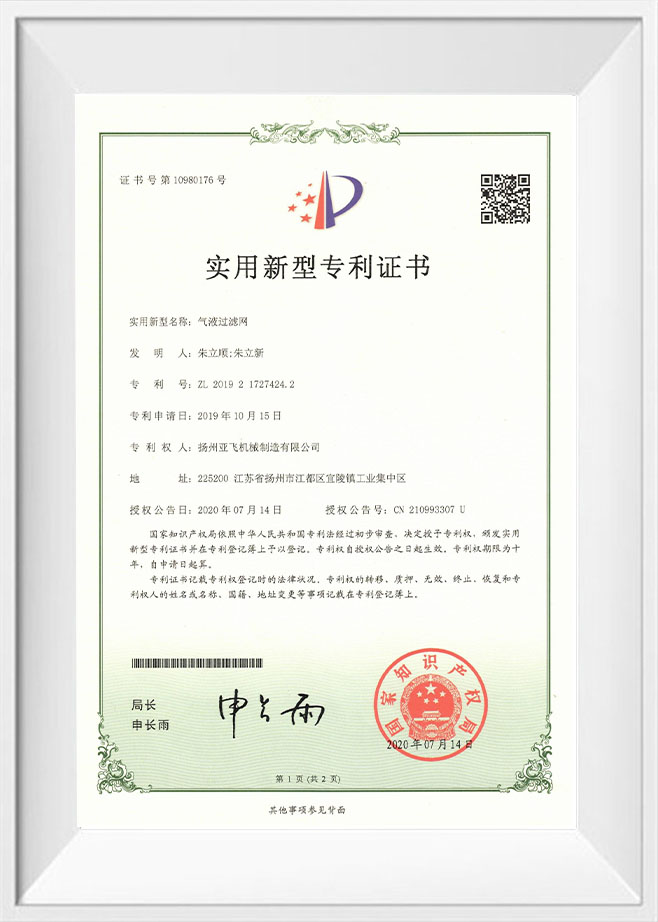
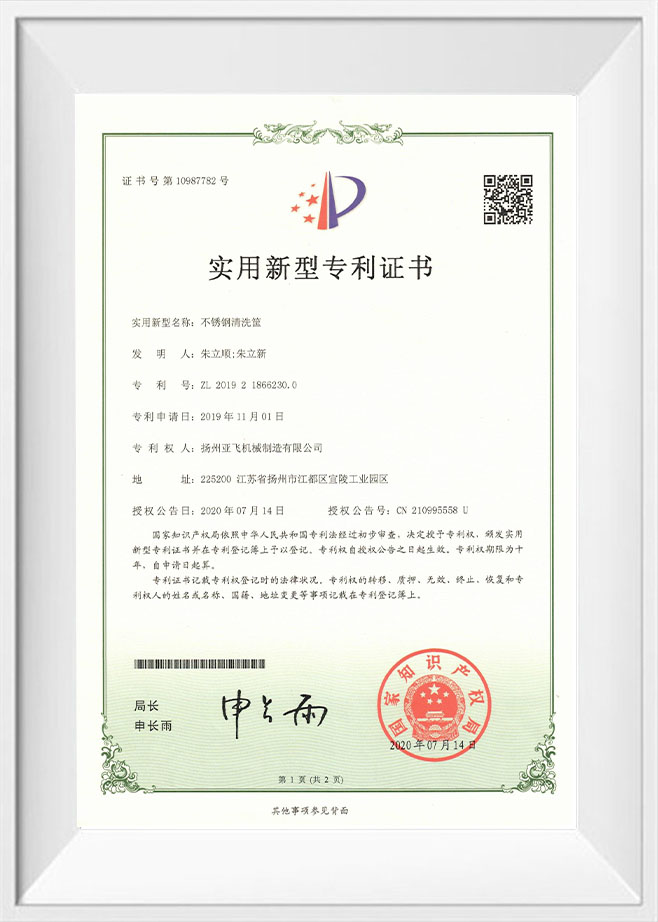
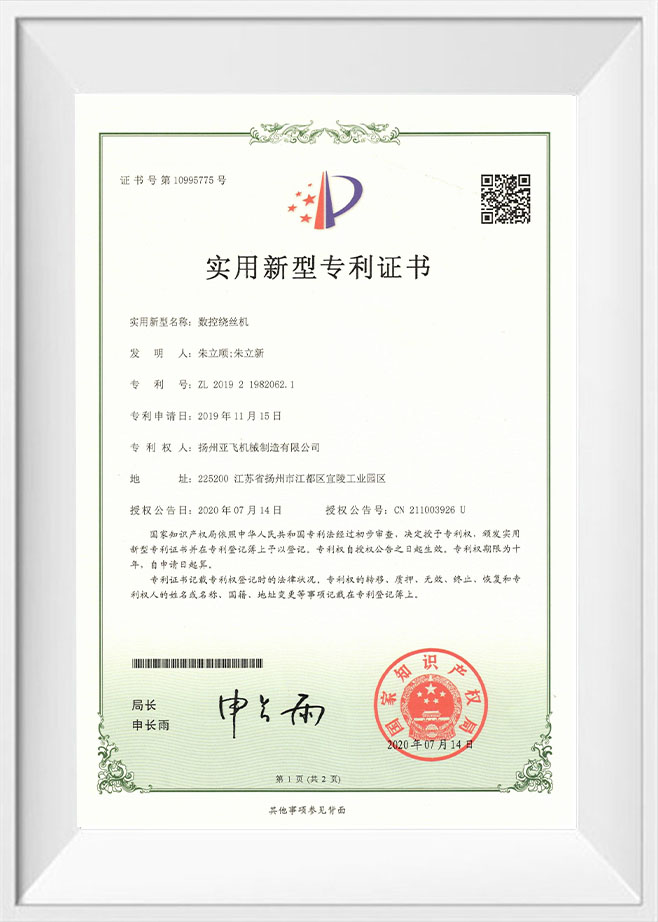
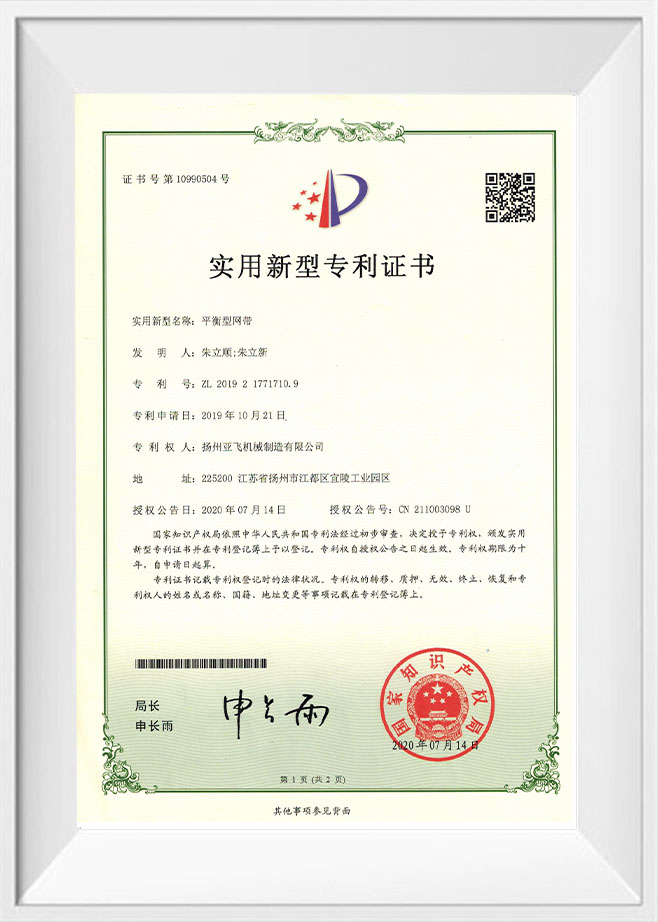
Yangzhou Yafei Machinery Manufacturing Co., Ltd. is a private scientific and technological enterprise in Jiangsu Province, formerly known as Yangzhou Yafei Metal Mesh Belt Factory, located in Yiling Industrial Park in the east of Yangzhou, with R&D, production and processing, office buildings, etc. With independent research and development of scientific and technological projects and equipment processing and manufacturing capabilities.
At present, the company is mainly engaged in: stainless steel mesh belt, conveyor mesh belt, metal mesh belt, stainless steel conveyor belt and related technology research and development, application and promotion.
Metal mesh belts have been used in beer and beverage, food, wood industry, glass, chemical industry, pharmacy, cleaning and spraying, powder metallurgy, new energy, heat treatment, industrial kiln, general conveying machinery and other industries.
Conveying machinery includes: net belt conveyor, hoist, flat top chain conveyor belt, roller conveyor, chain plate conveyor, etc. Widely used in home appliance engineering, automobile engineering, dairy beverage industry, brewing and water treatment and other fields.
A conveyor mesh belt rarely announces its own failure. It distorts, cracks, or begins tracking to one side, and a continuous furnace or production line stops the moment it does. That makes belt selection more than a spare-part purchase; it is a decision about uptime, product quality, and operating cost. The right conv...
READ MOREWhen a hardening furnace mesh belt fails, it usually does it without warning. One shift it is carrying bearing races through the high-temperature zone; the next, a torn edge catches on the return track and the whole line stops. Most of these failures were decided months earlier, when the belt specification was written...
READ MOREA continuous brazing line stops because the mesh belt has drifted to one side, the edge wires are broken, and the stainless steel parts grouping together on the belt are no longer aligned. It is a familiar scenario for maintenance teams: the furnace itself is running correctly, but the belt has become the bottleneck. ...
READ MOREBlackening Furnace Mesh Belt operates in environments where multiple corrosion pathways occur simultaneously, driven by temperature variation, reactive gases, and chemical residues generated during blackening treatment processes. The first mechanism involves high-temperature oxidation, where oxygen reacts with metallic surfaces at elevated temperatures, producing oxide scales that gradually detach under thermal cycling. This repeated formation and shedding process results in progressive material loss and surface roughening. Another mechanism is chemical corrosion induced by alkaline or salt-based blackening solutions, which often remain on workpieces and migrate onto the belt surface during continuous operation. These chemical residues may penetrate passive oxide layers and initiate localized electrochemical reactions, leading to pitting corrosion and surface weakening.
A further mechanism is carburization in carbon-rich furnace atmospheres, where carbon atoms diffuse into the steel lattice, altering hardness distribution and potentially increasing brittleness in surface layers. Conversely, decarburization may occur in oxidizing zones, reducing carbon content near the surface and lowering mechanical strength. Thermal cycling introduces additional stress gradients due to repeated expansion and contraction, which may result in microstructural fatigue and crack nucleation. When combined, these mechanisms form a complex degradation environment that gradually affects dimensional stability and mechanical performance.
Yangzhou Yafei Machinery Manufacturing Co., Ltd. develops Blackening Furnace Mesh Belt systems by analyzing these corrosion pathways at material and structural levels. Our approach includes adjusting alloy composition, refining surface conditions, and optimizing mesh geometry to reduce exposure points where corrosive media accumulate. Production processes are structured to ensure uniform microstructure distribution, which helps reduce localized corrosion susceptibility. Through controlled manufacturing conditions and application-based engineering, our mesh belts maintain stable operational behavior in furnace systems where multiple corrosion mechanisms interact continuously.
| Parameter Item | Specification Range | Material/Standard | Description |
|---|---|---|---|
| Belt Type | Balanced Weave / Chain Edge Type | Industrial Furnace Standard | Suitable for continuous blackening furnace conveying systems |
| Wire Diameter | 0.8 mm – 6.0 mm | Stainless Steel Series (304/316/310S) | Determines load capacity and structural strength |
| Mesh Opening Size | 5 mm – 50 mm | Customizable Engineering Design | Controls airflow and heat circulation efficiency |
| Belt Width | 200 mm – 4000 mm | Custom Production Standard | Adaptable to different furnace chamber sizes |
| Edge Reinforcement | Chain Reinforced / Double Edge Structure | Heat-Resistant Alloy Steel | Improves stability during high-load operation |
High-temperature oxidation in Blackening Furnace Mesh Belt systems occurs when metallic surfaces interact with oxygen at elevated furnace temperatures, forming oxide layers that evolve over time. These oxide layers initially act as protective barriers but may become unstable under cyclic heating conditions, resulting in cracking or flaking. Once the protective layer is disrupted, fresh metal surfaces are exposed, accelerating oxidation progression. The oxidation rate is influenced by alloy composition, surface finish, and thermal exposure duration. Chromium content plays a major role in stabilizing oxide formation, while nickel improves structural integrity under repeated heating cycles. Molybdenum contributes to resistance against localized degradation in high-temperature environments.
Yangzhou Yafei Machinery Manufacturing Co., Ltd. applies controlled alloy selection processes to ensure consistent oxidation resistance across Blackening Furnace Mesh Belt products. Our manufacturing process includes heat treatment cycles designed to stabilize grain structure and improve oxide adhesion. Surface finishing operations reduce micro-defects that may act as oxidation initiation points, while controlled polishing enhances surface uniformity. In addition, thermal simulation testing is conducted to replicate furnace conditions and evaluate oxide layer stability under long-term exposure.
Structural design adjustments are also implemented to reduce airflow turbulence around mesh intersections, which can influence localized oxidation rates. By optimizing mesh spacing and wire diameter distribution, heat exposure becomes more uniform across the belt surface. This reduces differential oxidation zones that typically lead to uneven wear. Through these combined strategies, oxidation resistance is maintained across extended operating cycles, supporting stable conveyor performance in continuous furnace systems.
Chemical corrosion in Blackening Furnace Mesh Belt environments originates from exposure to reactive substances used during blackening treatment processes. These substances may include alkaline oxidizers, nitrate-based compounds, sulfide residues, and cleaning agents used in pre- and post-treatment stages. When these chemicals come into contact with metal surfaces at elevated temperatures, electrochemical reactions may occur, leading to localized corrosion such as pitting, intergranular attack, or surface etching. Residual chemicals may also concentrate in mesh junctions or low-flow areas, increasing localized corrosion intensity.
Material selection plays a significant role in mitigating these effects. Stainless steel grades with controlled chromium and molybdenum content are preferred for their ability to resist chloride-induced corrosion and maintain passive film stability. Surface passivation treatments enhance the formation of a stable chromium oxide layer, reducing electrochemical activity at the surface. Additionally, controlled cleaning processes are implemented during manufacturing to remove contaminants that could accelerate chemical reactions during operation.
Yangzhou Yafei Machinery Manufacturing Co., Ltd. integrates chemical resistance considerations into both material engineering and structural design of Blackening Furnace Mesh Belt systems. Mesh geometry is optimized to minimize crevice formation where chemical residues may accumulate. Production processes ensure consistent surface cleanliness before delivery, reducing initial contamination risks. Application testing is conducted in simulated chemical environments to evaluate long-term resistance behavior. Through these engineering measures, chemical corrosion progression is reduced even under repeated exposure to aggressive blackening media.
Blackening Furnace Mesh Belt operates under combined thermal and corrosive stress conditions, where microstructural stability becomes a defining factor for long-term performance. Thermal cycling causes repeated expansion and contraction of the metal lattice, while corrosive media simultaneously interact with grain boundaries and phase interfaces. This coupling effect may result in grain boundary weakening, phase instability, and micro-crack formation. Over time, these microstructural changes may propagate into macroscopic deformation or failure.
Grain size control is a primary factor in maintaining structural stability. Fine and uniform grains reduce stress concentration points and improve resistance to crack propagation. Heat treatment processes are carefully controlled to achieve balanced grain refinement without introducing excessive internal stress. Residual stress reduction is also achieved through annealing processes, which help stabilize lattice structure and improve fatigue resistance under cyclic loading conditions.
Yangzhou Yafei Machinery Manufacturing Co., Ltd. applies microstructural engineering techniques throughout Blackening Furnace Mesh Belt production. Our process control includes precise temperature regulation during rolling and heat treatment stages to ensure uniform phase distribution. Material testing is conducted to evaluate grain consistency and phase stability under simulated furnace conditions. Structural design also considers thermal expansion compatibility to reduce stress concentration at mesh intersections.
By controlling microstructure at multiple levels, our mesh belt systems maintain dimensional stability and mechanical consistency under prolonged thermal-corrosive coupling exposure, supporting continuous operation in industrial furnace environments.
| Parameter Item | Performance Range | Operating Condition | Description |
|---|---|---|---|
| Operating Temperature | 300°C – 1150°C | Continuous Furnace Operation | Suitable for high-temperature blackening environments |
| Tensile Strength | 500 MPa – 1200 MPa | Thermal-Corrosive Conditions | Ensures resistance to deformation under load |
| Corrosion Resistance Level | Medium–High / High Grade | Chemical Blackening Media Exposure | Maintains stability in alkaline and oxidizing environments |
| Service Life | 1–8 years | Continuous Industrial Use | Depends on load intensity and furnace conditions |
| Heat Expansion Rate | Controlled (Low Expansion Design) | Cyclic Heating & Cooling | Reduces deformation during thermal cycling |
Mechanical wear in Blackening Furnace Mesh Belt systems occurs due to continuous contact with furnace rollers, guiding structures, and transported components. In corrosive environments, wear is often accelerated because surface corrosion weakens material hardness and increases friction coefficients. Abrasive particles generated during processing may also become embedded in mesh structures, further increasing wear intensity. This combination of mechanical abrasion and corrosion leads to progressive surface degradation.
Wear resistance is improved through material selection and structural reinforcement. High-strength stainless steel alloys are used to maintain surface hardness under mechanical loading. Mesh geometry is optimized to distribute contact forces evenly across the belt structure, reducing localized stress concentration. Edge reinforcement is applied to areas experiencing higher mechanical interaction with drive systems.
Yangzhou Yafei Machinery Manufacturing Co., Ltd. implements precision manufacturing processes to ensure uniform wire tension and consistent mesh alignment in Blackening Furnace Mesh Belt production. Surface treatments are applied to enhance hardness while maintaining flexibility, allowing the belt to absorb mechanical stress without structural failure. Lubrication compatibility is also considered in design to reduce friction without promoting chemical residue accumulation.
Wear testing under simulated furnace conditions is performed to evaluate long-term performance under combined mechanical and corrosive stress. Through these engineering strategies, wear progression is controlled and operational lifespan is extended under continuous industrial use.
Continuous operation in Blackening Furnace Mesh Belt systems introduces sustained mechanical loading combined with thermal expansion cycles. Over time, these conditions may lead to elongation, deformation, or alignment deviation if structural integrity is not properly maintained. Load distribution uniformity plays a major role in preventing localized overstress. Uneven tension can result in premature wear at specific mesh segments and reduce overall operational stability.
Dimensional control during manufacturing ensures consistent wire diameter, mesh spacing, and edge alignment. These parameters directly influence load distribution behavior during operation. Thermal expansion behavior is also considered in design to accommodate dimensional changes without inducing excessive stress at connection points.
Yangzhou Yafei Machinery Manufacturing Co., Ltd. applies strict dimensional tolerance control in Blackening Furnace Mesh Belt production. Each belt undergoes alignment verification to ensure uniform tension distribution. Structural testing simulates long-term continuous operation to evaluate deformation trends under sustained load conditions. Adjustments in mesh design are made to improve load balancing and reduce stress accumulation in high-contact regions.
By maintaining structural consistency across production and operational stages, our mesh belt systems achieve stable conveying performance in continuous furnace environments.
Get A Free Consultation Now
Get A Customized Solution
The company adheres to the concept of creating value for customers and prosperity for society, aiming to build a reliable mesh belt brand and establish the century-old Yafei brand.
CONTACT INFORMATION

Yiling Industrial Park, Jiangdu District, Yangzhou City, Jiangsu Province, China

+86 13852191798
PRODUCT CATEGORIES
QUICK LINKS
MOBILE
 Custom Blackening Furnace Mesh Belt Suppliers