 English
 русский
 عربى
عربىBrazing furnace mesh belts
Brazing furnace mesh belts are conveyor components specifically designed for con...
 +86 13852191798
Yangzhou Yafei Machinery Manufacturing Co., Ltd.

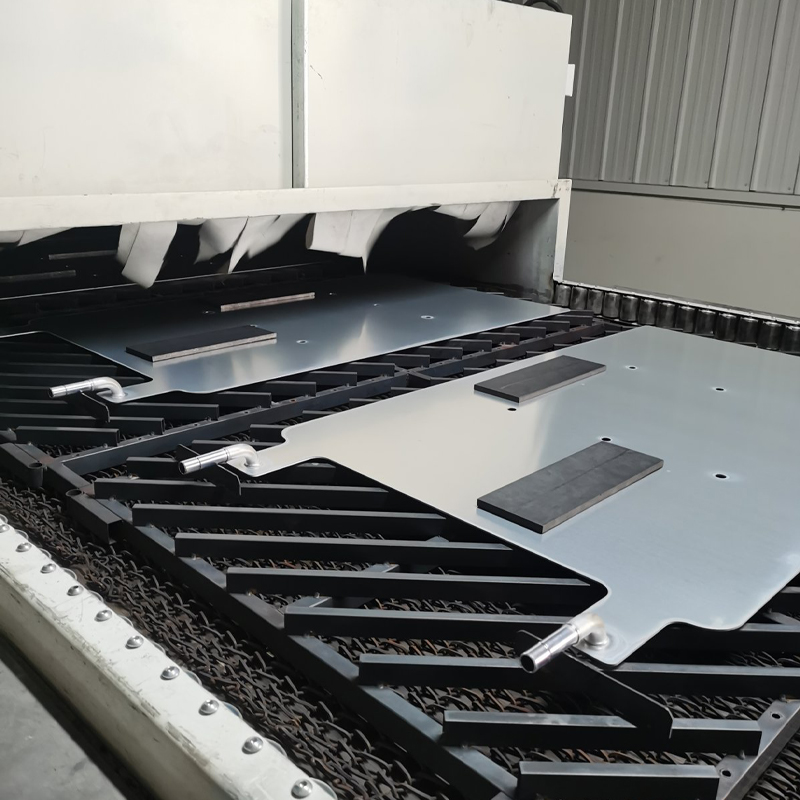
Brazing furnace mesh belts are conveyor components specifically designed for con...
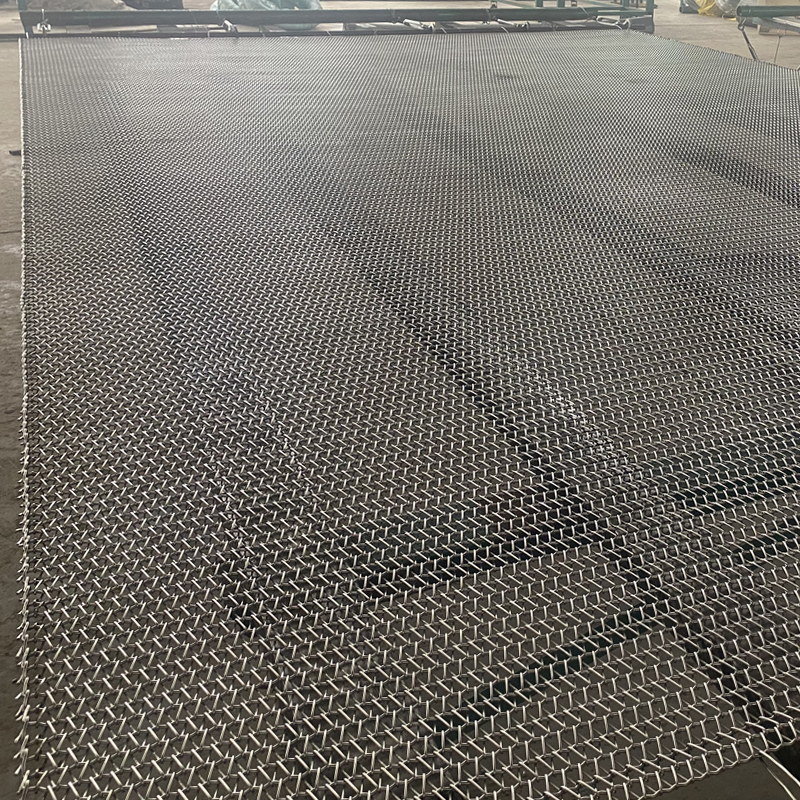
The aluminum brazing furnace mesh belt is a high-temperature resistant conveying...
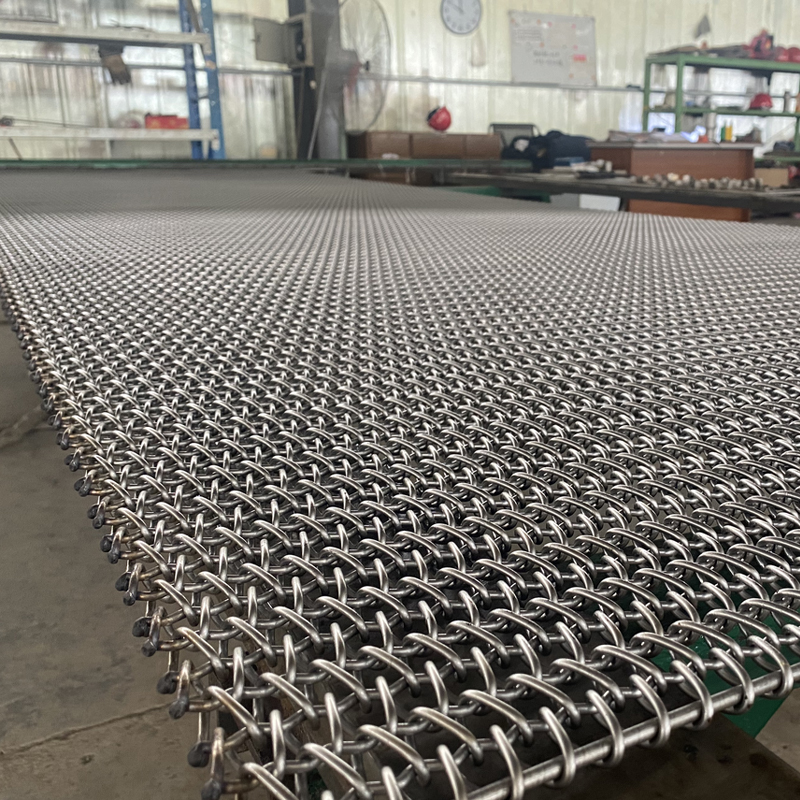
The aluminum brazing furnace mesh belt plays a crucial role in the entire brazin...
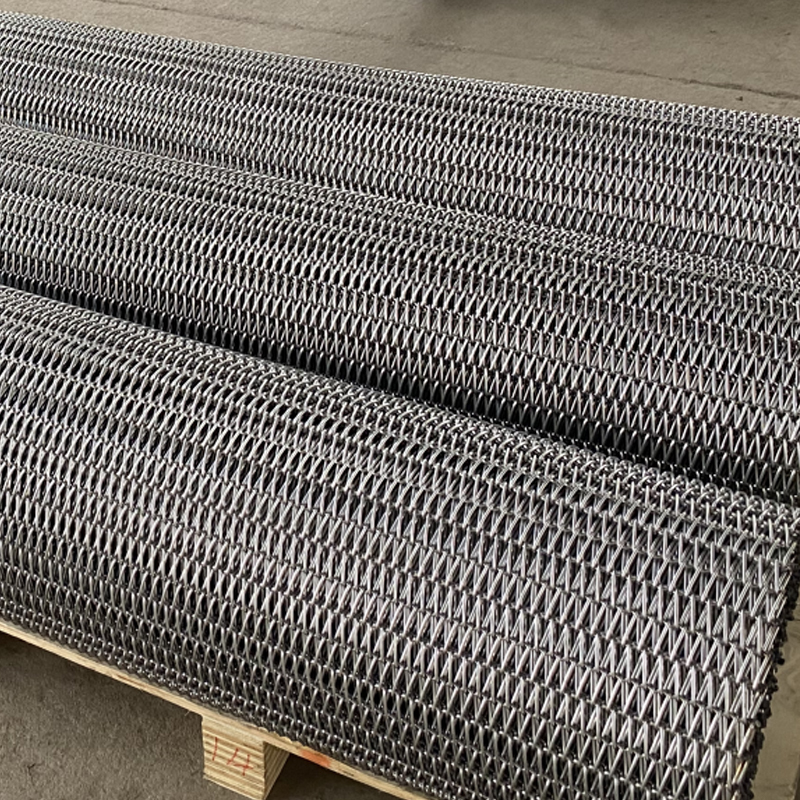
The automotive water tank aluminum brazing furnace mesh belt is used to stably t...
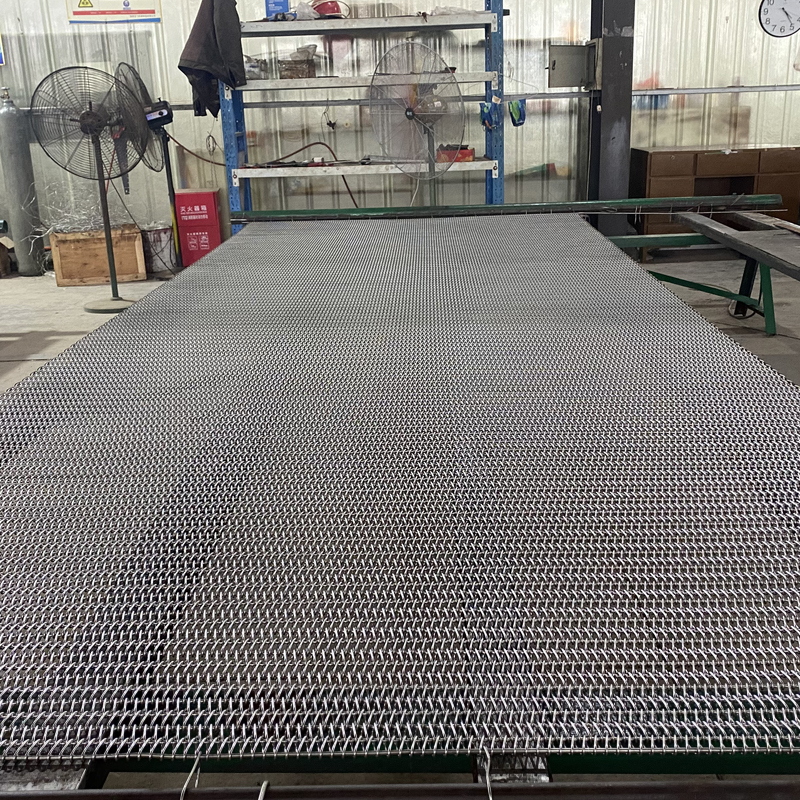
The condenser aluminum brazing furnace mesh belt is a high-temperature conveying...
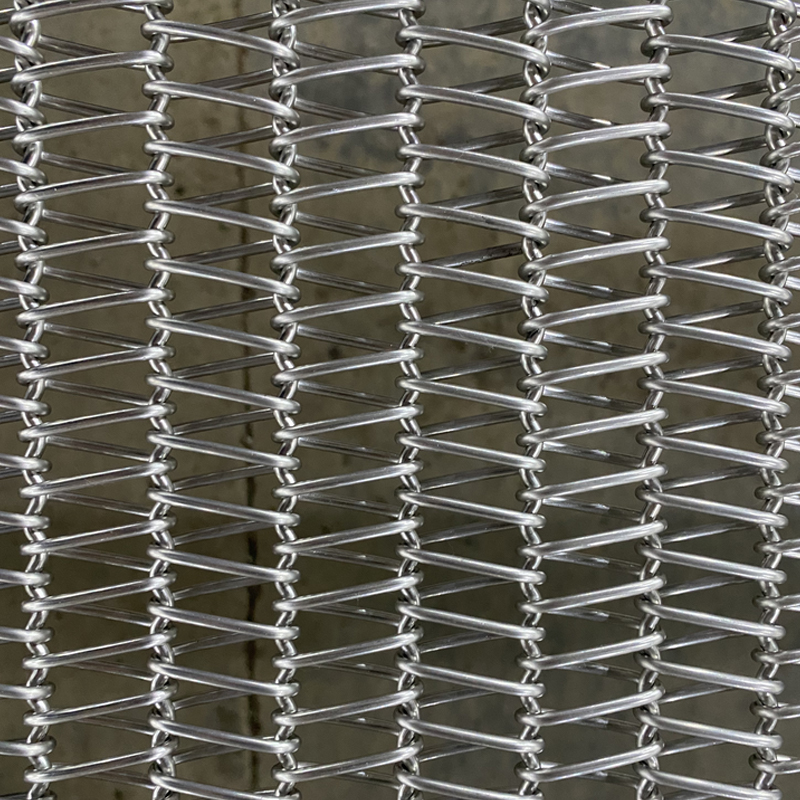
The evaporator aluminum brazing furnace mesh belt is specifically designed for t...
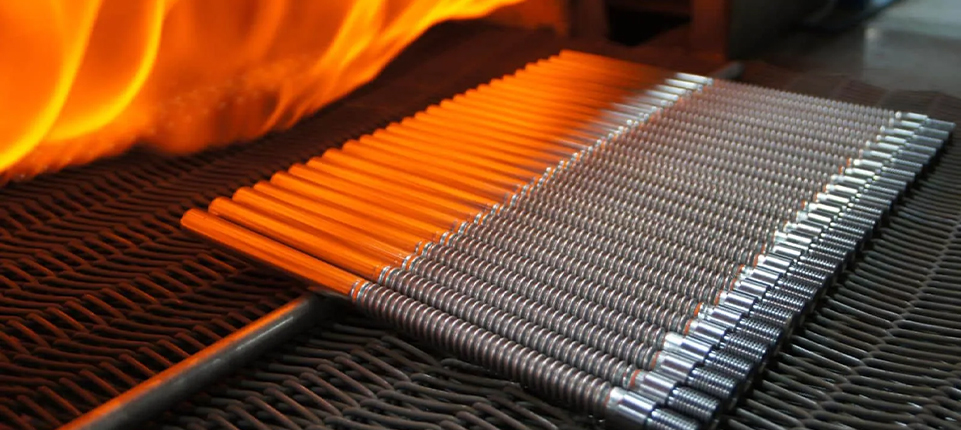
Aluminum brazing furnace belts are primarily used for continuous brazing of components such as new energy vehicle battery cooling plates, aluminum radiator tanks, oil coolers, intercoolers, heaters, tube-and-belt condensers, evaporators, parallel-flow condensers, stacked evaporators, and power plant air coolers. Operating under a nitrogen atmosphere, these belts prevent oxidation during the heating and cooling of aluminum components, ensuring a smooth surface finish and strong welds, thus meeting the high quality requirements of the modern automotive, energy, and refrigeration industries.
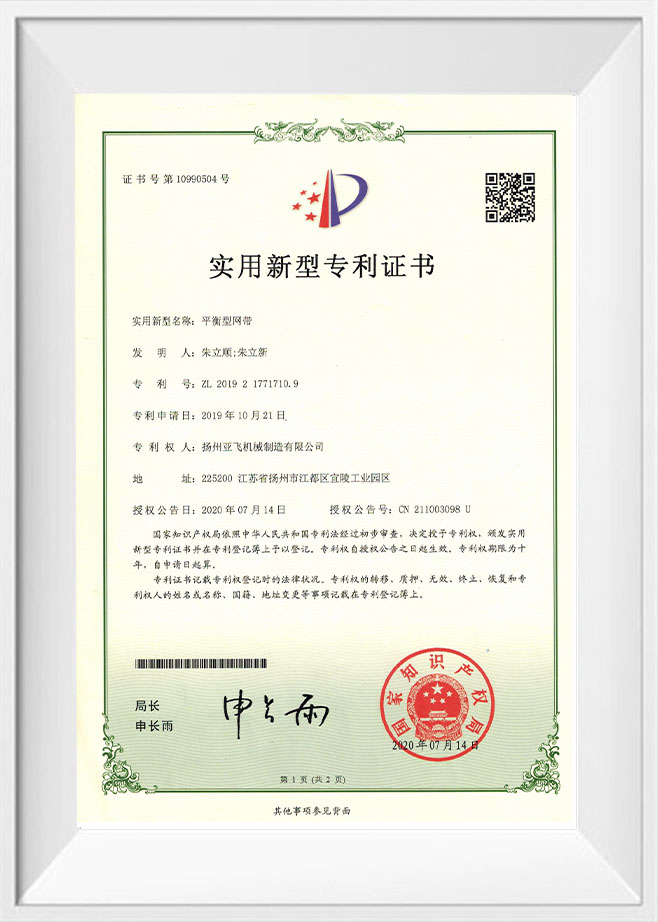
Aluminum brazing furnace belts are typically made of high-temperature and corrosion-resistant stainless steel or alloys and can be designed in various configurations, including balanced, herringbone, and chain-and-mesh belts, depending on production requirements. These designs ensure stable workpiece transport within the furnace while ensuring uniform heating in high-temperature environments, minimizing deformation and weld defects caused by temperature differences. For thin-walled, multi-channel aluminum parts such as water-cooled plates for new energy vehicle batteries and parallel-flow condensers, mesh belt flatness and tension control are particularly important to ensure consistent and precise welding during the welding process.
In practical applications, the mesh belt in an aluminum brazing furnace is more than just a conveyor; it plays a crucial role in the stable operation of the entire process. Its speed, tension, and material selection within the furnace directly impact weld quality and production efficiency. The aluminum brazing process often requires heating, holding, and cooling within a narrow temperature range. Therefore, the mesh belt must possess excellent thermal conductivity and durability to ensure reliable brazing results during continuous production.
As China Aluminum Brazing Furnace Mesh Belt Manufacturers and Aluminum Brazing Furnace Mesh Belt Suppliers,
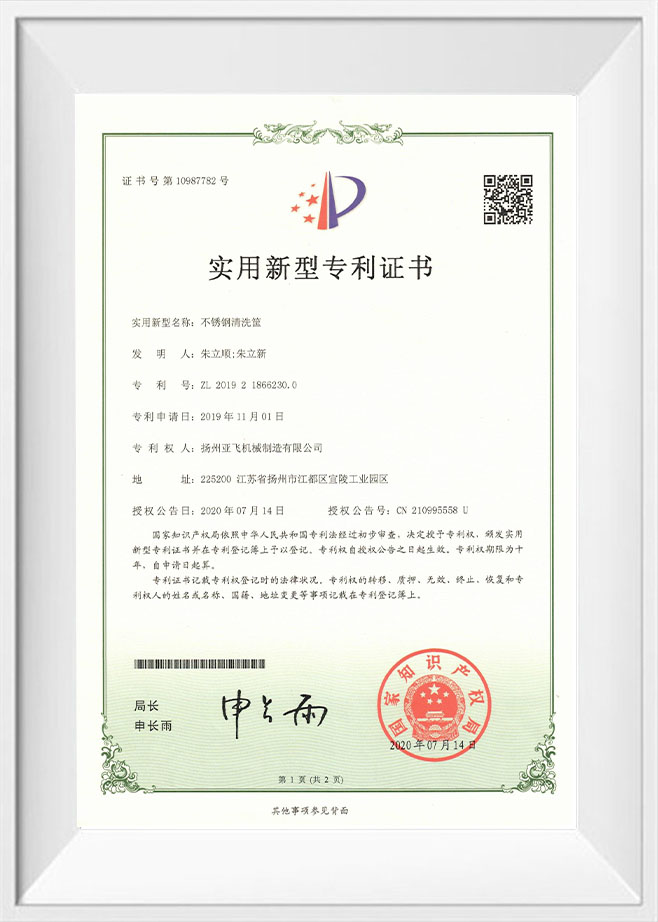
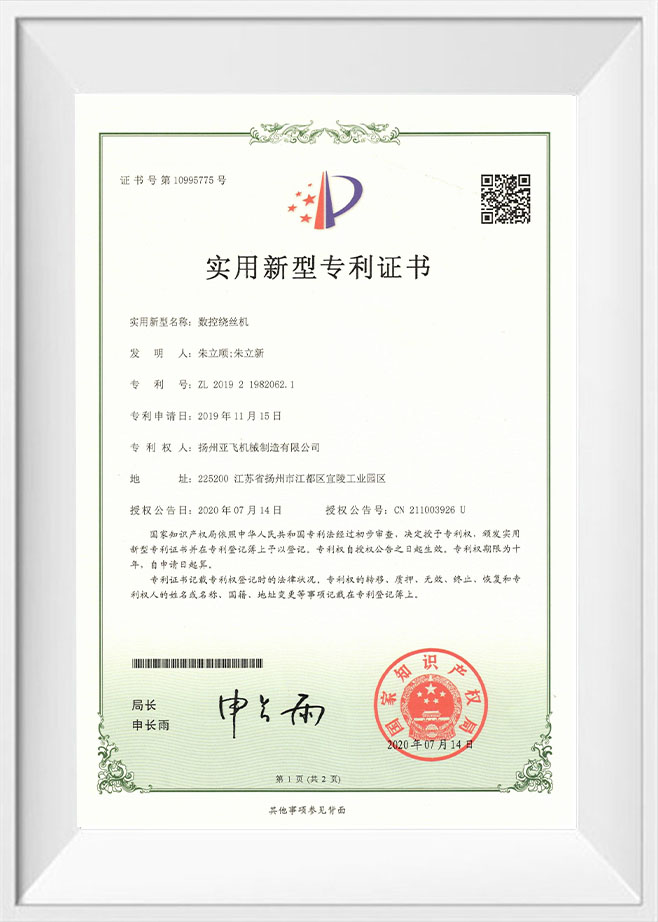
Yangzhou Yafei Machinery Manufacturing Co., Ltd. is a private scientific and technological enterprise in Jiangsu Province, formerly known as Yangzhou Yafei Metal Mesh Belt Factory, located in Yiling Industrial Park in the east of Yangzhou, with R&D, production and processing, office buildings, etc. With independent research and development of scientific and technological projects and equipment processing and manufacturing capabilities.
At present, the company is mainly engaged in: stainless steel mesh belt, conveyor mesh belt, metal mesh belt, stainless steel conveyor belt and related technology research and development, application and promotion.
Metal mesh belts have been used in beer and beverage, food, wood industry, glass, chemical industry, pharmacy, cleaning and spraying, powder metallurgy, new energy, heat treatment, industrial kiln, general conveying machinery and other industries.
Conveying machinery includes: net belt conveyor, hoist, flat top chain conveyor belt, roller conveyor, chain plate conveyor, etc. Widely used in home appliance engineering, automobile engineering, dairy beverage industry, brewing and water treatment and other fields.
A conveyor mesh belt rarely announces its own failure. It distorts, cracks, or begins tracking to one side, and a continuous furnace or production line stops the moment it does. That makes belt selection more than a spare-part purchase; it is a decision about uptime, product quality, and operating cost. The right conv...
READ MOREWhen a hardening furnace mesh belt fails, it usually does it without warning. One shift it is carrying bearing races through the high-temperature zone; the next, a torn edge catches on the return track and the whole line stops. Most of these failures were decided months earlier, when the belt specification was written...
READ MOREA continuous brazing line stops because the mesh belt has drifted to one side, the edge wires are broken, and the stainless steel parts grouping together on the belt are no longer aligned. It is a familiar scenario for maintenance teams: the furnace itself is running correctly, but the belt has become the bottleneck. ...
READ MOREThe lifespan of an aluminum brazing furnace mesh belt in industry typically does not have a single fixed value. It is a comprehensive result determined by a combination of factors, including material properties, process environment, and system design capabilities. On a CAB (Controlled Atmosphere Brazing) aluminum brazing production line, the mesh belt operates continuously in a medium-temperature range of approximately 580–620°C, while simultaneously enduring the complex effects of a nitrogen protective atmosphere, a trace oxygen control environment, and the volatilization of fluorinated flux. Therefore, its failure mechanism is not simply high-temperature creep, but rather a result of the coupling of chemical corrosion, thermal fatigue, and mechanical wear.
Under typical industrial conditions, the lifespan of aluminum brazed wire mesh belts made of 314 stainless steel is typically:
However, it is important to emphasize that in the aluminum brazing industry, the significant difference in lifespan stems largely from the design capabilities and system matching capabilities of the wire mesh belt manufacturer, not just the material itself.
Yangzhou Yafei Machinery Manufacturing Co., Ltd., a private high-tech enterprise in Jiangsu Province, formerly known as Yangzhou Yafei Machinery Metal Wire Mesh Belt Factory, possesses independent R&D capabilities and a manufacturing system, with capabilities in R&D, production processing, and complete equipment manufacturing. The core value of these companies lies not merely in providing "single mesh belt products," but in their conveying system-level engineering capabilities.
This is crucial regarding the lifespan of brazed aluminum mesh belts, as lifespan depends not only on the materials but also on the system design. For example:
System-level tension design capability: Brazed aluminum mesh belts undergo thermal expansion and creep at high temperatures. An improperly designed tension system can lead to localized overload or slack, accelerating wire breakage or misalignment. Companies with conveyor equipment R&D capabilities can co-design mesh belts with net belt conveyors, roller conveyors, chain plate conveyors, etc. This results in more uniform tension distribution, significantly extending lifespan.
Industry application compatibility: The company's products are widely used in various industries, including beer and beverage, food, wood industry, glass, chemical industry, pharmacy, cleaning and spraying, powder metallurgy, new energy, heat treatment, and industrial kiln. These industries have vastly different corrosive environments and load conditions for mesh belts.
In the field of aluminum brazing (especially in automotive and home appliance engineering), mesh belts not only serve a conveying function but also directly affect product quality consistency. Therefore, manufacturing companies with cross-industry application experience are better able to anticipate the following during the design phase:
These factors directly affect the actual lifespan of the mesh belt.
Impact of System Integration on Lifespan
A key reason why the lifespan of aluminum brazing furnace mesh belts is often underestimated is "system mismatch." For example:
These problems lead to localized stress concentration in the mesh belt, rather than uniform fatigue.
Companies with overall conveyor design capabilities (such as those simultaneously producing hoist, belt conveyor, and flat top chain conveyor belt systems) typically consider the dynamic balance of the entire conveyor line during design, thereby reducing localized stress peaks in the mesh belt, which directly impacts lifespan improvement. ---
Engineering Summary
From an industrial engineering perspective, the lifespan of aluminum brazing mesh belts can be summarized in one sentence:
Mesh belt lifespan = Material corrosion resistance × Thermal fatigue resistance × System design matching capability × Maintenance level
Yangzhou Yafei Machinery Manufacturing Co., Ltd. possesses R&D + manufacturing + conveyor system integration capabilities. Its advantage lies in its ability to upgrade from a "single mesh belt supplier" to a "systems engineering participant," thereby reducing failure risks during the design phase and bringing the actual lifespan closer to the theoretical upper limit.
The white powder appearing in aluminum brazing furnaces is usually a residue of the NOCOLOK flux system, mainly composed of KAlF₄, K₃AlF₆, and their high-temperature reaction derivatives. These substances are characterized by "low-temperature stability, high-temperature reactivity, and strong hygroscopicity," and are unavoidable byproducts of the aluminum brazing process.
During high-temperature brazing, flux is used to break down the oxide film on the aluminum surface, allowing the brazing filler metal to wet and form a reliable weld. However, after the reaction, some flux remains as powder on the conveyor belt surface or adheres to the wire intersections. Long-term accumulation of these residues can lead to three main problems: first, they absorb moisture and create a slightly acidic environment, accelerating stainless steel corrosion; second, particle buildup affects the flexible movement of the conveyor belt; and third, they may contaminate the surface of subsequent products.
Therefore, cleaning methods must adhere to a core principle:
Remove inorganic fluoride salt residues without damaging the passivation layer on the stainless steel surface and the wire structure.
In industrial practice, recommended cleaning methods fall into three categories:
The first category is low-stress mechanical cleaning, which is the safest and most commonly used method. This typically involves using a stainless steel soft brush or a high-temperature resistant nylon brush, gently brushing the conveyor belt at low speed. This method effectively removes loose powder and some adhering substances without causing significant damage to the wire diameter. For automated production lines, a dust extraction system can be used to simultaneously remove powder, preventing secondary deposition.
The second category is inert gas purging. Using dry nitrogen (N₂) or hot air to purge the conveyor belt can effectively remove powder from the return section or low-adhesion areas. This method is a non-contact cleaning method with minimal impact on the conveyor belt's lifespan, making it suitable for continuous production environments.
The third type is controlled chemical cleaning, but it must be used with extreme caution. Some industrial-grade cleaning agents can dissolve fluoride residues, but the concentration and pH value must be strictly controlled, and complete drying after cleaning must be ensured; otherwise, residual liquid may accelerate localized corrosion at high temperatures.
In practical engineering, the following operations must be avoided:
Furthermore, from a process perspective, flux residue control is more important than post-treatment cleaning. For example, optimizing the coating amount, improving coating uniformity, and improving the airflow organization within the furnace can significantly reduce the amount of white powder generated, reducing maintenance pressure from the source.
The answer is a definite yes: it will have a significant impact, especially in industries with high appearance requirements such as automotive heat exchangers.
Aluminum brazed products (such as automotive radiators, condensers, and evaporators) typically have extremely high requirements for surface quality, demanding not only weld strength but also a clean appearance free of indentations, mesh patterns, and localized deformation. Therefore, as the direct load-bearing medium for workpieces at high temperatures, the surface condition of the mesh belt directly translates into product quality risks.
The impact of mesh belt surface roughness is mainly manifested through three mechanisms:
The first is the mechanical indentation effect. At brazing temperatures (approximately 600°C), aluminum is in a high-temperature softening state, reducing its resistance to plastic deformation. If the surface of the mesh belt wires has oxide scale, burrs, or localized protrusions, these microscopic irregularities will be pressed into the surface of the aluminum fins or tubing under contact pressure, forming permanent "mesh marks." This defect cannot be restored after cooling and directly affects the product's appearance grade.
Secondly, there is the effect of micro-vibration and dynamic contact. Micro-vibrations are unavoidable during the operation of the mesh belt, especially at the drive end or turning section. If the surface is unevenly rough, it can cause periodic micro-jumps in the workpiece, resulting in uneven distribution of the solder and even localized poor soldering or wetting.
Thirdly, there is the effect of uneven thermal contact. A rough surface means that the actual contact points are concentrated on a few protrusions, forming areas of enhanced localized heat conduction. This leads to temperature gradient differences at the microscale in the workpiece, thus affecting the melting and flow behavior of the solder.
From an engineering perspective, high-end CAB production lines typically require mesh belts to have the following characteristics:
In some high-end automotive heat exchanger production lines, a "double-layer mesh belt structure" or a "low-contact sliding plate structure" is also used to reduce direct metal contact, thereby reducing the risk of imprints.
Therefore, this can be summarized as an engineering conclusion:
The surface condition of the mesh belt not only affects its conveying function but also directly participates in the product forming process. It is part of the brazing quality system, not just a simple mechanical component.
High-temperature burn-off is commonly used in industrial furnace equipment to remove organic contaminants such as grease, lubricants, or minor carbon deposits. However, its applicability in aluminum brazing furnace mesh belt systems is very limited and must be evaluated very carefully.
First, it is necessary to clarify the type of contaminants in the aluminum brazing system. The most significant contaminant in aluminum brazing is not organic matter, but inorganic fluoride salts (NOCOLOK flux residue). These substances do not burn or decompose into volatile gases at high temperatures but remain solid or even further form more stable compounds. Therefore, high-temperature burn-off is essentially ineffective against these types of contaminants.
From a materials perspective, the main risks of high-temperature burn-off on aluminum brazing mesh belts include:
First, it accelerates the fluorination corrosion reaction. In the presence of residual fluoride salts, a high-temperature + oxygen environment intensifies the destructive effect of fluoride ions on the passivation film of stainless steel, accelerating intergranular corrosion. This corrosion is often irreversible and directly leads to the pulverization or embrittlement of the conveyor belt.
Secondly, there is the risk of thermal stress. Uneven heating of the conveyor belt under no-load conditions, especially in long-span structures, easily creates thermal gradients, resulting in localized tensile stress concentration and inducing microcrack propagation.
Thirdly, there is the risk of structural stability. Without workpiece support, the conveyor belt may experience localized sagging or increased vibration, leading to abnormal loads on the drive system.
Therefore, in aluminum brazing systems, high-temperature dry burning can only be used as a "very limited auxiliary method," such as for removing minor oil stains or initial organic contamination, and cannot be used as the primary cleaning method.
More reasonable industrial alternatives include:
From an engineering perspective, this can be summarized as: High-temperature burn-off is suitable for "combustion-type pollution," but the main pollution in aluminum brazed wire mesh is "inorganic fluoride salt system." Therefore, burn-off is not a standard cleaning solution and can only be used as an auxiliary or boundary condition method.
Get A Free Consultation Now
Get A Customized Solution
The company adheres to the concept of creating value for customers and prosperity for society, aiming to build a reliable mesh belt brand and establish the century-old Yafei brand.
CONTACT INFORMATION

Yiling Industrial Park, Jiangdu District, Yangzhou City, Jiangsu Province, China

+86 13852191798
PRODUCT CATEGORIES
QUICK LINKS
MOBILE
 Custom Aluminum Brazing Furnace Mesh Belt Suppliers