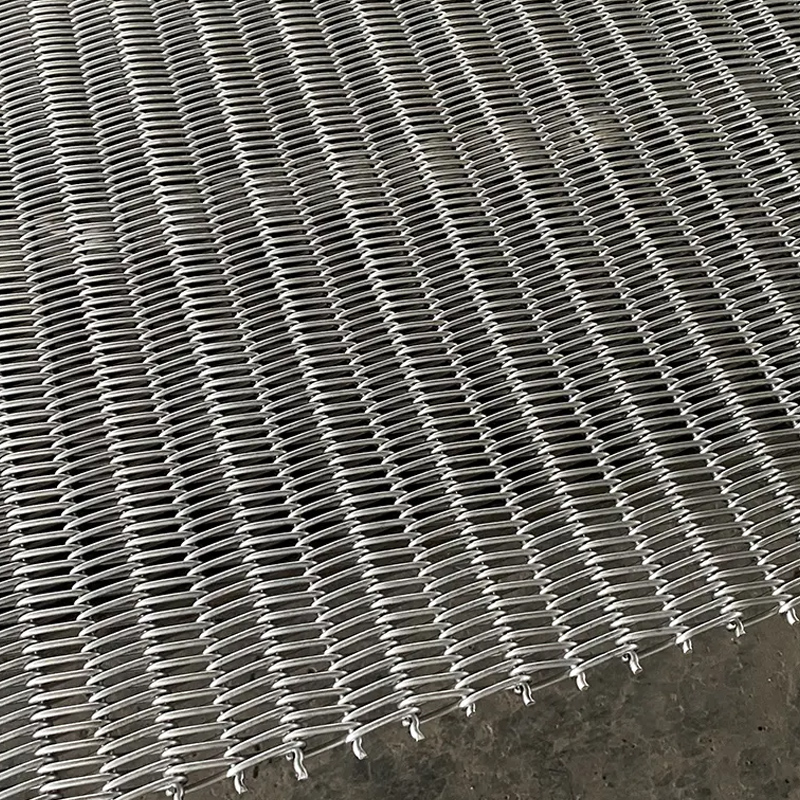
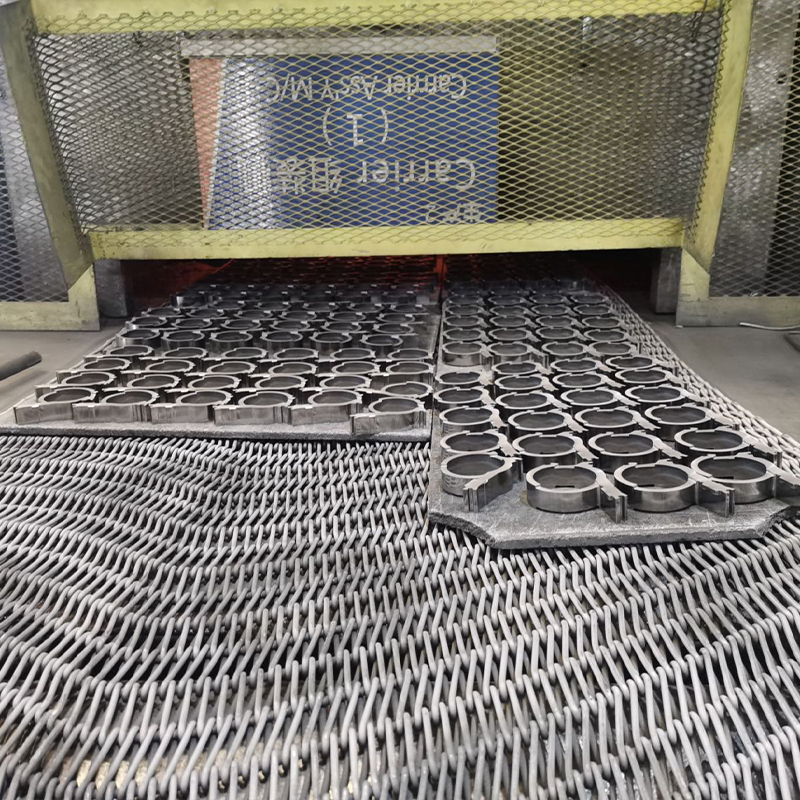
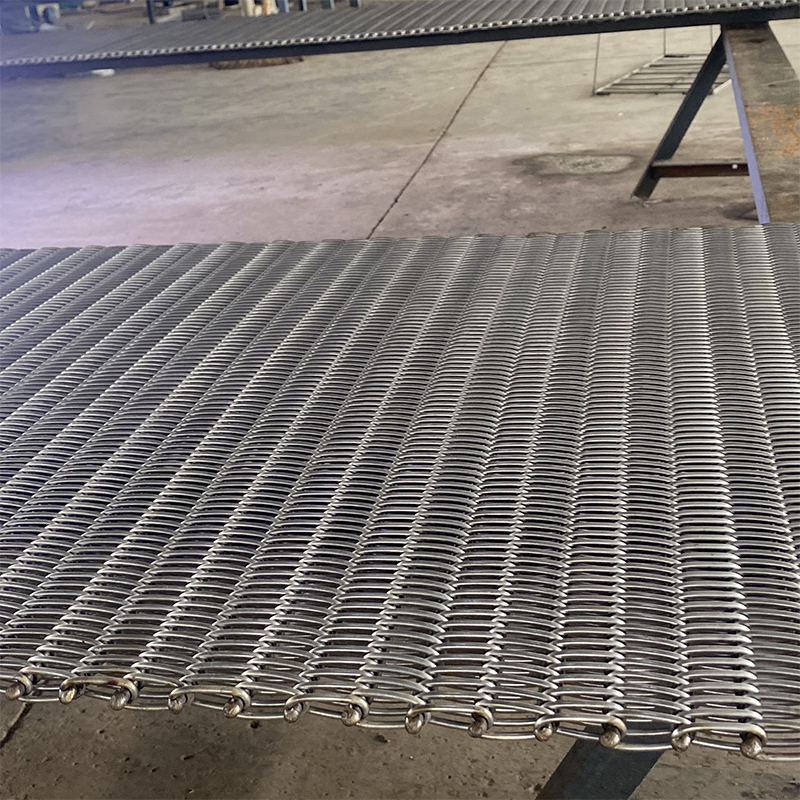
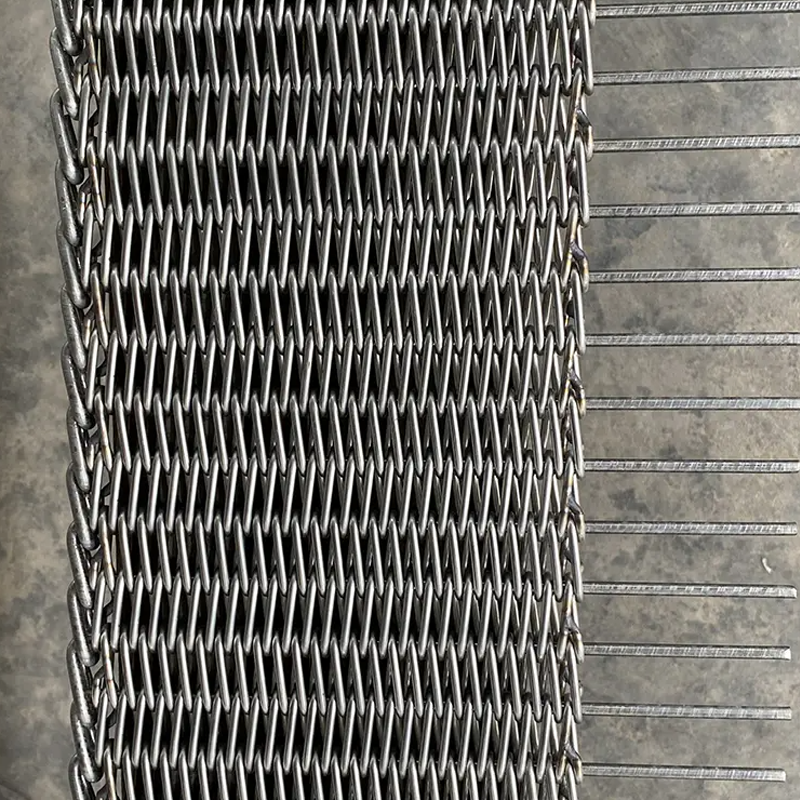
A photovoltaic panel recycling line runs at the speed of its weakest component, and in a continuous pyrolysis furnace, that component is often the mesh belt. The belt carries end-of-life panels through a thermal decomposition zone where EVA encapsulation breaks down, making it possible to separate glass, silicon cells, and metal ribbons for recovery. The service conditions are unforgiving: sustained heat, acidic volatiles, and continuous mechanical cycling. The belt specification determines line uptime, the cleanliness of recovered fractions, and the cost of processing each ton of panels.
Why the Mesh Belt Defines Pyrolysis Output
The mesh belt in a PV panel pyrolysis furnace is not a passive conveyor. It sets the thermal history of every panel that moves through the preheat, decomposition, and cooling zones. Belt speed, zone temperature, and the open area of the weave combine to control how quickly EVA softens and vaporizes. If the belt restricts gas flow, panels emerge with incompletely decomposed encapsulation, and downstream separation equipment struggles to produce clean glass and cell fractions.
The belt also has to keep panels stable. At the transfer point between the hot furnace section and the cooling tunnel, a belt that flexes unevenly can cause panels to shift or jam. A single jam can halt the entire line for hours, which is why belt tracking behavior matters as much as its heat resistance.
Temperature Resistance and Alloy Selection
Most PV panel pyrolysis processes run between 400°C and 600°C. At the lower end, EVA decomposes slowly and the process mainly removes volatile organics. At the upper end, decomposition is fast and carbonization is more complete, but the belt faces higher thermal stress. Some operators push toward 650°C to increase throughput. Every additional degree shortens belt life, so the realistic continuous operating temperature is the first thing to define before selecting a belt.
Stainless steel grades commonly used for pyrolysis furnace belts are summarized below.
Comparison of common belt alloys for PV panel pyrolysis furnaces
| Alloy |
Maximum Continuous Service |
Resistance to EVA Off-Gases |
Typical Application |
| 304 stainless steel |
650-700°C |
Moderate |
Lower-temperature or short-run lines |
| 310S stainless steel |
About 1000°C |
Good |
Continuous pyrolysis duty above 550°C |
| Nickel-based alloys |
1100°C and higher |
Superior |
Severe corrosive conditions and frequent thermal cycling |
In practice, most PV pyrolysis furnace belts are specified in 310S or a similar high-chromium, high-nickel grade, because the combination of creep resistance and oxidation resistance at 550-650°C is what keeps the belt within gauge. The same material engineering used in photovoltaic cell sintering furnace mesh belts applies directly to pyrolysis duty, since both processes require a belt that holds its dimensions under sustained thermal load.
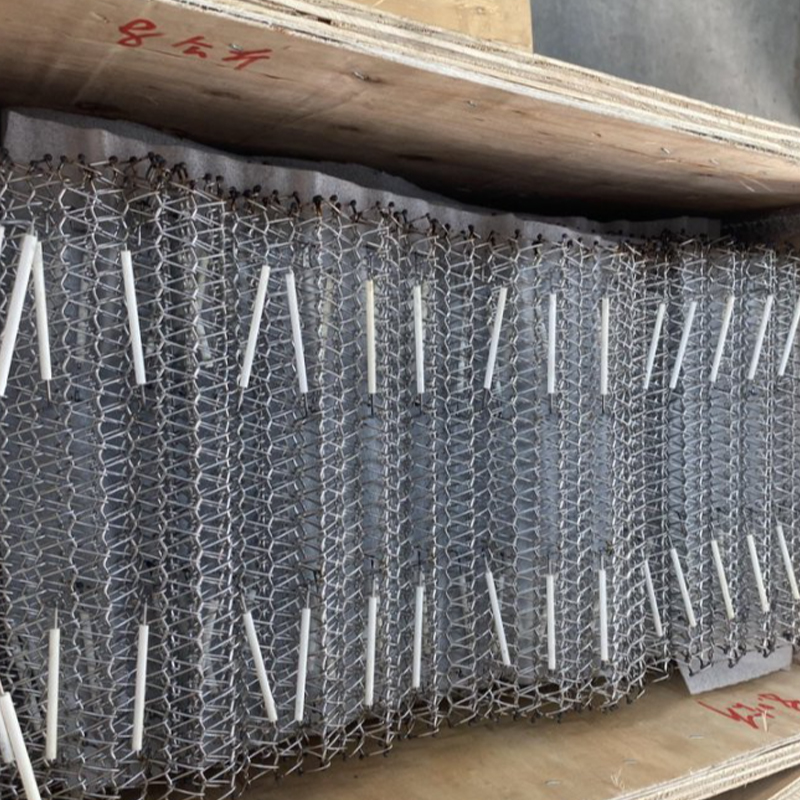 Wholesale Photovoltaic cell sintering furnace mesh belt Suppliers, Factory - YanYangzhou Yafei Machinery Manufacturing Co., Ltd is China wholesale Photovoltaic cell sintering furnace mesh belt suppliers and factory, d...View Product →
Chemical Compatibility with Pyrolysis Byproducts
Temperature is only half the story. When EVA encapsulant decomposes, it releases acetic acid and a range of organic volatiles. Fluoropolymer backsheets can release hydrogen fluoride under certain conditions, and silver busbar pastes may leave acidic residues. Together, these byproducts form a corrosive atmosphere that attacks the belt, especially above 450°C.
Acetic acid is the primary concern. It attacks stainless steel at grain boundaries when the metal is held in the sensitization range, which for 304 stainless steel sits at roughly 500-800°C. That is exactly where pyrolysis furnaces operate. A 304 belt can develop surface cracking within months, while a 310S belt in the same furnace can run for years.
Moisture accelerates the attack. Panels stored outdoors often carry residual rainwater, and the combination of moisture, acetic acid, and heat is far more corrosive than dry heat alone. A preheat section that evaporates free moisture before the panel reaches the decomposition zone will measurably reduce belt corrosion.
Belt Structure, Airflow, and Panel Support
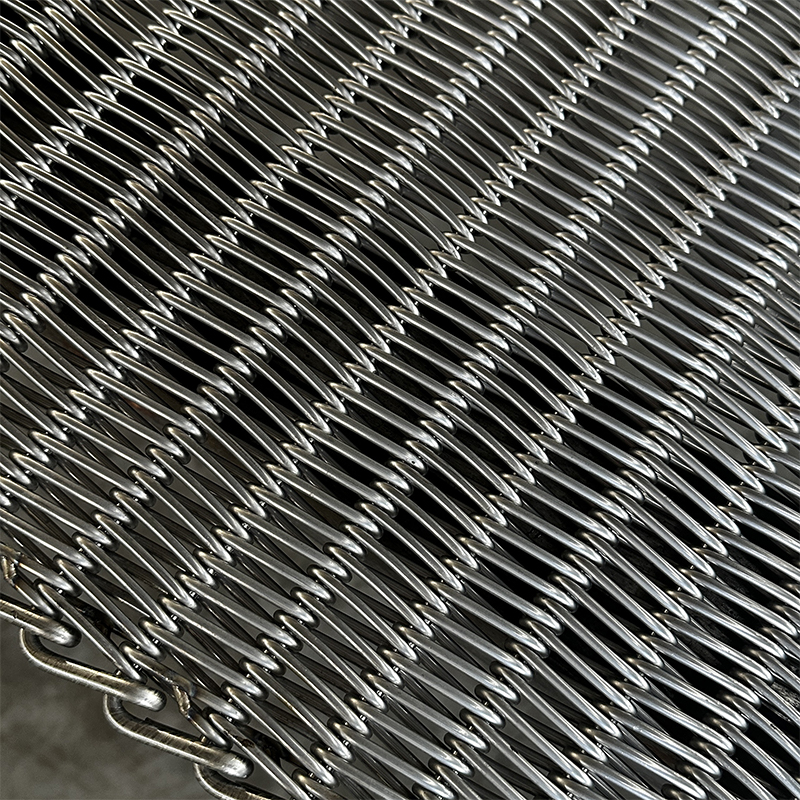
Wire diameter and mesh opening size are the two structural variables that most affect pyrolysis performance. An open area of 30-50 percent lets hot gases wash across both faces of the panel and shortens the residence time needed to decompose the EVA layer. Smaller openings give better panel support and less surface marking, but they restrict airflow and add thermal mass that must be heated and cooled on every pass.
Mesh pitch also affects material handling. A tight surface keeps small fragments of glass and silicon from falling into the furnace chamber, where debris can accumulate around burners and temperature sensors. At the same time, the belt has to remain flexible enough to track smoothly around the head and tail sprockets without developing a permanent set.
Edge Construction
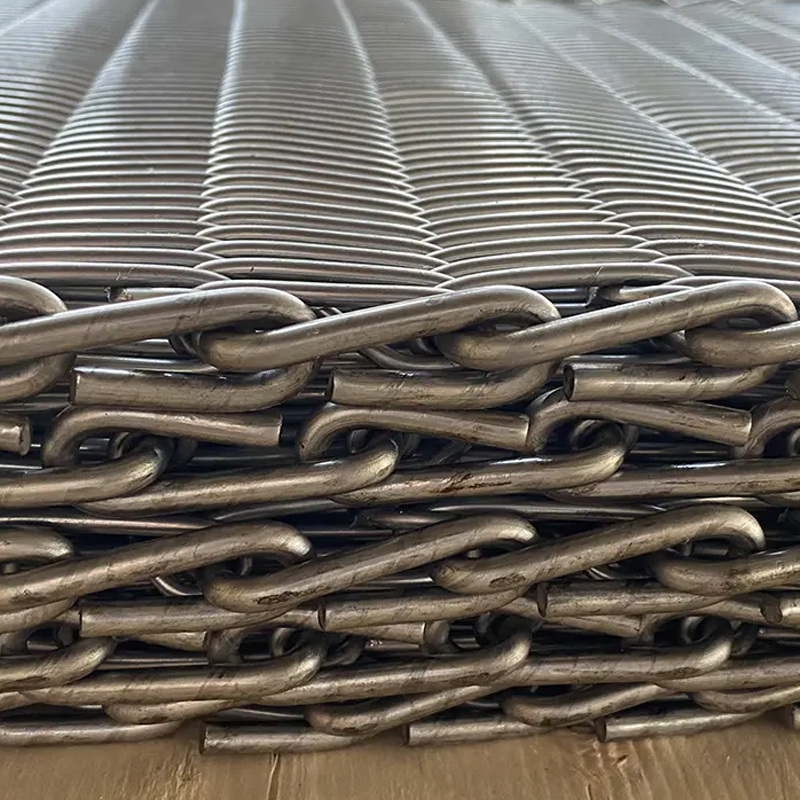
Edge construction is the most common wear point on a pyrolysis belt. The three practical options are woven selvedge edges, welded edges, and chain-linked edges. For lines handling heavy panels or frequent stop-start operation, chain edges or reinforced welded edges provide better tracking and load transfer. The right choice depends on the sprocket diameter and the available space for the belt return strand.
The mesh design principles behind PV cell drying oven mesh belts show how open weaves manage airflow in continuous solar process lines. Pyrolysis belts follow the same airflow logic, but with heavier wire and more corrosion-resistant alloys because the atmosphere is far more aggressive.
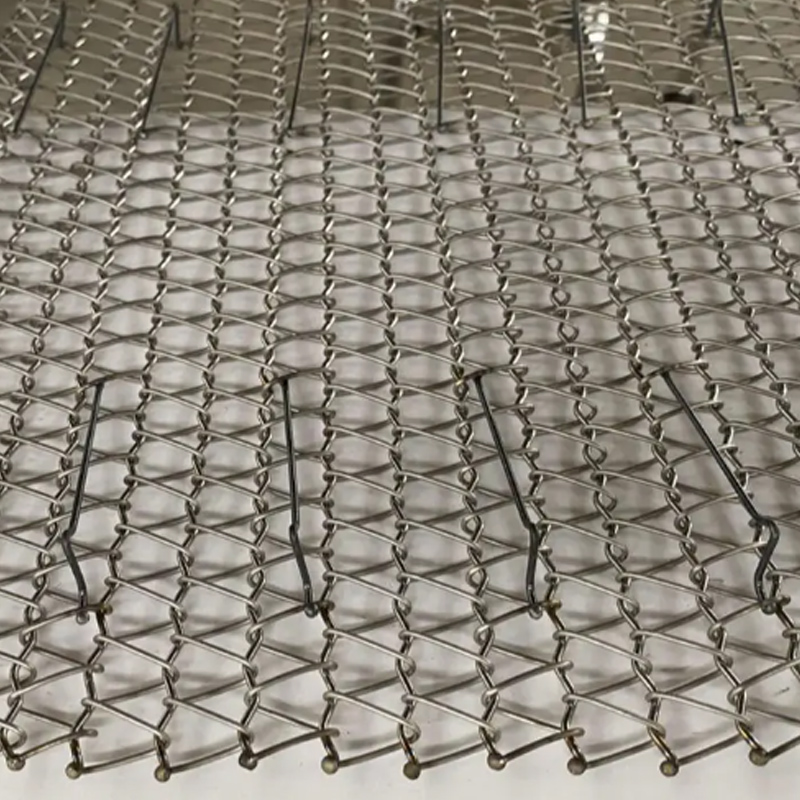 Wholesale PV cell drying oven mesh belt Suppliers, Factory - Yangzhou Yafei MachYangzhou Yafei Machinery Manufacturing Co., Ltd is China wholesale PV cell drying oven mesh belt suppliers and factory, details:The PV ce...View Product →
Maintenance, Tensioning, and Failure Modes
The most common cause of premature belt failure in pyrolysis service is not alloy selection but incorrect tensioning. A belt running too tight stretches the wire beyond its elastic limit and accelerates creep. A belt running too loose slips on the sprockets, producing uneven load distribution and localized wear.
Regular inspections should cover three zones. The return strand under the furnace is where the belt cools and acidic condensate can collect. The sprocket engagement zone is where edge wear first appears, in the form of elongated holes or cracked welds. And the transition into the cooling section is where rapid thermal contraction can crack wires.
Track Elongation
Measure belt pitch during scheduled maintenance stops. Most belt weaves have a measurable pitch that changes as the belt wears. A permanent elongation of more than 2-3 percent is a warning that the belt is near the end of its life. Replacing it during a planned shutdown costs far less than a mid-run failure.
Cleaning is also part of the program. Carbon residue and flux deposits build up on the wire surface, harden over time, reduce airflow, and trap corrosive compounds against the metal. A scheduled burn-off cycle, running the empty belt at temperature with increased airflow, is a practical way to extend service life.
Selection Criteria and Life-Cycle Cost
The number that matters when comparing belt quotes is not price per square meter but cost per operating hour over the expected belt life. A 310S belt that costs 40 percent more than a 304 belt but lasts three times longer in the same furnace is the more economical purchase.
Ask the belt manufacturer these questions before ordering:
- What continuous operating temperature was the complete woven belt tested at, not just the wire alloy rating?
- How does the proposed edge construction handle the sprocket diameter in my furnace?
- What pitch tolerance can be held, and does it match the existing sprocket tooth spacing?
- Can a replacement belt be supplied with the same weave and alloy for staging purposes?
Manufacturers with a track record in industrial furnace belting, including heat treatment conveyor applications, can usually provide more practical guidance than general-purpose conveyor suppliers. The engineering approach covered in this sintering furnace mesh belt selection guide translates directly to pyrolysis furnace planning.
Finally, confirm width and wire diameter against the actual furnace drawing. A small width deviation can cause the belt to ride against the furnace wall, and a wire diameter change affects both the open area and the belt's resistance to concentrated panel loads. These details determine whether the belt survives its first year.
The photovoltaic panel pyrolysis furnace mesh belt is not a commodity spare part. Its alloy, weave, edge construction, and maintenance schedule determine how long the recycling line runs between stops, how clean the recovered glass and silicon fractions are, and how predictable the operating budget stays. Choosing the belt for the real service temperature, the acidic byproducts of EVA decomposition, and the mechanical duty of the furnace is what separates a line that meets its throughput target from one that spends every other week on unscheduled repairs.



 English
 русский
 عربى
عربى