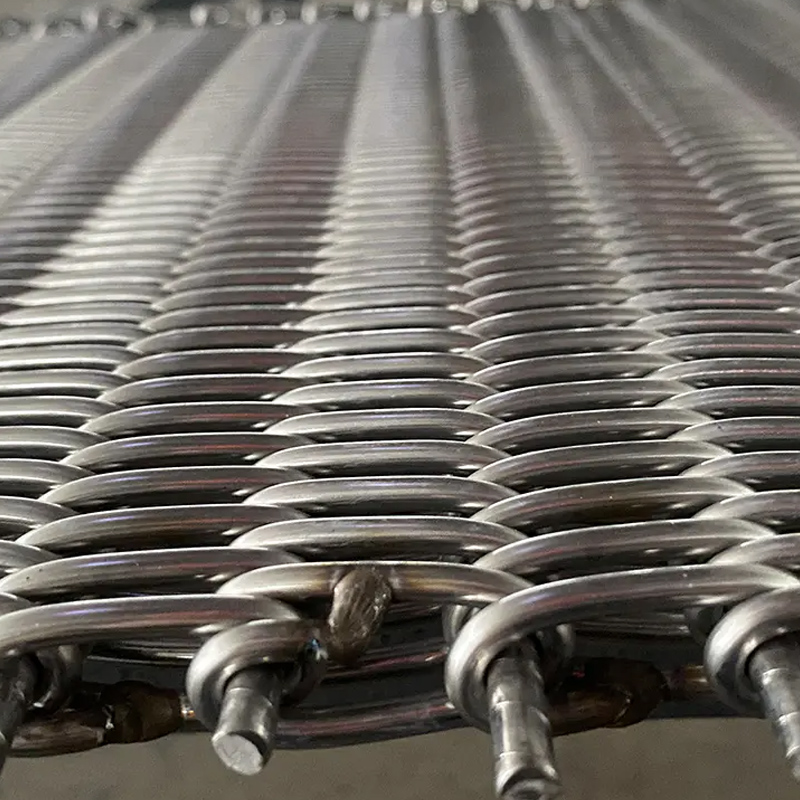
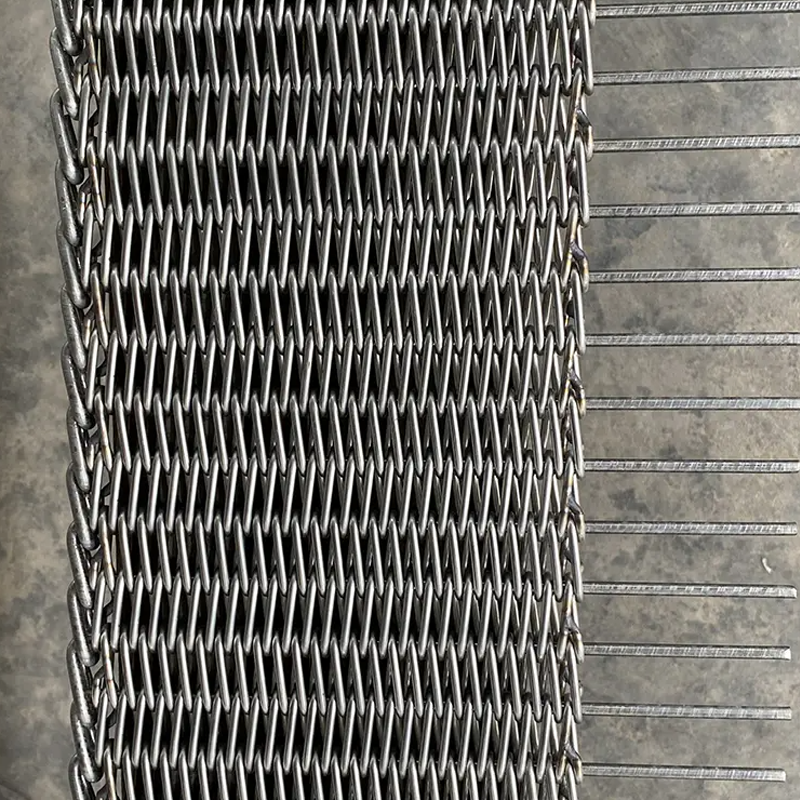
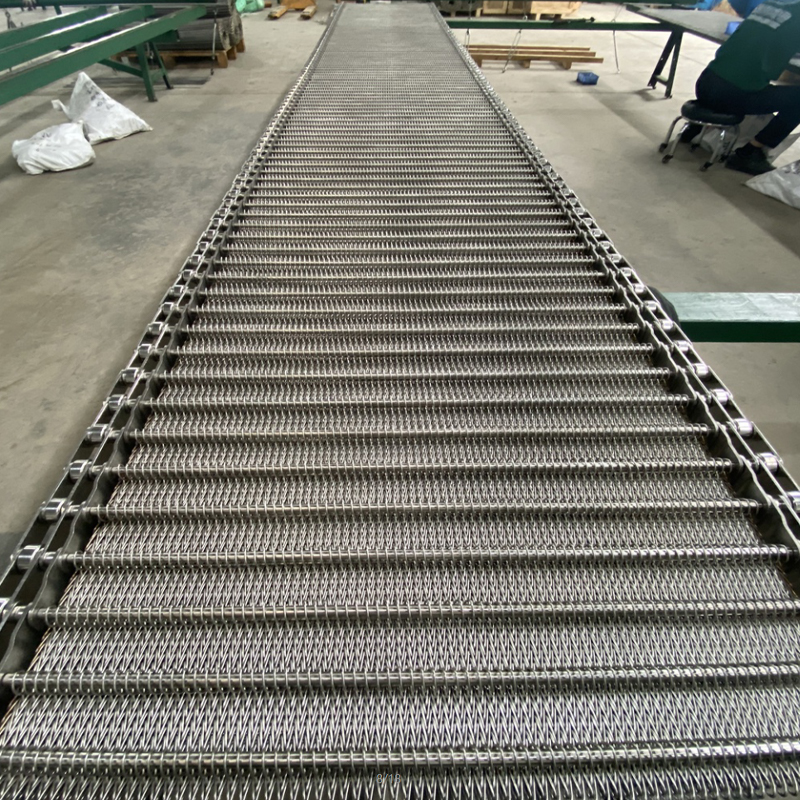
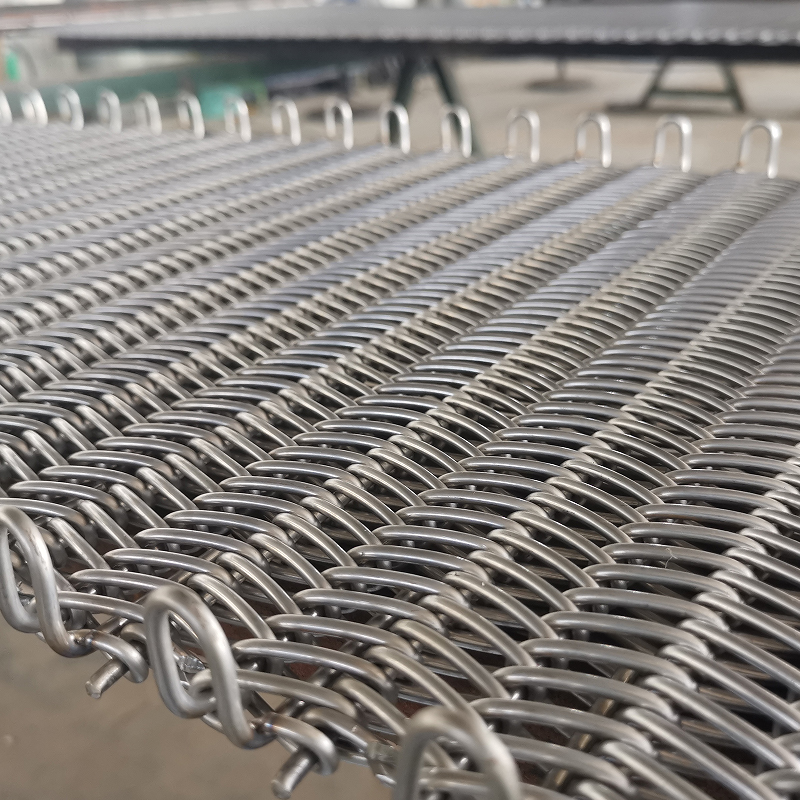
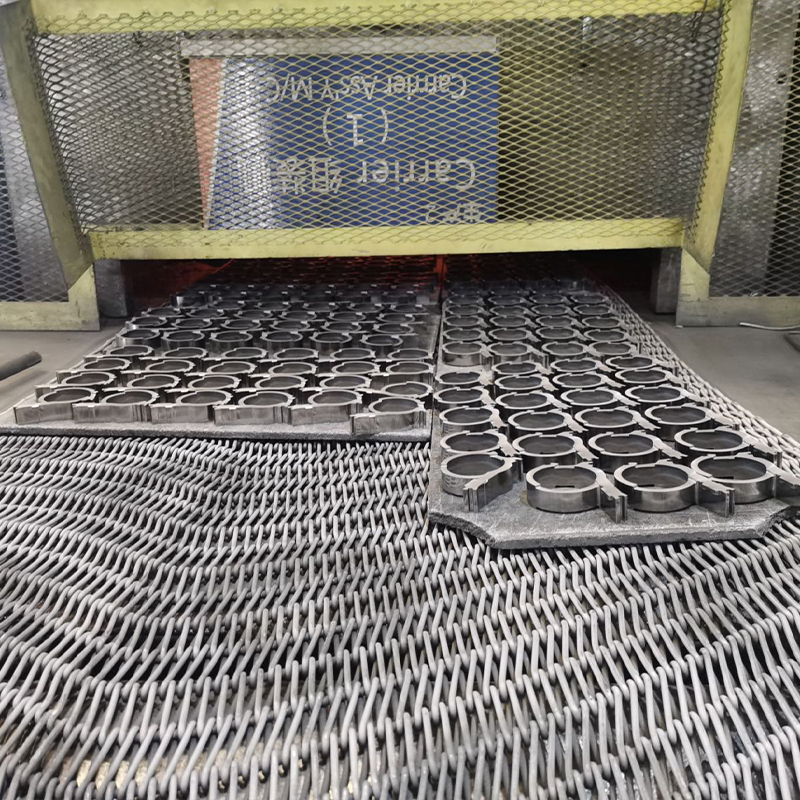
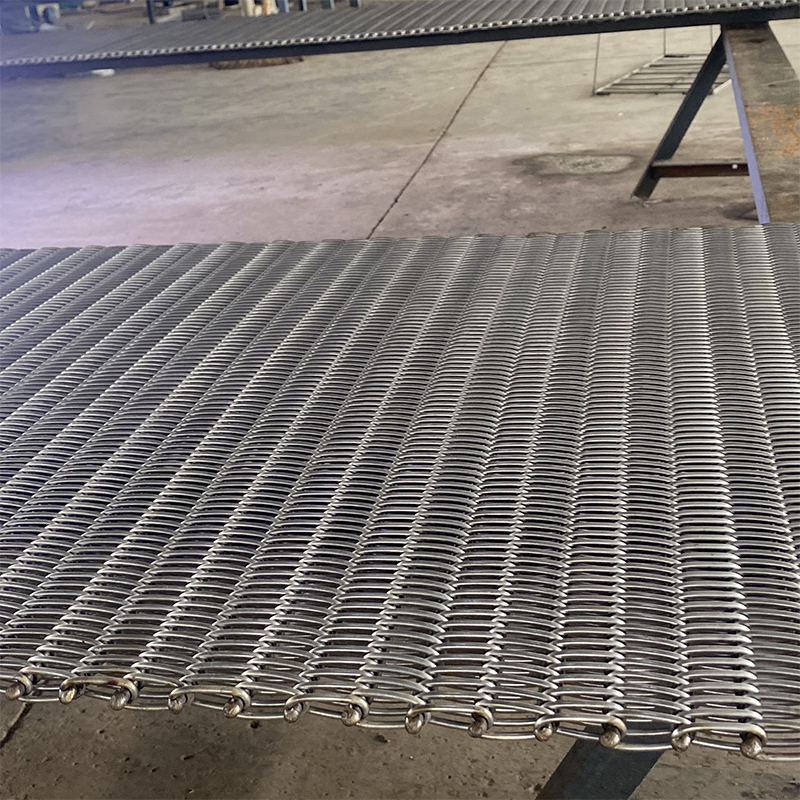
The right heat treatment resistant mesh belt is chosen by matching alloy composition and weave type to furnace temperature and load — not by picking the cheapest option in a catalog. A belt rated for 850°C continuous service will fail prematurely in a 1050°C carburizing furnace, while an over-specified belt for a low-temperature drying oven wastes budget unnecessarily. Getting this match right prevents costly unscheduled shutdowns and extends belt life from a few months to several years.
Alloy Selection Determines Temperature Ceiling
Every heat treatment resistant mesh belt is built from an alloy chosen specifically for the thermal and chemical environment it will face. The alloy is the single biggest factor separating a belt that survives 18 months from one that survives 5 years in the same furnace.
| Alloy Type |
Max Continuous Temperature |
Typical Application |
| 304 Stainless Steel |
Up to 870°C |
Annealing, drying, low-stress heating |
| 309/310 Stainless Steel |
Up to 1035°C |
Sintering, hardening, brazing |
| Nickel-Chromium Alloys |
Up to 1150°C |
Carburizing, high-temperature sintering |
A common mistake is selecting an alloy based only on peak furnace temperature without accounting for atmosphere. Carburizing and nitriding environments are chemically aggressive even at moderate temperatures, and a 304 stainless belt exposed to a carburizing atmosphere at just 900°C can suffer carbide precipitation and embrittlement far faster than the same belt would in a clean-air oven at that temperature.
Weave Pattern Comparison
Weave geometry affects three things simultaneously: load capacity, product support, and airflow through the belt. Choosing the wrong weave for the product being conveyed often causes more operational headaches than choosing the wrong alloy.
- Balanced weave: Offers the highest strength-to-weight ratio and is the standard choice for heavy loads such as metal parts or cast components moving through hardening furnaces.
- Flat-flex (ladder) weave: Provides a flatter, more stable surface ideal for small or loose parts like fasteners, bearings, and granular products that could fall through a more open weave.
- Spiral weave: Maximizes open area for airflow and even heat distribution, making it well suited to convection ovens and drying applications where uniform heat exposure matters more than raw load capacity.
- Compound balanced weave: Adds cross rods for extra rigidity, used where belts must span wide furnace widths without excessive sagging.
For example, a spiral weave belt typically offers 60–70% open area, compared to roughly 40–50% for a standard balanced weave. That difference translates directly into faster, more even heating for lightweight products, but it also means a spiral weave belt carries substantially less load per unit width — making it a poor substitute in furnaces conveying dense metal components.
Wire Diameter and Load Capacity
Wire diameter within a given alloy and weave type directly governs how much weight a heat treatment resistant mesh belt can carry without permanent stretch or sagging between support rails. Thicker wire increases load capacity but reduces flexibility and open area, so the choice is always a trade-off rather than a simple "bigger is better" decision.
| Wire Diameter |
Relative Load Capacity |
Best Fit |
| 0.8–1.2 mm |
Low |
Light electronics, small components |
| 1.4–2.0 mm |
Medium |
General heat treatment, ceramics |
| 2.3 mm and above |
High |
Heavy castings, forged metal parts |
Undersizing wire diameter is a frequent cause of premature belt failure — a belt that sags even 2–3% beyond its rated tolerance under load will experience uneven wear at the edges and accelerated stretch at the center, cutting expected service life by as much as half.
Oxidation and Atmosphere Resistance
Furnace atmosphere changes the corrosion behavior of a heat treatment resistant mesh belt dramatically compared to how the same alloy performs in open air. Reducing atmospheres (common in bright annealing) are generally less aggressive to nickel-chromium alloys than oxidizing atmospheres at the same temperature. Nitriding atmospheres, by contrast, can cause nitrogen embrittlement in belts not specifically rated for that environment, leading to sudden cracking rather than gradual wear.
Belts intended for oxidizing, high-humidity, or salt-bath environments benefit from higher chromium content, since chromium forms a stable oxide layer that slows further oxidation. A belt with 25% chromium content will typically outperform one with 18% chromium by a wide margin in continuous oxidizing service above 900°C, even though both may look identical on delivery.
Maintenance Practices That Extend Belt Life
Even a correctly specified heat treatment resistant mesh belt will underperform without proper handling and maintenance. A few practices consistently separate long-running installations from ones needing frequent replacement:
- Avoid rapid thermal cycling where possible — repeated fast heat-up and cool-down cycles cause more fatigue stress than steady continuous operation at the same peak temperature.
- Keep tracking and tension adjustments within manufacturer tolerance; a belt running even slightly off-center wears unevenly and can shorten life by 30% or more.
- Inspect edge wear regularly, since edges typically fail before the belt center due to uneven tension distribution across support rails.
- Remove debris and scale buildup that can act as an abrasive between the belt and rollers, accelerating wear at contact points.
Matching Belt Type to Furnace Application
Choosing among heat treatment resistant mesh belt options ultimately comes down to matching four variables at once — alloy, weave, wire diameter, and atmosphere — to the specific furnace process rather than optimizing any single factor in isolation. A carburizing furnace running continuously at 950°C in a carbon-rich atmosphere calls for a high-nickel alloy in a balanced weave with thicker wire to handle both chemical attack and part weight. A drying oven running at 300°C, by contrast, can use a lighter 304 stainless spiral weave without any performance compromise, at a fraction of the cost.
Facilities that document their furnace's peak temperature, atmosphere type, and typical load weight before requesting quotes are far better positioned to compare options accurately, since these three data points alone eliminate most mismatched belt specifications before a single sample is ordered.



 English
 русский
 عربى
عربى