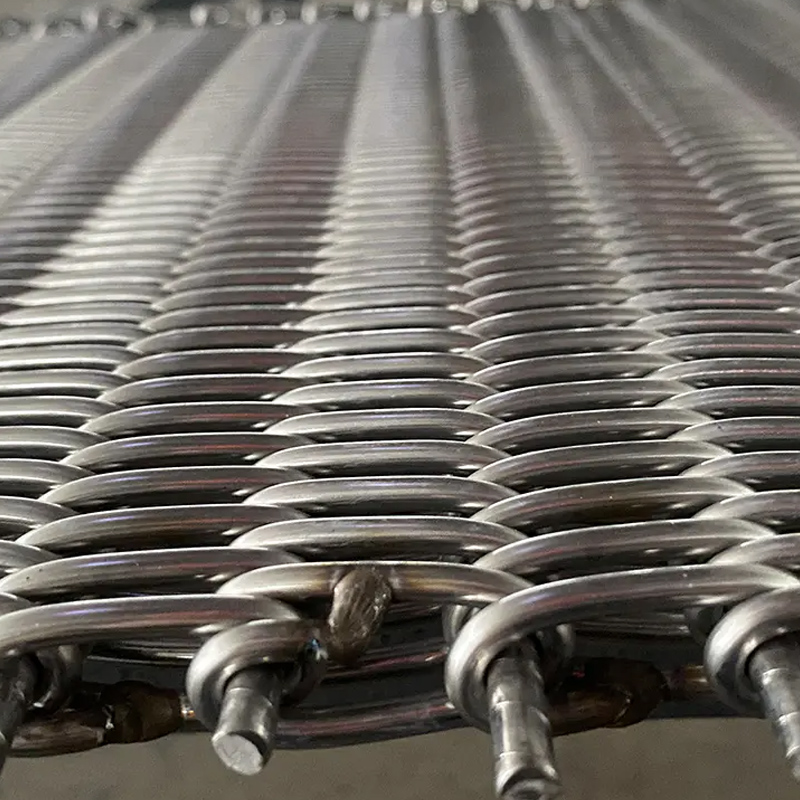
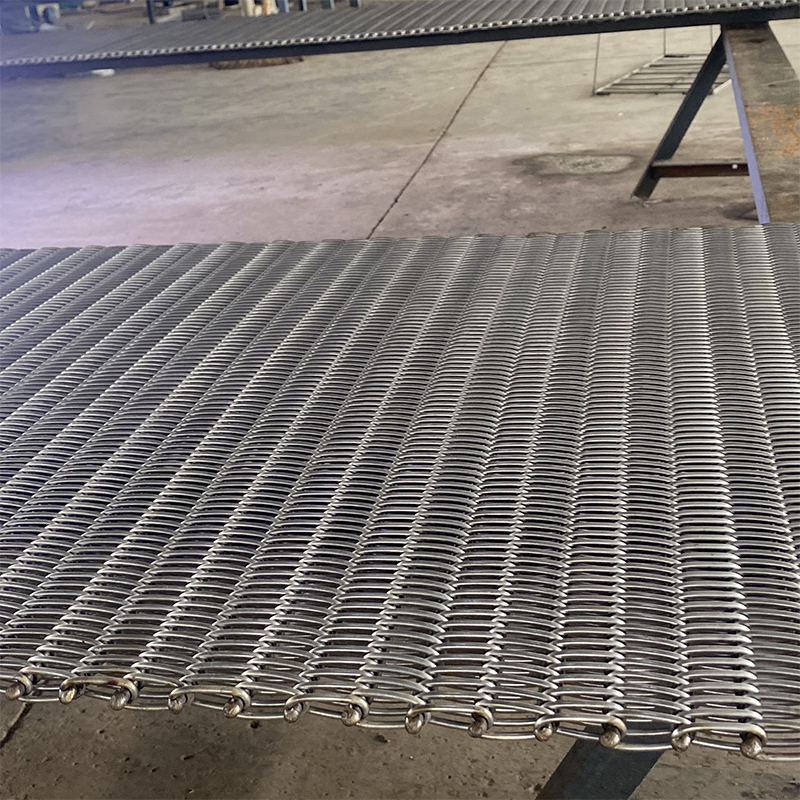
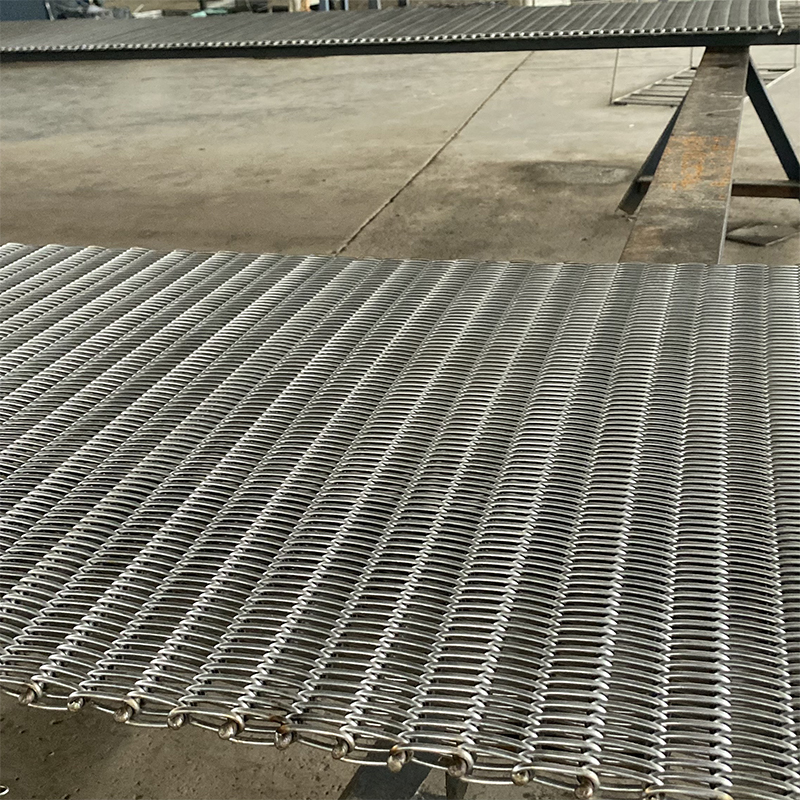
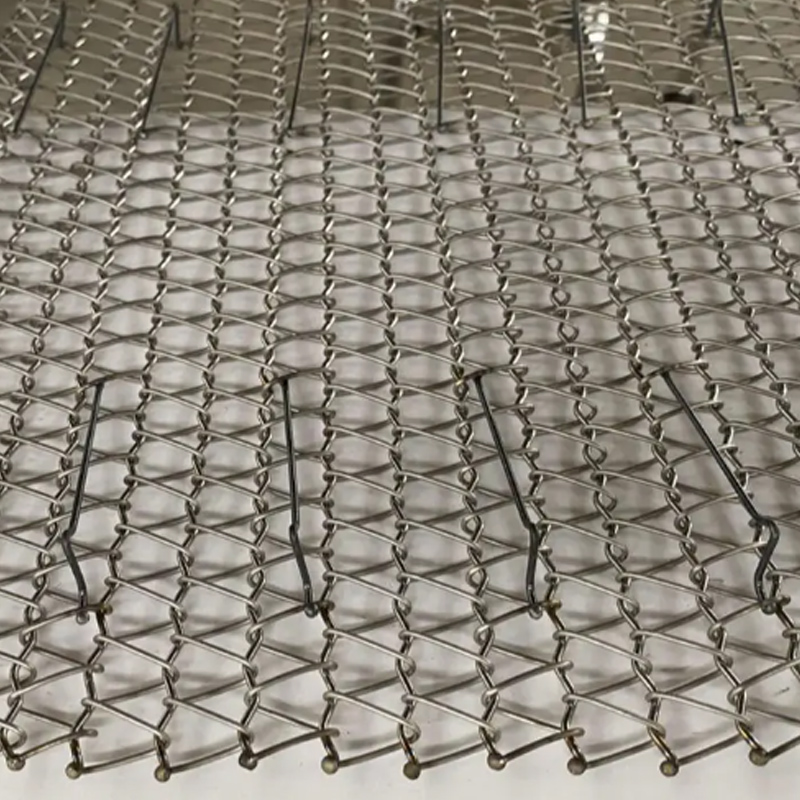
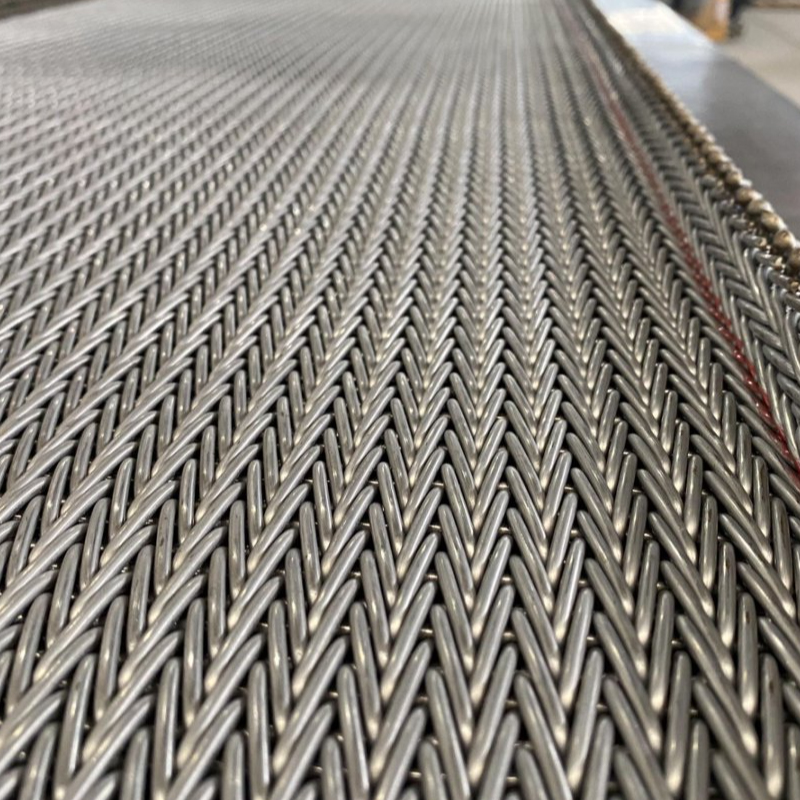
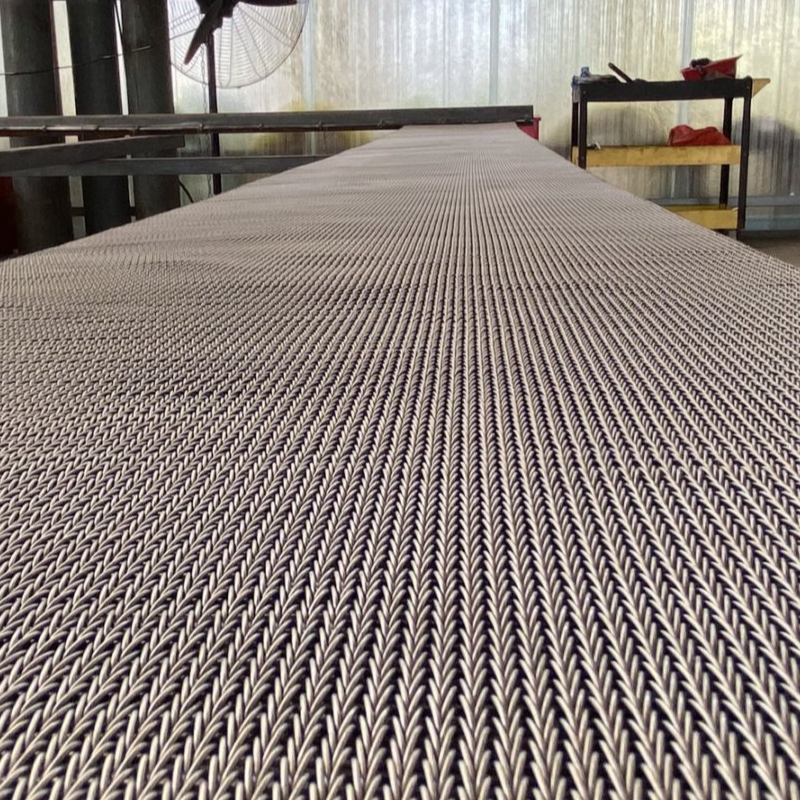
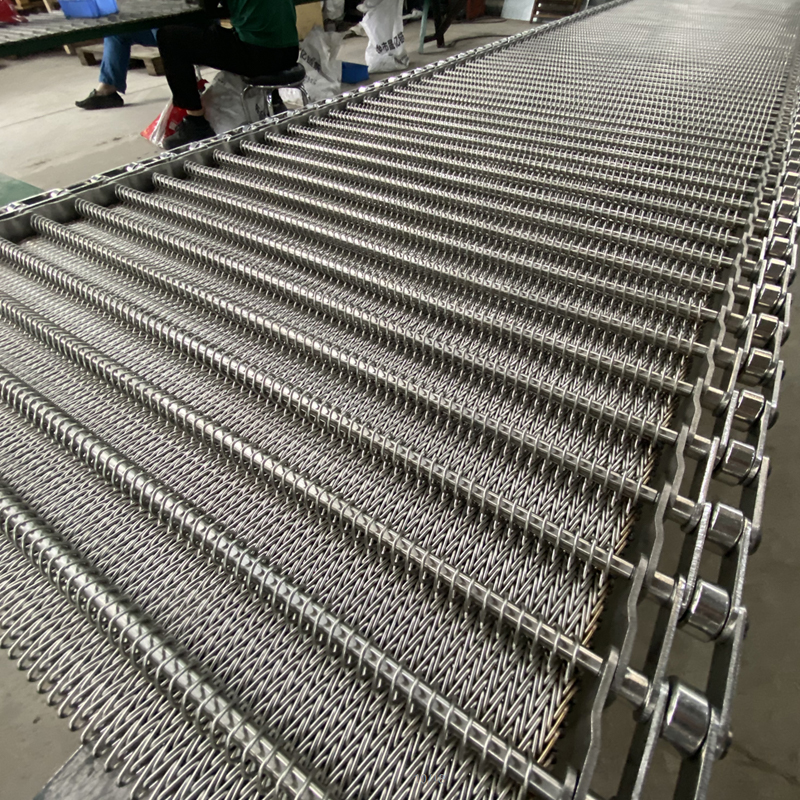
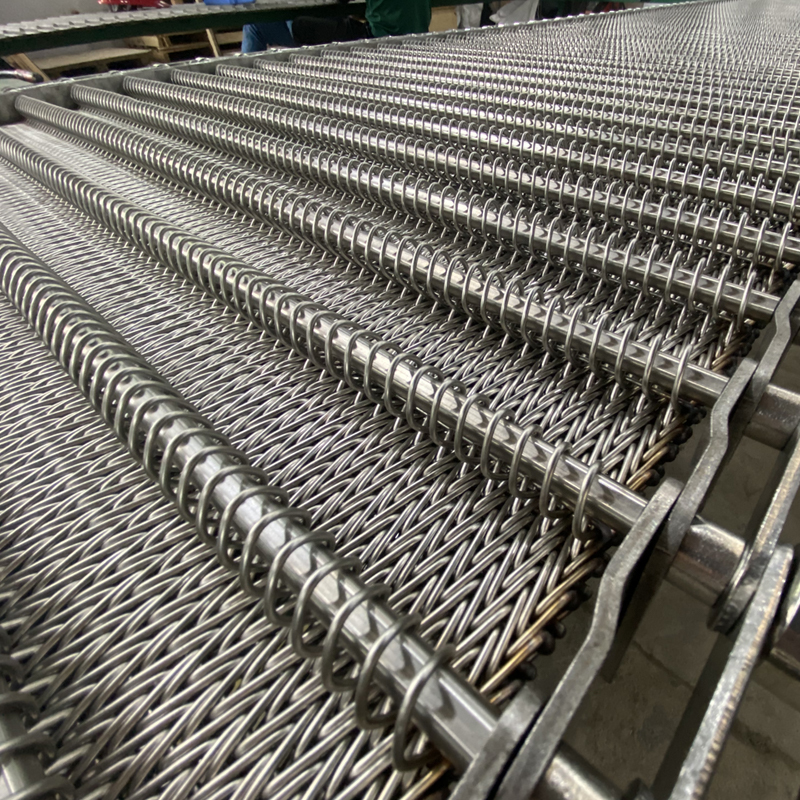
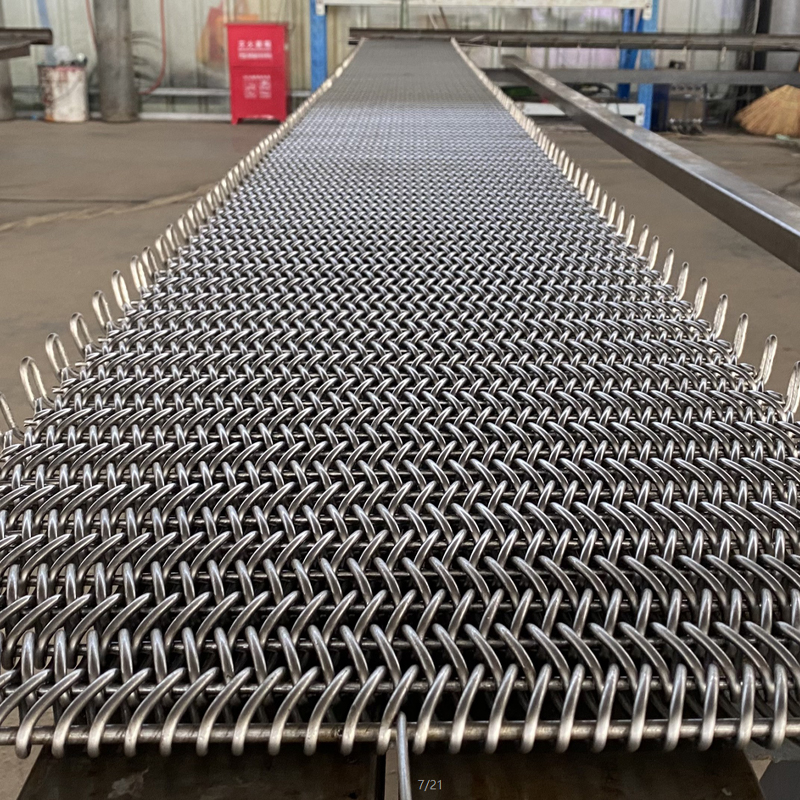
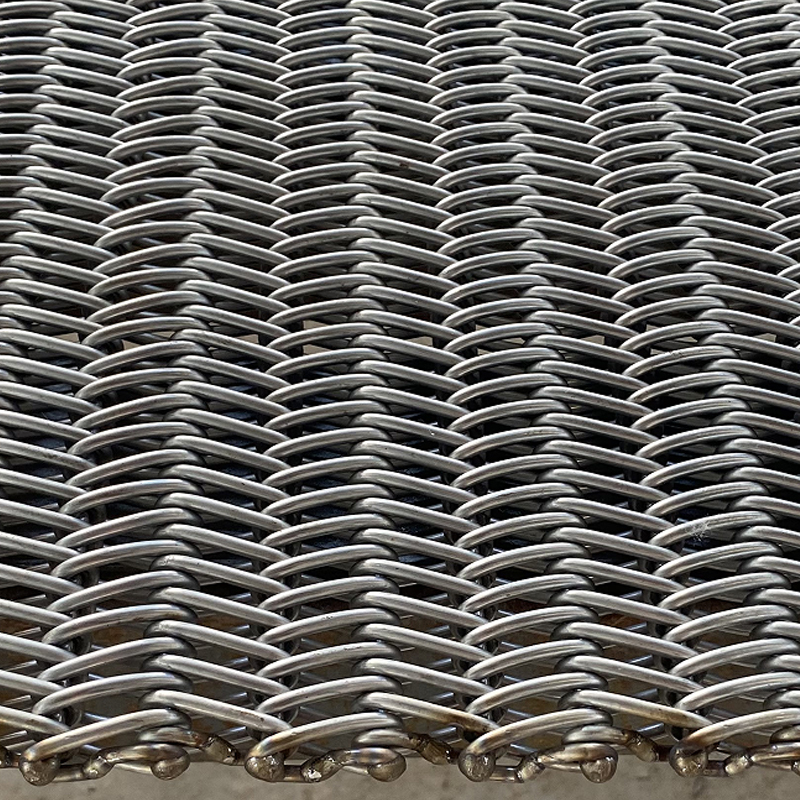
The long-standing problem of "deviation" and "serpentine" movement of mesh belts in industries such as metallurgy, ceramics, and glass annealing has recently seen a breakthrough solution. It officially released its innovative technology of adding chain plates to the edge of the herringbone mesh belt. This technology integrates specially designed heavy-duty chain plates on both sides of the herringbone mesh belt to build a rigid edge guidance and transmission system, fundamentally solving the core pain points of lateral instability of the mesh belt in wide-body furnaces, biting the furnace body, causing product slagging and shutdown.
The herringbone (herringbone pattern) mesh belt, with its outstanding load-bearing capacity and good air permeability, has become an ideal choice for high-temperature heat treatment furnaces. However, under complex working conditions such as wide furnace chambers, heavy loads and uneven temperatures, traditional pure flexible mesh belts lack effective lateral constraints and are prone to "serpentine" drift during operation. This drift not only causes friction between the edge of the mesh belt and the furnace body, resulting in equipment damage, but also affects the uniformity of heat treatment due to the sliding of workpieces on the mesh belt, and may even lead to blanking accidents, becoming a major obstacle to improving product quality and the level of production line automation.
It is praised by industry experts as "installing rigid tracks on flexible mesh belts", and its technological advancement is reflected in the following three aspects:
I. Transmission Mechanism Innovation: From Friction Drive to Precise Meshing
The traditional mesh belt is driven by the friction between the drive roller and the bottom of the mesh belt, which is prone to slipping and has inaccurate speed. This technology achieves rigid transmission through the precise meshing of specially designed heavy-duty chain plates installed on both sides with the furnace head sprocket. This transmission method completely eliminates the slippage phenomenon, ensuring the absolute synchronization and stability of the conveying speed, and providing a fundamental guarantee for the precise heat treatment process.
Ii. Reconfiguration of the Guidance System: From Free Drift to Forced Alignment
The added chain plates themselves form a rigid guiding track. The rollers or guide protrusions on the chain plates, in combination with the fixed tracks on the furnace body, form a mandatory "centering system". No matter how the temperature field inside the furnace is distributed, the mesh belt is always strictly restricted to run at the preset trajectory center, effectively eliminating the "deviation" and "serpentine" phenomena.
Iii. Edge Strength Upgrade: From Weak Links to Solid Defenses
The edge spiral strips of the herringbone mesh belt are directly subjected to force on the chain plates. Its force application mode changes from a single stretch to a composite tension-compression-shear, doubling the load-bearing capacity. As "reinforcing ribs", the chain plates greatly enhance the overall lateral rigidity and impact resistance of the mesh belt, effectively preventing edge deformation and damage caused by heavy loads or material jamming, and significantly extending the overall service life of the mesh belt.



 English